






Featured Stories
Steel, Soul, and Fire: The Legacy of Bonnie Raitt

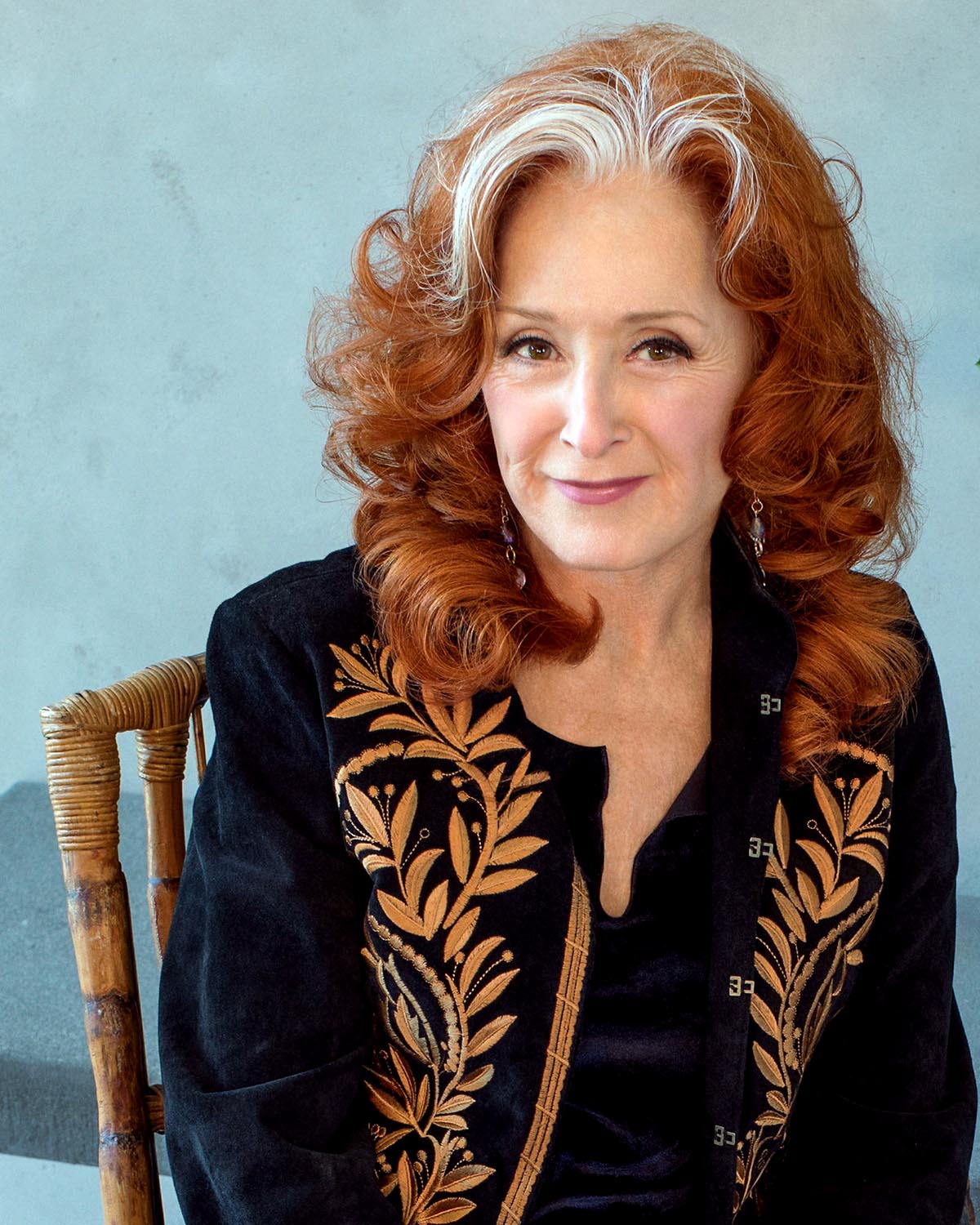
Bonnie Raitt. Photo by Ken Friedman.
Bonnie Raitt is a legacy artist. That is not a term used lightly for any living roots music performer, nor is it simply a euphemism for growing older while sustaining a long career. By personal definition, a legacy artist is someone whose work has endured and remained relevant through both personal and professional peaks and valleys. Their story unfolds as an epic journey marked by love, loss, triumph, resilience, and redemption. They are the artists we often refer to as national treasures.
The names are familiar to nearly every fan of American roots music while not always to the public at-large. They include Willie Nelson, Bob Dylan, Taj Mahal, Gillian Welch and David Rawlings, Janis Ian, Buddy Miller, Bruce Springsteen, Lucinda Williams, Keb’ Mo’, and Dolly Parton. Bonnie Raitt, acclaimed slide guitarist, singer-songwriter, and activist, belongs comfortably within this distinguished group of America’s great legacy artists.
For more than five decades, Raitt has masterfully blended blues, rock, folk, country, R&B, and pop into a sound that is unmistakably her own. Rolling Stone recognized her extraordinary talents by naming her one of the “100 Greatest Guitarists of All Time” for her signature slide guitar work and one of the “100 Greatest Singers of All Time.”
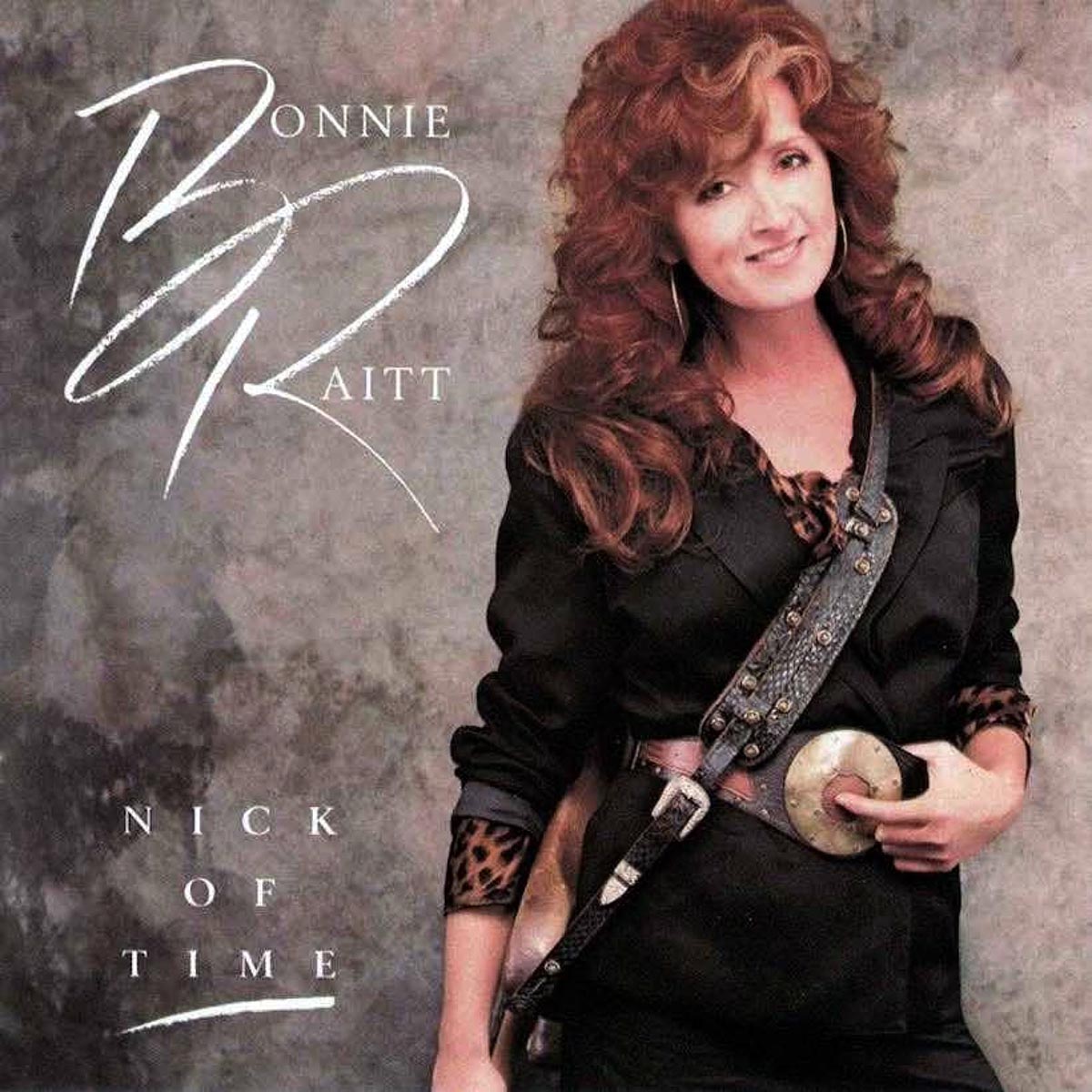
Bonnie Raitt’s Grammy-winning album, Nick of Time, 1989.
Her accomplishments alone could fill a hall of fame. Raitt has earned 13 Grammy Awards, including major wins for her landmark 1989 album Nick of Time and for “Just Like That,” which captured the Grammy Award for Song of the Year in a surprise victory. She has also been honored with Americana Music Association awards, including Album of the Year, and received the Recording Academy’s Lifetime Achievement Award in 2022. In 2023, “Just Like That” was named Song of the Year at the 22nd Annual Americana Honors & Awards.
In 2024, Raitt received a Kennedy Center Honor recognizing her lifetime contributions to American culture and the performing arts. While the award celebrated her remarkable musical legacy, it also acknowledged a lifelong commitment to social activism. According to the Kennedy Center, her advocacy has included environmental protection, safe energy initiatives, human rights, social justice, artists’ rights, and music education. She also helped found Musicians United for Safe Energy and the Rhythm and Blues Foundation, extending her influence far beyond the stage.
Bonnie Raitt was born on November 8, 1949, in Burbank, California. Her father, John Raitt, was one of Broadway’s most celebrated leading men of the 1950s, earning acclaim for his performances in classics such as Carousel and The Pajama Game. Her mother, Marge Goddard, was a talented pianist who was deeply respected for her musical abilities.
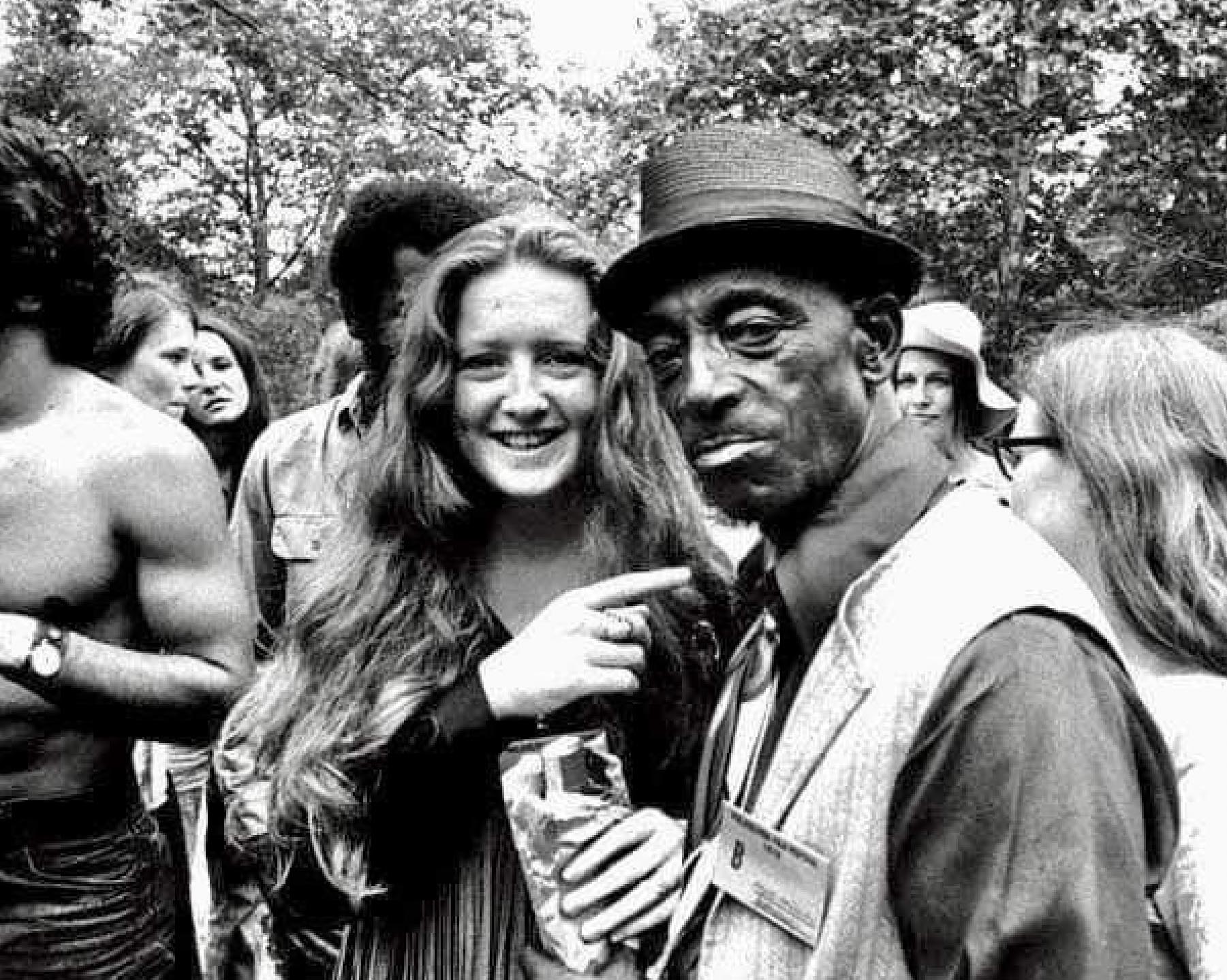
Bonnie Raitt & Fred McDowell at the Philadelphia Folk Festival, 1970.
Given her parents’ backgrounds, it would have been natural for Raitt to gravitate toward musical theater or classical music. Instead, she found her passion in the distinctly American roots traditions of blues, folk, and country music. She received her first guitar at the age of eight, and by her early teens had become captivated by the music of Muddy Waters and Mississippi Fred McDowell. McDowell would later play a direct role in nurturing her talent when she was 18 years old.
The music that emerged from the Mississippi Delta and the streets of Chicago could not have been more different from the Broadway show tunes and refined classical music that surrounded her upbringing. What drew Raitt to the blues was its raw emotion, honesty, and expressive power. Over time, her admiration evolved into something much deeper. The music became part of her identity and an essential component of her artistic voice. Its influence can be heard throughout her recording and concert career, particularly in her distinctive slide guitar playing. The blues became not only the foundation of her music, but also a guiding force in her life.
Adding another dimension to her upbringing, Raitt was raised in a Quaker household, an influence that helped shape her lifelong commitment to social justice and activism. She has often pointed to her experiences at Quaker camps as formative moments that inspired her concern for civil rights, social causes, and making a positive difference in the world around her. In later years, she would become a prominent advocate for environmental issues and musicians’ rights.
When it came time for college, Raitt’s academic career proved relatively brief. She attended Radcliffe College and Harvard University from 1967 to 1969, where she became increasingly involved in the anti-war movement in Cambridge. By 1971, just before the release of her debut album, she left school to pursue music full-time.
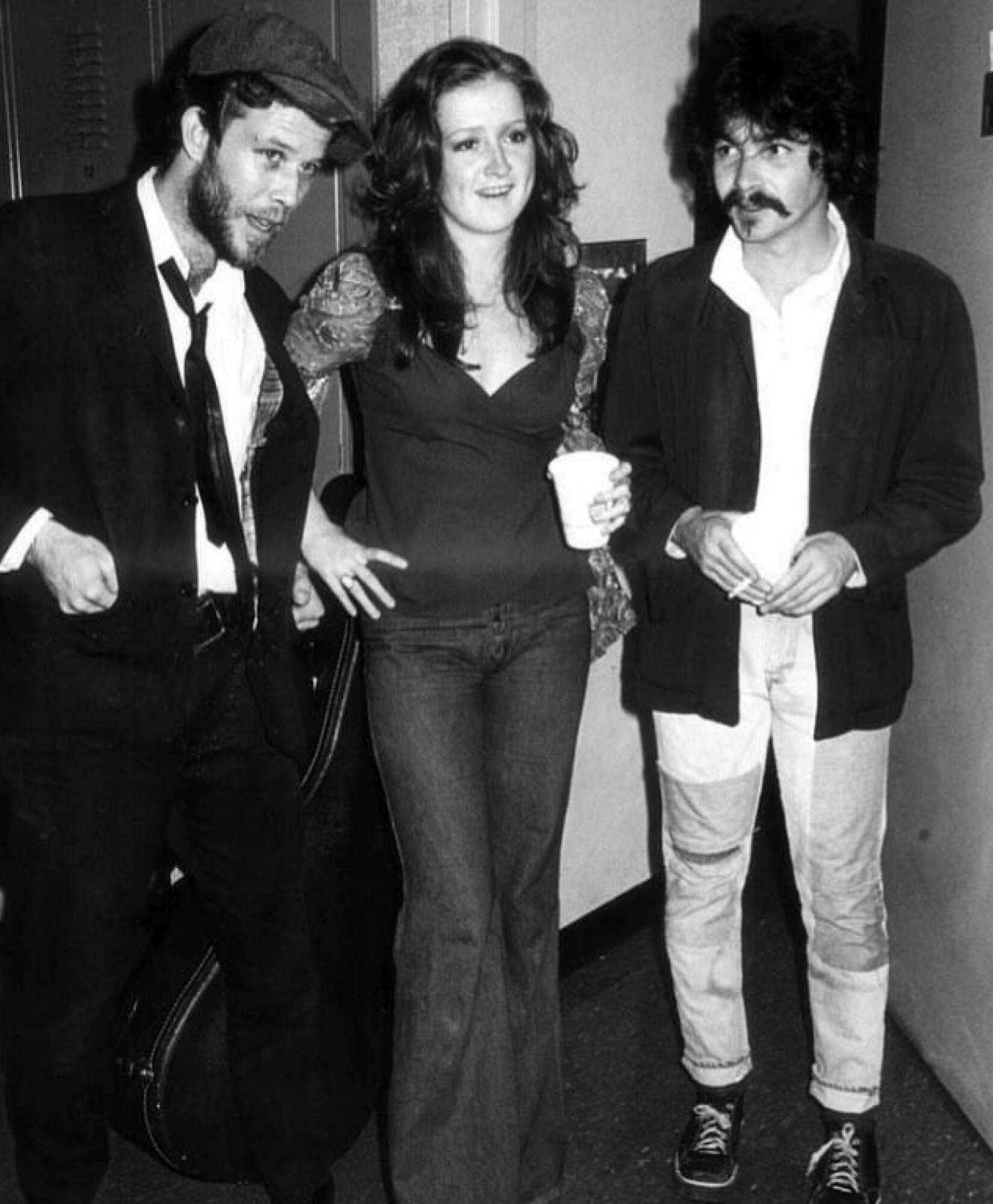
Bonnie Raitt with Tom Waits and John Prine, 1970s.
During this period, Raitt was making a name for herself on the East Coast as a young performer whose remarkable gifts as a singer and slide guitarist were already attracting attention. It was also during these years that she met Dick Waterman, a 33-year-old blues promoter and manager whose deep knowledge of the music perfectly aligned with Raitt’s passions. Waterman immediately recognized her talent and began featuring her in blues showcases, often placing her on bills with some of the genre’s greatest artists, including John Lee Hooker and Mississippi Fred McDowell. Those opportunities provided invaluable experience and helped launch one of the most enduring careers in American music.
When Bonnie Raitt first met Mississippi Fred McDowell, she was just 18—young, hungry, and already chasing the sound that would define her life. McDowell, discovered by folklorist Alan Lomax in 1959, was the embodiment of Hill Country Blues: hypnotic slide guitar, trance-like rhythms, and a raw emotional force that pulled younger musicians toward him like a magnet. Raitt was one of them, and she didn’t just admire him—she studied him.
By 1970, at the Philadelphia Folk Festival, the student stepped onto the stage beside the master. Raitt was 20; McDowell was 66. The performance has since become a piece of blues legend, the moment when a young woman with a steel slide and a passionate sense of purpose showed the world exactly where she was headed.
In a 2010 interview on Confessing the Blues, Raitt remembered how she felt sharing the stage as McDowell played: He used to just throw his head back and lift his knee up, take that slide guitar all the way up the neck… I was just blown away by the power of one guy and a guitar to just hit so many emotions.
That power shaped her. Over the years, Raitt developed her own slide-guitar voice—fluid, soulful, unmistakably hers—built on the foundation McDowell had laid. They played together at small venues, and she hoped to feature him on her second album, Give It Up. But before that could happen, McDowell died of cancer at 68.
His loss hit her hard. Dick Waterman later wrote that Raitt wasn’t just grieving the man—she was grieving the lost chance to lift him even higher. Her star was rising, and she wanted him to rise with her. “He just ran out of days,” Waterman said.
As a tribute, she recorded two of McDowell’s classics: “Write Me a Few of Your Lines/Kokomo Blues” on Give It Up, preserving his spirit inside her own breakthrough.
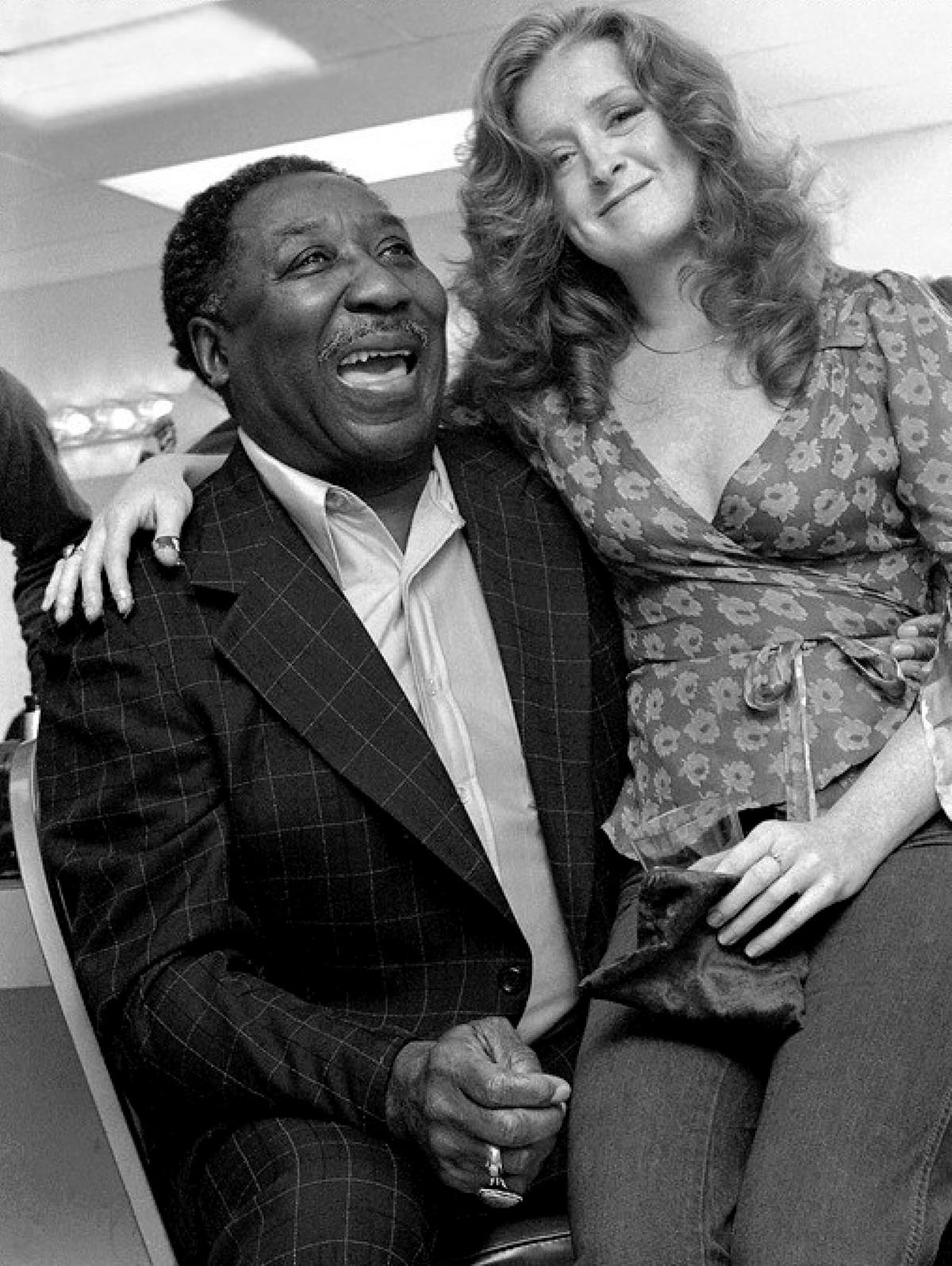
Bonnie with Muddy Waters, 1977. Photo by David Jacobs.
Raitt’s blues education didn’t end there. She became close friends with John Lee Hooker and, in 1990, the two won a Grammy for their simmering duet “I’m in the Mood.” It was another milestone in a career built on reverence, collaboration, and a deep love for the elders who shaped the genre.
But the 1980s brought turbulence. Raitt fell into the same myth that has ruined many blues musicians—the cliche that greatness required hard drinking and hard living. “I wanted to be the female version of Muddy Waters or Fred McDowell,” she told biographer Marc Bego. “I bought into that whole lifestyle.”
Alcohol and drugs nearly derailed her career. Then, in 1987, she entered rehab. Sobriety didn’t only save her life—it set the stage for one of the most celebrated comebacks in modern music. Three years later, she roared back with renewed clarity, purpose, and fire.
Bonnie Raitt’s story is inseparable from the men who taught her, inspired her, and—sometimes—haunted her. But her legacy is her own: a slide guitar that sings with history, heartbreak, and a woman’s unshakeable will.
Five decades into her career, Bonnie Raitt continues to develop new songs, mentoring younger musicians, and using her platform to fight for justice and the planet. Her legacy isn’t frozen in time; it’s active, growing, and deeply embracing the future of American music. The artists she inspired now inspire others, creating a lineage that stretches far beyond her own catalog. If a legacy artist is defined by endurance, relevance, and impact, then Bonnie Raitt stands as one of the clearest examples we have. Her story isn’t just one of survival, it is one of continual rebirth.
Bonnie Raitt, along with Jon Clary & the Absolute Monster Gentlemen, will be performing at the Rady Shell on October 17, 7pm.

