





Featured Stories
Hop on Board: New Musical Highlights Parallels to the Present

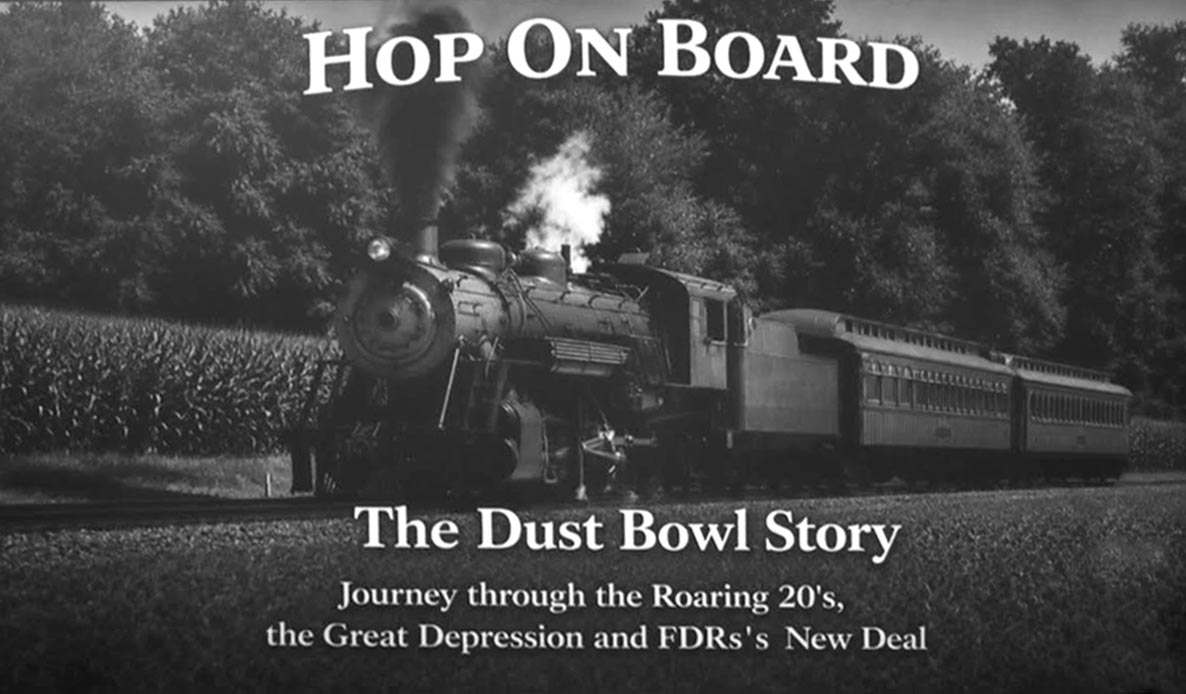
Rising prices. A man-made ecological crisis. Predatory lenders. A surge in the homeless population. Tariffs and retaliatory tariffs. Mass deportations. A wildly unpopular president.
Welcome to 1936.
As Mark Twain once said, “History doesn’t repeat itself, but it often rhymes.” And in a new musical penned by longtime musician/first-time playwright Michael DeLuca, it also swings in a helluva good time. DeLuca has commandeered an eclectic band of local singers and musicians to join him in an adult version of “let’s get dressed up and put on a play in the living room!” But on October 31, his musical Hop on Board graduates from DeLuca’s home playhouse to its premiere at the Bornemann Theatre on the TERI Campus of Life in San Marcos.
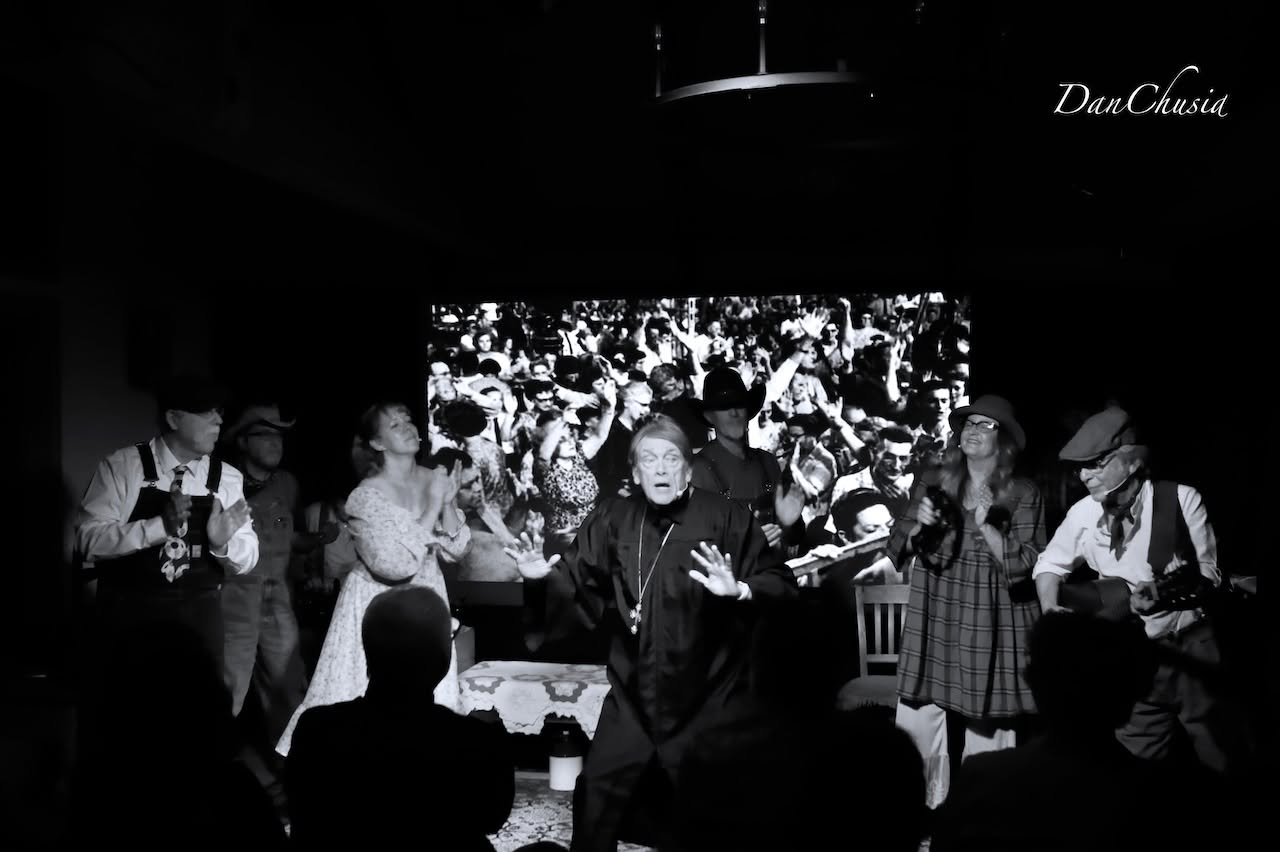
Cast of Hop on Board; Grant Bentley as the preacher. Photo by Dan Chusid.
On paper, a historical recounting of how the Dust Bowl triggered thousands of Midwesterners to hop trains to California sounds like a black-and-white documentary your fifth-grade teacher wheeled out on the TV cart while she processed her divorce in the faculty lounge. But there’s plenty here to shake the dust off the…well, Dust Bowl. First up, Cathryn Beeks debuts as Moonshine Mary, sweetly flipping the bird to Prohibition as she walks the audience through her recipe for homemade “medicine.” Mark Torpey joins as her upstanding husband, who despairs over his failure to save the family farm from economic ruin. Grant Bentley does double-duty as the local preacher and hilariously sinister Monopoly-man banker, complete with evil mustache twirling. And DeLuca himself dons the character of Joe’s rascal brother Jimmy escaping the shackles of farm work through playing in bands, racing fast cars, and distributing Mary’s product.
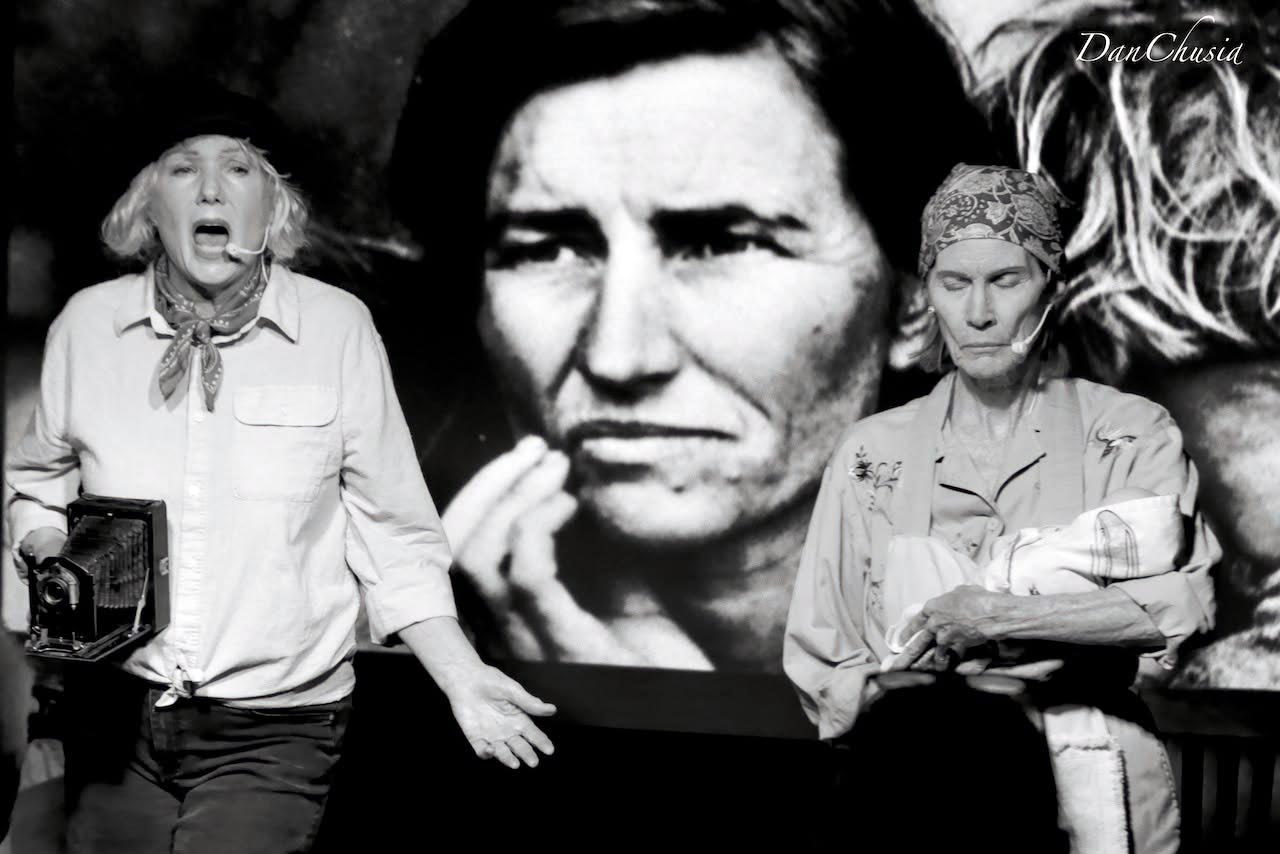
Nisha Catron & Ramona Ault. Photo by Dan Chusid.
Full disclosure: I’m also in the ensemble playing the role of Sanora Babbs—a true life novelist whose notes on the mass migration from the Midwest to California got scooped by John Steinbeck’s The Grapes of Wrath. Other ensemble members include Dana Duplan as a failing general store owner, Richie Strell as a down-and-out hobo who blows a mean harp, Nisha Catron as a local town resident and famed photographer Dorothea Lange, Ramona Ault as her involuntary subject, and Mary and Jerry Gartner as supporting characters. And DeLuca assembles a talented local band to back his expert fingerpicking on a battered guitar, including Conrad Sansbury on dobro, Terry Wardell on bass, Scott Ensign on piano and percussion, and Chris Bitner on drums.
What inspired DeLuca—a New York transplant with Italian roots—to connect with the stories of 20th century rural Midwestern farmers hopping trains? DeLuca’s background leans toward music rather than theatre; he was influenced by Buddy Merrill, a musician for the Lawrence Welk show who lived two doors down from him. After an adolescence playing and touring in rock bands, DeLuca himself migrated west and fell in with his then-girlfriend’s theatre family in LA. Her stepfather, a theatre professor at Loyola Marymount University, wrote and performed a one-man show about the Dust Bowl using projections of historic photos (“Ken Burns before Ken Burns”), which was where “the seed for the whole thing came from.”
Once he gave up touring for adulting, DeLuca’s theatre experience was limited to biannual trips to New York to see Broadway shows. But a decade ago, DeLuca thought back to that one-man show and penned the first song “Hop on Board,” about young men going west in search of jobs. He then expanded outward to portray bankers, general store owners, and various characters struggling through the same era. Though these initial songs weren’t “connected by any duct tape or wire,” he eventually filled in the gaps, beginning with the prequel of Prohibition and agricultural expansion in the 1920s, which led to destructive new farming methods. Those new methods, combined with a multi-year drought, caused widespread soil erosion and crippling dust storms, triggering financial ruin and a mass migration to what was billed as the “land of milk and honey” in California.
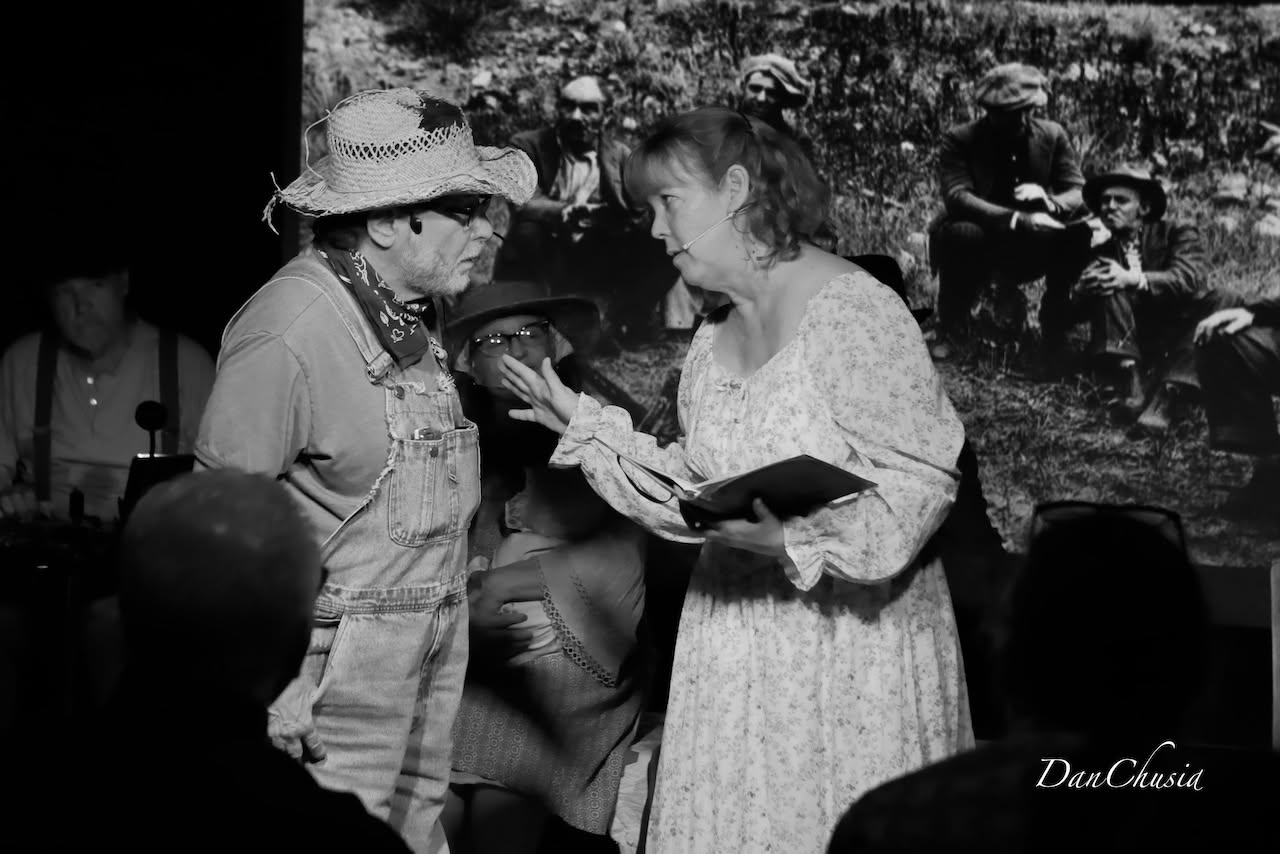
Richie Strell & Cara Cormier. Photo by Dan Chusid.
For DeLuca, the appeal of this story was “all the parallels between back then and now”—parallels that run as long as the train tracks from Oklahoma to Bakersfield. The cycle he recounts is nothing new. Rapid industrialization leads to unintended climate consequences that disrupt food and supply chains. Prices spike, exacerbating the divide between the haves and the have-nots and tipping many into full-blown poverty and homelessness. To distract the desperate masses, politicians scapegoat immigrants and implement isolationist tariffs. We may have swapped newsprint for iPhones, but the headlines haven’t changed much.
Though this cycle remains predictable, DeLuca’s challenge was to inject personality into his characters and see whether they “come to life or not.” But it also meant letting the personalities of the actors he drafted influence the characters’ development in a form of theatrical symbiosis. (Anyone who knows and loves Cathryn Beeks, for instance, will recognize her outrage over the Bankman’s shady tactics.) Yet DeLuca also knows that his characters need to exist independently of their creators if the musical is to have a longer life and move to other venues. Like every good artist, DeLuca muses about the day when the piece exists independently of him: “One day it will happen. I’ll have to move on and there’ll be a younger Jimmy in there doing my part. It will happen.”
But in the meantime, there’s a show to do at the Bornemann Theatre on October 31. And regardless of whether you want to catch historical allusions or switch your brain off and ignore the dumpster fire of modern times, you can still enjoy DeLuca’s lively storytelling and catchy, spirited tunes. After all, those who forget the past are condemned to repeat it, but those who remember it can still turn it into a rollicking good time.
Hop on Board, A Musical Journey Through the Roaring Twenties, the Great Depression and FDR’s New Deal, will premiere at the Bornemann Theatre, TERI Campus of Life, San Marcos, on Saturday, October 31, at 6pm. Tickets are now available at https://events.humanitix.com/hop-on-board. Come in your favorite Dust Bowl-era costume—there will be a costume contest!

