




Featured Stories
Nancy Porter Is Putting on Another Show

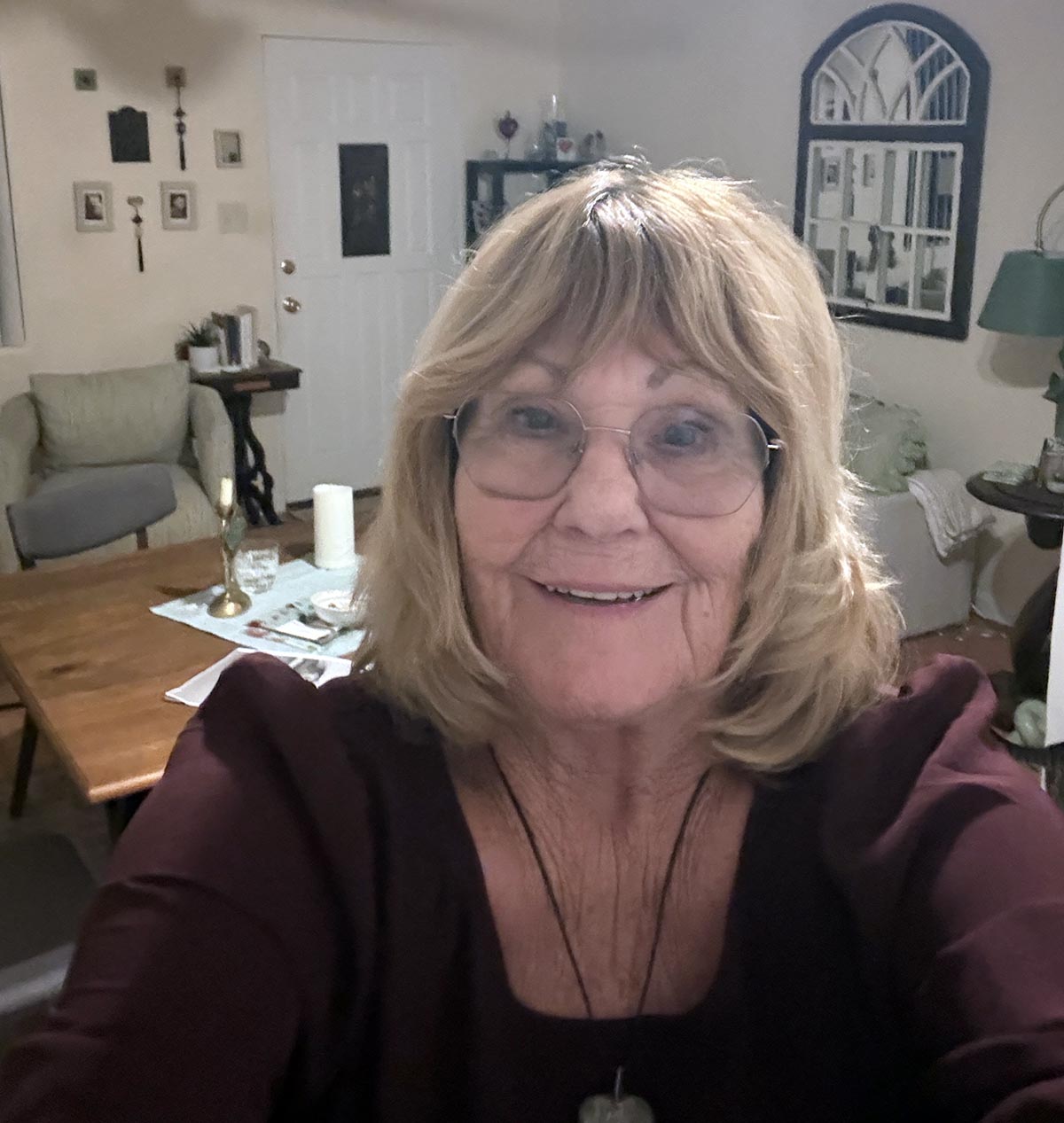
Nancy Porter
I recently visited a new coffeehouse in North Park and talked with owner Nancy Porter while it was still under construction. The coffeehouse is scheduled to open in October 2026. It’s amazing to literally see the ground floor of a place that’s about to house a music-loving community.
Even as a basic footprint and counters over concrete, I can tell that the planned nooks and spaces within it will be homey.
Yes, the stats about the success-failure rates of new businesses are scary, the current economic climate is shaky, and music venues are even riskier, but I’ll tell you this: don’t bet against Nancy Porter to create something magical.
Nancy’s Place, the name of the coffeehouse, will not be some generic coffeeshop music venue. Even at this stage in its rapid construction, I’m already charmed by the various nooks in the place: local bakers section; art gallery; coffee counter, featuring Mexican coffee from Oaxaca and Veracruz; and indoor hangout, outdoor patio, and stage. The mural will be created by talented local high school students, another example of Nancy and her partner Michael making room for people who are still finding their audience.
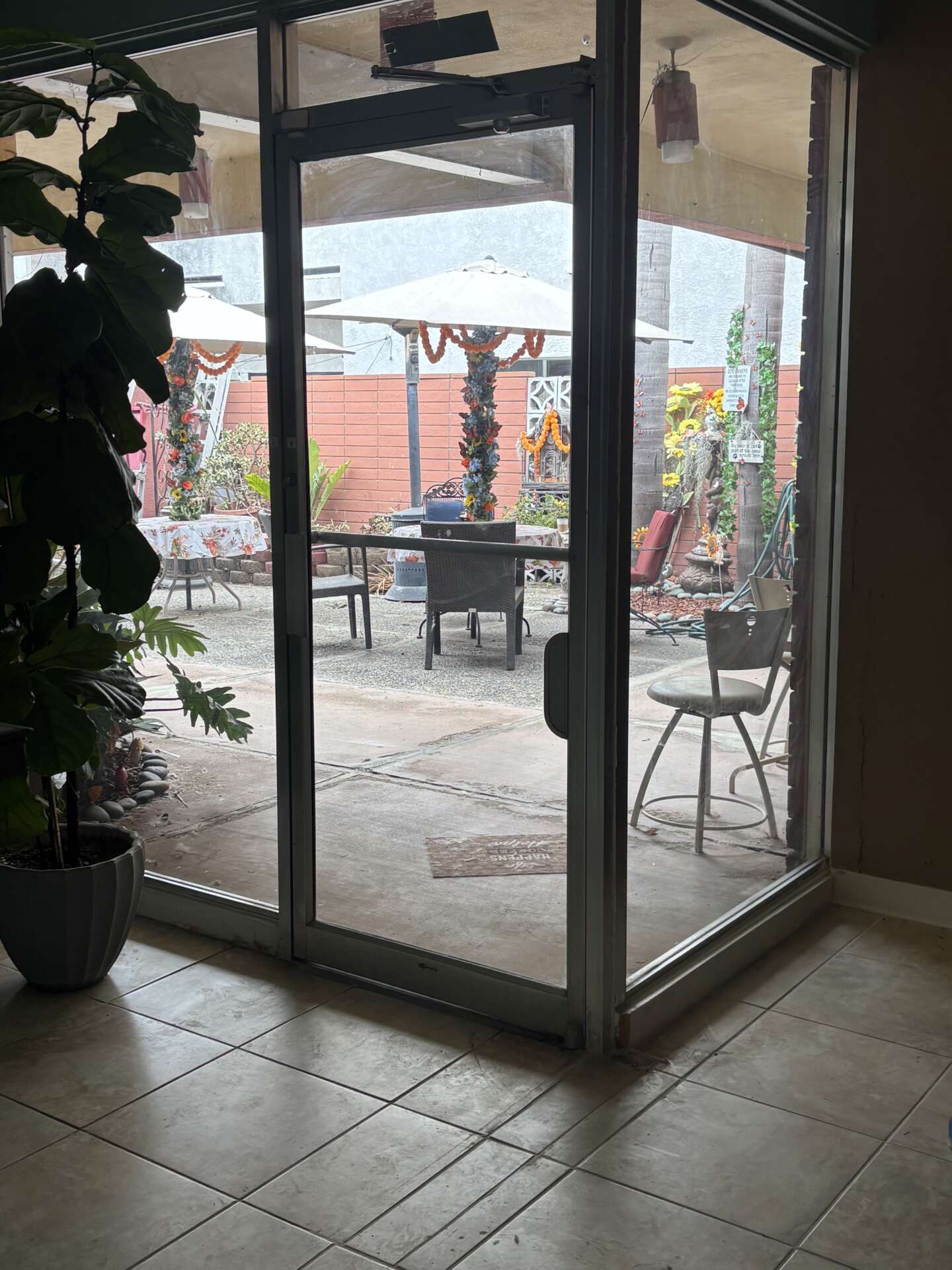
Inside Nancy’s Place, looking out.
All of this is tucked away in a hidden space behind El Comal Mexican restaurant in North Park. It’s almost like a speakeasy courtyard that opens up behind the restaurant. You would have no idea that when you open up the door to Nancy’s Place that it opens up a whole other series of spaces. It’s like a speakeasy within a speakeasy.
When I was there, I saw the owner of Urban Whiskers Pet Grooming next door pop in, and it was like Nancy and he were already lifelong friends.
That’s exactly why a place like this really does become a neighborhood hub: Nancy is the sort of person who seems to create a community simply by existing.
She’s not doing it alone. She’s got a partner, Michael Huesca, who isn’t a guy writing a check and standing back. He has experience with 20 restaurants. They’re building shelves and rolling up their sleeves every day.
This is technically a new business. But it doesn’t really feel like Nancy is starting something new. Yes, a new San Diego music venue opening in North Park – and much needed given the loss of places like Twiggs and the changing landscape of the old coffeehouse music scene.
But that undersells what is happening. Nancy has created a special place before with Inner Change in Pacific Beach in the 1990s.
Currently, Nancy doesn’t need to open a venue. She’s doing it because she loves it.
Co-owner Michael Huesca’s description of what it’s like to work with Nancy may say even more: “Nancy is like the big sister I never had, bossy with love!”
This isn’t a corporate restaurant group backing another Brian Malarkey restaurant, Live Nation adding another room, or the Belly Up Group expanding its footprint.
It’s much closer to the old-fashioned “let’s put on a show” idea. And it’s not Nancy’s first rodeo.
Nancy’s relationship with music isn’t a nostalgia trip. She grew up in Denver and was exposed to classical, jazz, marching music, and loved Ella Fitzgerald. In Colorado, she gravitated toward the local candlelit espresso bar/beatnik culture before moving to Los Angeles in 1964. She gravitated toward the scenes in Hermosa Beach, Venice, and Hollywood, where jazz musicians, artists, and actors were making things happen.
In the 1970s, Nancy and her then-husband became friends with actor/singer Bobby Sherman (“Easy Come, Easy Go”), who was a major teen idol at the time.
“My husband told me about this new recording studio on Ventura Blvd. in Sherman Oaks. Bobby suggested we get involved and it would be a good investment. Val Garay, who owned the studio, met with us in the studio and we invested.”
The studio was called Record One, where James Taylor, Kim Carnes, and Linda Ronstadt recorded. Ronstadt was a neighbor of Nancy’s.
Because of that investment, Nancy got to sit in on recording sessions and see how albums were made, from the beginning of the process through the finished product. It quickly became a serious L.A. studio. Toto’s “Rosanna” and Don Henley’s “The Boys of Summer” were among the major recordings associated with it.
Nancy wasn’t somebody who suddenly decided she liked music because she wanted to open a coffeehouse. She’s spent her life loving music and musicians.
Flash-forward to 1990 after Garay and Porter sold their shares of Record One. Nancy moved to San Diego in 1990 and in 1992, she opened the Inner Change in Pacific Beach.
The coffee shop on Turquoise Street became an important little chapter in San Diego music history. Nancy describes the concept as a “people’s coffeehouse” where musicians performed, poets read, and comedians built followings.
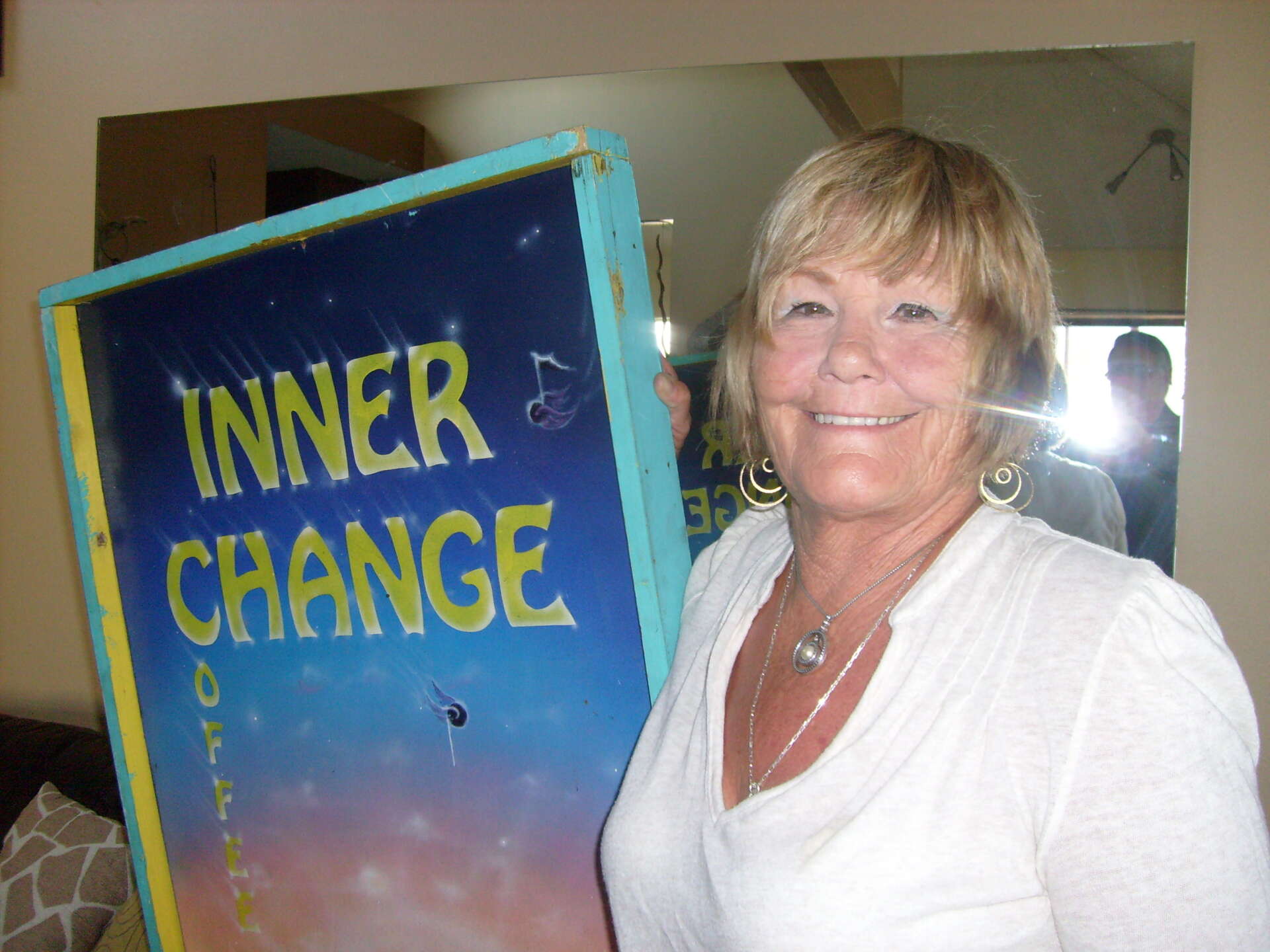
Nancy at the Inner Change, 1990s.
The Inner Change was a laboratory where artists could experiment while they built audiences. They didn’t need to be famous yet. They just needed to be good.
One of those artists looking for a place to play and grow an audience was a young singer named Jewel. After a couple of early shows, Nancy gave her Thursdays. They made a handshake arrangement that allowed Jewel to keep the door money and build her audience. This is where local San Diego mythology of Jewel started. She went out and promoted herself, including handing out flyers to surfers. People came, she developed, and Thursday nights at Inner Change became a thing.
Yes, Java Joe’s often gets mentioned as a launching pad for Jewel, but she played at both venues, among others, and Jewel later identified the Inner Change/Nancy as a major part of her break. Nancy gave Jewel something perhaps more valuable than discovery: a room.
The same can be said for San Diego musicians Steve Poltz and Gregory Page, who were among the musicians who made the place part of their world. Inner Change became a home base/incubator for musicians who were already developing.
One night, Steve Poltz and Gregory Page showed up at the Inner Change only to discover that the electricity had been shut off. Nancy improvised, running an extension cord from the house behind the coffeehouse so the two musicians could play anyway. Between songs, Poltz and Page even poured coffee, turning what could have been a disaster into one of those gloriously scrappy Inner Change nights that Nancy still remembers.
That anecdote is a perfect reflection of Nancy’s philosophy. It’s not trying to be perfect or polished—it’s just trying to be.
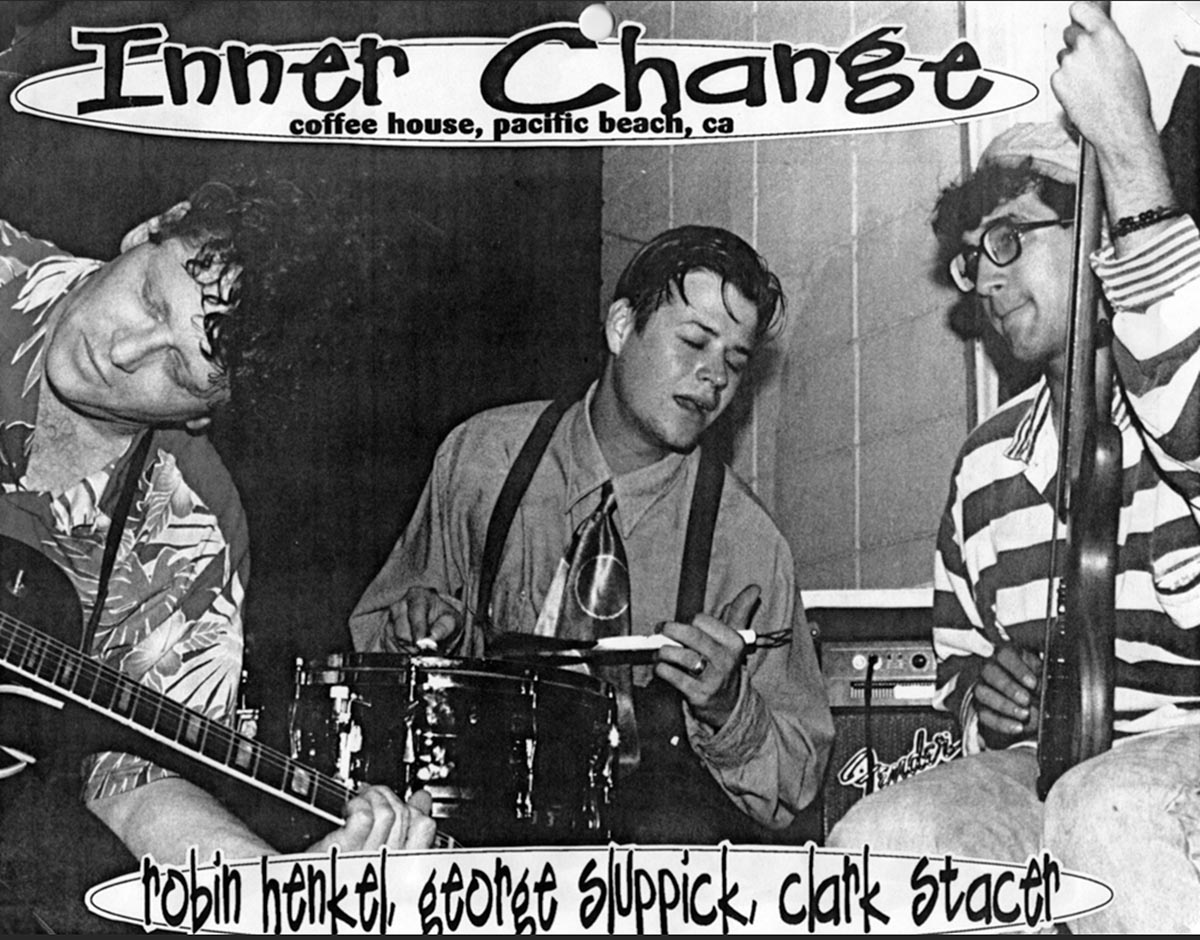
Early flyer with Robin Henkel.
The Inner Change lasted from 1992 to 1995. Eventually it, and Nancy, ran out of money. She could have continued limping along. Instead, she closed before she couldn’t pay the people who had helped make the place work. She closed the doors with $5 in hand and a big smile on her face.
The financial result wasn’t the measure of whether Inner Change had succeeded. The reward was seeing musicians develop, audiences form, people connect. That’s not typically how owners or corporate backers operate. And it tells us a lot about Nancy.
So, why does Nancy Porter want to do this all over again?
She loves the music. According to Nancy, “I don’t find it difficult at all. The pleasure is in the gift of the music. Each musician is on their journey inside and out sharing feelings of joy, heartache, and love. They’re sharing and creating for everyone’s enjoyment.”
Despite loving music and musicians, there are some realities to the task ahead. Running a coffeehouse is hard. Running a coffeehouse with music is harder. Running one with events, artists, food/artisan products, and community ambitions is harder still.
With a concrete slab on the floor at the moment, questions undoubtedly are swirling: Who books the music? How much established talent vs. completely new artists? How do you build weeknight traffic? How do you deal with sound/noise? What happens when musicians are predictably flaky?
That’s enough to scare anybody, but Nancy and Michael are up to the task. And they aren’t approaching this as a simple venue.
Yes, they want to create a space for musicians but also for other artists and artisans generally. And they’re trying to create an actual community. As Michael Huesca put it, he closes his eyes and envisions “Nancy’s Place as a place to go for good people and good times.”
The Inner Change was in Pacific Beach in the early 1990s. Nancy’s Place is in North Park now, with a different neighborhood, different audience, and different cultural landscape.
North Park has its own history of coffeehouses and intimate music rooms. Java Joe’s, Twiggs, and Lestat’s are the most notable of its small acoustic/listening-room spaces. These places helped create a San Diego tradition where a coffee shop could also be a cultural room.
But Nancy isn’t simply trying to recreate them—or recreate the Inner Change as some sort of a museum exhibit for 1992. She has a vision. I was lucky enough to get a tour of the space and hear all of the excitement in Nancy’s voice as she showed me around: what goes where, where the plants will be, the new stage, everything.
San Diego has plenty of sophisticated businesses and increasingly sophisticated entertainment infrastructure where restaurants become restaurant groups and venues become venue groups. Successful concepts get duplicated, and large operators can create very polished rooms like the Belly Up Group stepping up with The Sound. That’s one model.
Nancy Porter’s model is almost the opposite: One place, two peoples’ vision—hers and Michael’s. And then bring together a bunch of people she knows.
This doesn’t mean corporate venues are universally bad while local, intimate ones are automatically great. If Jewel is in town next month, which one do you think she wants to play?
But people frequently love to say how they love to support local, non-franchise businesses. Nancy’s Place certainly seems like that place to eat somebody’s homemade thing, see somebody’s first show, and appreciate somebody’s art. Some people open businesses and then try to build a community around them. Nancy Porter seems to walk into a neighborhood and discover that she has already built one.
We don’t yet know exactly what this place will become; that’s partly because the place is still being built. You can build the room, install the counters, and put up the stage. But the actual community is going to be made by the people who walk through the door.
Remember, Nancy closed Inner Change with $5. She’s starting Nancy’s Place with more than that. Music venues aren’t necessarily the best investment. She’s doing this because she still believes there should be places where people can make something, try something, find an audience, and have a good time doing it.
Let’s see what those half-finished counters, concrete floors, and open courtyard turn into.
QUICK FACTS
Nancy’s Place
3942 ½ Illinois Street
San Diego, CA 92104
Opens: October 2026

