



Lessons from Melody Ranch
Lost and Found

As per usual, I waited a week past my editor’s deadline to write this article. I am so lucky that she is patient with me. Because until last night, I felt little inspiration to crank this out. Why? Because right now, I am in audience mode, not performer mode. I am creating less and consuming more. Don’t worry. I’m not consuming what you might think.
Wait up. I’m getting ahead of myself. You need me to set the scene.
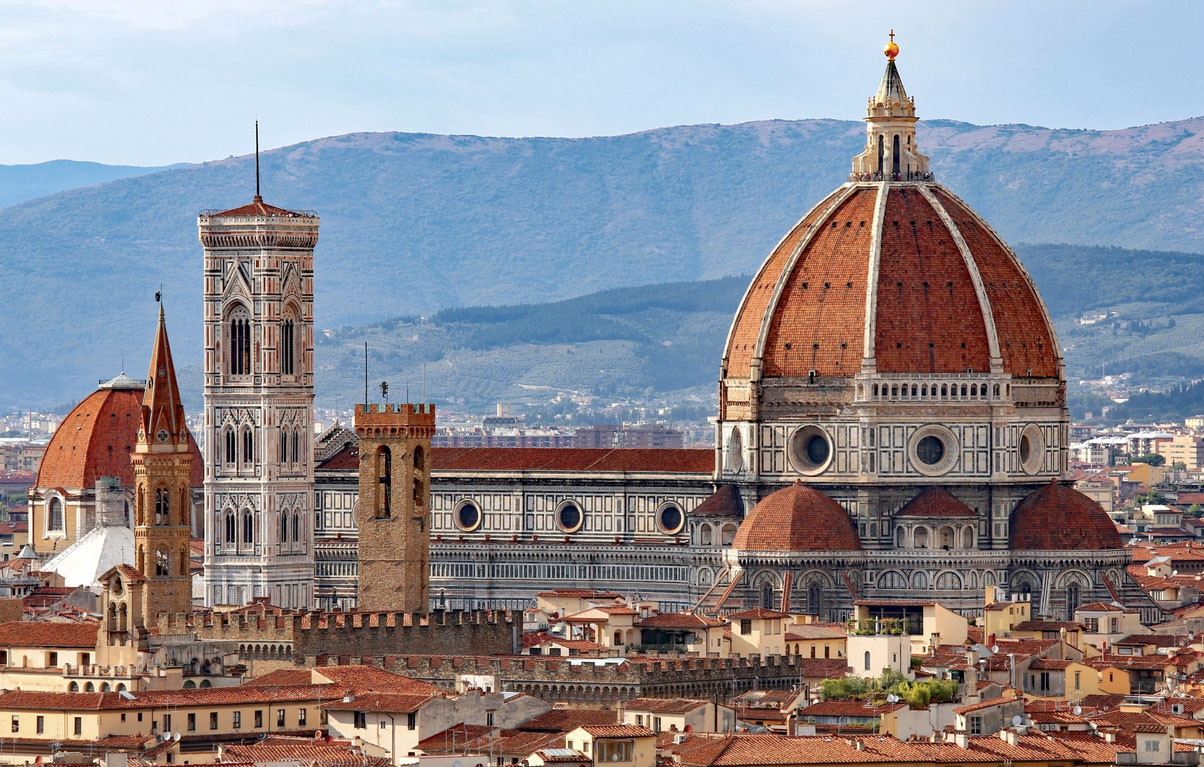
Il Duomo in Florence
Fun fact about Francesca: I like to disappear every year for my birthday. I’m a Gemini. It’s really almost a necessity. This year, I’m in Italy for a month. My travel companion and I have developed a saying while wandering the streets of Rome, Naples, Sicily, Pisa, Cinque Terre, and now Florence. If we get lost, we will be found.
Every time Google Maps gives up. Every time we take a wrong turn. Every time we disappear down an alley because we hear music coming from somewhere, I tell her the same thing: If we get lost, we will be found.
As a classically trained singer, shout out to my alma mater, Cal State LA, which hosted Billie Jean King at commencement this year, more on that in another article, Italy is the center of the root system that my trained musical knowledge grew out of. Also, I was very Catholicly Catholic until about age 22. I can sing you everything from “This Little Light of Mine” to Mozart’s Requiem without missing a beat. So, while my traveling companion is a visual artist here to see Michelangelo and da Vinci, I’m here for Vivaldi and Puccini.
Italy is the birthplace of opera. This not only means that there are fantastic musicians everywhere. It also means there are incredible venues everywhere too. Churches and archways built to reflect and blend overtones. Streets lined with stone buildings reaching high above, amplifying every baby’s cry and every “Ciao!” shouted between friends down the block.
Italians are among the most musical cultures you can experience. It’s in everything they do, woven into the fabric of everyday life. When you go out to eat, Italians’ favorite pastime, you might hear a tenor’s high notes soaring over a piazza from the steps of a cathedral. You will run street to street trying to figure out where that singer-songwriter’s voice is coming from. Is it underneath you? Spoiler alert: it is. Now you’ve got to find the stairs, because there is an entire underground level that seems to exist everywhere in Italy, too. You can’t spend any time in Europe without encountering busking musicians wandering the streets. Accordions, trumpets, jazz, classical guitar, folk songs. It’s everywhere all the time.
What strikes me isn’t simply the quantity of music. It is the space given to it. Musicians rarely have to compete for the attention of diners with a television. Restaurants are built into the streets instead of sealed away from them. Music mingles with conversation and church bells and footsteps on stone. The worst that a musician has to deal with are the countless church bells making their announcements. Sounds rough, right? American musicians reading this probably have stories of jukeboxes starting up mid-set, televisions with politics and sports on every wall, managers asking them to turn it down. Pro tip: never compete. Just stop playing and stand there. Turn off the TV, please, and I’ll sing you a song.
Then, of course, you bring your own music with you. I wandered the streets of Pompeii and heard Bastille in my head for six hours. Dean Martin, Tony Bennett, Lady Gaga, Rosemary Clooney, Italian-American tunes running through my head all day long. I find myself constantly singing as I wander. That part isn’t different, really. Except in the States there’s so much ambient noise and a culture that would often rather I be quiet, so you just don’t.
Even when there isn’t music, Italians seem to be singing with every word they speak.
“Frrrancesca. You are Italian?”
A favorite phrase of theirs around me, with so much dynamic and cadence that every sentence sounds like a question and an answer at the same time. Even when they just say “prego.”
Preeee-go.
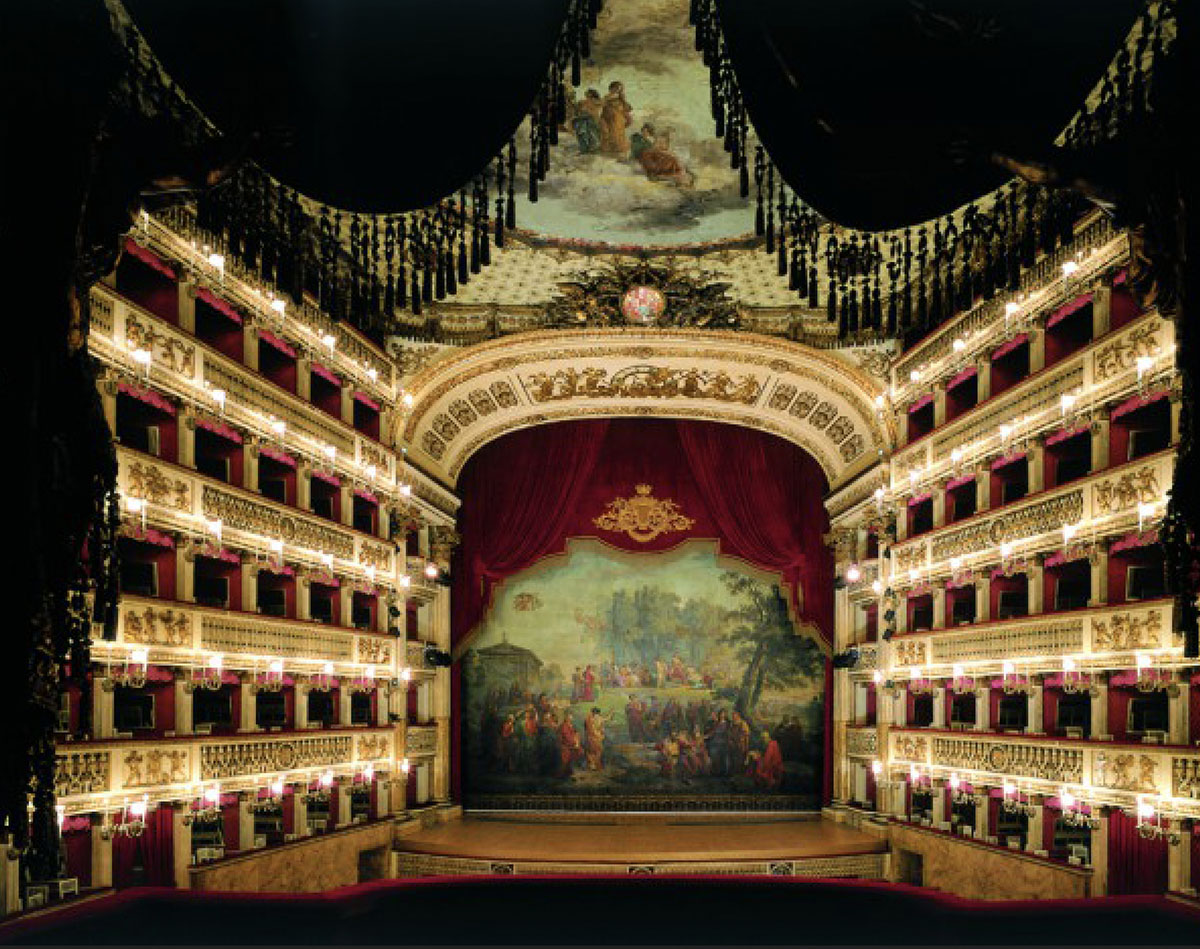
This week I’m in Florence, home to the Ponte Vecchio, mentioned in a million works of art. My favorite is still Puccini’s “O mio babbino caro.” Florence, longing, a melody that barely needs to move to break your heart. Last night we caught our second opera of the trip, but our first in Tuscany. A small but long-running opera company performed an intimate production of La Traviata in a church. The Violetta blew my mind. Being in a small church with those massive voices, hearing these arias as they were intended to be performed, was moving in a way I had never experienced. I’ve been to the Met. I’ve seen Renée Fleming as Violetta. Those experiences were incredible in their own right.
They never made me cry.
Last night, in that small church in Florence, I sobbed in my seat for the entire second half of the show. The music pierced my soul. The voices seemed to crawl inside my body like something being returned to where it belongs. And at the end, after a five-minute curtain call with maybe 75 audience members clapping for a company that had just given everything they had, I found myself breaking down while hugging the hosts as the performers came to receive us. They say never meet your heroes. But can a city be a hero? Can a style? Because the more I meet the core of the art form I have dedicated most of my life to, the root of the root, the more I am brought to tears. Pretty sappy. But true.
The funny thing is, you don’t have to be a classical musician to get it. My travel companion has thanked me over and over for including her musically. She “had no idea.” And she had seen this opera before, just not in a venue like this. She’s followed me down staircases to find distant guitar players. She’s dug into her bag to tip buskers. She’s fallen in love with my wandering. Every day I tell her the same thing.
If we get lost, we will be found.
And somehow, we always are. Found in a church. Found in a piazza. Found in a melody. Found in each other and in strangers. Sometimes I’m even found by babies, dogs, street cats, and pigeons. Can you be lost with a new furry bestie, sharing your prosciutto and listening to yet another rendition of Con Te Partiró?
I came to Italy looking for the roots of the music I love. What I have found is a culture where music still belongs to everyday life, not a product, not a performance, not something to be consumed. Just life, singing itself out loud.
Lead with your heart, friends.
The music will find you.
Listening Homework
- Giuseppe Verdi — “Addio del passato” from La Traviata. The heartbreak centerpiece. Sit still for this one.
- Bastille — “Pompeii.” For walking through ruins with a modern song rattling around your skull.
- Lady Gaga and Tony Bennett — “The Lady Is a Tramp” or “Cheek to Cheek.” For the Italian-American jazz/pop thread running through the trip.
- Dean Martin — “That’s Amore.” Corny? Yes. Still perfect? Also, yes.
- Rosemary Clooney — “Mambo Italiano.” Because sometimes music is history, stereotype, joy, theater, and camp all at once.
Homework
Go find music that is being made by actual human beings in real time. A busker. A choir. An open mic. A church service. A local opera. A student recital. A songwriter round.
Then ask yourself: where does music live in my community when no one is trying to sell it to me? In America, music is a commodity and the world lines up to consume it. In Italy, music is art, filled with ritual and effort, showing how much they care for it. My ticket to the best opera I have seen thus far cost one tenth of what my tickets to The Met cost. And yeah, The Met is cool but I’d take the tiny audience and singers without massive followings again, first, any day. Save your pennies spent on overpriced concerts and subscriptions and get yourself back to some art. You may have to cross continents. Or, just head to Chicago.

Francesca Valle is a singer, songwriter, multi-instrumentalist, writer, producer, and entrepreneur. Originally from Los Angeles, she spent 12 years in San Diego and still stays closely connected to its arts community. She’s the founder of BugByte Studios and WiseJack Marketing, now based in Santa Fe, New Mexico, and Costa Rica, with creative roots planted in the people and stories that have shaped her.

