

Bluegrass Corner
Do Politics Have a Place in Bluegrass?

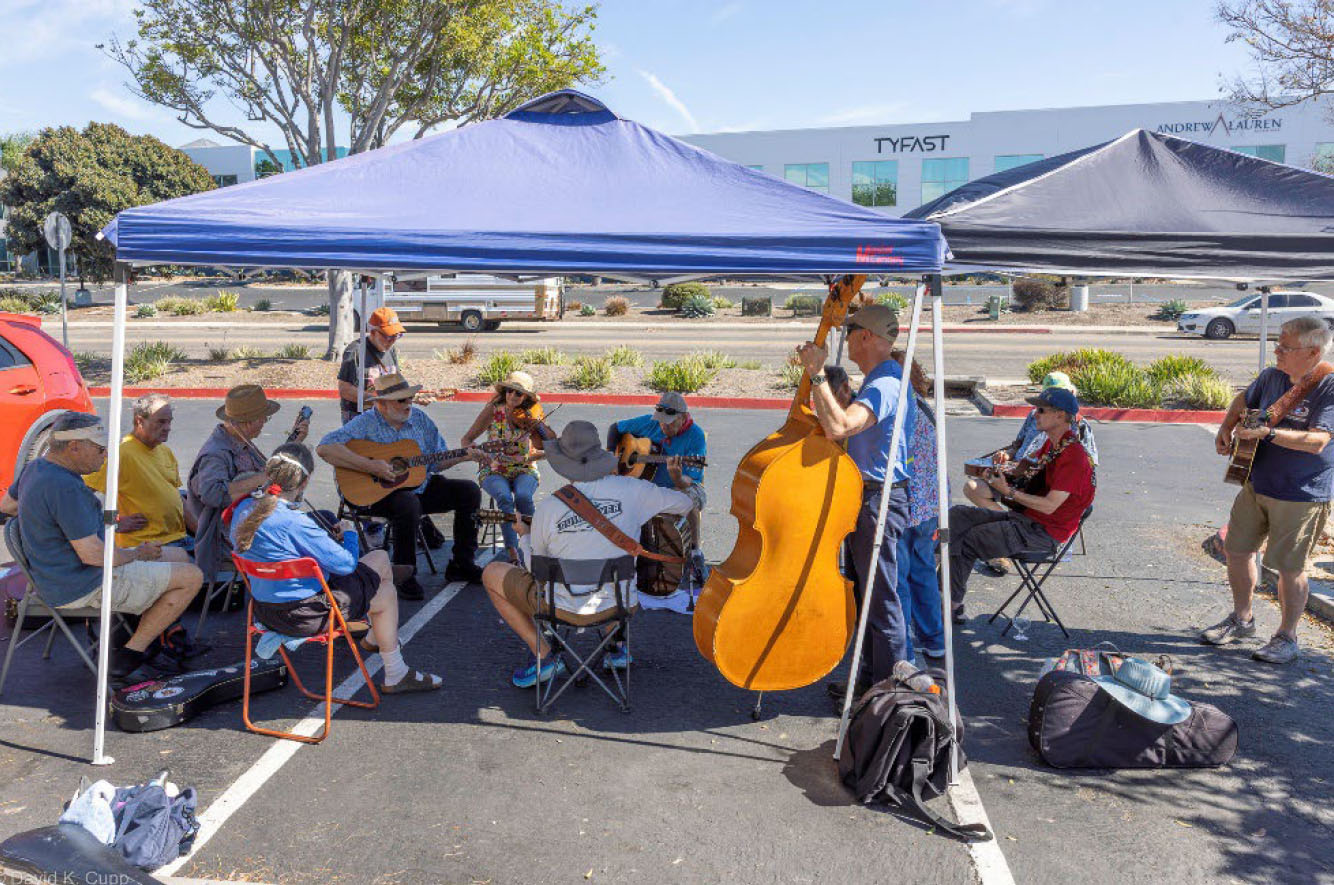
A typical San Diego jam session. The politics of the participants is unknown and unimportant. Photo by David Cupp.
Well, yes and no. “Yes,” in that many great bluegrass songs address issues involving the human experience, including concerns about individual and group struggles. Less so, are there songs about particular candidates for office or issues of the day, driven by the news cycle. Most of the hot topics of any time period, and certainly now, are at least to some degree “political,” so it’s not surprising that political issues find their way into bluegrass music. So, a song about war in general is typically welcome. A tune taking sides on a particular current war not so much.
On the other side “no,” in that in most gatherings of bluegrass musicians there is a generally followed rule that folks check their politics at the door. Start spouting dogma about Trump, Biden, or political topics of the day in a jam session and you’re likely to get nothing but stink eye. Play a tune about coal mining or the struggles of farmers in the U.S., both clearly political topics, and you will be well received. So, there is a subtle, but important, line of distinction. A jam session song about a universal struggle is welcome. One expressing your personal political views, not so much.
This isn’t to say one’s personal political views are unimportant. They are important. But, most often, they are best shared within some other context. I have been attending a number of jam sessions for decades, with lots of the same people. I don’t have a clue what the politics are of most of these folks. I like that. I know them as musical colleagues and folks who share their stories of family and friends. We are able to bond notwithstanding political issues left undiscussed.
It’s Summer Festival Season!
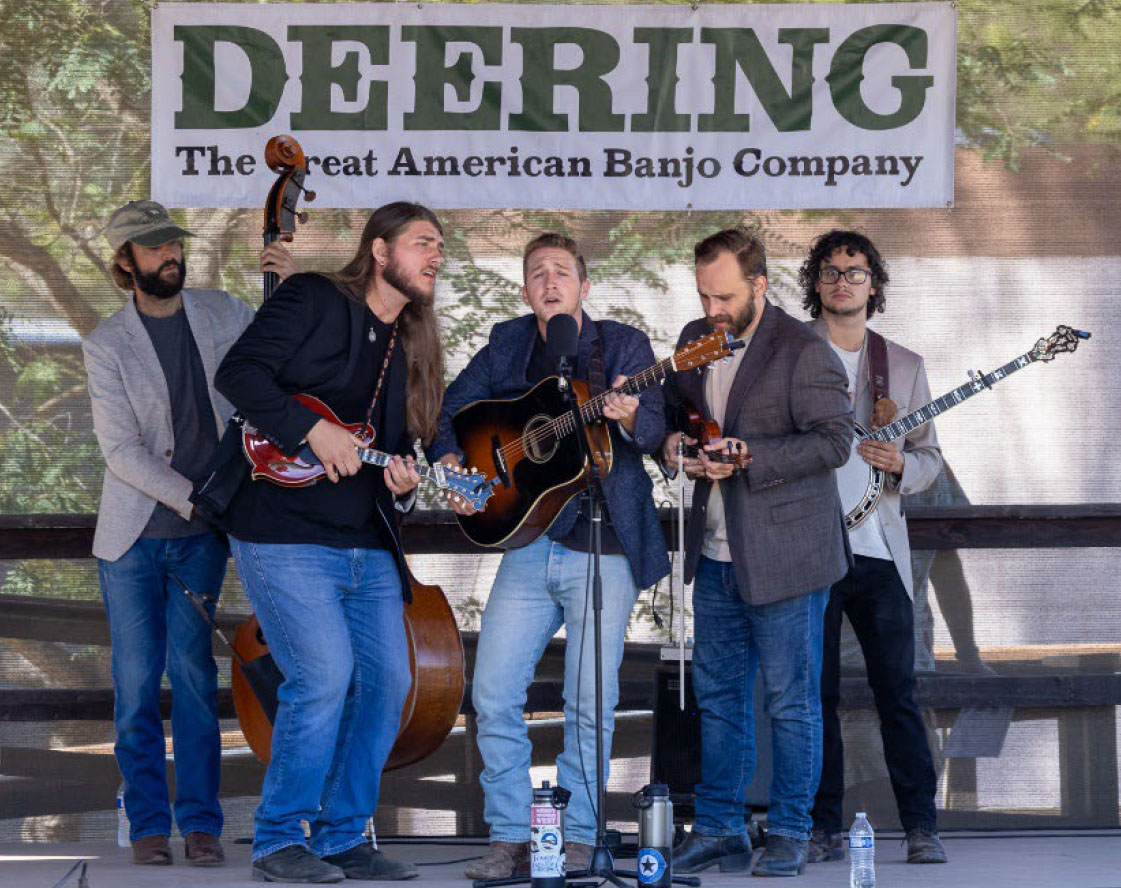
Muddy Mountain West on stage at Summergrass. Photo by David Cupp.
Bluegrass music thrives on the summer festival season. It provides a major opportunity for fans to hear the music live and support their favorites. Likewise, it provides a critical revenue source for bluegrass performers. This is especially true because the music industry has changed. Radio and CD sales are still important, but both have taken a back seat to the modern internet world where Spotify, iTunes, and other platforms provide access to music and provide key revenue streams to artists.
In this context festivals provide a key opportunity for a bluegrass band to showcase its material to grab the attention of listeners and to market their wares. It’s not an over statement to note that the festival season keeps bluegrass alive.
Here in San Diego, we have the Summergrass Festival every August. In nearby Orange County we have the Huck Finn Jubilee. In Northern California we have the annual CBA Father’s Day Festival. We have lesser, but important, events like South State 48 every November in Carlsbad, the Sam Hintron Festival in Poway, and the annual Julian Family Fiddle Camp in Julian every May. If you have never been to a bluegrass festival you owe it to yourself to attend one. You won’t regret it
Dwight Worden, who has been writing a bluegrass column for the Troubadour since its beginning, plays guitar, fiddle, mandolin, and bass and is active in several bluegrass bands. He is a board member of the San Diego Bluegrass Society, a prior board member of the International Bluegrass Music Association, a recovering lawyer, a Del Mar council member for 10 years, and mayor of the City of Del Mar for two years.

