

Ask Charlie...
What Does the Song Need?

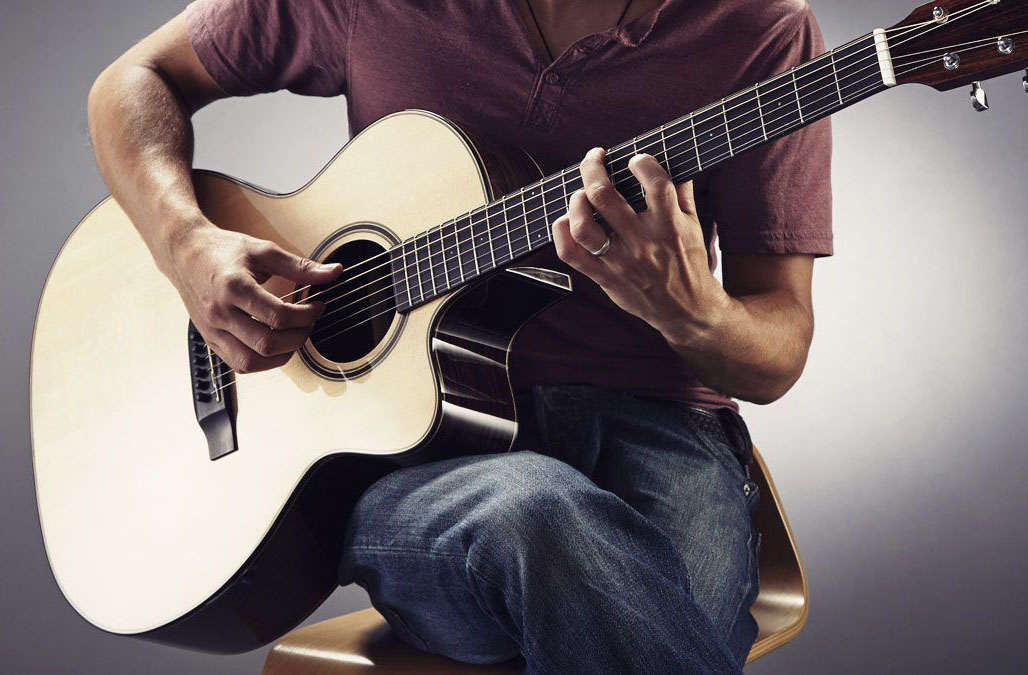
Hello Troubadourians! Over the past few months, I’ve written about which tones I use and what gear I use to create them. This time I’d like to talk a bit about when I would choose a particular tone and a little about why I’d make that choice. Some would argue that it is a matter of taste—and that could be right—but for this discussion, context matters as much as taste. More about taste a bit later. First, let’s talk about context.
If you are playing in a cover band and are trying to sound like the record, then the idea is that you would try to play the song as much like the recording as you possibly can—which includes getting as close to the recorded guitar tone as possible. Back in the day, when guitar effects were simpler and more primitive, that was much easier to achieve. If you had some type of distortion effect, a phaser or flanger, a chorus (absolutely necessary in the ’80s and pre-grunge ’90’s), and a delay, you could get reasonably close to most of the guitar tones that were on records. Today, you need to have a programmable digital platform that has simulators for hundreds of individual effects and that can be loaded with “scenes” from the original artists themselves, which pretty much guarantees that you’ll have the tone from the record. Then all you need is a great ear to hear the parts and the chops to play them. Easy, right?
I really admire players that have mastered the gear to be able to do that and play the parts too. Some do it better than others but even getting close is very cool… Playing songs note for note was never my strong suit, even when it was simpler to mimic tones and parts. That wasn’t my thing. Rather, I was taught to listen for the essence and style of a player and filter that through my own abilities. Sure, I could replicate my big influences—Joe Walsh, Jim Messina, Don Felder, Pat Simmons, Eric Clapton, etc.—but there was always a little bit of my phrasing in all of it. Why was that? I certainly had the skill to mimic almost anyone, so why didn’t I? Well, like I said, that was how I was taught. Early on, I became enamored with Chet Atkins, and I wanted to play just like he did. I got a thumb pick and learned to play fingerstyle. I even learned to do the palm mute thing that Chet did. I did that on my own, but I didn’t know enough to make it sound like what I was hearing. So, my parents signed me up for guitar lessons with a professional teacher.
That proved to be dream-crushing and life-changing, all at the same time. My teacher was Marty Stuart, a jazz guitarist and session player, and one of the most complete musicians I have ever met. I started taking lessons with the idea that Marty would teach me how to play like Chet Atkins. From the first lesson he made it abundantly clear to my 12-year-old self that that wasn’t going to happen. Instead, he taught me to be myself—always—even when I was asked to play like someone else. But just as important as it was to be myself, he taught me to play what the music needed. “Play what the song needs,” he would say to me, “but make it your own.” That was a very fine line to walk, play it like the record and like myself, especially for a kid who didn’t have a lot of chops and who wanted to be anybody other than himself.
As a result, I struggled with being in cover bands for a long time. I could hear what was on the record, and I was usually physically capable of playing the parts, but mentally I couldn’t get into playing the same thing, the same way, every time. It’s a tough place to be when you’re trying to sound like yourself, and all your bandmates want you to do is sound like the record. I did learn to be a fairly passable mimic—good enough to get and keep a gig—but I wasn’t having much fun doing it. After playing with a few mediocre cover bands, both at home and in LA, I was fortunate to stumble into the original music scene in San Diego. I connected with some excellent players and songwriters who shared the same interest that I did in creating music that sounded like ourselves, and who had the chops to pull it off. I was able to contribute to some excellent songs and recordings and learned to trust my ear to hear and play just what the song needed. We could do it live too! Sometimes we would play a cover of a song we really loved, but we would churn on it until it sounded like us—like our original music. A bold choice but highly effective if you can make it work… Ironically, sometimes my ability to channel the essence of another player into the context of an original song became something cool rather than a hinderance to creativity. You want Keef? I got Keef right here and I can make him fit your song. Steve Cropper on a Beatles cover? No problem. Oh, you wrote your version of “Life’s Been Good” and you want a “Joe” part? Nailed it. A slide guitar part on a power ballad with a Lindley-esque tone? I can make grown men cry… And then, I’ll put my DNA all over your record, because I can…
I think about Marty a lot. After I stopped taking lessons—actually he “fired” me from lessons—he said, “You know what I know, you just don’t know it yet. You need to go play and figure it out.” I lost touch with him. I recently found out that he died in 2012 about the same time that my dad did. I don’t think that was a coincidence. They were both deeply influential in my life and in my music. My dad taught me to hear music and Marty taught me to play what I heard. Both of them were able to teach the unteachable; they taught me taste, and I will be forever grateful to both of them.
So yeah, I was trained to play for the song and that has served me well. Eventually, I did develop the chops to be a good player, and I did develop a style of my own, one that could hold up against any internal doubt that I might have had… am I “good enough?” Yeah, I am…
Need to know? Just ask… Charlie (ask.charlie@hotmail.com)
Charlie Loach has played guitar in the San Diego music scene for many years, primarily with the power-house original rock band the Wild Truth and the elegant Americana ensemble Folding Mister Lincoln, performing and recording several CDs with both bands. More recently, he has performed with the vocal trio the Outliers. Charlie is an accomplished session player who is well versed in multiple genres of music from bluegrass to rock to country, and his playing is both smooth and tasteful whether on electric or acoustic guitar.

