




Featured Stories
Saxman Mark Lessman Has Made his Mark on the Local Jazz Scene

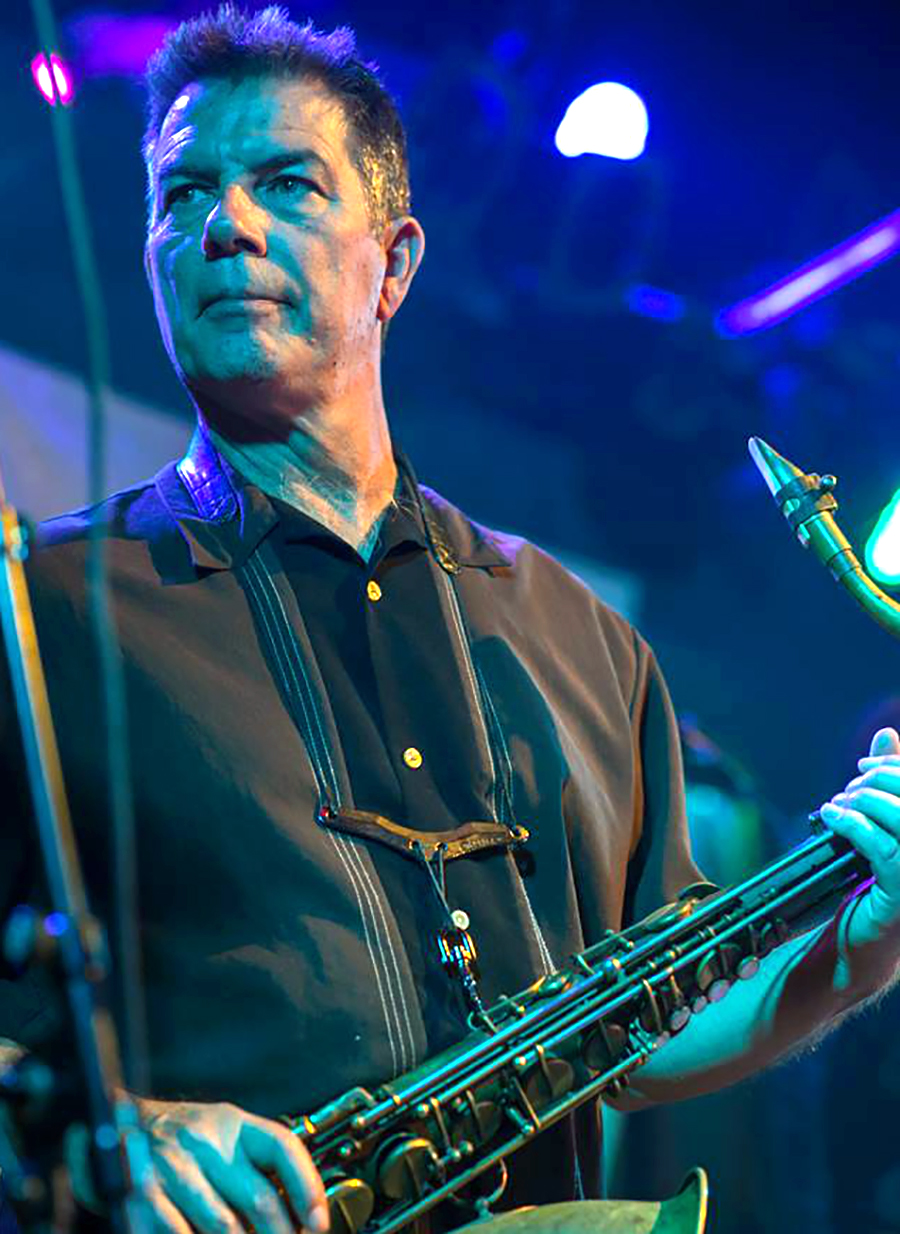
Mark Lessman
Saxophonist and flutist Mark Lessman grew up in the midst of San Diego jazz aristocracy, even if none of them realized it at the time. If he doesn’t have the same name recognition as Peter and Tripp Sprague, it’s likely because Lessman has only released a single album since first meeting the Sprague brothers while attending Earl Warren Junior High School in Solana Beach.
He was part of that creative group of what jazz fans called the Del Martians in the late 1970s, which not only included the Spragues, but pianist Rob Schneiderman, drummer Kelly Jocoy, bassist John Leftwich, and singer Kevyn Lettau as well.
“I was actually born in Long Beach,” Lessman explained in a recent interview. “It all started for me in Southern California.
“Our family moved to Del Mar when I was going into ninth grade, so I went to middle school in Solana Beach, then entered high school at San Dieguito. There was no Torrey Pines [High School] yet, so we all took buses and rode bikes to get up to San Dieguito.”
Lessman said he only really got into music after the move south.
“I picked up the guitar in the fifth grade and it just didn’t stick with me. When I came down here and was going to middle school, the friends I made in middle school were Tripp Sprague and Rob Schneiderman. I ended up taking recorder class in the tenth grade. I did that and quickly switched to flute, and then I realized I wanted something a little bit bigger, so I moved on to saxophone.”
The third of four children, Lessman said his older sister studied classical piano, but that neither of his parents nor his brother or younger sister were involved in music.
“I kind of came out of nowhere!”
It was acquiring a tenor sax that set Lessman on his life’s journey, he recalled.
“I got the saxophone, brought it home, and put it on the workbench and said, ‘I will be a professional in three years.’ I was 15 years old. I remember the date; it was April 23. So, I started practicing, practicing.
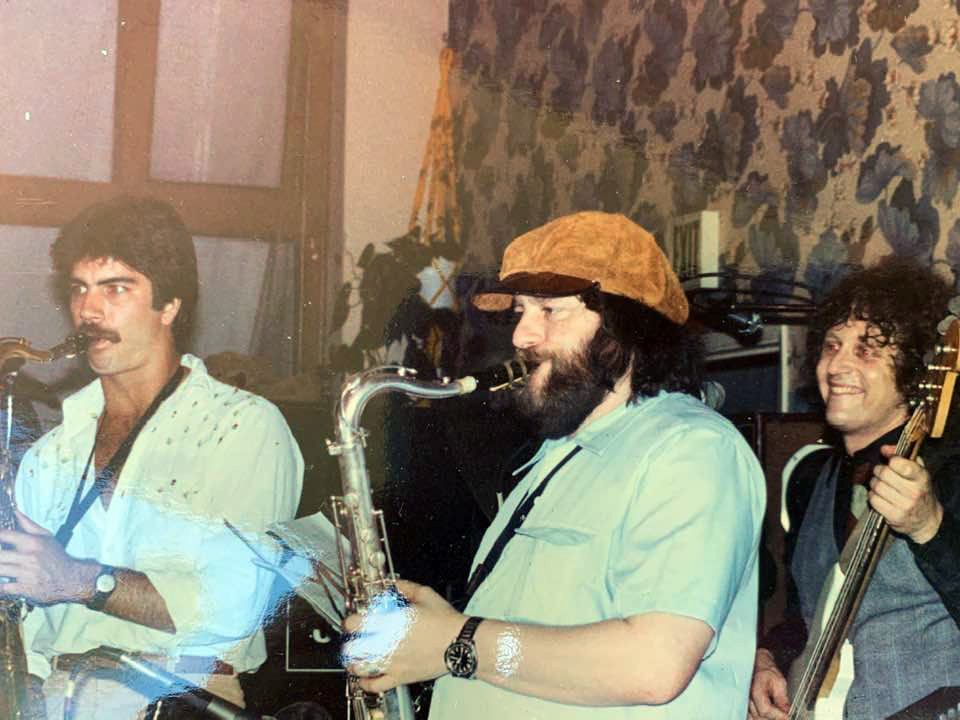
Lessman, Johnny Almond, Robin Henkel, 1980s.
“About two and a half years later, I joined a band that had a five-night-a-week gig. It was two blocks from my family’s house, at the old Albatross in Del Mar. Robin Henkel, Rob Bolton, George Kosta, and the singer was Ramona Maiman. We would do a dinner set of jazz tunes, and then we would morph into more R&B and pop stuff. The gig was like a four-hour gig, Tuesday-Saturday.
“I think I probably was almost 18 when that happened, and school might have ended by then. I think I was out of school by then. We all rented a house together down in Del Mar Terrace. A whole bunch of us lived down there: Peter, Tripp, Rob—we all lived in that neighborhood and it was really fun.”
Lessman remembered that his parents were actually quite supportive of his passion for music.
“When I got the sax, they said, ‘You can play any time after 9am up until 9 o’clock at night. Don’t cross those boundaries.’ Later they said, ‘We didn’t know you were going to play the whole time!’”
While Lessman says the tenor sax is his main instrument, he pointed out that he was learning flute and sax at the same time, and so he has always had the ability to double on them.
“I think they kind of came naturally—the fingering is very similar, but the embouchure is so different, it’s like two different things.”
He was in the fusion band Manzanita with the Spragues, Schneiderman, Jocoy, plus Tommy Aros (percussion) and bassist Nathan East, releasing Pirate Lady in 1979.
Lessman briefly relocated to the Bay Area, where he studied under legendary reedman Dave Liebman.
By 1981, Lessman had moved back to San Diego County and was leading his own band, focused on Latin jazz.
“I had Rob Schneiderman on piano, Tommy Aros and Skip Howlett on percussion. But then Skip went off to play with Mongo Santamaria. And Andy Esparza was the bass player in that group.”
After that, he joined forces with saxophonist Johnny Almond, leading to opportunities to gain experience backing major touring stars, including blues singers Jimmy Witherspoon, Joe Turner, and Big Mama Thornton.
“He moved to town, and he came and heard me play and asked if I’d like to put a band together with him. We put a band together with two saxophones, with Robin Henkel, Doug Randall on piano, Gary Underwood on drums. We had this band, and we did a lot of R&B stuff, and we worked seven nights a week and twice on Sundays, and so whenever those people came to town, they always asked us to back them. And that was a lot of fun.”
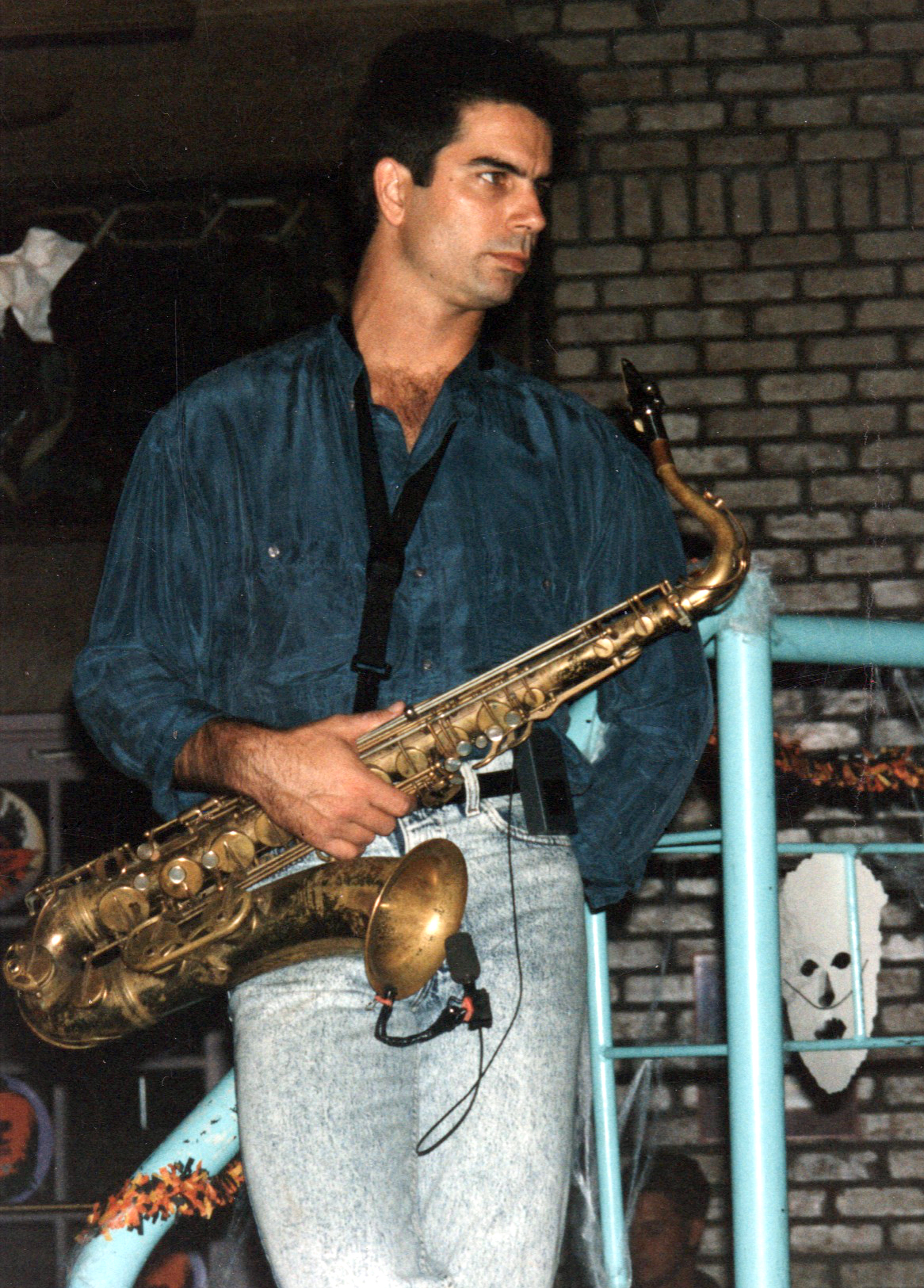
Lessman in the 1980s.
Lessman explained that there were rarely formal written charts provided when backing the touring stars.
“It was mostly head arrangements. With Jimmy Witherspoon, Luis Gasca would be part of it with us, and Lee Allen. Those guys would be there sometimes, and we would make up horn parts on the spot. I was the only horn player sometimes on these things, and we got good at just making stuff up on the spot. Johnny was from England; he played with a lot people and knew all the parts to everything.”
He was busy both as leader and sideman throughout the 1980s, forming the Mark Lessman Band in 1986, but also gigging with Private Domain, the local rock-pop band formed by Paul Shaffer and Jack Butler.
“They were formerly called Bratz. I played with them a bunch of different times. We played a gig up in L.A. They almost got a record deal with A&M, but it didn’t quite pan out. I would play some keyboard to back up Jack a little bit. I’m not really a good keyboard player, but Jack said, ‘It’s okay—just play this chord and this chord,’ and I said, ‘I can do that.’ I think it was more to make his guitar solos sound even better by comparison!”
In 1989, things were breaking Lessman’s way. He issued his debut recording as leader, More or Less. The core band included Rob Whitlock on keys, Charlie Chadwick on bass, and Duncan Moore on drums. San Diego stalwarts Tommy Aros and Kevin Koch made guest appearances, as did guitarist Kiko Cibrian.
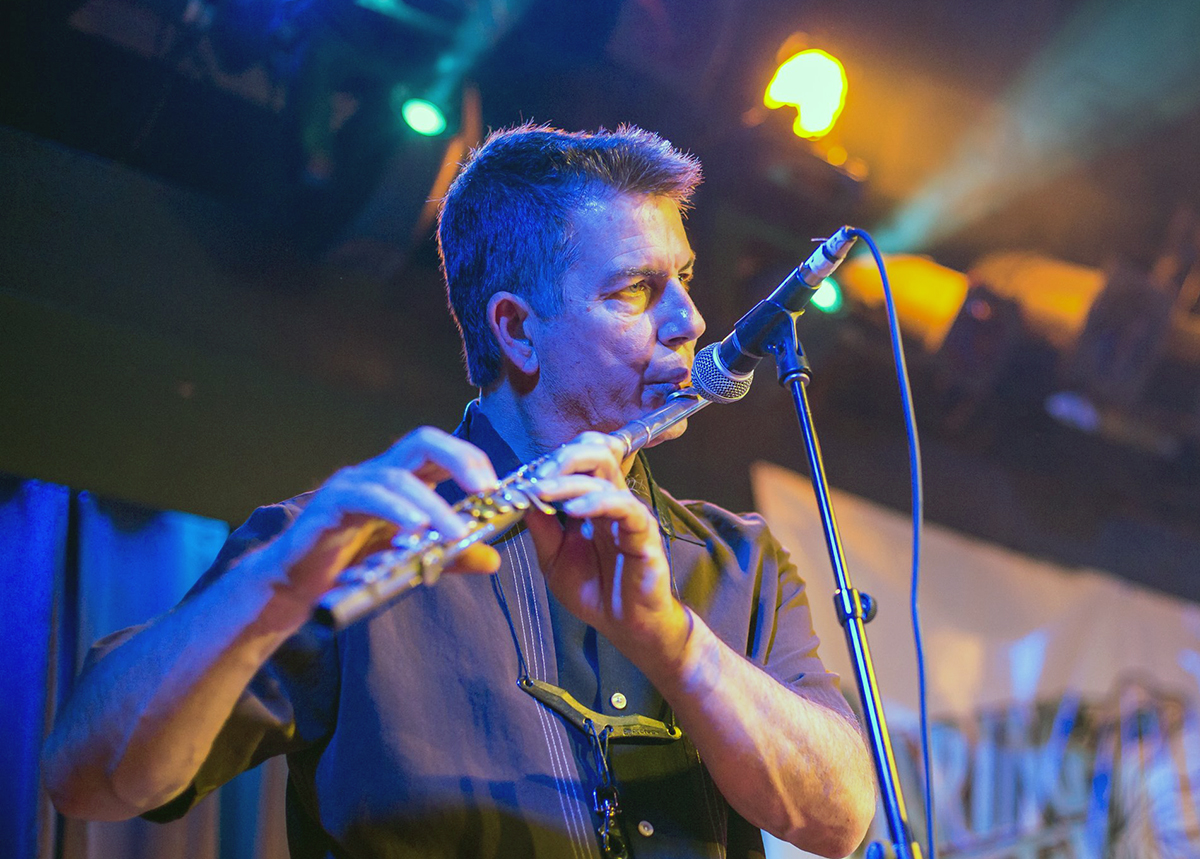
Lessman on flute
A few years later, he headed back into the studio for his sophomore release with Whitlock, Todd Hunter and John Opferkuch on piano, and Koch on drums. They recorded seven songs before Lessman’s life turned upside down; the tracks were never released.
At the same time he was in the studio working on his second album, his marriage fell apart and his ex-wife took their two children and moved to Chicago to be close to her family.
“I kind of dropped everything I was doing to go there because I thought I would do the good dad thing and move down the street. And then she got cancer and passed, so I scooped up my kids and moved back to Southern California.”
He’s been back in San Diego County for the last 25 years, remarried, and had a third child.
But while in Chicago, Lessman was not only busy musically—gigging around town and recording two more demos— but he also got a job outside music for the first time.
“I’ve never taken a break from music in any way, but when I was in Illinois I picked up a book and learned HTML and web design. So, I’ve had this side gig doing web design and hosting. I have about 75 clients.”
He slowed down his performance schedule a dozen years ago when his mother came to live with him.
“My whole clubbing thing has been not really happening. I had my mom living with me her last 10 years, and I decided to stick close to home for her. She passed two years ago, and I’m threatening to start increasing my bookings now.
“I’m dong a lot of private things, things were you get paid,” he explained. He added that he averages three to four public gigs a month right now. “I played down at Ki’s, and I’ll do those Peabody things sometimes, and I’ll play downtown at the U.S. Grant, a sax and piano duo. I’m doing a thing at the Athanaeum, too.” (He is playing with pianist Art Olson on July 12 and 26 at Mr. Peabody’s in Encinitas.)
He also went into the studio in 2024 and cut five songs at Spragueland, Peter Sprague’s studio. Lessman said those haven’t been released yet, although he does have them posted on his website, marklessman.com, along with his other demos.
Of his three children, his son Andrew has followed Mark’s path and taken up a career in music.
“He hated high school at La Costa Canyon, so I told him that when I was in high school Peter [Sprague] took his senior year off and went to Interlochen. He was all over that. We went out so he could try out, and they accepted him. He ended up at Cal Arts for four years. He’s in L.A. now and he’s a real good drummer. I called him for a gig up in L.A. once, and he said he’d love to do it, but he was already booked with Charlie Haden!
“He doesn’t really like doing the casuals—the weddings and the corporate stuff. He tries to keep it artistic. He’s got a Monday night speakeasy going. It’s a small little place but he really enjoys doing it. We talked a few months ago, and he said he’d added a Thursday night as well. He booked [pianist] Larry Goldings on a Thursday night and I went up for that!”
The one constant throughout his career has been his 1959 Selmer Mark VI.
“I was 18 years old, and I was looking through The Reader. I’d been playing this Yamaha sax I’d started with. I saw this Mark VI in the Reader for $300, and I was like ‘Wow.’ I called and the guy answered; I told him I was calling about the sax and was it really only $300, and he said, ‘You sound like a nice kid— give me your address and I’ll drop it off for no charge.’ I waited a few hours, and he never showed, so I called back and this time a woman answered. She said ‘Nobody’s dropping anything off.’
“I had dialed the wrong number the first time! So, I went to her place in Leucadia, and it wasn’t in playable condition. But I picked it up and once I put my fingers on the keys, I thought, ‘This is the one.’”
He took it to a shop to have it reconditioned and has used it ever since.
“It’s one of the holy grails. Pete Christlieb played it once, and said I could pick any horn in his collection for it, but I said no.”

