


SUE'S SPOTLIGHT: Women in Blues and Jazz
Women in Blues and Jazz: Hazel and Alice, Anita O’Day, Blu Lu Barker

Because of the current political scene now and the chaos, hatred, division, and pain it is causing all over the world, I want to cross genres a little and remember other turbulent times. I wasn’t born during the Depression but certainly heard much about it from my relatives. I was too young to remember much about the McCarthy era of the early fifties, but I do remember the protest era and the angst of the Vietnam war and the Women’s Movement. Today is much worse. In the fifties, with the advent of bebop and jazz, the anxiety of the fifties could be expressed but was not always accessible to the average listener. Celebrated bebop pioneer legend Charlie Parker was a fan of country music—especially Hank Williams—much to the chagrin of his colleagues. When friends teased him about listening to corny hillbilly music, Parker responded, “Listen to the words man; do you listen to the words?!” Many fellow musicians witnessed him pumping nickels into jukeboxes to hear “Your Cheatin’ Heart” after a gig. Some even witnessed him crying over the soulful harmonies and sad stories. He apparently embraced all kinds of music that was done well, including southern country, European classical, and western swing. As Duke Ellington said, “There are simply two kinds of music: good music and the other kind.”
Hazel and Alice: Hazel Dickens (1925-2011), Alice Gerrard 1934-
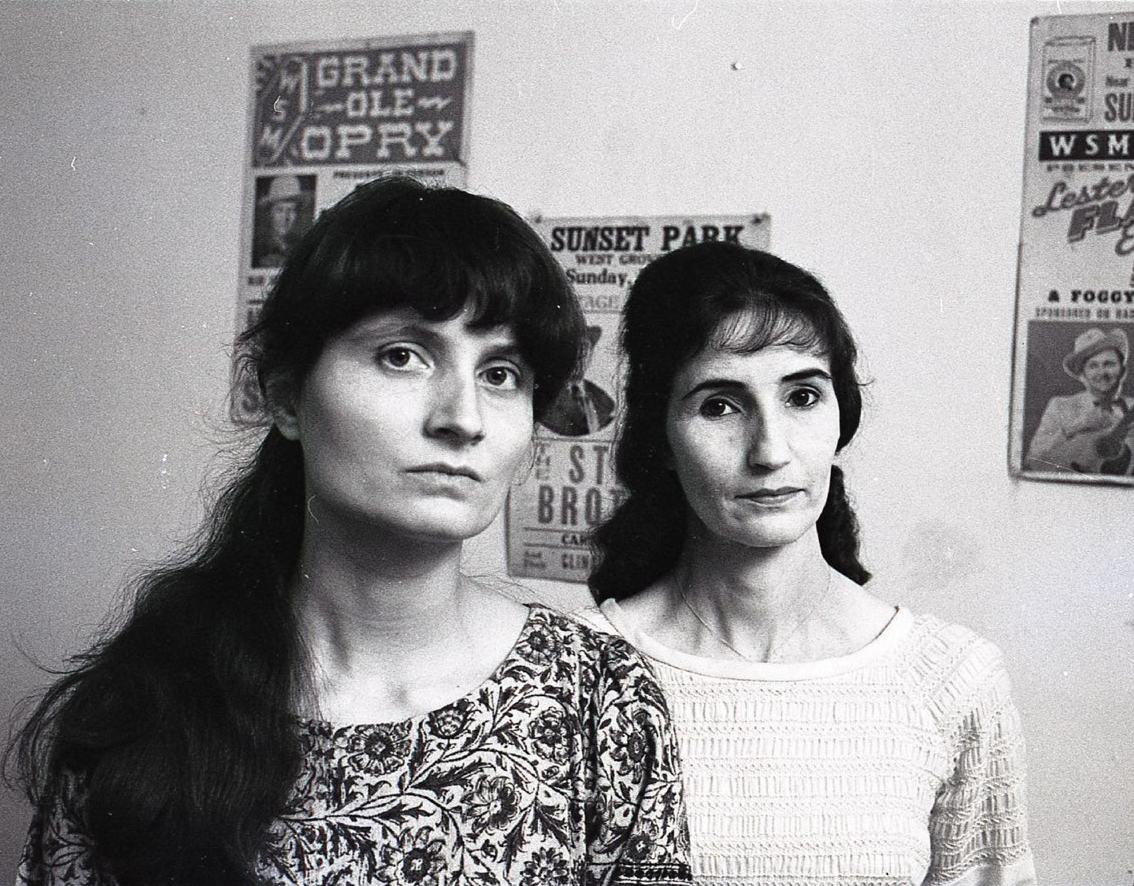
Hazel Dickens (right) and Alice Gerrard.
Hazel Dickens and Alice Gerrard were a trail-blazing bluegrass duo who revolutionized the genre in the sixties and seventies. As the first unrelated female duo to lead a bluegrass band, they shattered patriarchal norms while blending poignant, southern rural tradition with themes of social justice, civil rights and working-class feminism. Hazel and Alice met in the mid-1950s at house parties in the Baltimore and Washington DC area. They both grew up in musical families: Hazel and her siblings almost all played and sang country music while Alice’s family was much more classical. Hazel had a voice “that could nail you to the wall: edgy, piercing, high, lonesome, cutting, raw. Hers was an oasis in the desert of pretty sweet voices emerging during the folk revival of the fifties and early sixties.” —Indy Week, Riley, Durham, Chapel Hill News, Culture and Music. They bonded over traditional mountain music and emerged as leaders in a genre that was entirely male dominated. They took songs that were historically sung by male artists and made them entirely their own. They introduced music that touched on women’s struggles, working-class realities, and independence. Though much of their repertoire celebrated older traditional songs, their music became more politicized over the years. Dickens once explained, “She didn’t have to work in a factory to see how badly women were treated. Playing bluegrass was enough.”
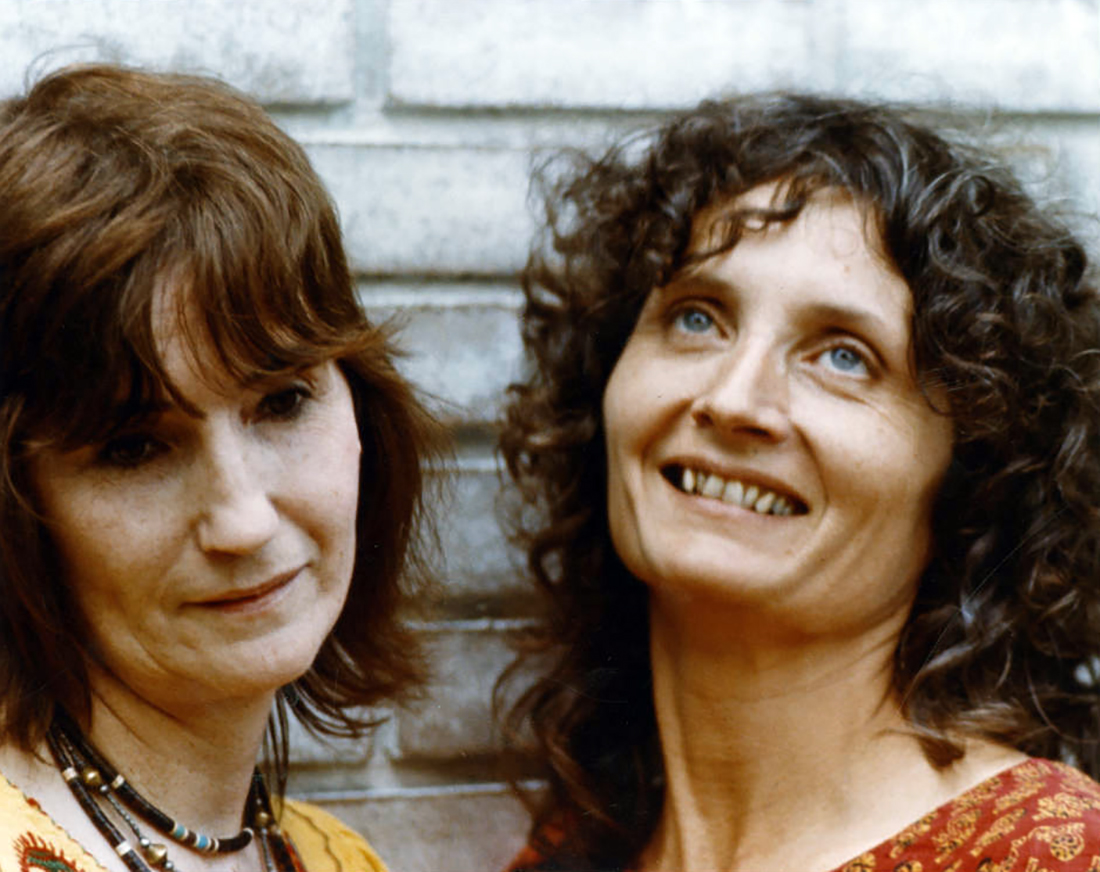
Hazel & Alice
In 1964, they got a recording contract with Folkways and recorded two albums. They recorded two with Rounder Records as well. The two wrote some particularly poignant social justice tunes, including “Black Lung” about Hazels brother’s death from Pneumoconiosis from coal mining. It was used in Harlan County, USA, a bluegrass documentary. Gerrard wrote “Beaufort County Jail” about JoAnn Little, a black woman charged with the murder of a man who tried to sexually assault her. In the late sixties, Dickens and Gerrard participated in the Southern Folk Cultural Revival Project, run by civil right activists Bernice Johnson Reagan and Anne Romaine. The tour was a racially integrated effort to speak to the struggles of the working classes and unify a shared reference for tradition. Consequently, Dickens and Gerrards music was relevant to a remarkably diversified audience, from labor unions to southern old timers to New York feminists.
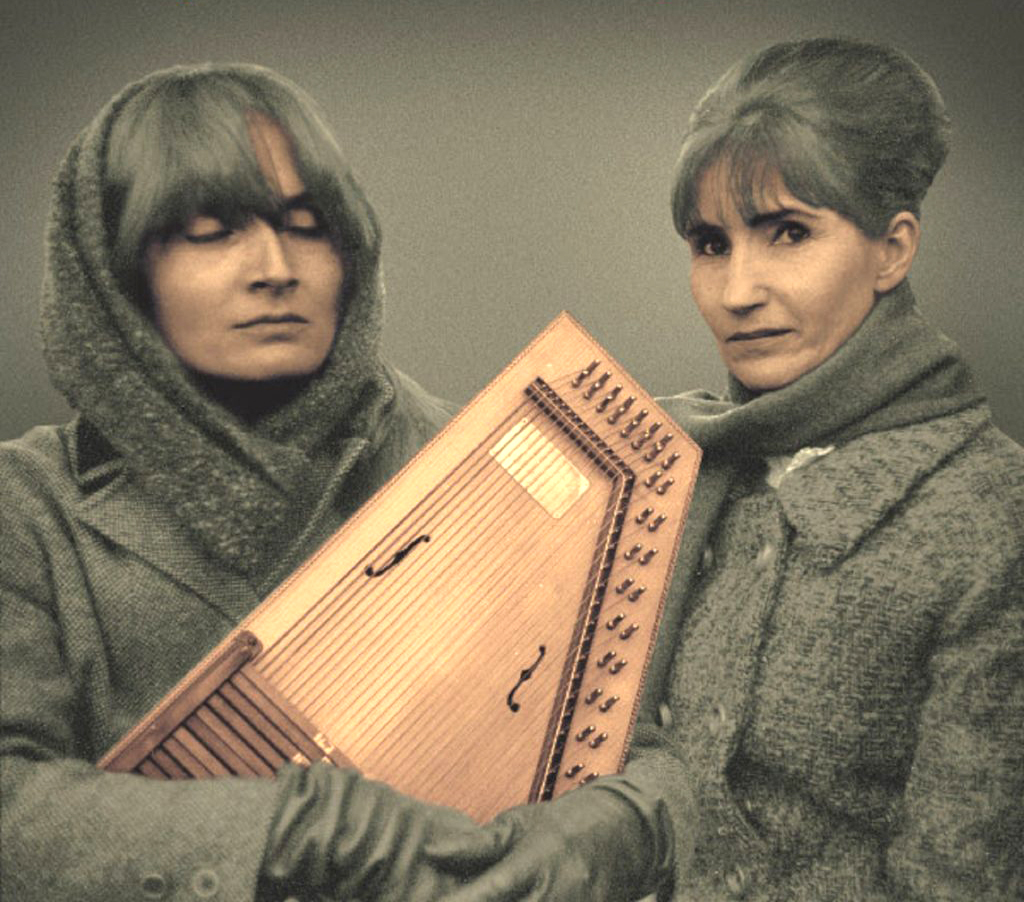
On the surface, the two formed an unlikely partnership: Dickens, a hard-working country girl whose formal education ended after seventh grade and Gerrard, a younger free-spirited college dropout from an urban West Coast family. They created a particularly soulful sound with their harmonizing voices and powerful lyrics. What they shared was their passion for their music and their boldness as women to go out and play it. As a musician myself, I have frequently likened it to a “disease.” It is something that you have to do. This powerful duo stayed together until 1976, going their separate ways after that. Their breakup was not acrimonious, and they reunited, to great applause, in 1996. Hazel died in 2011. Hazel and Alice were both inducted onto the International Bluegrass Hall of Fame in 2017. Alice continues to be active and is currently living in Durham, North Carolina.
Anita O’Day, 1919-2006
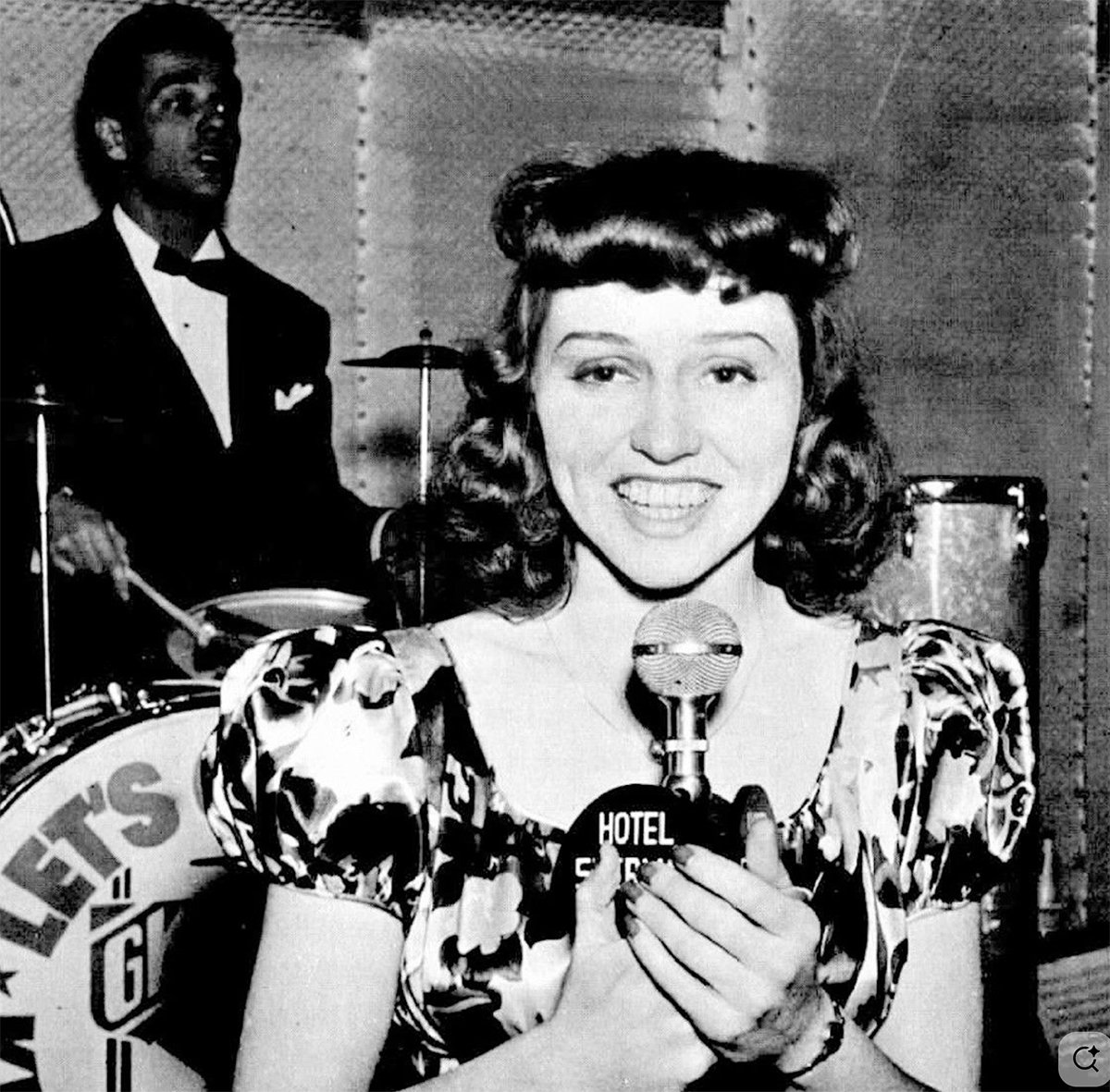
Anita O’Day
Now, in a completely stylistic shift, we turn to the jazz genre. Anita O’Day grew up in Chicago, quitting school in the early ’30s during the Depression to make money in “walkathons.” She convinced her mother she could make money and changed her last name from Colton to O’Day, which was pig Latin for the DOUGH she hoped to make in the walkathons. She won first place in a Lindy Hop Walkathon dance show, second place in an amateur show called “Dynamite Sprint” and second place in a walkathon that covered 4,000 miles in 97 days. She toured the circuits for two years, occasionally entering singing contests. She was learning how to adapt her singing to the loss of her uvula, after a botched tonsillectomy in her childhood. She could sing but had no vibrato. In 1936, she began working as a waitress and a singer, playing in Chicago clubs such as the Offbeat and the Three Deuces. At the Offbeat, she met Gene Krupa, who was a star drummer on the swing circuit. He hired her as the vocalist is his band in 1941. He had one of the best swing big bands of that time, which also included trumpet player Roy Eldridge. Eventually, Anita and Roy recorded “Let Me Off Uptown,” and this became one of the top ten hits on the pop charts. This was one of the first examples of racial integration in American popular music. While Krupa received top pay, O’Day received $7.50 per week as the band singer, which afforded her just enough to live on while on tour. In 1943, she received time off to marry her second husband, Carl Hoff. Later, in 1943, Krupa was arrested for marijuana possession (it’s so ironic to read this, when it is legal now). The band broke up, and she joined Stan Kenton’s band, despite being wary that he didn’t have the characteristics of a swing band. Despite that, she recorded several “soundies” with him and one tune: “And the Tears Flowed Like Wine,” which became a million-selling single. In 1945, she was named Top Band Girl Vocalist by Downbeat Outstanding New Star by Esquire. By 1944, she was wearing her signature men’s-style jacket, which was the uniform of the 1940s female hipster. Life was changing for women, and she was definitely a trend setter in personality, fashion, and music. She rejoined Krupa’s band but had to quit due to a panic attack and exhaustion.
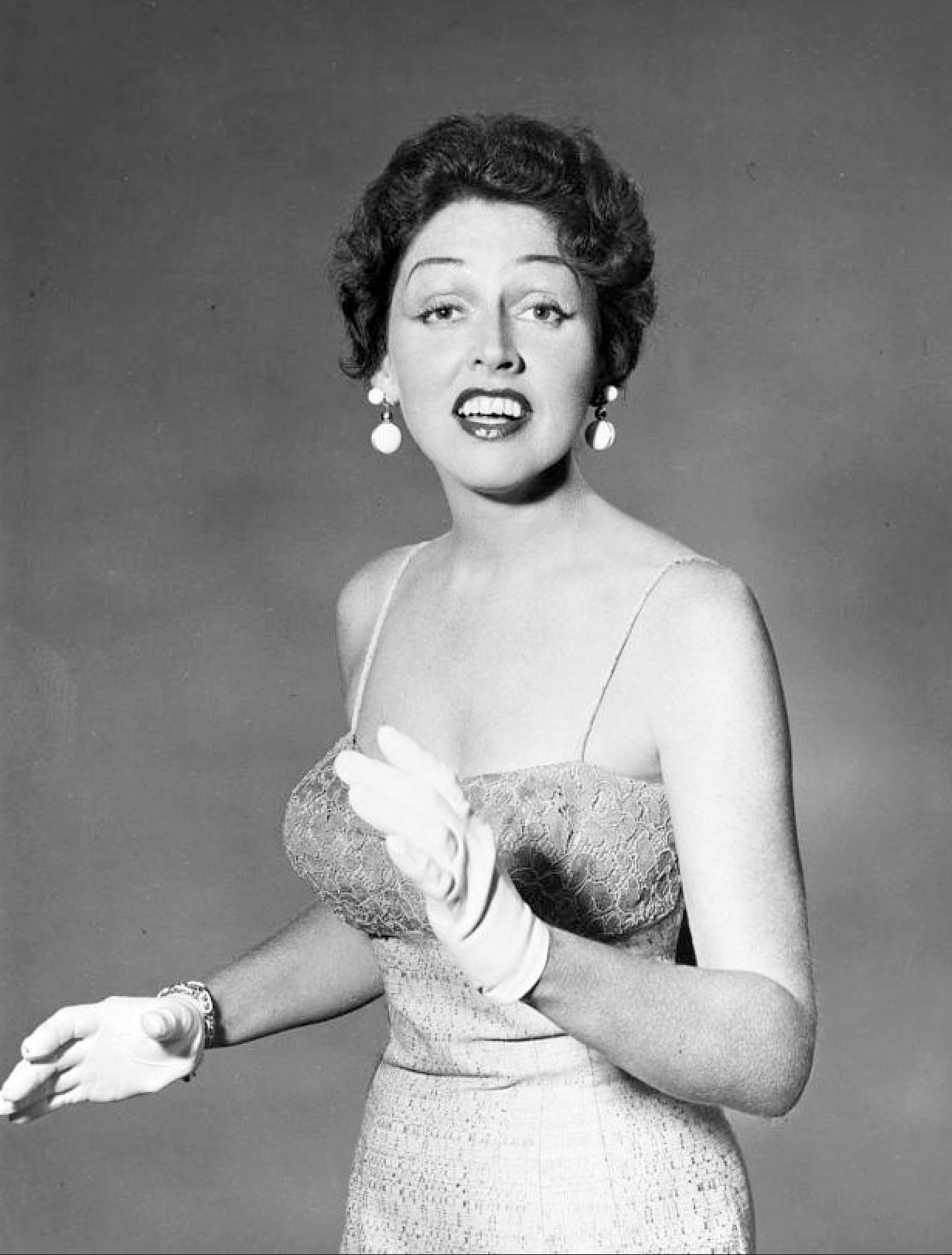
By 1947, she signed with the Signature label and went on to become a solo act, backed by a trio, mostly. The big band era was waning, and she could make much more money as a solo act. At Signature, she was moving into a new style of jazz: bebop. She began advocating for singers to experiment more, rather than just doing hits (especially novelty songs). She began recording for Norman Grantz labels, including Verve records and Mercury records. She was making appearances with Duke Ellington, Benny Goodman, Count Basie, Oscar Peterson, and Dizzy Gillespie, among other top jazz performers. She appeared on the Johnny Carson Show and 60 Minutes and received a Grammy nomination for her Carnegie Hall appearance at age 65, celebrating her 50 years as a jazz musician, (Wonderful Big Band Concert, 1985.)
O’Day began abusing drugs as a teenager, working in clubs and bars “I drank, I got high, learned to cover up my feelings of pain behind a hip, swinging-chick personality I’d carefully developed, “ she wrote. She was arrested for marijuana possession and served a 90-day sentence. John Poole, her longtime drummer (for 40 years), introduced her to heroin. In 1953, she was arrested on stage for heroin possession. She spent five months in prison and five years on probation. In 1966, she finally kicked the habit for good.
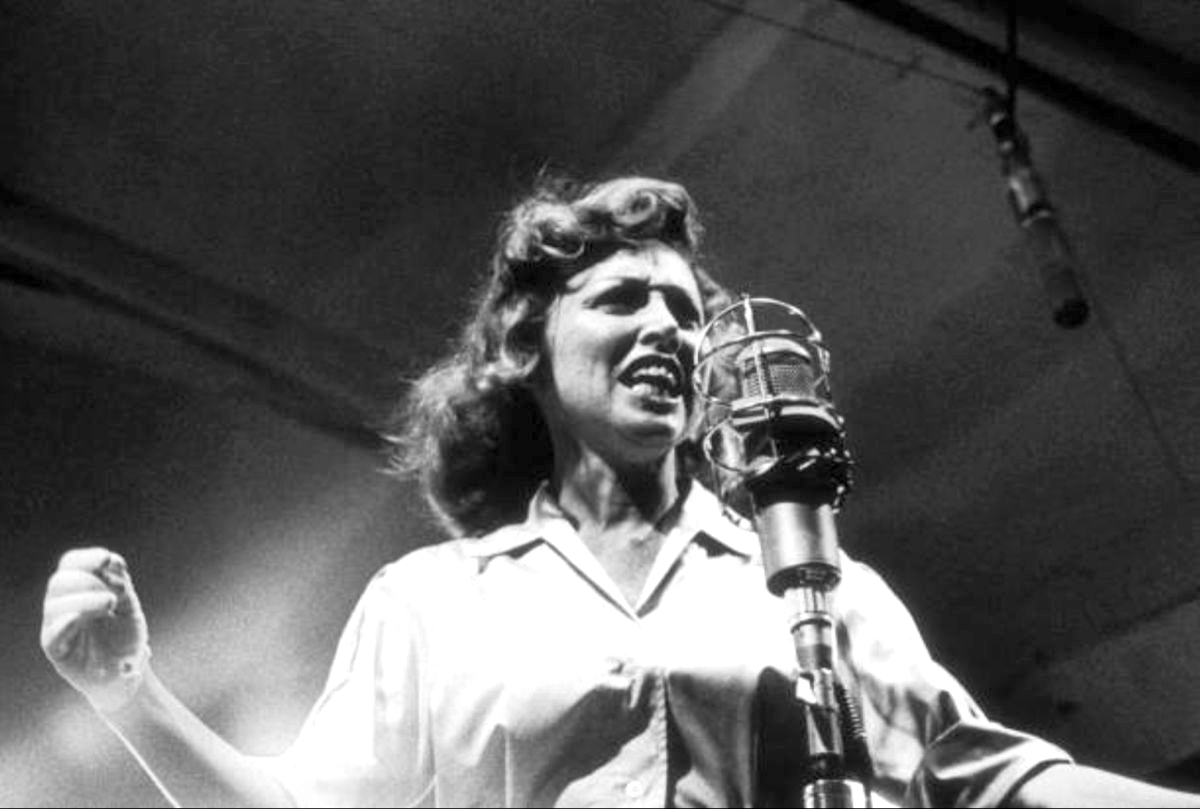
O’Day at the Newport Jazz Festival.
O’Day performed with fast-tempo arrangements and was able to keep up by singing (and scat singing) just as fast. All Music’s John Bush wrote “Few singers matched the hard swinging O’Day for sheer exuberance (that) enabled them to stand side by side with the great jazz horn players.” She cited her main influences as Mildred Bailey, Billie Holiday, and Martha Raye. New York Times biographer Will Friedwald said, “When you think of the great jazz singers, I would think Anita is the only white woman that belongs in the same breath as Ella Fitzgerald, Billie Holiday, and Sarah Vaughn.” She was awarded the title of Jazz Master by the National Endowment of the Arts in 1997. She performed in 2006 and died that same year.
Blu Lu Barker, 1913-1998
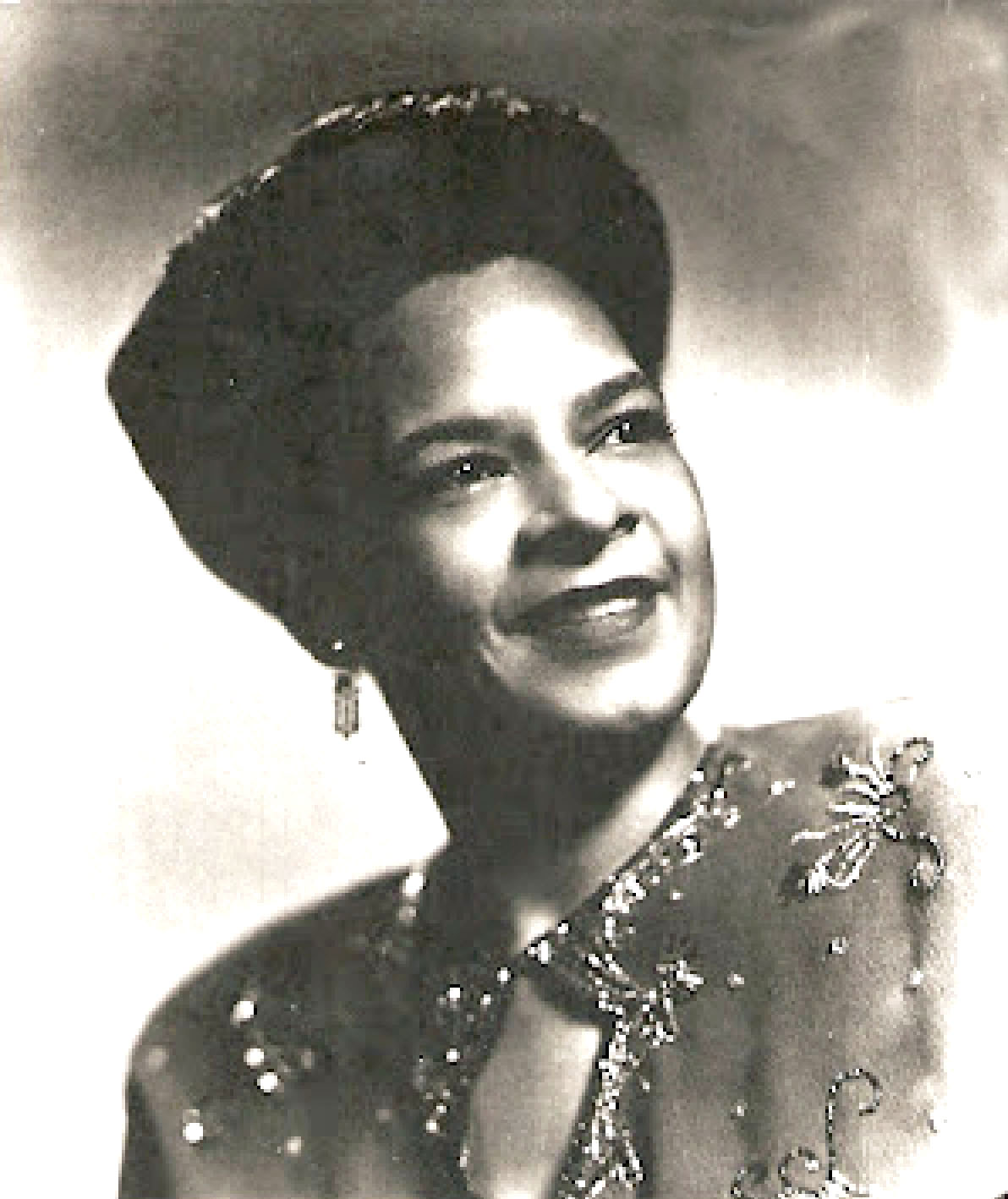
Blue Lu Barker
Louise “Blu Lu” Barker (née Dupont) was an American blues and jazz singer hailing from the historic Treme neighborhood in New Orleans, just outside the French Quarter. Her father ran a grocery store and pool hall, cashing in big time during prohibition with bootleg liquor. She met and married Danny Barker when she was just 13 and he was 17. They had one of those rare relationships that lasted a lifetime. Both were renowned musicians—Danny played guitar and banjo, and Lu went on to become a popular and beloved singer. Billie Holiday cites her as her biggest influence.
In 1930, the couple moved to New York City and began hooking up with jazz and blues greats such as Wynonie Harris, Dinah Washington, Luis Russell (known as a bandleader and for his association with Louis Armstrong). Russell was also married to musician Carline Ray ( see Troubadour Spotlight December 2025) and father of singer Catherine Russell. In the ’30s and ’40s, they recorded with Decca Records and the Apollo label. Blu Lu was one of the more popular blues singers, appearing alongside Cab Calloway, Jelly Roll Morton (self styled Father of Jazz), Sidnet Bechet, and others. Her most wel-known song was “Don’t You Feel My Leg.” She wrote the music and her husband Danny wrote the lyrics. The song seemed to encourage promiscuity and restraint at the same time—always a good thing for the music business. Maria Muldaur recorded it in 1980 and it got another round of popularity.
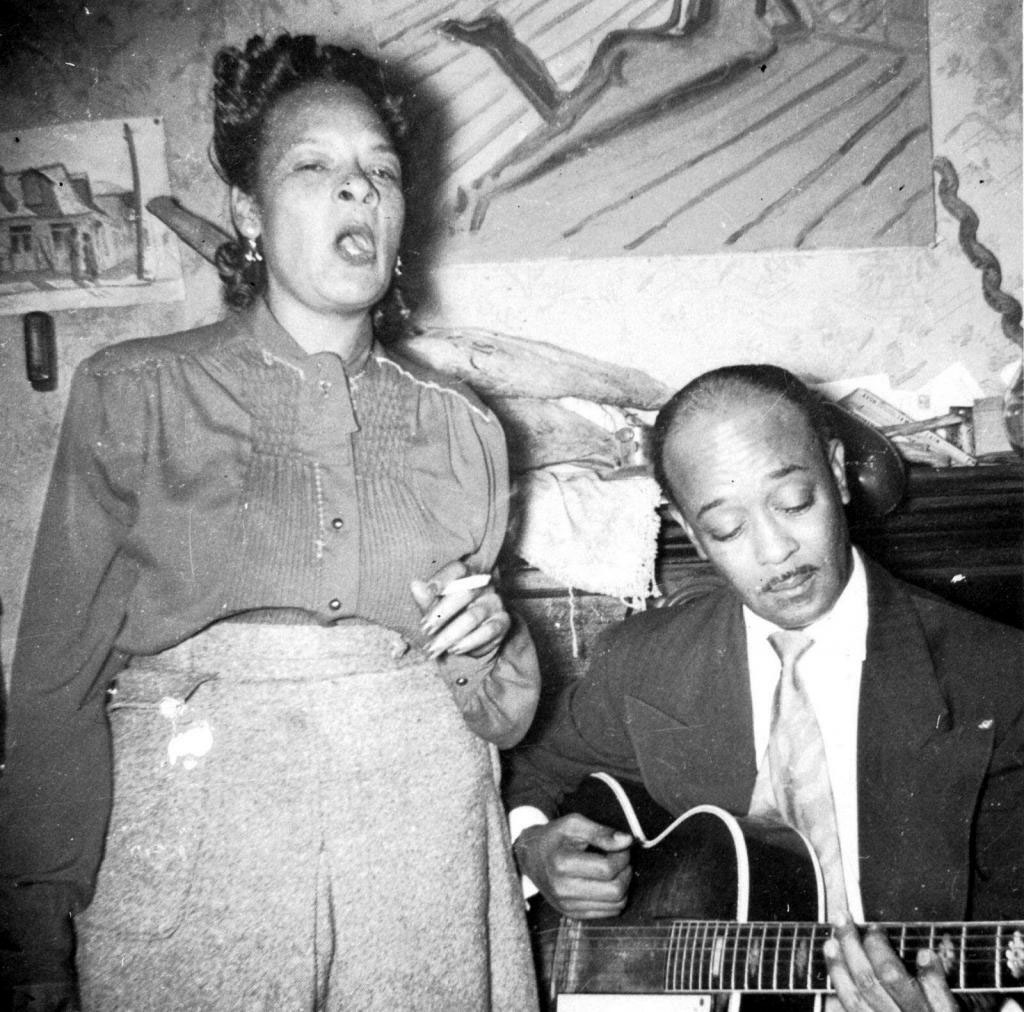
Blue Lu & Danny Barker
The Barkers moved to California for a stretch in 1948. They moved back to NOLA in 1968 to care for her ailing mother. Both of them carried all the early jazz traditions in their blood. They helped nurture and create what came later in the 20th Century. Going to New York during the Harlem Renaissance gave them an education in both all kinds of art and in Black Pride. According to jazz critic Nat Hentoff, Danny Barker was one of the best rhythm section guitarists, which enabled him to be at home with singers, boppers (i.e., Charlie Parker) and homeboys. Both Lu and Danny are beloved and celebrated in their hometown of New Orleans. They played together until Danny died, shortly after the two played at the Jazz and Heritage Festival in 1989, recording a live album that was considered an historic documentation of their 63-year-old personal and musical partnership. Lu retired after that. Blue Lu was inducted into the Louisiana Hall of Fame in 1997. She passed away at the age of 84, four years after Danny and just months after the New Orleans City Council declared January 13 Blue Lu and Danny Barker Day.

Sue Palmer has been a San Diego musician and resident her whole life. She has received numerous San Diego music awards as well as an award for Best Self-Produced CD from the International Blues Challenge in Memphis. She was inducted into the San Diego Music Hall of Fame, has recorded 30 podcasts, and hosted her online radio show for three years on the local jazz and blues radio station, KSDS Jazz88.3.

