






Lessons from Melody Ranch
I Am Not the One

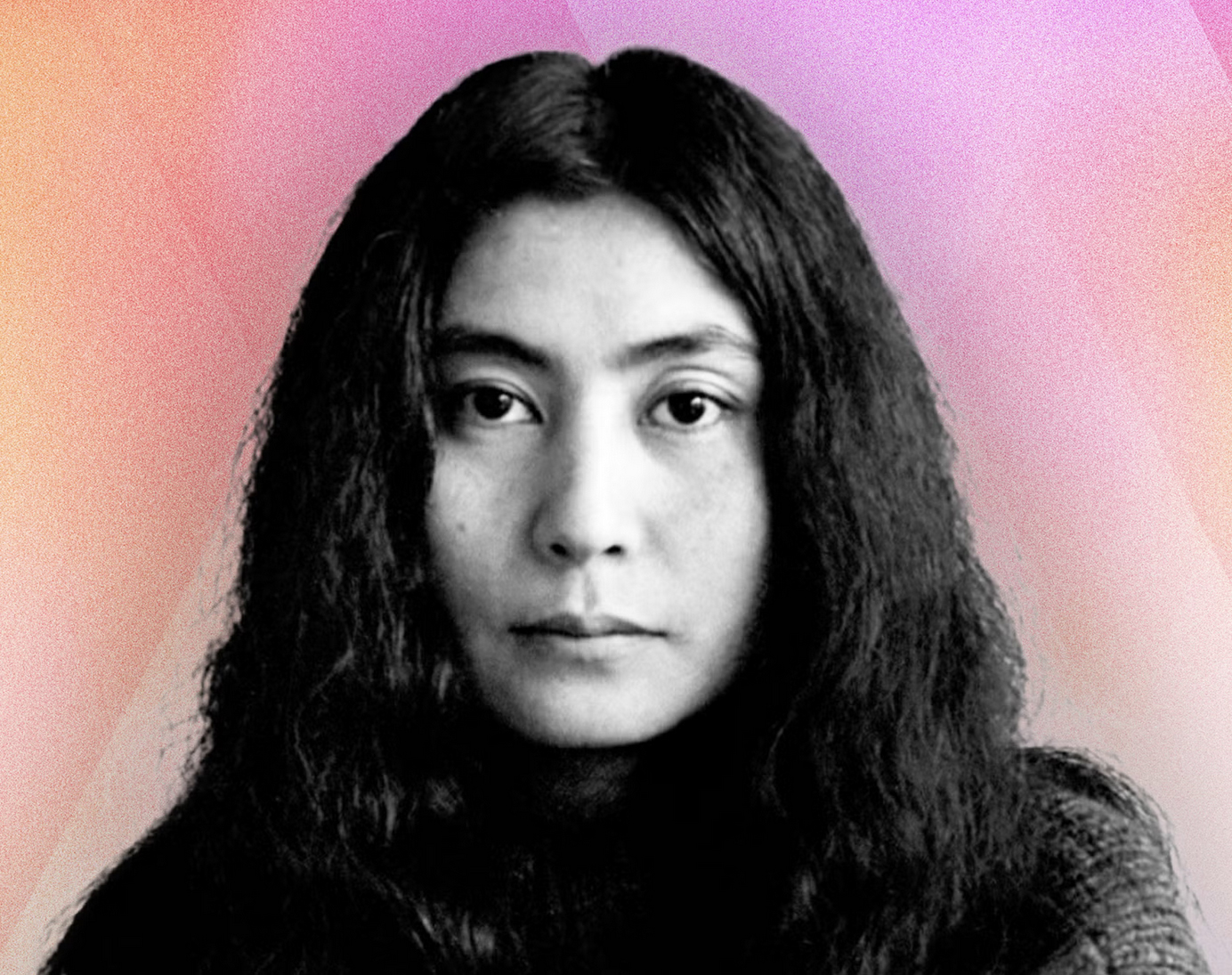
Yoko Ono
I am not the one to put down Yoko Ono.
Not at a dinner table, not in a passing joke, not in that easy, inherited tone we all know how to slip into without thinking.
I am not the one.
And the reason I know that is because I have watched that reflex happen in real time, in rooms full of thoughtful, intelligent, well-meaning people. People who care about art. People who care about justice. People like… us?
Last month, my wife and I drove to Denver to visit two of our best friends, a married couple who, like us, tend to choose intensity over ease. We don’t really do surface-level hangs. We go looking for things that rearrange us. Last year, it was the Anne Frank House. This trip, it was the History Colorado Center—three stories of history, grief, resilience, the kind of exhibits that sit in your chest long after you leave.
Afterward, a little raw and a little quiet, we wandered into a used bookstore and were immediately met with something that felt like an assault. Not from the books, but from the music. It was good music. Dark, chocolatey blues guitar, thick and distorted with a rich tone that should have wrapped around you. Instead, it overwhelmed the entire space. You couldn’t read, you couldn’t browse, you couldn’t even properly listen. It swallowed everything whole. One by one, everyone bailed. No one bought anything. Except me.
My hyperfocus kicked in and said, No, we’re finishing this. So, I stayed. I carved out a little pocket of focus inside the noise and kept going while everyone else chatted outside. I gathered my stack and brought it to the counter: Yoko Ono’s Instruction Pieces, Joy Harjo’s An American Sunrise, and the selected works of Gertrude Stein.
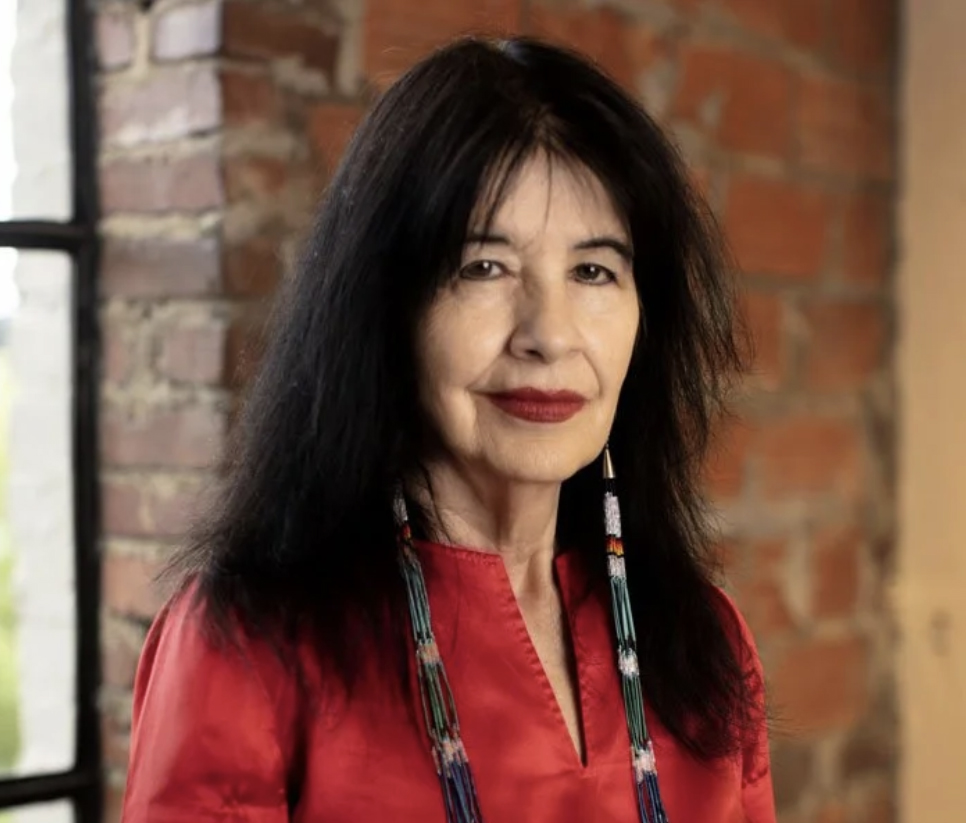
Joy Harjo
The clerk looked at them, smiled, and said, “That’s a stack of books that says something about you.” My buddy picked them up and flipped through. “Just a little light feminism,” he said. Then he paused, held up the Harjo, and added, “I know who she is. She was the American Poet Laureate, wasn’t she?” “Yes,” I said. “She was.” He glanced at the price of the Yoko book and laughed. “$35 for a Yoko Ono book?!” I met his eyes and said, “What, not a Yoko Ono fan?” And he replied, casually—so casually it almost didn’t register—“Is anybody?”
That was the moment. The crack in the floor. Because my friend is a good man, a thoughtful man, the kind of person who goes to museums and actually engages. The kind of person who knows who Joy Harjo is and why that matters. And still—still—that response. Automatic. Cultural. Baked in. I felt it land not as anger, but as recognition. Oh. We’re still doing this.
And I wish I could say this is about men. It’s not. Women do it too. We all do it. We all participate in these quiet, reflexive dismissals of certain women—women who are too strange, too honest, too disruptive, too unwilling to perform likability on command.
So, I didn’t push. I didn’t turn it into a debate in that moment. We walked back to the car, and instead of forcing the point, I opened the Harjo and read the forward out loud.
On May 28, 1830, President Andrew Jackson unlawfully signed the Indian Removal Act… We were rounded up with what we could carry. We were forced to leave behind houses, printing presses, stores, cattle, schools, pianos, ceremonial grounds, tribal towns, churches… We witnessed immigrants walking into our homes with their guns, Bibles, household goods, and families… We were surrounded by soldiers and driven away like livestock at gunpoint… There were many trails of tears… The Indigenous peoples who are making their way up from the southern hemisphere are a continuation of the Trail of Tears. May we all find our way home.
When I finished, the car just held it. No jokes, no deflection, no commentary. Just a deep, collective breath. We absorbed it.
But fuck Yoko, right?
We will sit with genocide. We will examine brutality. We will open ourselves to history at its most devastating. But we won’t examine our reflex to dismiss and belittle women artists? Why? Because that dismissal feels small, harmless, normal.
And it’s not.
Later, at the house, I showed my friends what I couldn’t explain in the car. First, Yoko performing “Don’t Worry.” She’s older, small, wearing a straw hat, smiling—like a happy little grandma just repeating, “Don’t worry. Don’t worry.” No spectacle, no virtuosity, no traditional performance. She’s just boppin’ around without a care in the world. And yet she is completely present, completely grounded, completely free.
Then I showed them her interpretation of Katy Perry’s Firework. No lyrics, no polish, no attempt to please. Just raw, embodied sound. And people laugh at it. They mock it. They share it as evidence that she’s ridiculous. And every time, I think: you are not watching her. You are watching your own discomfort.
Because what Yoko has, in overwhelming abundance, is the one thing most artists never fully access: unfiltered humanity. Vulnerability without apology. Expression without permission. And instead of recognizing it, we punish it. That’s what I teach my students—not how to sing like Yoko, but how to risk like her.
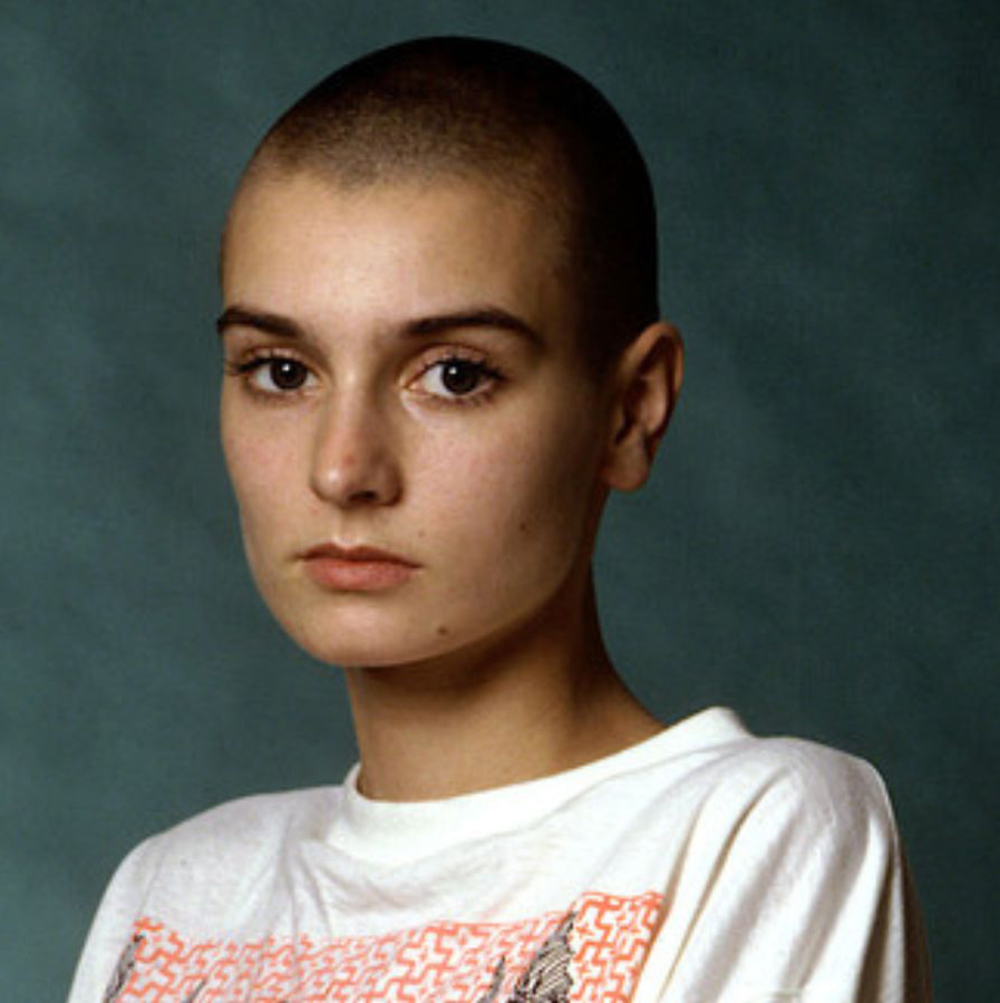
Sinead O’Connor
This is a pattern in how we treat female artists. Look at Sinéad O’Connor. Demonized. Ridiculed. Publicly dismantled. And if you listen to Universal Mother, it opens with Germaine Greer saying, “I do think that women could make politics irrelevant.” That’s the thesis. Sinéad lived it. She told the truth early, before it was safe, before it was popular, before it was profitable. And the response wasn’t disagreement. It was character assassination. And now, we look back and say, “Oh. She was right.”
And it’s still happening. Right now. Look at Chappell Roan. She challenges the industry and almost immediately the narrative shifts. Suddenly she’s “difficult,” “rude,” “a problem.” Not because of what she did, but because of what she named. And we watch it happen over and over and over.
So no. I am not the one to put down Yoko Ono. Because doing that—participating in that casual dismissal—is not neutral. It is aligned. It is inherited. It is rehearsed. And if that makes you uncomfortable, good. Sit in that.
Because here’s the sharper truth: we don’t just misunderstand women like Yoko. We practice misunderstanding them. We pass it down. We reward it. We laugh at it. We build entire identities around it and call it taste. And I am not interested in calling that taste anymore.
1. Yoko Ono
Watch “Cut Piece.” Watch “Don’t Worry.” Watch her Firework interpretation.
Pay attention to what she’s actually doing.
In “Cut Piece,” she removes control from herself and hands it to the audience. The performance isn’t about sound—it’s about power, vulnerability, and what people choose to do when given permission.
In “Don’t Worry,” she strips performance down to almost nothing. Repetition, presence, tone. She isn’t trying to impress you—she’s holding a state.
In Firework, she removes the song from its structure entirely. No melody as you expect it. No familiar phrasing. Just raw expression.
Sit with that.
She’s not failing at traditional performance.
She’s rejecting it.
2. Joy Harjo: An American Sunrise
Read a few poems from the book.
Notice how the writing moves.
She doesn’t separate history from the present. She doesn’t explain everything. The voice carries memory, land, identity, and survival all at once.
There’s rhythm in it, even when it isn’t musical in the traditional sense. There’s structure, but it’s not rigid. There’s meaning, but it’s not handed to you cleanly.
Let the language do what it does.
3. Sinéad O’Connor: Universal Mother
Listen straight through.
The album isn’t just a collection of songs—it’s a statement. The arrangements are sparse in places, confrontational in others. The vocal delivery shifts between intimacy and force.
And it opens with Germaine Greer saying, “I do think that women could make politics irrelevant.”
That’s not decoration. That’s framing.
Everything that follows sits inside that idea.
4. Gertrude Stein
Read a few pages.
The structure is the work.
Repetition, rhythm, disruption of expected meaning—she’s not trying to communicate in a conventional way. She’s reshaping how language functions.
If it feels disorienting, that’s part of it.
5. Chappell Roan
Listen to her music, then watch how she presents herself publicly.
There’s theatricality, control of image, and a clear point of view. The performance extends beyond the song.
Then compare that to how she’s talked about.
The shift between those two things is part of the work now, whether it should be or not.
Now ask yourself: who have I already decided isn’t worth taking seriously, and who taught me that?
Because this is where it lands for me: I am not the one to put down Yoko Ono.
And when you judge her, I judge you back.

Francesca Valle is a singer, songwriter, multi-instrumentalist, writer, producer, and entrepreneur. Originally from Los Angeles, she spent 12 years in San Diego and still stays closely connected to its arts community. She’s the founder of BugByte Studios and WiseJack Marketing, now based in Santa Fe, New Mexico, and Costa Rica, with creative roots planted in the people and stories that have shaped her.

