



Featured Stories
Tom Ward: Musician, Preservationist, Curator, Gentleman

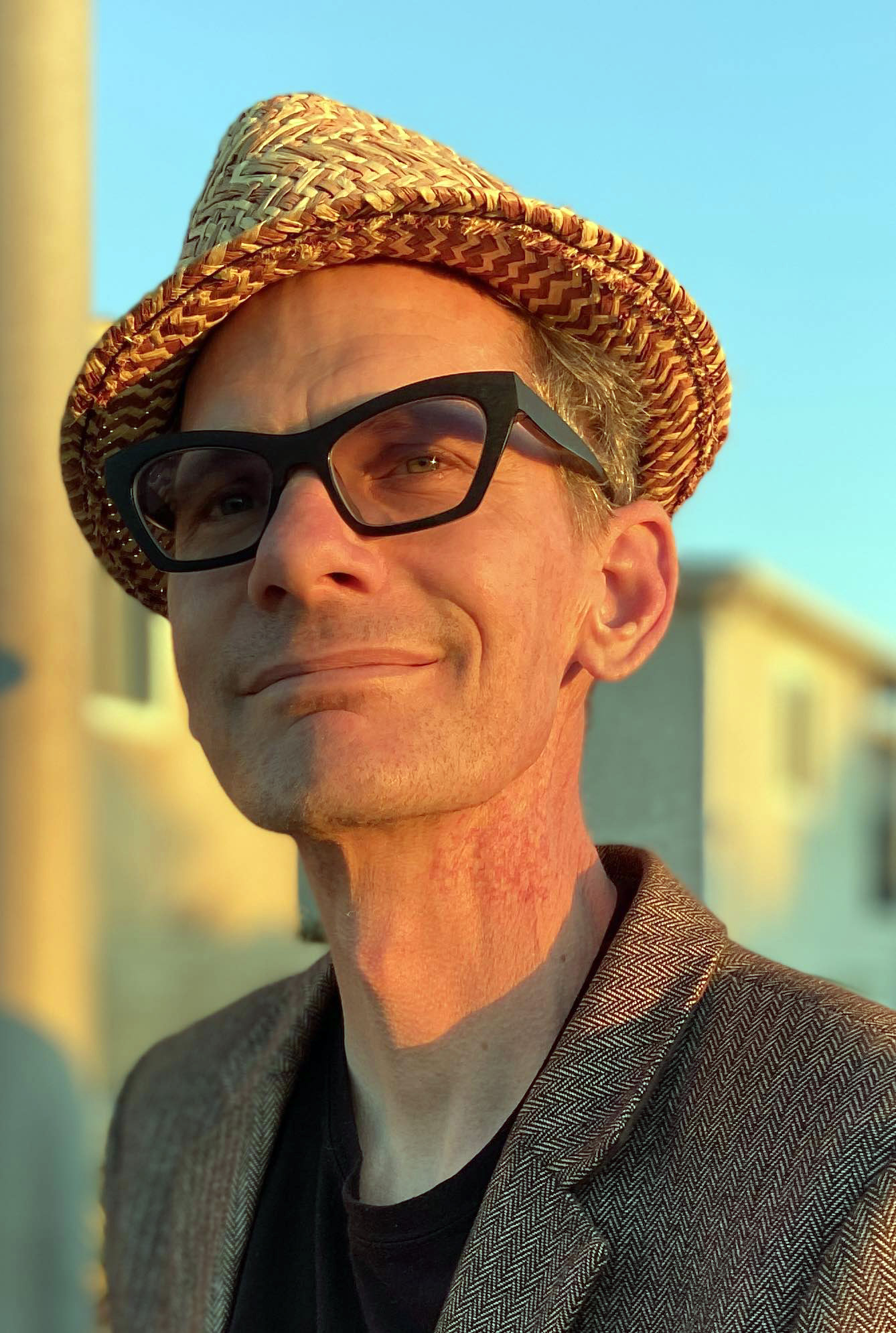
Tom Ward
Tom Ward passed away on September 20, 2025 after a lengthy illness.
Tom had been a much loved and respected figure on the San Diego music scene since the mid-eighties, but he also lived for periods in New York City and San Francisco. Although he played bass guitar in numerous bands over the years, he’ll be most remembered for his work with the Nashville Ramblers with whom he logged countless, consistently sensational live performances as well as one immortal song, “The Trains,” which was released as a single and also appeared on several compilation albums. He also played with, among others, the Gravedigger V, Manual Scan, the Optic Nerve, the Saturn V, the Dansettes, the Amandas, Trevor McSpadden, Trio Los Elotes, and the Sidelong Glances.
Authenticity was everything to Tom—in music, in fashion, in his interactions with others, in the way he lived his life. He was an outstanding musician with a meticulous sense of taste, style, and tone. Like many of us in our particular circle of the music scene, he believed that music, art, fashion, and culture peaked in the middle of the 20th century, most specifically in the mid-sixties.
“Tom was a preservationist,” says Carl Rusk of the Nashville Ramblers. “He cared about history so much, specifically the art and music history of an earlier time period. I think that he really believed in human potential to transcend base human behavior and ugliness. He believed in people’s ability to create beauty. He cared about subtlety, and I think kindness was a part of that. He believed in being kind to people, and that was always there, like when he was onstage, the way he looked at people, the way he reacted to people. He wanted people to know that he saw them as a human being, even just the way he looked at them from the stage. People connected to Tom because you could see that he was looking at you as a person, even if you were a complete stranger. And he went out of his way to connect with strangers, even just through looking at them and giving them a nod. That’s the kind of kindness that Tom had. I think that’s one of the reasons why so many people are so affected by his passing.
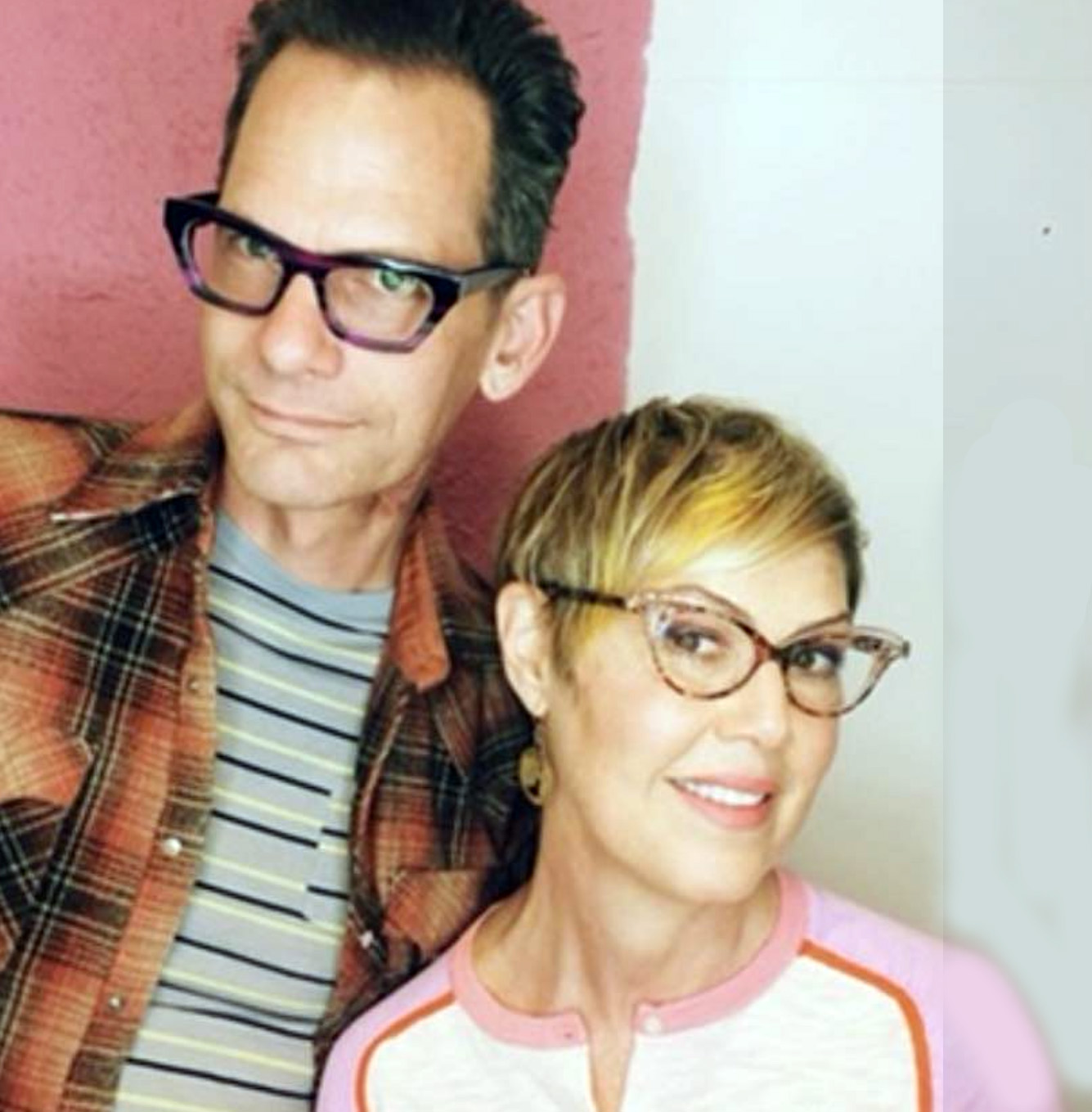
Ward & his longtime partner Ann Kopels.
“At the same time,” he continues, “he was extremely sensitive, and I think that’s one of the reasons why he had difficulty in dealing with the modern world and its loudness and brashness and its ugliness and its lack of concern. The fast and cheap way of doing everything nowadays really turned him off. All of us in our particular music scene sort of craft our own realities that we use as a sort of shield against the modern world, and I think maybe Tom did that more than any of us. His home with Ann [Kopels, his longtime partner] really was a personal museum, and he referred to himself as the curator of that personal museum. On the outside, I think he may have appeared to be materialistic because he cared so much about things and preserving things, but he only cared about those things from the standpoint of what they say about humans’ ability to be craftsmen and also to try to preserve that from disappearing from the world. He didn’t care about owning them. In fact, he saw himself as temporary custodian of those things. Often he would just give things away to people if he felt that they would be the best custodian for that thing.
“He applied all of that same mentality to his bass playing,” he adds. “His bass playing was immaculate and careful and very studied and thought out. He had great feel and he had amazing tone. But a lot of that came from how specific he was about the accuracy of all those things. Like flat-wound strings and playing with a pick was crucial for him for the type of music that we were doing. But then if he was doing jazz, he might have to change that up, because it had to be accurate for what he was doing, and the tone had to be accurate.”
“His taste and style were impeccable,” confirms Jon Erickson, who first met Tom in the early ’90s and went on to play with him in several bands. “The phrase ‘Tom Ward approved’ was an often spoken phrase when seeing something classically well-designed, and his practical application of this taste made the world a much more beautiful and interesting place.”
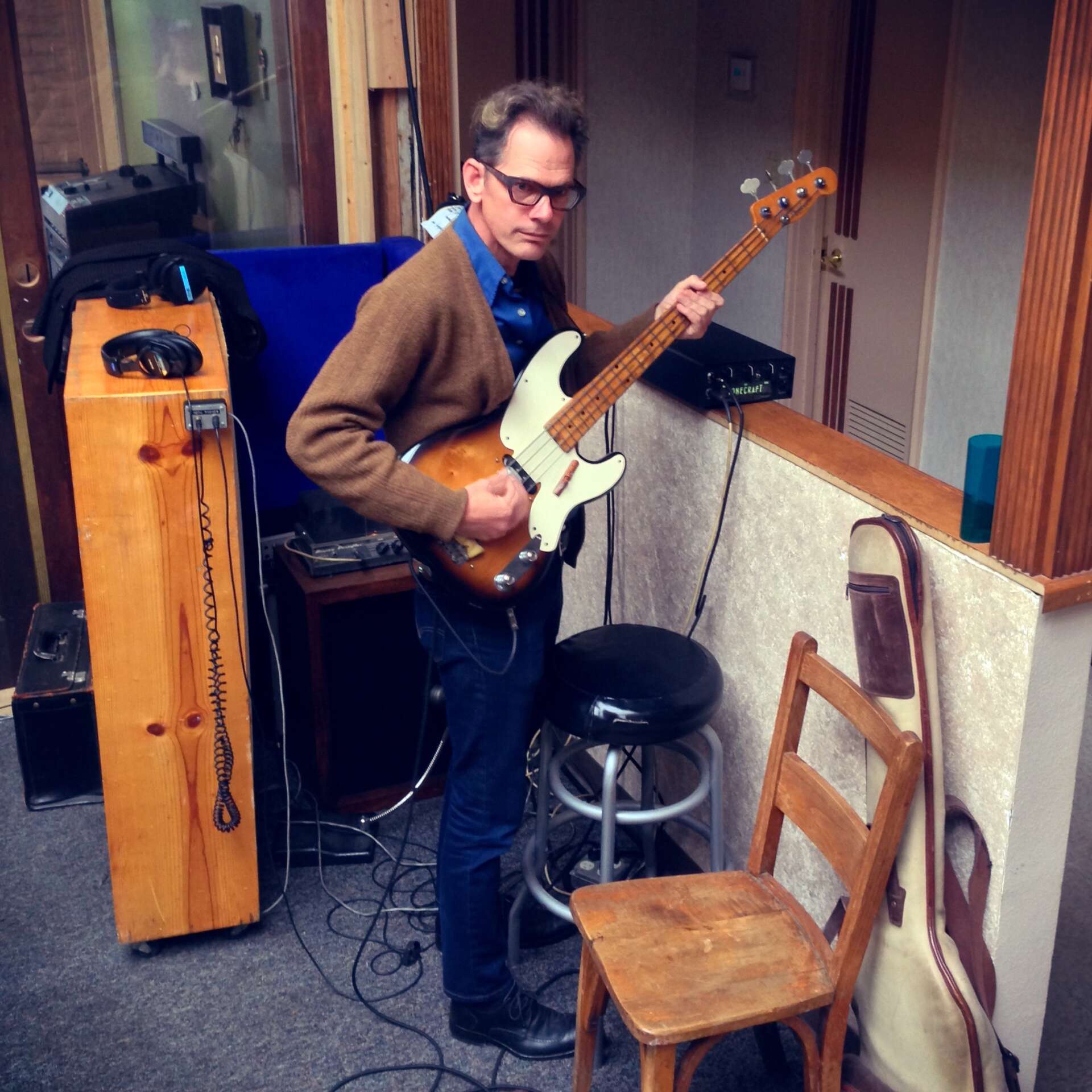
Ward in the studio.
In early 1984 Tom was 16 years old and attending Clairemont High School when he joined his first band, the Gravedigger V, which was part of a small but vibrant ’60s garage scene in the city. As rhythm guitarist John Hanrattie explains, Tom replaced the band’s original bass player Chris Gast. “Tom joined the Gravedigger Five in late February of 1984. I was given the task of firing Chris as well as the much better task of hiring Tom. So I called him up and offered him the job as bass player. The only condition to him joining our band was that his parents insisted on meeting a couple of us. Ted [Friedman, lead guitarist] and I dutifully drove over to Tom’s house one afternoon and sat down with his parents and had a really nice talk. They were so sweet to us, even though I’m sure they were a bit puzzled by our appearance. Tom’s mother even brought Ted and me carrot and celery sticks with ranch dressing!”
Despite his youth and inexperience, Tom was well-versed in the kind of music the band played, and took to his new role with enthusiasm. “We were lucky to have Tom, and we realized that right away,” remembers Hanrattie. “Tom brought a level of musical expertise and knowledge that we desperately needed. All I had to do was give him a song on cassette we wanted to cover, and Tom had his part down cold almost immediately. And he could compose music and write lyrics as well! He wrote almost the entirety of ‘She’s a Cur,’ and the bass lines of all our originals were composed by Tom alone. I couldn’t write a song to save my life, so it was good to have another quality tunesmith besides Ted.”
Not long after Tom joined, the group landed a deal with Greg Shaw’s Voxx label and in the summer of 1984 drove up to Los Angeles where they spent two days recording their album All Black and Hairy, which included the aforementioned “She’s a Cur.”

By the end of 1984, though, the Gravedigger V had broken up. Shortly afterward Tom was invited by Carl Rusk and Ron Silva to join what would become the Nashville Ramblers. Carl was only 18 but already an accomplished songwriter and guitar player, while Ron had logged several years experience as a member of the Hitmakers and then the seminal ’60s R&B recreationists the Crawdaddys. Both were—and remain to this day—talented, opinionated personalities with a strong commitment to a very specific look, sound, and overall aesthetic. Fortunately Tom was attuned to the same aesthetic so was able to complete a trio of musical kindred spirits: Rusk on vocals and guitar, Silva on vocals and drums, and Ward on bass and backing vocals.
“I think for Tom to join us, he had to have this really specific set of characteristics,” reflects Rusk, “which he just happened to have. One of them was to have not a hint of modernity. He didn’t have any hint of modernity in him. It was like if you went back in time and just pulled a bass player from, say, 1963. He already had flat-wound strings, and he had the tone and everything—and the look. He was very concerned about style, and it was already rooted in the early to mid-’60s. He was inexperienced, for sure, but he was super eager to learn and he was obviously talented and able to learn.
“But the other most important thing that he had, and that Ron and I had, was an inability to fit in with any group that existed at that time. We all had that. That’s, I think, the thing that really bound us together is that not one of the three of us felt like we were a part of the current world in any way, that we were outside of it and we were looking for something to belong to. The ’60s scene in San Diego was the closest thing, but none of us could join a specific group within that. We couldn’t be like, ‘Oh, we’re mods or we’re garage’ or whatever. It was really about the music.”
That shared belief in the music—which included some superb original songs by Rusk—and their commitment to their craft, would sustain the group, intermittently, across the next four decades. There were periods of dormancy during which the members pursued other projects, but they would always regroup, sometimes in a new location for a time even under a different name, but the Nashville Ramblers were a part of Tom’s life for just about 40 years. They played their last show on November 18, 2023 at the Permanent Records Roadhouse in Los Angeles.

Through the years, between sporadic bursts of Nashville Ramblers activity, Ward was involved with numerous other musical projects, not all of them in San Diego. In January 1988 he followed Carl and Ron to New York City where they reconvened as the Black Diamonds. While there he also played for a while with the Optic Nerve. He was back in San Diego in 1989, as were Carl and Ron, so they picked up again as the Black Diamonds. During this period he and Ron also played on couple of tracks later released on Carl’s solo album, Blue Period. In early 1992 Tom moved to San Francisco where he joined Ron Silva & the Monarchs and then the Saturn V Featuring Orbit, making records with both of them. Then, in late 1998 he moved to Brooklyn, New York, where he remained for the next ten years or so, rejoining the Optic Nerve for their 2005 album On! and also playing with a soul group, the Dansettes.
While he was living in New York Tom was diagnosed with throat cancer, but by the time he returned to San Diego at the end of 2009 it was in remission. He threw himself back into the music scene, playing live and recording with several bands, as well as forming the Fairmounts, a soul/R&B outfit that eventually evolved the Amandas. He also began playing solo acoustic shows featuring some of his own material. “He was writing songs and singing and playing guitar almost anywhere,” remembers Rusk, “just being like a bit of a troubadour. He would do anything, just as long as he was still playing music. I think playing alone worked well for him because, for one thing, there was no one to get angry at him if he was an hour late!” he laughs. “He’s so famous for being late that it’s like you almost have to mention it.”
Ward particularly enjoyed playing with country singer-songwriter Trevor McSpadden’s band. Tom’s first gig with them, Trevor remembers, was on July 24, 2015, at the Ould Sod on Adams Avenue. They met for the first time that night, and Tom jumped right in, undaunted by the largely unfamiliar material, most of it written by McSpadden. “I have no recollection of who the guitar player or drummer was on that gig,” says Trevor. “But I clearly remember playing music with Tom for the first time. It was clear that he was a very special person. He had this beautiful blond Rickenbacker bass, and of course he looked great. I’d just never really interacted with someone with so much style and pizzazz and gumption and get-up-and-go. It was a great experience. It was very clear, I think, for me at that point that, well, I’m going to just keep calling this guy. And so in the very beginning that’s really was what it was for many months, just calls and emails: ‘Can you do this gig? Can you do that gig?’”

That working relationship blossomed into a friendship as Tom began joining Trevor for longer haul out-of-town gigs, for example in Paso Robles on the Central Coast. They began spending even more time together when Trevor and his family moved into to the same neighborhood as Tom and Ann. “Then also in this neighborhood is Shae Moseley, who plays drums,” Trevor continues, “and Tom knew him as a neighbor, and we’d do this block party, and with Shay playing drums with us. That’s also a moment I can very clearly remember, like, oh, Shay, this is the guy. He needs to play drums in this; he’s got a groove with Tom, this is killer. So for like a year, it was almost like we were in this episode of, like, ‘The Middle-Aged Monkees’ or something. I lived in the neighborhood… Tom, the bass player; Shae, the drummer; Philip [McCardle] wasn’t too far away, the guitar player—it was this real Southern California idyllic scenario. It was real groovy.”
Ward’s bass playing had a huge impact on McSpadden’s music. “I had been in a band in Chicago for a long time doing real Ray Price, Merle Haggard-style country,” he explains, “and so that’s what I was doing. They were my songs, and so I had all these original songs that kind of had some framework to them. I had made this record in L.A. with Pete Anderson, Dwight Yoakam’s guitar player, for a long time, and so I had this record to kind of try to replicate, but then as soon as I started playing with Tom, it was way more interesting with him than what I had recorded with Pete Anderson. But I didn’t really understand Tom as a bass player at that point, because I was kind of after this, like, ‘Root Five’ sort of thing, but Tom was playing circles around that kind of stuff. And really, it’s only taken me until now to really appreciate it. I feel like my musicianship only now has finally caught up to Tom, and sadly he’s not around, and I can’t f**king play with him now. He was way more sophisticated than I ever knew, and my songs today have Tom’s stamp on them forever. I mean, there are songs that I wrote and we started doing them with Tom, who made a few changes on a couple things, and it’s just brilliant, and it will always be that way.”

Trevor also remembers Tom as the preservationist, the inveterate collector and restorer of vintage instruments, dust-encrusted amplifiers, broken-down drum kits, orphaned keyboards, and geriatric bicycles. “Which frustrated me to no end, Mike,” he laughs. “I mean, you can quote me on this: I drove those drives with that guy with his broken-ass amplifiers and strings falling off and power cords that need to be soldered on the way to the gig. I mean, I lived through that, so… But I now see that he was a caretaker of those things. He knew times were changing. I don’t think that he was against modernity; he wasn’t trying to stop time, but he was trying to bottle up a particular moment in time so it wasn’t lost. And also, he didn’t want to keep it for himself. He knew the real owner would come along, someone that would also appreciate it, and he would know that ‘oh, this person needs this thing,’ and just give it to them.”
Like all of us who knew Tom, he remembers his gentle, generous spirit, and his almost child-like wonder for the things he loved. “Tom was also just so charmingly naïve,” reflects Trevor. “That’s a theme that I certainly keep coming back to, that he was really naïve, and that could be frustrating but also inspiring. There were some moments, driving home as the sun was rising over the Pacific Ocean from the Central Coast with Tom Ward. And I felt like, man, we’re in the f**king Beatles right now! You know, these are my guys, and Tom, he made it really easy to feel that way. Yeah,” he adds, his voice cracking a little, “I miss that a lot.”
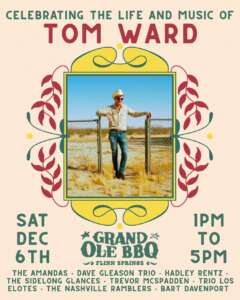
McSpadden moved to Minnesota in 2019, but returned to San Diego periodically to play with his old bandmates; his last show with Tom was in December 2024 at the Whistle Stop. Meanwhile, in 2023, Ward, McCardle and Moseley formed a band with singer Chloe Liddell, which Tom named the Sidelong Glances. Unfortunately, by then his health had begun to worsen, and in February of this year it was discovered that the cancer had returned. The last gig Tom ever played was with the Sidelong Glances on March 7 at the Grand Ole BBQ in Flinn Springs.
Many friends came to spend time at his bedside in his final weeks. Carl Rusk was there almost every day as was Philip McCardle. My wife, Anja, and I also visited Tom shortly before he passed. By then he was no longer able to speak so we would converse by writing, copiously, in his meticulous script, on a pad. I told him he’d used his time here well, that through his dedication to his music and his craft he’d brought pleasure to a lot of people. I told him how much I admired him as a bass player, as a musician, as a man. I was speaking for all of us who knew him, and Tom knew that too. He appreciated it. He wanted to be remembered, and he will be. I’m happy he’s at peace now.
Condolences to all who knew and loved him, especially Ann Kopels who took such great care of him in his final years, and Carl Rusk who was a true and solid friend and musical brother right through to the final chord.
A memorial celebration for Tom Ward will be held at the Grand Ole BBQ in Flinn Springs on Saturday, December 6, starting at 1pm.

