





Cover Story
The Magic and Music of Julia Sage

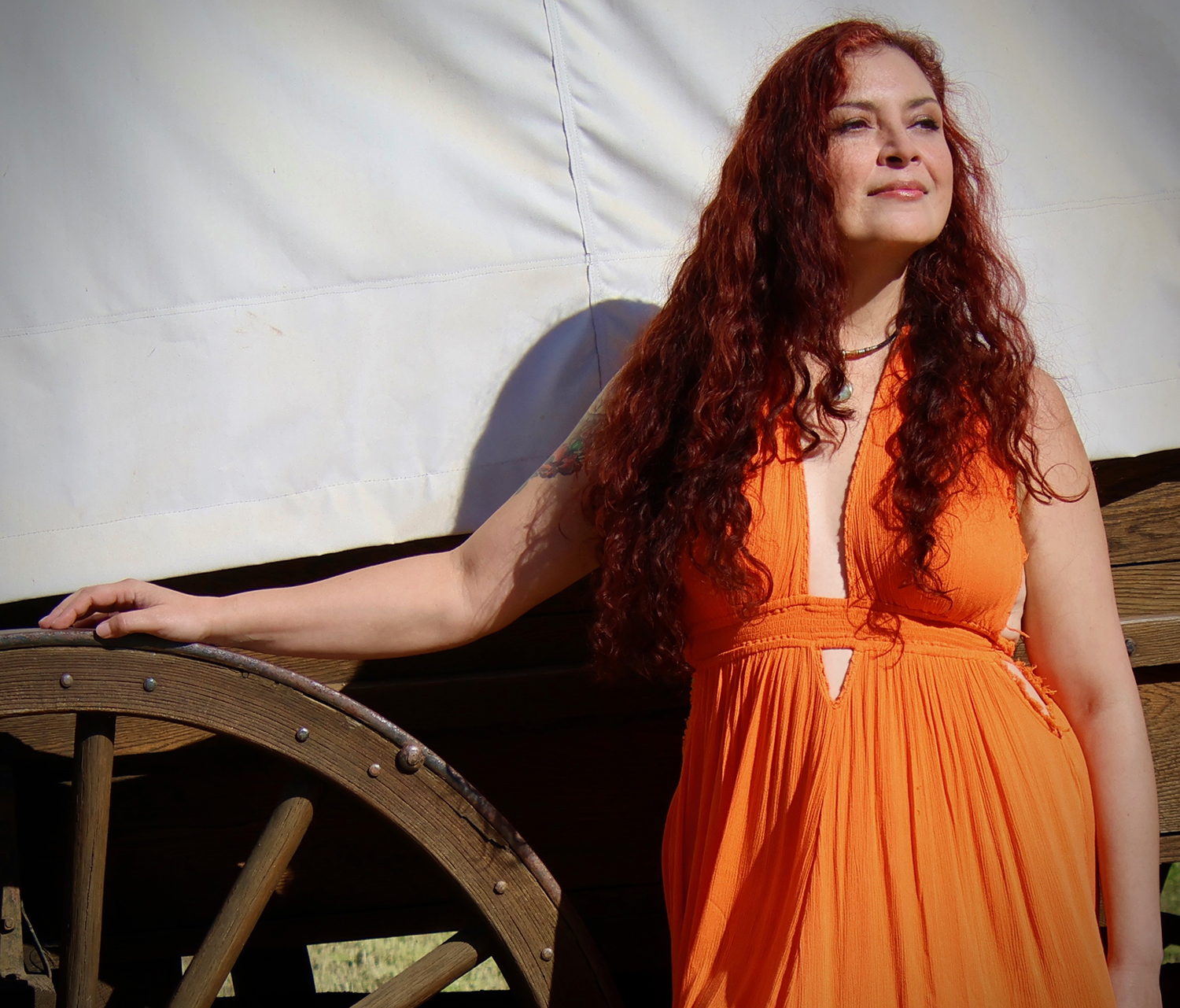
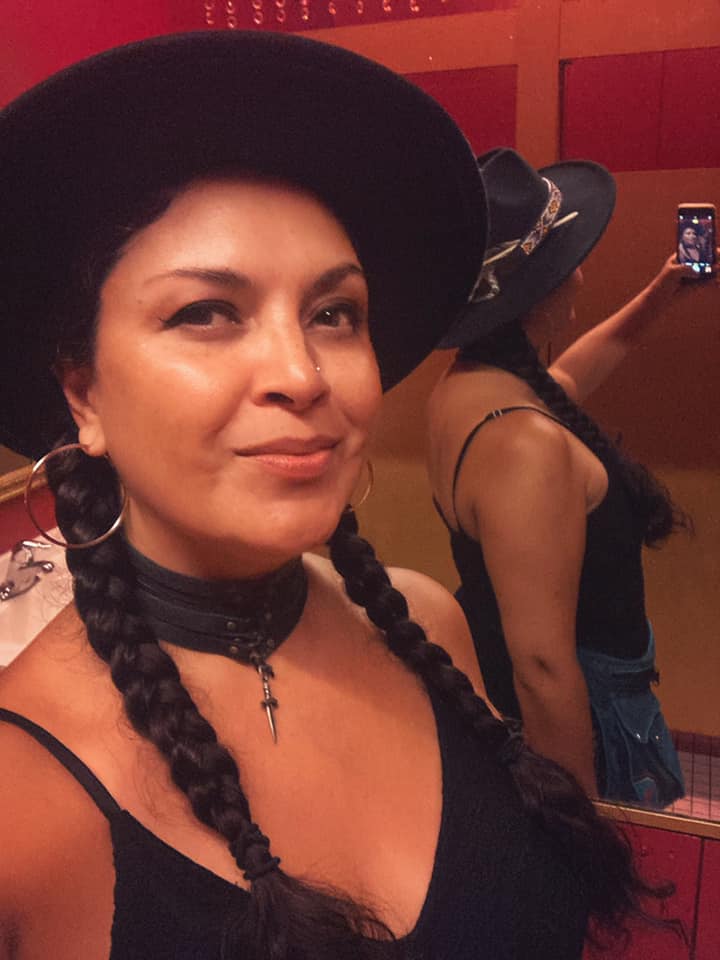
Julia Sage. Photo by Kristin Albright.
Ever since she was a little girl in Santiago, Chile, Julia Sage could do two things really well: connect with the realm beyond and sing. It only makes sense that she developed both of those unique skills as she grew up to embody the woman she is today. Julia Sage is a gently fierce force who takes all of her life experiences, her dealings with spirits, and her love of music and channels them all toward being a captivating singer-songwriter and a dynamic energy and sound healer.
Maybe it’s best to start at the beginning.
Early Years
Julia recalls living under the Pinochet regime as a child. “I grew up during a long dictatorship, so life was challenging and what I would consider a bit traumatic, now that I know better. I remember that the economy was rough on the working class (as it usually is) and how that affected access to food. One of my earliest memories is crying about being hungry and my mom having to ask a neighbor for help to feed me something. I was close to my mother and felt loved and cared for, but she was old fashioned and had a bit of a temper. Yet I can’t blame her in any shape or form. She had six kids to raise and most of the time by herself since my dad always had to work really hard to support the family. But he was there for me, had a great sense of humor (my mom did as well), and taught me good values. Neither one of them was anywhere close to perfect, but that side of my childhood felt safe and protected. My parents did their best to provide love and care.”
Part of that love and care included family parties for holidays where there was always dancing and music, which Julia loved very much, “I was always singing when I was little.” Though not an only child—her brothers and sisters were much older—she had to entertain herself much of the time. It’s one reason she feels that she became a creative person. In school she kept great grades and participated in school plays and choir, “Just singing; I didn’t play an instrument back then. One of my brothers had a band when I was a young child/tween, so I’m sure the fact that I wasn’t allowed to touch his guitar made it even more appealing to me.” Her dad bought her her first guitar as a birthday present in her early teens. “As soon as I got it, I started writing songs as I taught myself how to play it. Most of my early songs were songs of protest.”
At the same time, Julia recognized another gift, one that seems to run in her family. “I’ve actually been very sensitive and in touch with the other side since I was a kid. My grandfather used to do astral projection. My grandmother used to read palms and do tarot card readings. Since a very young age I used to have (and still have) very vivid dreams (and a lot of them) where I would see light coming out of the palms of my hands. I used to dream of people before I met them. These dreams were always about saving or healing people (and animals)… people I did and didn’t know, it didn’t make a difference. It always felt like a powerful burst of energy full of goodness. This was before I even knew about energy healing and all that. I would see mythical beings, too. I used to joke that I was a superhero in my dreams. I would, in my own weird way, meditate without knowing what I was doing, mainly through drawing, writing music, and connecting with nature. The sense of wonder that I used to have since I was little has never gone away.”
Julia sang in her high school choir every year, and she also played basketball, soccer, tennis, and table tennis. She was also singing and making some appearances outside of school. She had a multitude of influences from around the world and was interested in different styles of music like classical, tango, and opera. “Growing up in Chile and the amount of amazing songwriters we had (when a country is in turmoil, as you know, creators are creating), it’s probably a huge part of it.”
After high school, she was given an opportunity she couldn’t pass up: the chance to be in Venus, the first Chilean all-female heavy-metal band. “I played a few shows with them, recorded a cover song in the studio, and we had appearances on national TV (including Sábados Gigantes, which was a huge variety show in South America). We opened for a national act and played a couple of shows after that, but I decided to concentrate on going to college. I bet my life would have been a lot different had I kept being a part of it; it’s one of those “sliding doors” points in my life for sure.”
So instead of chasing her rock star dreams, Julia sought her education, the first of several forays into higher learning. She was an advertising and graphic design major, and she also did film photography. While in school, life happened. She fell in love and got married (“way too young!”) He lived in the U.S., so she came with him. The marriage didn’t last, but she eventually found her way to San Diego in the late ’90s after visiting a friend and realizing she could wear t-shirts in January. It wasn’t long before that she also started playing shows in town. “My very first shows were at coffee shops. I remember opening for Gregory Page at Java Joe’s when it was in OB and playing at Twiggs several times. I opened for Randi Driscoll there and played improvised duets with Jon Ciccolella (RIP).”
Now let’s fast forward to her more recent past and what’s going on these days.
Songwriting with a Spirit Connection
“Writing seldom stops. The pull to make music is always there and always an exploration of what else I can do. I was never formally trained in music, so I tend to grab instruments and just start messing with them. I’ve lost count of how many I’ve gotten my hands on at one point or another, and I’m not even close to being done trying as many as I can possibly try or have access to. The only ones I really play are the guitar and the native flute, everything else I just pretend to play. I’ll name a few: ukulele, banjo, piano, percussion, charango, accordion, melodica, harmonica. Just hand me anything and I’ll try making some noise,” Julia muses.
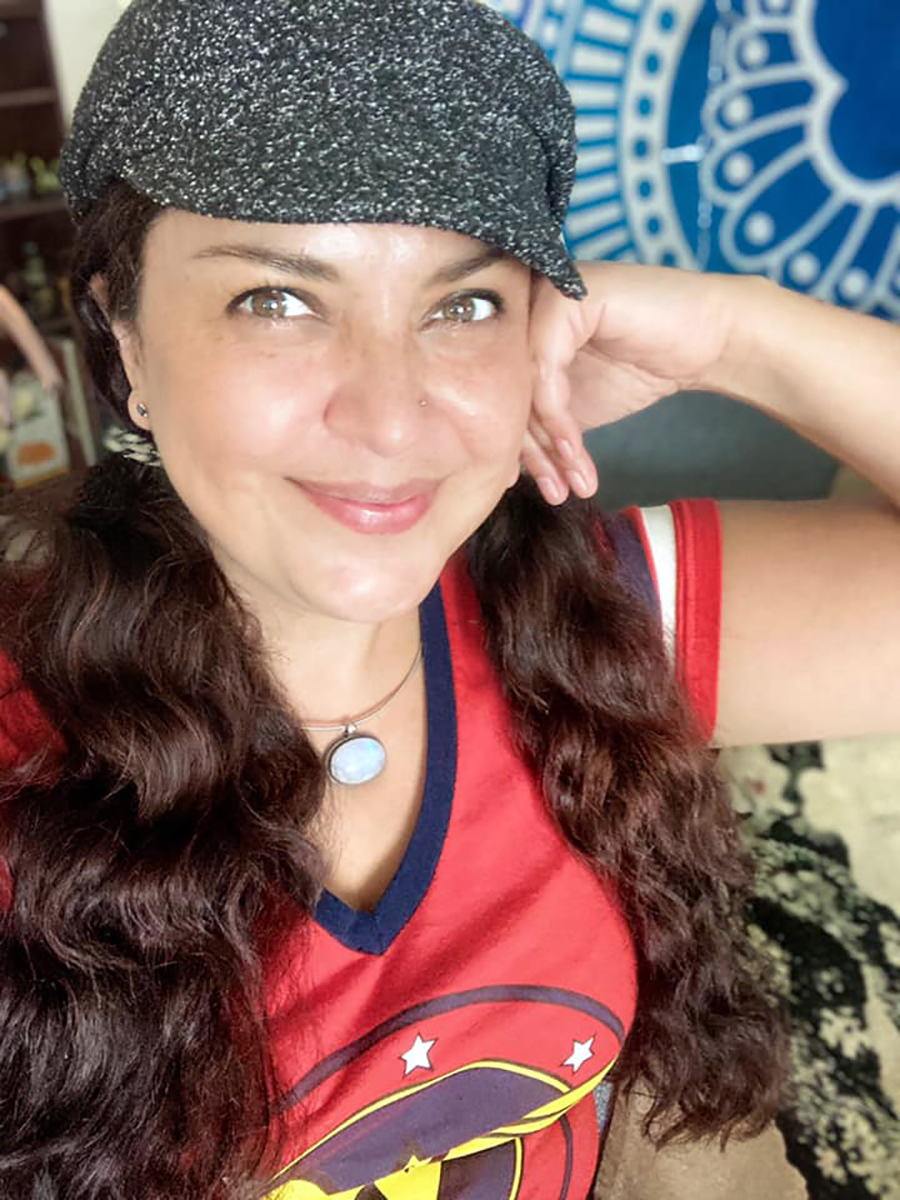
She is a bilingual singer-songwriter (“technically, I only speak two languages fluently, but I understand some French, Portuguese, and Italian”) and multi-instrumentalist, so I asked how everything fits together. She insists that all of her instruments write songs and that they call to her when they have one to share. “Heeding the call, I grab whichever one called my name, sit down on my couch with it, and spit out the song the instrument decided to write. It usually takes between five and 30 minutes at the most. I have no say whatsoever when it comes to what language my songs are in … it is whatever comes out. And depending on the instrument, some songs might come out in languages I don’t even speak. There is one song that I haven’t recorded yet that came out completely in French, which I memorized without any difficulty, and another in Portuguese. Interestingly, the guitar that wrote it is from Brazil.
“I think there are only a handful of songs I’ve actually planned on writing. Most of the time it’s an impulse that comes out of nowhere. The more I am in touch with ‘the other side’ or ‘the universe,’ whatever you want to call it, the more writing that happens. I feel like I am so influenced by the spiritual world that sometimes it seems like I am not even writing the songs, but just channeling them.”
Let the People Hear the Music
She is eager to share her music. She has a band, the Bad Hombres, which has included Drew Douglas (grampadrew), Matthew Strachota (Trailduster, Bartenders Bible), Chad Pittman (River City), Tom Peart, Clayton Payne, and Natasha Cruz. They call their music SouthAmericana. “I miss being able to play with the Bad Hombres more, but I got burned out trying to book us all the time and fighting to get us paid decently. Sigh. It’s a pity that as artists/musicians it’s always an uphill battle when everyone says they wouldn’t be able to live without music and art.” When they have a gig now, “it’s usually for benefits and donating our time to them. If I happen to get a well-paid offer that makes sense to play with the band, I still love to do so.”
But back around 2018, they were rehearsing and gigging regularly. She remembers, “There was a point when I was writing three or four songs a day. The band members used to make fun of it (in a good way), because I didn’t give them any time to learn songs before I brought new ones into rehearsals.” She goes on to say that, in those days, she often gave the band a choice between taking their cut from the pay or saving it to record. “We almost always chose to save it to record; that’s the main reason we were able to do so.”
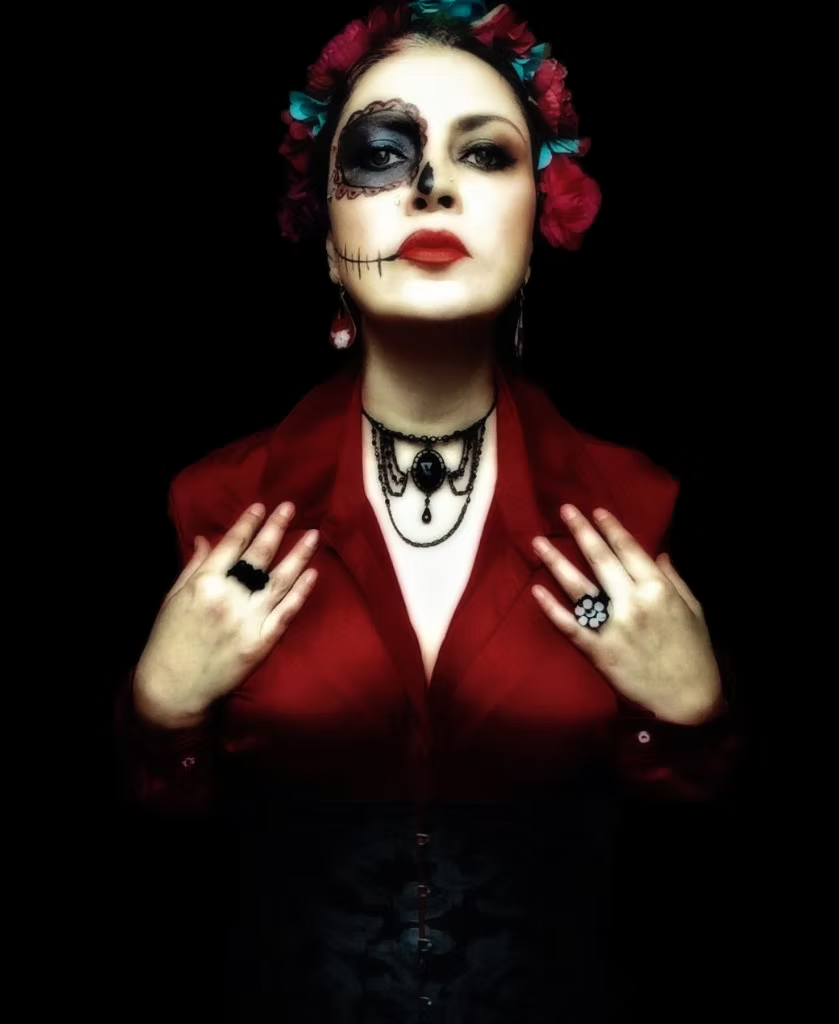
She is referring to Desnuda, the 11-track studio album that was released in 2021. But the story of that album began back in 2018 when she and the band (at that time without a drummer) recorded the single, “Ni de Aqui Ne de Alla,” with Christopher Hoffee at Chaos Recorders. She tells me the poignant story behind the song: “This song came to me at about the time my dad turned 90. The fact that I couldn’t be there for that made me quite sad. The words and music, as usual, flowed easily. This song talks about the division that we immigrants feel in our souls and the fact that we kind of feel like we float in a limbo when it comes to belonging to the land we are from and the land we ended up living our everyday lives. It is one of my favorites because of the emotion that came through. It was like an open wound that needed to heal.”
Julia was nominated for Best New Artist by the San Diego Music Awards (SDMA) in 2019, and the band recorded a couple more singles on their way to recording the full album.
But before they could complete it, that pesky pandemic came along. “Writing was the only way I could stay (moderately) sane. So yeah, I wrote A LOT.” She also experimented with GarageBand and was able to capture some of her feelings in song. Her self-produced Midnight Songs in the Time of Corona Vol. 1 was released in early 2021. The album, which was named for the time that she could record in the quiet without noise or interruption where she was living at the time, “was much needed therapy to get through the pandemic and the complete isolation and uncertainty. It brought out the worst and the best in people and it kind of reflects that.” She has about 20 other songs that she had planned to put out as Vol. 2. but never did. She earned a second SDMA nomination for Best Folk Song in 2021.
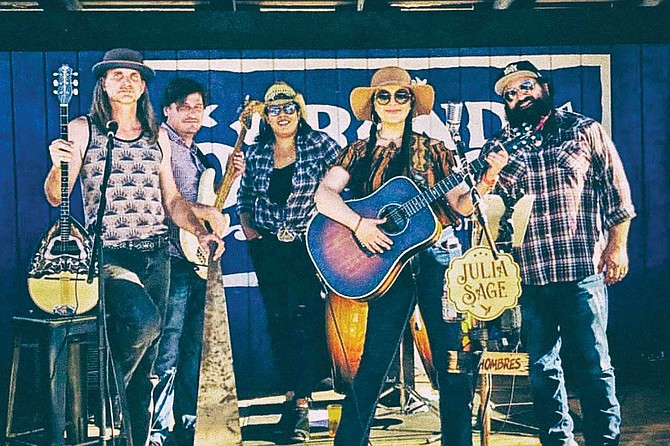
Julia Sage & the Bad Hombres
Julia Sage and the Bad Hombres were finally able to return to Chaos Recorders to finish recording Desnuda. Julia explains, “Desnuda means naked, and the name refers to how we as musicians/artists don’t hide anything from the world, and how absolutely vulnerable this is.” Recalls Hoffee of the sessions, “Each time, of course, was a very good experience. Julia brings a lot of passion to her music, which carries through the whole session. She also chooses people that mirror that same energy.”
The song, “I Shouldn’t Stay,” was nominated for Best Pop Song at the 2022 San Diego Music Awards.
Still Gotta Keep the Lights On
In the midst of all this music-making and getting it out there, it’s the reality, as Julia mentions, that most musicians and artists often don’t make enough to earn a living. In the past, she tried corporate life, but she realized it wasn’t meant for her. She wishes she could support herself as a full-time musician, but, until then, she relies on her other learned and innate skills to keep herself afloat. She went back to school again and became a holistic esthetician. After doing that for a number of years, she studied to be certified as an oncology esthetician and later, as a reiki energy healer. Julia remembers that as a child she “was a little ham to make people laugh (they say laughter is the best medicine, and I believe that). I’ve always been like that. I guess you could call them good vibes, and it was just instinctual from an early age, and then it came to a point where I started honing all that after I became a reiki healer.”
Julia Sage with her frequent collaborator Matthew Stracchota.
Julia is also an accomplished sound medicine woman, providing private and group sound medicine/sound bath sessions. She started this practice in 2021 when she taught herself to play the native flute. Julia tells me, “It was near the time of my mother’s passing, and playing it really clicked with me in a spiritual way. It calmed me down, it turned off my brain for a couple of minutes (a brain that is always yapping and driving me nuts). That set me on a path of calming sounds and sound medicine. I started collecting unusual instruments that would allow me to provide that healing energy for others and hopefully another way to make a living. I have done many sessions now, for people with terminal illnesses and mental exhaustion/stress, etc. Every now and then I get a client that helps me pay the rent and keep a roof over my head. Music has always been medicine for me, a calming force, so it’s not a surprise that I fell into this path.” In 2022, Julia released a self-produced instrumental EP called Soul Sounds. The flute and its spiritual connection dictated the direction of the songs and melodies, which were all improvised.
“Sound medicine is another way of channeling for me, because every now and then, if I don’t feel like doing it, as soon as I start the process it just takes over for me; not only the people who it was done for feel better, but I do, too. All the sounds, all the instruments, the chants, and, mostly, the spiritual side of it all—everything comes together from infinite forks, merging into a cleansing river. Sometimes, right after a session, I feel this calling to do a tarot card pull for the person I’m with, and it’s always someone trying to convey a message to that person; their message always comes across loud, clear, and on point, whatever it is. That is another reason I feel like I’m somehow just like a funnel for all these energies that need to merge and communicate and help people heal themselves.”
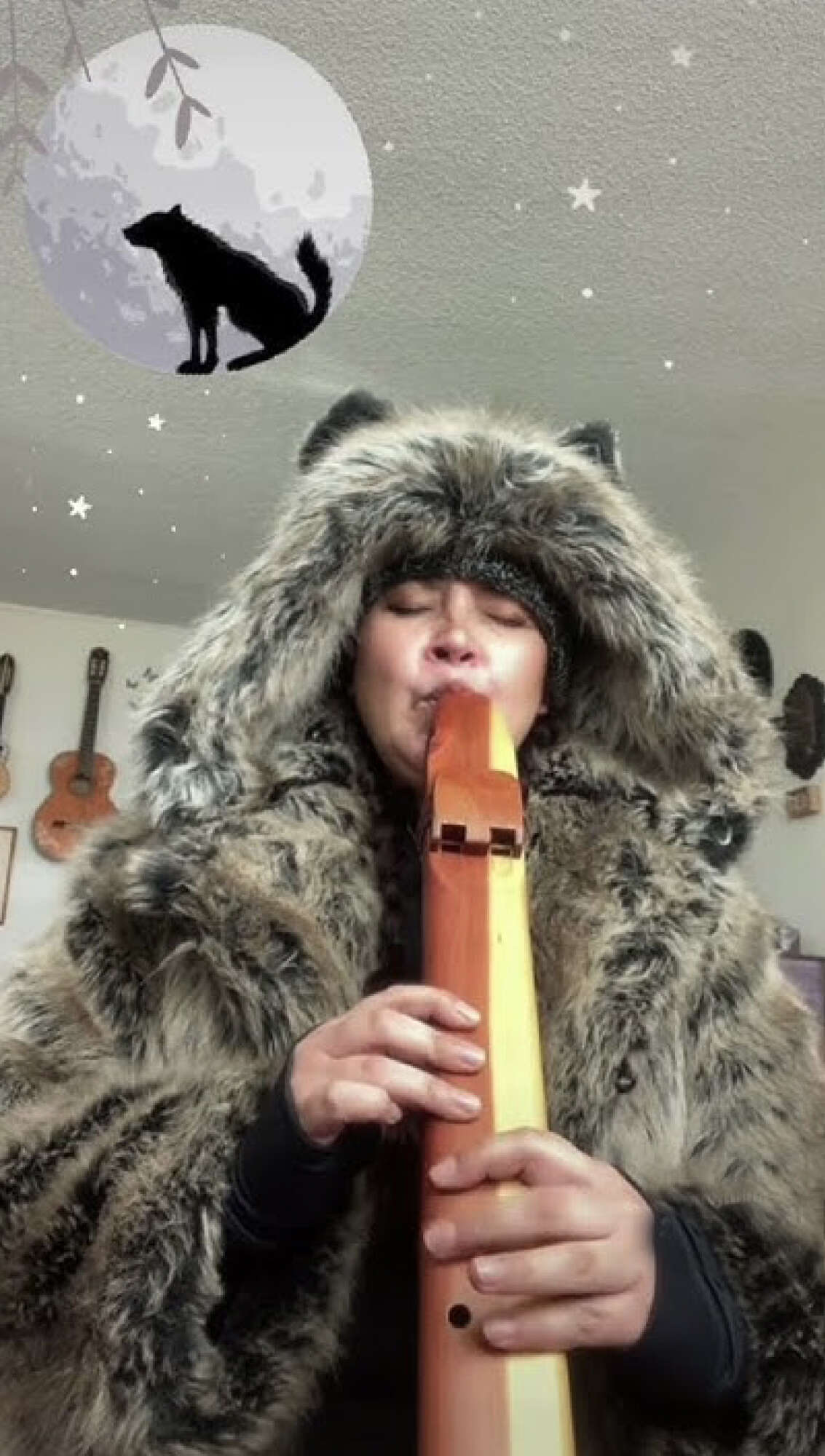
Most recently, in 2025, Julia became a Somatic Experience therapist. I wasn’t familiar with that practice, so I asked her what that involved. She shares, “Somatic experience therapy takes people back to the basics of where trauma is located: the body. It deals with generational trauma, PTSD, medical trauma, physical trauma, etc. It’s how the body stores all those memories and unresolved issues. It’s incredibly effective but it must start gently, working its way up to increase the capacity of a person to deal with stress and any difficult memories and situations. It even deals with trauma that happens in the womb. While doing my training, I had to put myself through it and I’m telling you, it’s some powerful stuff. And what’s really interesting is that you never know what will come to the surface and how quickly it might be resolved. Of course, the ideal way is to move gently and slowly and as a therapist I am supposed to be a witness and the support that the person needs to realize what they went through, what’s still stuck in the body, and how to work it out. I was so lucky to have one of my good friends offer me a scholarship to learn this and learn from her most of the course. Being an empathetic person naturally really helped me develop the skills needed because that foundation was there already because of the way I grew up.”
Diving Deeper into the Beyond
Another aspect of the pandemic lockdowns, as we all remember, was the amount of time many of us had that we didn’t really know what to do with. “That freaking pandemic was a mixed bag for sure. It gave me more freedom (time) but also stress of not having work because my regular job kept getting closed over and over again because of health mandates.” Along with all the writing and recording she did, she also started meditating more seriously, which sharpened her connection with the beyond. “I started having ‘visitors.’ I started astral projecting and seeing things or people that would show up a few days later in real life. But the coolest thing is that I started telling some friends what I had dreamed, seen, etc. before it became true, so I finally had witnesses to what I thought was madness that turned into doubt after a while because I questioned it being real when it was just me knowing about it. Hell, I still question it sometimes.
“One thing that happened, which was a bit of a catalyst, was the voice of one of my best friends calling my name and waking me up (twice in a row). It kind of freaked me out because I thought it was a thief inside my house, but there was no one there. The next day I found out that my friend had passed away suddenly.”
That experience is not the only arrow she has in her spiritual quiver. Julia tells me, “When my mom was transitioning out of this life, she did two physical things to me. Remember, she was in Chile and I was here in San Diego. She made my iPhone fly from the bedside table (twice) while she was still alive. The day she passed, and at the time she transitioned, she set off my smoke alarm (which had never happened before). It never did it again, except on the first anniversary of her passing. When she was gone, she kept being in my head and saying random things that I knew were not coming from my own mind. So, after my mother passed, I lost my slight fear of ‘lifting the veil’ if I wanted to.
My dad passed one year and nine days after my mother did. He died from Covid, and it was a shock. One day he’s in the hospital, the next he’s gone, and two days later he was buried. I couldn’t cry for a year. I just felt like screaming my head off somewhere where no one would hear me, but I never got to do that; it felt embarrassing and impossible to find an isolated place like that. I think one of the main reasons it was so hard was that I could not feel him around me like I had felt my mom. But after a year, finally, he came through. He communicated through one of my flutes in a way that was undeniable and magical, and I was finally able to cry.”
The Music and Messages Continue Flowing
Julia continued to record and release singles. In 2024, she gave the world “Delta Sunrise,” a self-produced instrumental with a shamanic vibe, and “La Llorona de San Diego,” which is inspired by the old Mexican folk song, “La Llorona.” Julia transformed it into a protest song about San Diego’s rapidly rising cost of living. It was recorded by Josquin Des Pres at Track Star Studios as a benefit to raise donations for Border Angels.
Last year, Julia received a grant from the Steam Engine Foundation that she used to record “¡BASTA! (Enough!)” at Satellite Studio with Jeff Berkley. Percussionist Monette Marino helped out on the track. Julia describes the song: “It’s a protest song in a way as well, about how men are killing the earth and how we must save it. The song came to me in a straight-up vision. I had nothing to do with the writing process except for my fingers playing the guitar and my pen writing it down as fast as I could. It took about 10 minutes to finish the whole thing, which is not unusual as far as timing, but the whole-body tingling and sensations that happened when it came through were definitely a little different.” Berkley reflects, “Julia carries the power of the universe in her veins. She walks into the room with it. Her performances both live and in the studio are just an extension of her powerful sorcery. She doesn’t have to access it, it’s always with her.”
She finished 2025 with the release of “Skeletons,” recorded with her band and done as a learning/trade opportunity. It was recorded by Eric Nielson for his class, and she traded a healing session for Rachel Hall to do the mix. “I think everyone did a great job, including my band. I like this song; you can dance to it… And if you listen all the way to the end there is an Easter egg buried in there.”
Looking Ahead
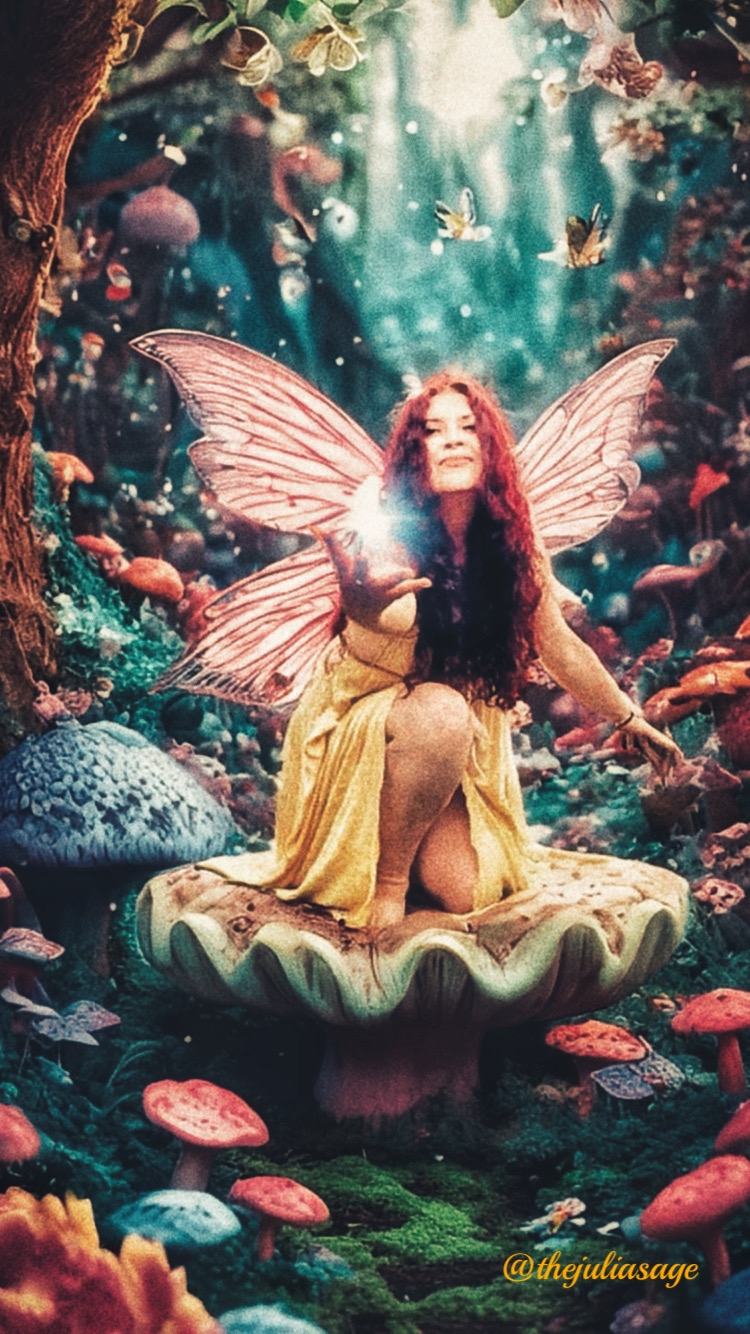
Julia lets me know that she doesn’t really make plans, “Things change constantly in this world; nothing stays the same. I try to live as well as I can every day that I am given.” That doesn’t mean she doesn’t think about the future. She has a few dreams out there, such as taking a real vacation sometime and having her band play at the Rady Shell to a sold-out crowd. She would also like to do a sound medicine session at a place with amazing acoustics. Ultimately though her wishes are something that nobody should have to wish for. She’d love to have a permanent physical home and “to live somewhat comfortably and not have to stress over rent and my basic needs. It doesn’t have to be fancy (I love my current little apartment); it just has to be enough and safe. I guess we all want that, don’t we?” And above all, she wants to help as many people as possible with the gifts she’s been given.
She doesn’t consider herself an activist or an advocate. “I am more of a mama bear who wants goodness to prevail and evil to go to hell where it belongs… so I do what I can for that to happen, however small the thing I do ends up being; I hope it leaves ripples somewhere. Music is something I can give freely when needed (playing benefits and such) and hopefully provoke some thought and some change.”
Her hopes for others are fairly innocuous. She believes people should have “their basic needs met and be able to have access to education and healthcare. They should have freedom to do whatever they wish (as long as they’re not hurting others in the process). There should be justice for those who have been victims of powerful, evil people. All of these things are just basic human decency. I just want humans and other living things to be as happy as they can in a world that is not run by assholes. That is all.”
There is one more thing. “I wish the sentiment from 2020, when people were so starved for art and music and kept saying they couldn’t live without it because it felt awful, would have put their money where their mouth was and continued to do so. At the same time, I wish that musicians would appreciate themselves more and demand fair pay instead of undercutting each other; I know most of us are struggling in this country nowadays, but wouldn’t it be nice if we all got the chance to earn enough to live without compromising our art?”
To that end, she has joined Songwriter Sanctuary as Board Secretary and will also present its Hispanic Heritage Month showcase in September. Lindsay White, curator and Board President of the monthly series at the Normal Heights United Church, feels Julia is a perfect fit. “As we transition the series into a nonprofit project, I want to collaborate with alumni artists who can offer their unique experiences and skills and contribute meaningfully toward our goals of making San Diego more accessible for artists and making the arts more accessible to San Diegans. Julia was one of my first calls, not only because she’s exceptionally talented and reliable, but because she’s also navigating the barriers we hope to reduce. Just listen to her gut-wrenching “La Llorona de San Diego” — every time I hear Julia perform her spin on this folk song, it lights a fire under me to continue this work. I think that’s why we click. We’re not dreaming about Grammys and mansions, we’re scheming about basic needs and human rights.”
Julia Sage describes herself as, “Still mostly nice, but I don’t take any shit anymore.” From her Chilean upbringing to doing what she can to thrive here musically and spiritually, she still counts herself lucky. “I am quite lucky most of the time, so I don’t want it to sound like I’m whining… the universe always steps up and saves me. Even though sometimes it’s at the last minute and makes me sweat it quite a bit, I’m still grateful that it does come through for me, even if it’s when I’m about to lose my grip.”
If you’d like to book Julia for any of her healing work, send her a private message on Instagram. Find her @thejuliasage.
And be sure to catch Julia’s performance on Saturday, February 28, for We Are All Protesters, a benefit for the ACLU of San Diego and Imperial Counties and other local charities, at the Soap Factory in Logan Heights. The show starts at 2pm and also features multiple other San Diego artists like the 7Brothers Burns, Lisa Sanders, and Ashley E Norton. Tickets are available on EventBrite.

