



Cover Story
The Bastards: Don’t Let the Name Fool You

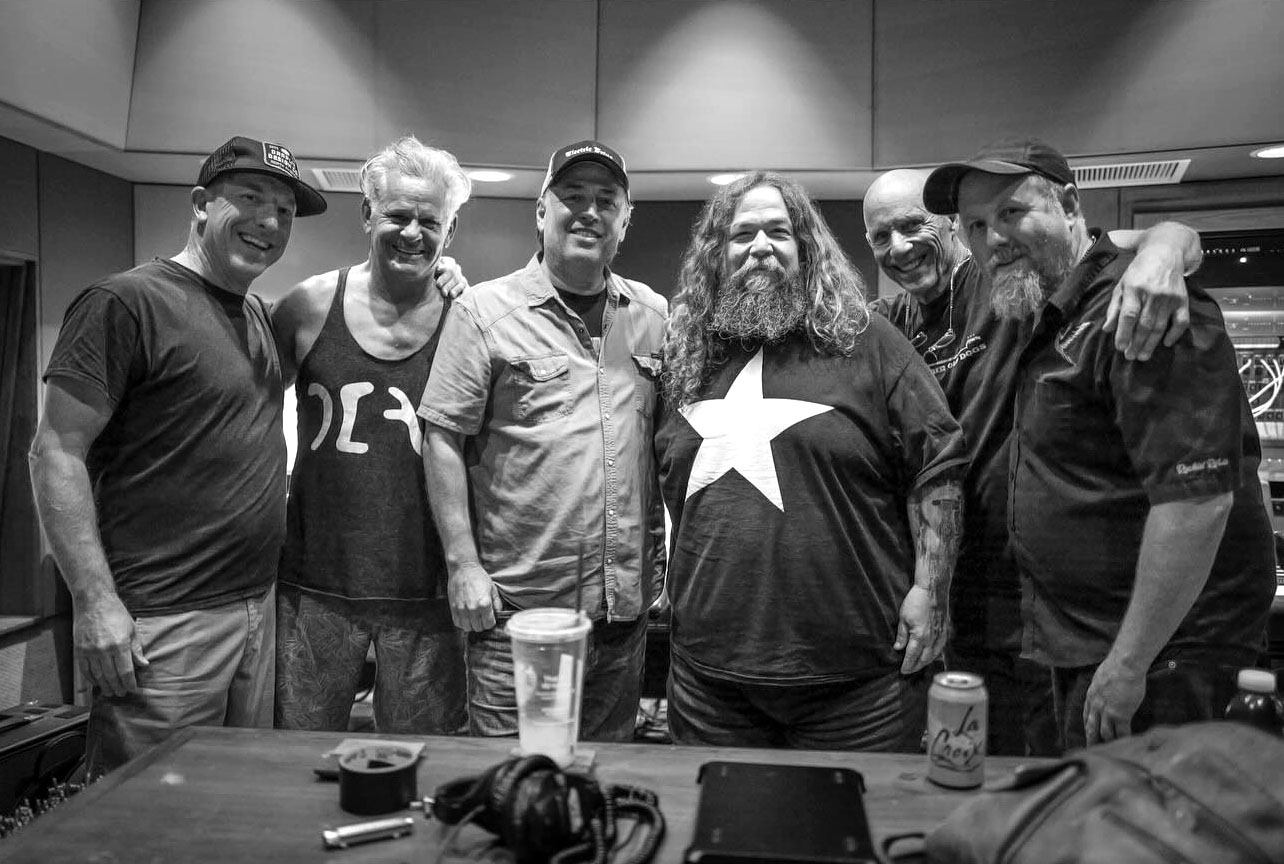
The Bastards in the studio: Patrick McClory, Danny Campbel, Shawn Rohlf, Jeff Berkley, Tim Flannery, Ben Zinn.
This is a journey, a trek into a parallel universe where I would love to reside always. Well, mostly, kind of. It’s just that I know when I step over the threshold at Satellite Studio, I am entering a place where dreams are developed and manifested.
Beyond the bright reception area and the heavy inner door, the room is dimly lit. Jeff Berkley sits at the board, the controls shining upward on his face as he makes adjustments, quick, feather-like fine-tuning of the inputs. He is at once the sound engineer and one of the three electric guitarists as well as one of the three vocalists and songwriters on hand.
Shawn Rohlf is another, and he sits next to me on the couch, with a microphone on a stand positioned in front of him at the ready. Acoustic guitarist and vocalist Tim Flannery is in the isolation booth, seated on a stool warming up to sing his song “Ashes to Ashes.”
The back wall is made almost entirely of glass, and through it I see globes of colored lantern lights hanging from the high ceiling. In the large room, drummer Danny Campbell sits, joined by bassist Patrick McClory and guitarist Ben Zinn.
There are six of them: three singer-songwriters who play instruments and three instrumentalists who don’t sing; together they are the Bastards. But don’t let the name fool you, they are the nicest group of guys. I’m hanging out with them at the studio as they record what will become their album, Fall Risk, which was released this past October.
It’s always a joy being in the studio with Berkley. It seems that whomever he’s with, there will be an endless string of one-liners and laughter. The Bastards don’t fail to deliver on that front, and I’m having such a good time, I feel like I’m on vacation. But I’m working, trying to pinpoint the angle—there are so many.
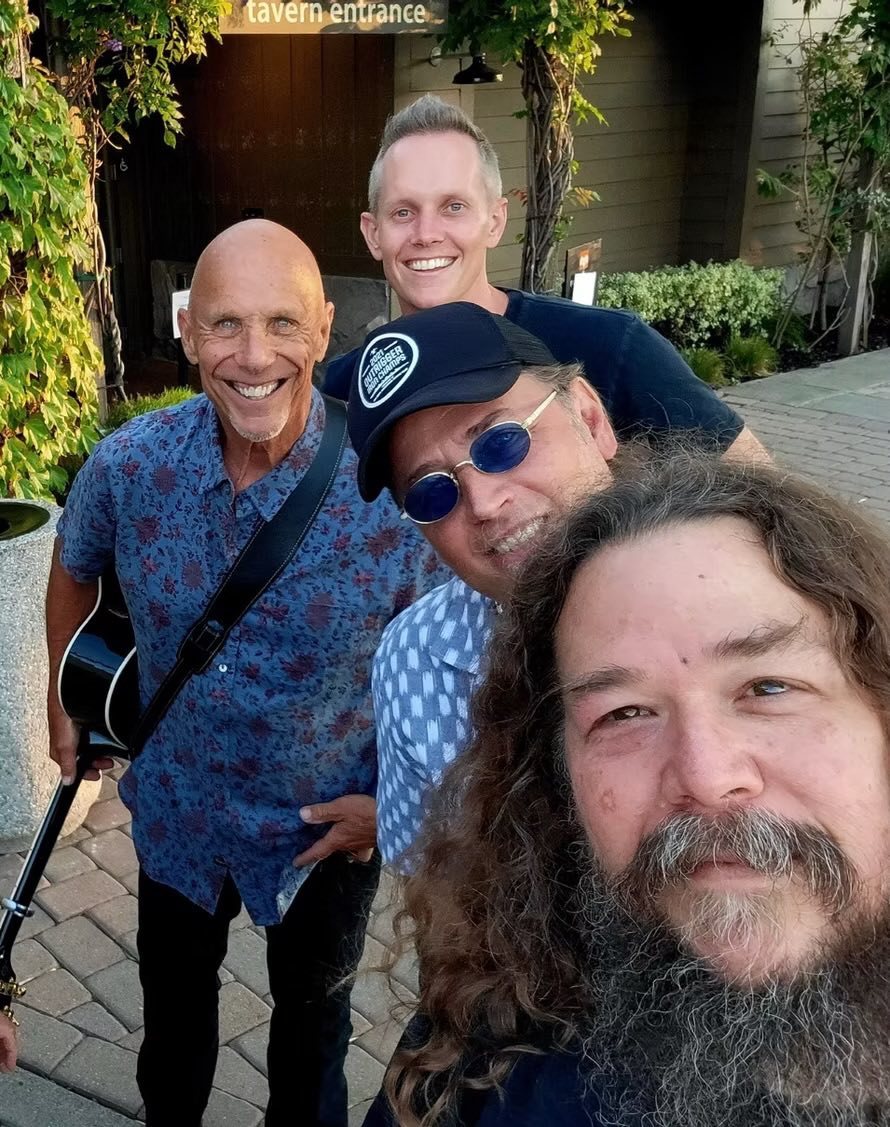
Tim Flannery & the Lunatic Fringe: Flannery, xxx, Shawn Rohlf, Jeff Berkley
Their strands of musical DNA have twisted and looped through many of the same people and projects for years—some tighter and some from further afield. Berkley has been playing in Flannery’s band, the Lunatic Fringe, for almost 30 years; Rohlf joined them in the early 2000s. McClory and Campbell have both played with the Bastard Sons of Johnny Cash, which makes them, in a way now, double bastards. The two of them, along with Zinn, are in Zach Barnhorst’s band ZB Savoy, and they have all regularly played with Stacy Antonel. The three of them, plus Berkley, have also played with Sara Petite. To top it off, McClory and Rohlf are the twins in the group, as they share a birthday. It makes my head spin.
Flannery recalls meeting Berkley in 1996, who was in the Joel Rafael Band at the time. “Yeah, I used to follow Joel Rafael. I used to love watching him, and Berk was just a kid in the back playing djembe, you know, but had that incredible magnetic, you know, I don’t have to explain it to you. You guys see it. We’ve seen it and been attracted to it forever.”
He continues, “Down at Java Joe’s, I spent a lot of years being trained by the best down there as well as watching them and getting an opportunity to do the reps. And then Berk saw the people I was playing with, and he called and said, ‘Hey, look, you’re playing with all my friends—can I play too?’ I go, ‘Sure, we’d love it.’”
Berkley remembers even further back to when he was just 12 years old—a Junior Padre and Little Leaguer. His mom, who had a crush on Flannery, took him to a Padres meet-and-greet. “I got to meet him, and I was a huge fan because he was this utility player, and that meant he could play a bunch of positions, and I really thought that was cool. And also, I knew he was a musician, and I loved music and was already dabbling with drums and piano and stuff at that age. So, it just was cool. He was this guy who loved baseball and music, just like I did, you know, so we had common ground. But I was just a fucking little snotty kid when I met him, man; I didn’t know shit. I was just learning about songwriting and how to be in a band and all that. I think he probably was too. So, it worked out really well. We’ve kind of grown up together in a way, even though he’s a little older than me. But that’s really the story.”
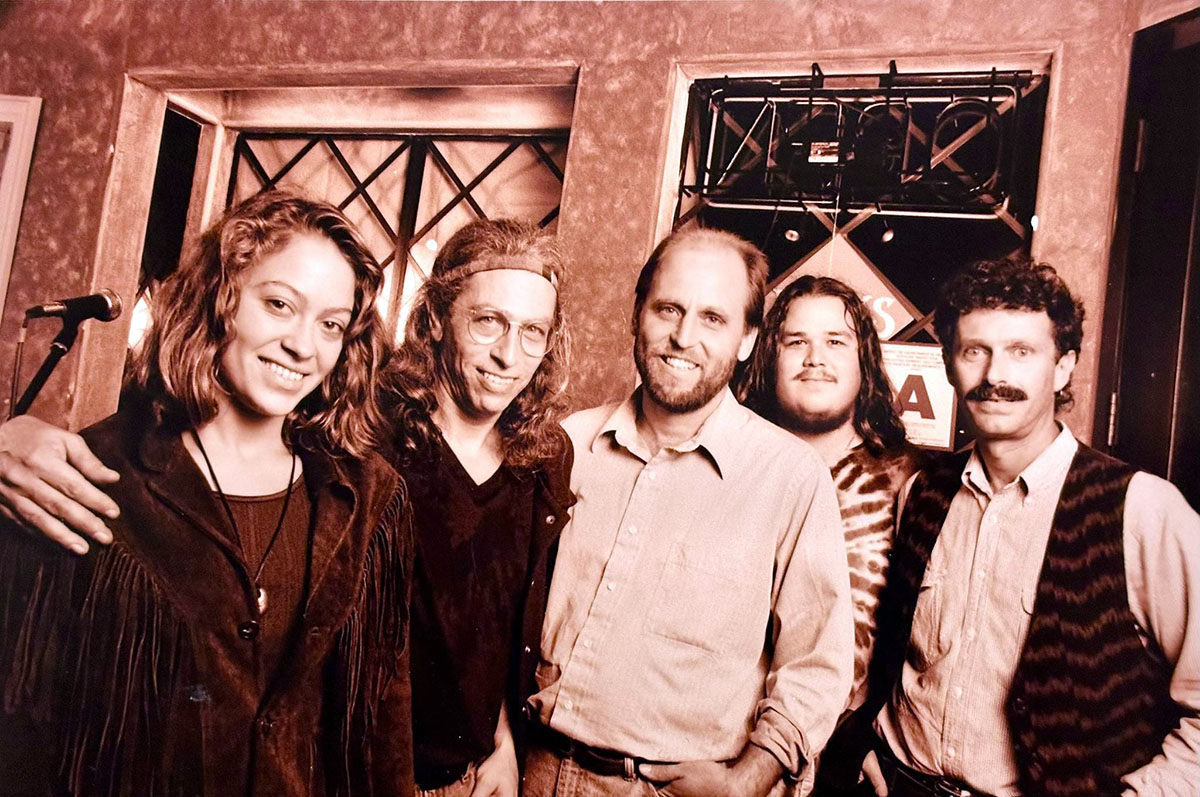
The Joel Rafael Band, 1994: Jamaica Rafael, Joel Rafael, Carl Johnson, Jeff Berkley, Glenn Goodwin.
Fast forward to his time with Joel Rafael, Berkley continues, “We toured around, and we opened for Joan Baez and Pete Seeger and all these people. I did that as a percussionist. I played with all these people—Jackson Browne and Ben Harper and all that—with that band. That’s where Flan first saw me playing percussion, and he was like, ‘Oh, man, that guy’s cool.’
“Later on, Dennis Caplinger was in the band, and he was like, ‘You should get that guy Jeff Berkley to play percussion in your band.’ At that time, Flan only played like five or six shows a year because he was in baseball, so we would only play during the off season. We’d play gigs, and it was easy, even though I was busy. It was cool to start playing with him, and, basically, me and him and Dennis Caplinger were his original band.”
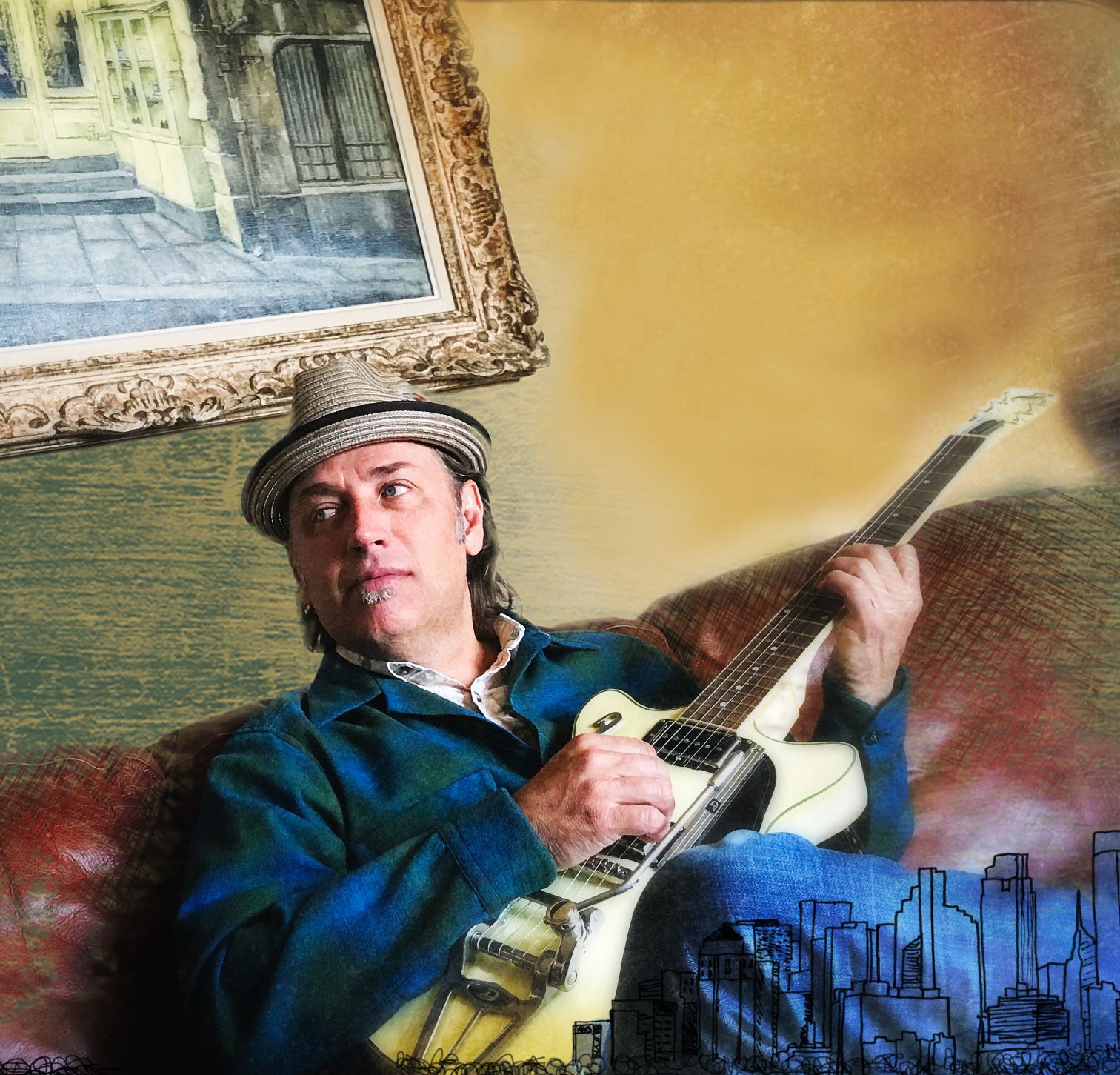
Shawn Rohlf
When Rohlf arrived in San Diego in late 1997, he went looking for the folk venues and ended up frequenting Twiggs and Java Joe’s, where he met Berkley. “I ended up on some open mics, on some folk shows with him, and got to know him first, and then, through him, I met Tim. And so, this is early 2000s, I started doing shows with them both and becoming very good friends with them.
“And then, you know, shortly after that, Flan was like, ‘You got to be in my band.’ And I was like, ‘Sure,’ and I joined up. So those guys are like, you know, my brothers. I’ve known them for a long time.”
Zinn and Rohlf met at the Office bar in North Park during a regular event called the Grand Old Office, a country music night with a house band that accompanied different songwriters who would come through and play. Rohlf felt an instant connection with Zinn: “He’s a Nebraska boy, and I’m a Minnesota boy. We had this Midwestern kind of connection pretty quick.” They played in several bands together—Rohlf’s bands, Jonathan Lee’s band, Sara Petite shows—before joining up with the Bastards.
Rohlf met Campbell through Petite just a couple of years ago but they quickly started playing a lot together. “Danny’s the guy, you know. He’s such a great drummer and such a great guy, so that’s why everybody wants to play with him.”
“It’s interesting, you know,” Rohlf continues, “you meet a lot of musicians and play with a lot of people, but there’s some that you just really click with. And that, to me, is like half of it. It doesn’t matter how good they are if you don’t click with them, you know. If there’s no chemistry, it just doesn’t work, really. But these guys, I click with all of them.”
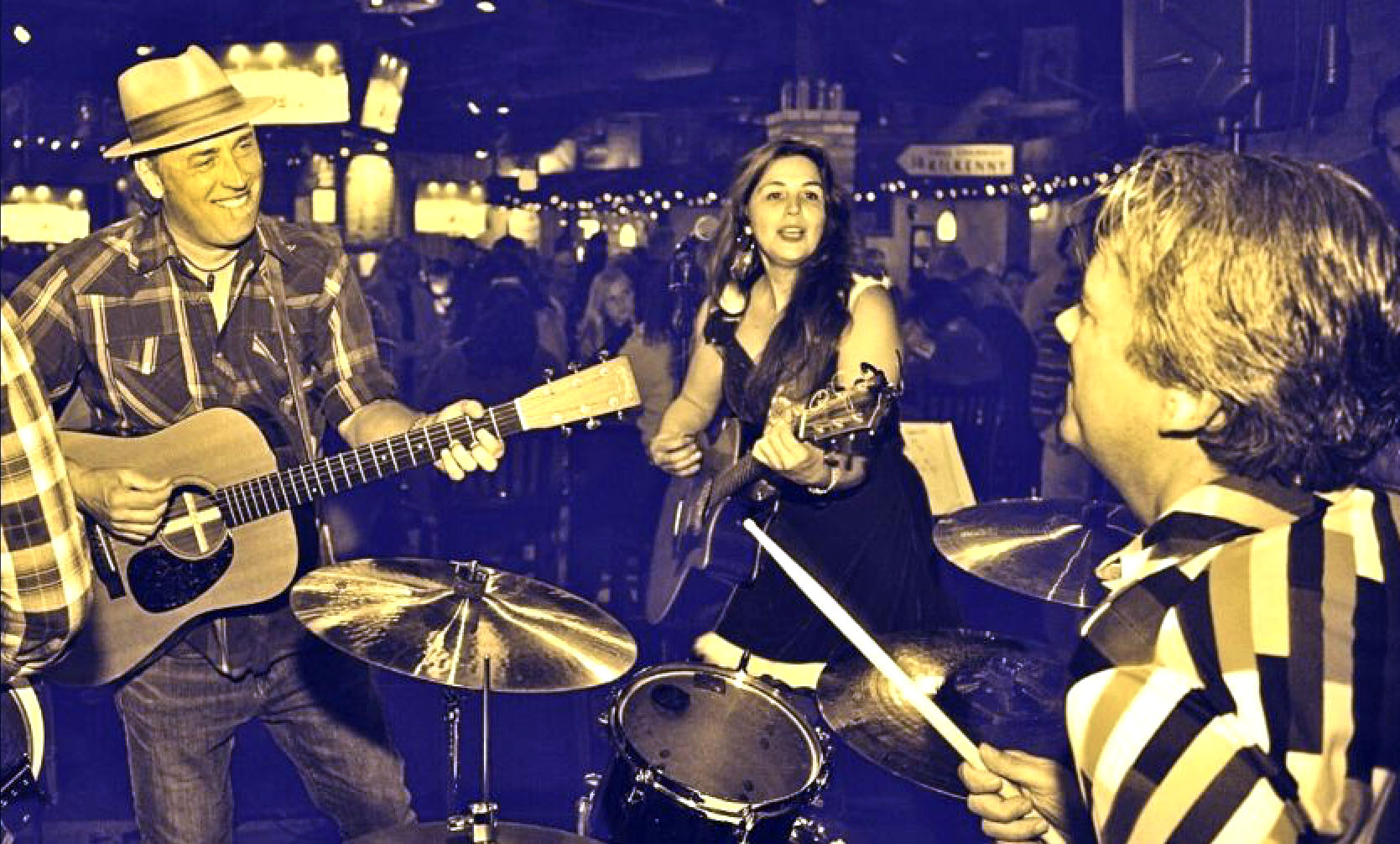
The Bad News Bears
Rohlf and Petite have a just-for-fun band called the Bad News Bears, and McClory joined them about ten years ago. They don’t rehearse; they simply book gigs, show up with a dozen or so songs each, and play them while the others join in. That project saw Rohlf and McClory bonding right away and becoming good friends. “So, when Jeff put this band together, he was asking about bass players, and I was like, ‘I think Patrick would be a great bass player for this band.’ And so, we got him, and, sure enough, he fits in perfectly.”
The impetus for creating a band in the first place came from the increasing number of band-type gigs Berkley was being offered. Scheduling issues with others made it difficult, but he wanted to be able to accept more of them. Right away, he considered a trio with Rohlf and Flannery because they had such a long history of playing and being on the road together. The three of them knew each other well and presented no learning curve. The idea eventually expanded from just the three of them to include additional players who would round out the band.
Berkley shares, “Well, Shawn had bragged about Ben being a great player, and I had heard him play with Josh Weinstein one night, and he sounded like Mark Ribot, my favorite guitar player in the world. I’m like, ‘Oh my god, that guy’s amazing.’ He literally just plugged his guitar straight into the amp, and then turned the reverb on, and he was getting all these fucking weird sounds. It was so cool.”
After seeing Campbell, McClory, and Zinn backing Petite at a Beat Farmers tribute, he remarked, “They were just rocking every song.”
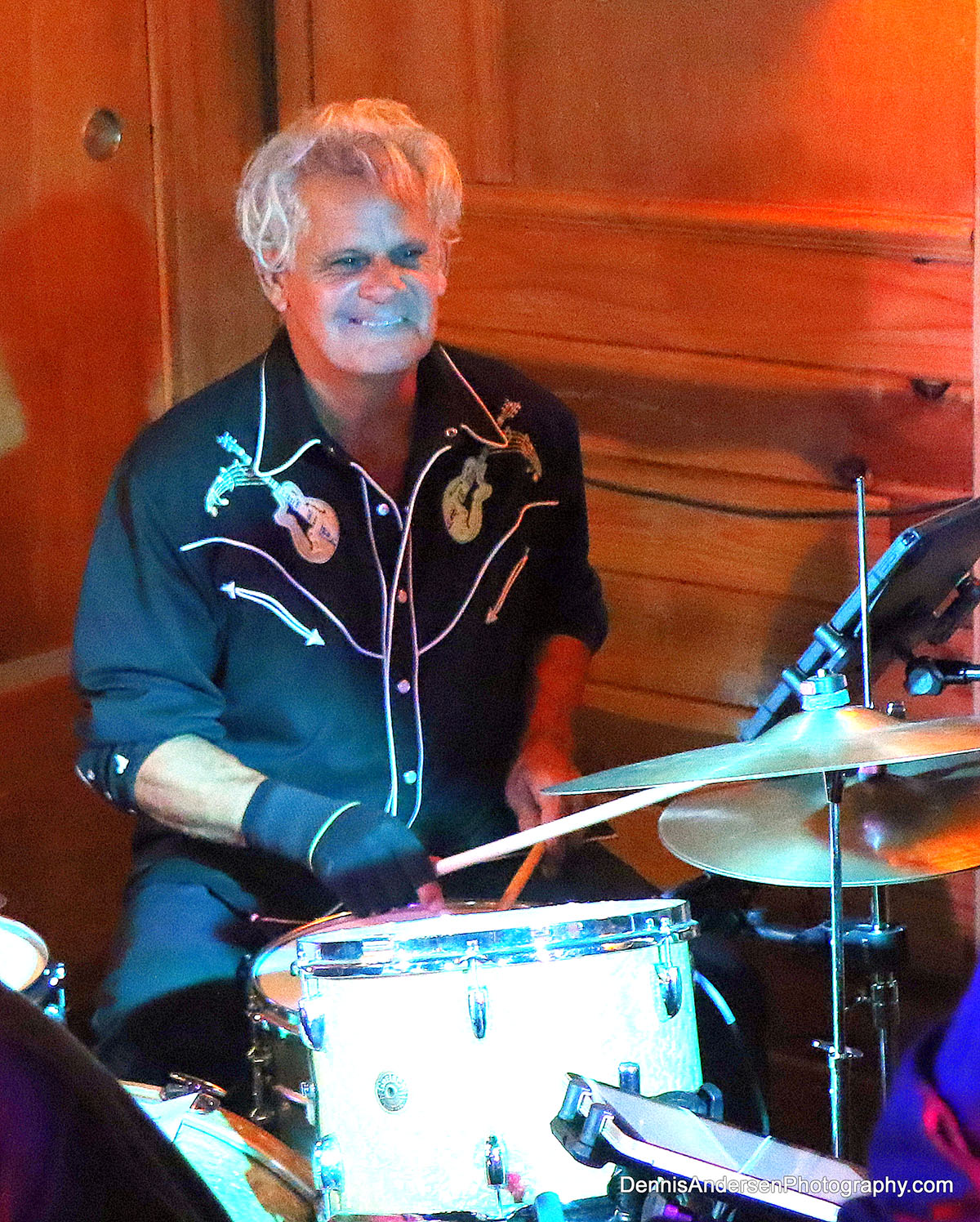
Danny Campbell. Photo by Dennis Andersen.
The wheels started turning then, and after a gig with Campbell, Berkley recalls, “I was out in the car getting stoned and lamenting about the schedule issues, and he walks by my car like the fucking angels dropped him on my porch. And I just said, ‘Hey, you wanna be in a band?’ He’s like, ‘Really?’ I go, ‘Yeah, really.’ He’s like, ‘Okay. We’re calling ourselves the bastards.’”
Campbell thought he was joking, but says, “Now I get where he’s coming from, you know? Like, I mean, it’s funny and we’re serious, but we’re not taking ourselves so seriously, you know?”
“The whole evolution happened really quick,” Rohlf says. “It was like Berkley had this idea of doing a kind of an outlaw country sort of vibe. I thought, ‘That sounds fun.’ And these characters here, too. I mean, when their names are mentioned, it’s like these are the guys that you walk into a party and go immediately to because we’ve known them and had some good times over the last couple decades, playing with them at different shows. It’s a lineup, so we’re all like, ‘This is awesome.’”
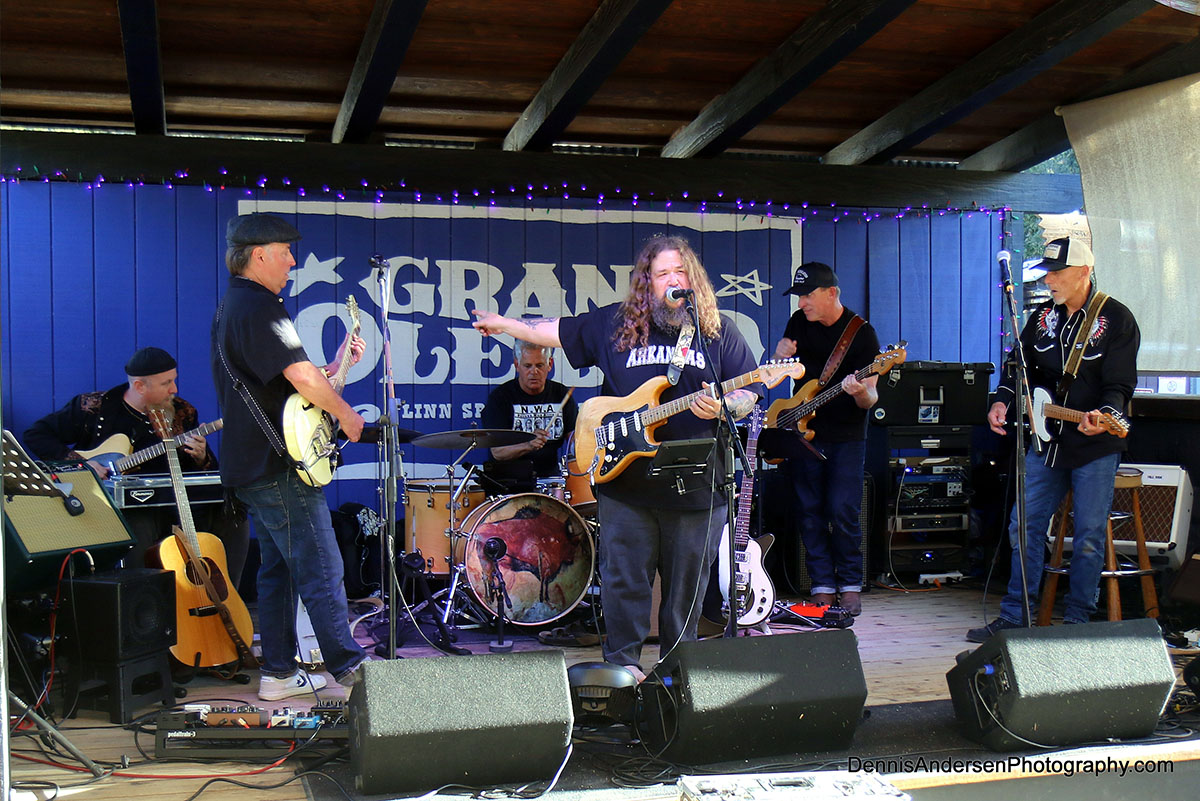
The Bastards first gig at the Grand Ole BBQ. Photo by Dennis Andersen.
They are all amazed at how easy it all came together. Berkley laughs, “It’s a good sign when something’s easy like that, when you’re not shoehorning something or pulling teeth to get them all together.”
“We got together for those two or three rehearsals at Flan’s house,” McClory adds, “that was the first time we played together ahead of our first gig. And it came together, like, really quick. I mean, the vibe was really good. We knew things were happening musically, but it was also a great hang.”
“When the three of us are presenting our songs and you’re hearing a bunch of people play your song for the first time,” Rohlf chimes in, “I’m like, wow. This sounds good already. You know? It was instantly a cool sound.”
Flannery says, “And I think it was surprising to go into the studio so quick. But having a record now, it’s definitely helped me, even after our last show. It gave me a lot more structure once I heard the recordings, you know.”
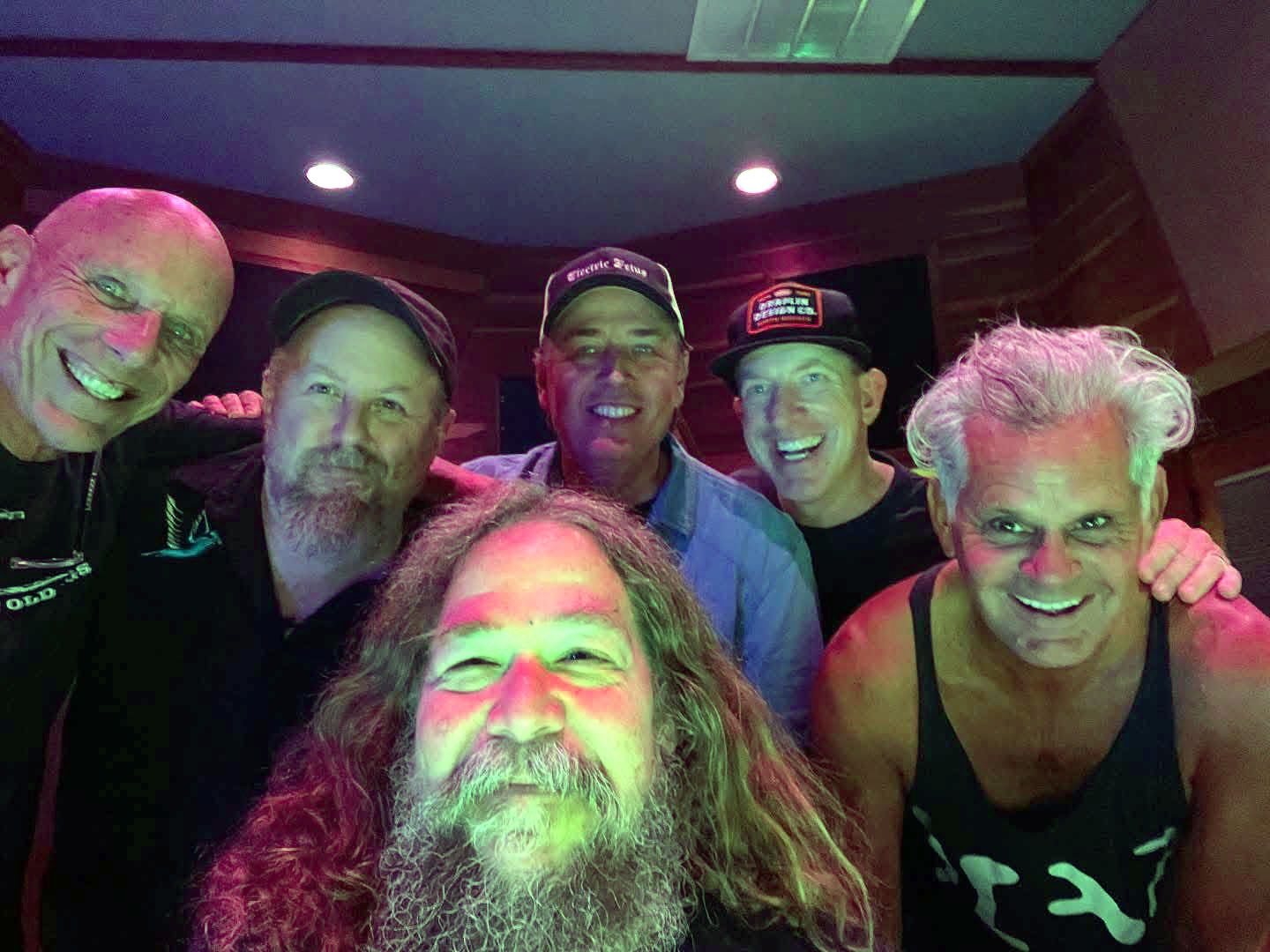
The Bastards in the Studio.
About recording, Berkley adds, “You know, these guys all showed up prepared. These three, well, they knew our songs better than we did. Really, truly. And we learned 32 for our first Grand Ole BBQ gig, I think we played 17 of them, but we were prepared.” He continues, “We could have done all sorts of different songs, but I personally was in a really heavy writing season, just writing, writing, writing. And so, I thought, let’s write a record. I was like, each of us will bring four songs. So that’s what we did. And we came in here a couple days, two or three days.”
“And, like, with these guys,” says Zinn, “each having distinct different songwriting styles, it’s almost like being in three different bands sometimes, which becomes one band. But each one of these guys has a distinct voice in their songwriting styles. And it’s so cool to play those all separately. But then when it all comes together well, that’s the cool thing.”
Early comments from the audience at their album release party at the Ould Sod noted surprise at how well everything flowed and worked together, that it sounded like one band.
McClory reflects, “There’s still a common thread that the three of you share with your writing styles, even though they’re distinct. When you listen to the record, too, it transitions from one person singing lead to the next, but there’s kind of a natural connection point, even though they’re different voices, which is cool.”
“I think you three,” Berkley says, referring to Campbell, McClory, and Zinn, “have a lot to do with that. You’re the engine behind all the songs, too, so it works out that way. The Beatles, the Band—those are two of my favorite bands—all have three lead singers. When John sang a song, you’d get that punk rock edge, and then Paul would do his pop thing, and every few songs George would break your fucking heart. You know what I mean? So, this has that same thing, and it’s just sort of a secret weapon. Nobody’s ever gonna get tired of the same sound on every song.”
The instruments-only half of the band don’t write songs, but they are crucial to the outcome of every one of them. McClory says, “We have input about the vibes of the arrangements and contribute in that way. But these guys, they’re the writers, they have the tune, and then we get together and kind of bring it to life from there.”
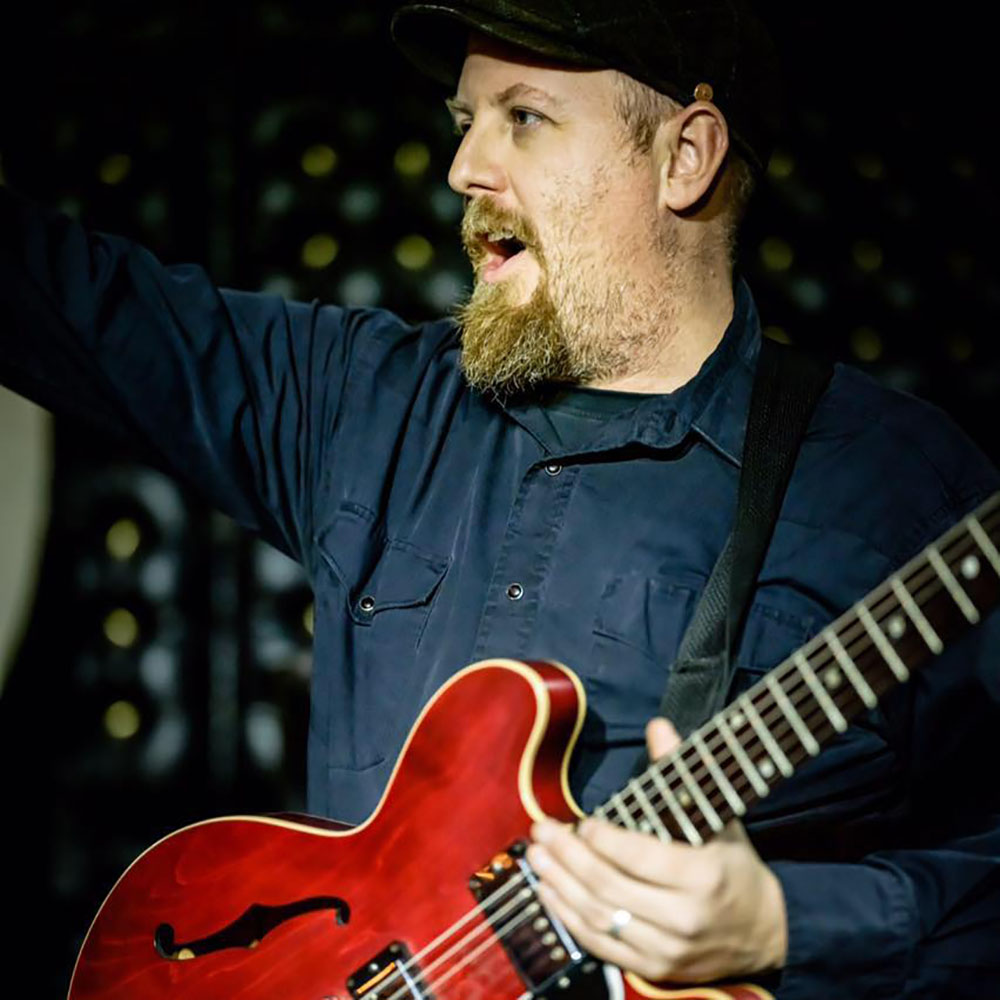
Ben Zinn
Zinn agrees, then shares, “I love the opportunity to inject myself into these songs that these three songwriters have crafted. There’s a tremendous level of trust from all three of them for the band to produce their vision of what the song would be. It sort of all came together so quickly that everybody’s first instinct is more or less what you end up hearing on the record. That level of trust is pretty rare when you’re in a sideman role. But with this project, and with the record specifically, it came together in the most pure and natural way of a band putting together a song, which is: here’s the song, let’s play it and make it as cool as we can.”
“We got all the right people in the room,” Berkley adds. “There’s never a time when we have to say, ‘play it differently, ’ because I know that’s the person I wanted in this band and that they’re gonna do the right thing. We go one, two, three, four, and they know it better than we do.”
Rohlf talks about gratitude, “I think that feeling is why we all want to have bands. Why we wanna be in a band, you know? You give somebody a song, they give it back to you and you’re, like, wow, thank you.”
Berkley continues along that vein, “How many times have you written a song that you thought was blah, but then you brought it to the band and you’re like, well, we’ll try it and then you can’t believe it. It’s like, oh, I didn’t know. But, you know, a picture’s really nice, but when you get a really beautiful frame and put it on the wall with lights and stuff, it becomes a whole other thing.”
The vocalists have begun to explore and discover more about how they sing together. Where once the harmonies were more spur of the moment, they now have more purpose and structure, yet the dynamic is inherently fluid. Each time the lead shifts to someone else, so do the harmonies. They are beginning to slowly but surely find a new pocket.
“This band has been together 27 years, Flannery’s band, and there’s a new gear because this band sort of gave that spice to it,” Berkley explains. “It’s been great. This band has an edge to it that none of the other bands we’re in have. There’s a bit of punk to this band, just a little taste of it, you know? And we all sang differently on this record too, with energy, like physically attacking the mic rather than, you know, singing folk songs or whatever.”
Rohlf adds, “That’s really cool too because it’s fresh. We haven’t even gotten very far with that yet. I mean, we’re just beginning to find all the possibilities because, you know, everything’s moving really fast.”
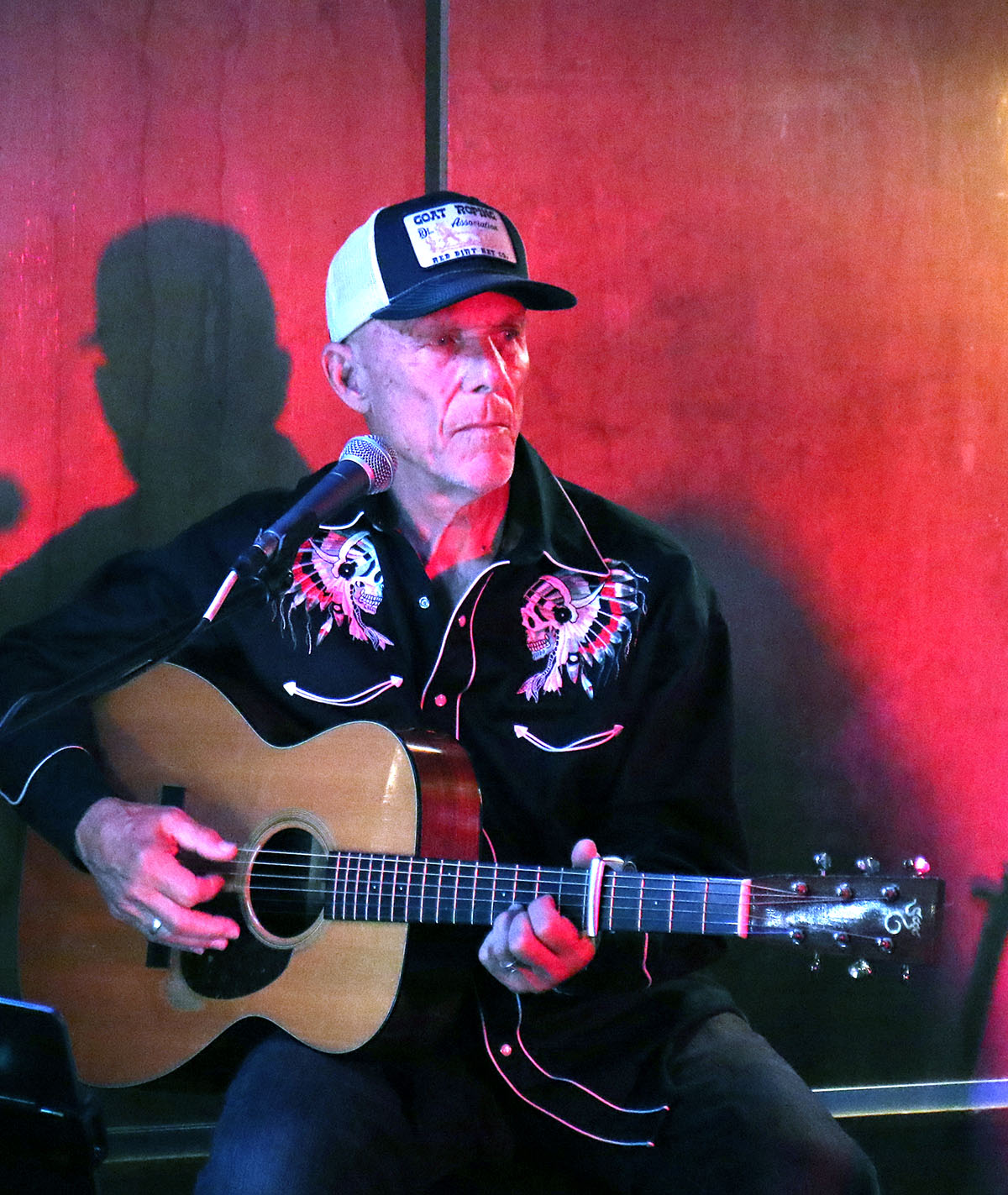
Tim Flannery. Photo by Dennis Andersen.
Flannery is enjoying playing music without having to tell stories. He says, “A lot of people do that. But to be able to just go from song to song, and we just bam bam bam with somebody else singing every time, I love it. That’s kind of a weight off,” he reveals. “I learn everything by doing it over and over and over and over again. And you know, there are a lot of songs to learn, but I love that. I love to lock in every day for three hours, you know, because at any moment he could call and say, hey, we got a gig. Somebody’s gonna actually let the Bastards come play!”
I sat with them while they recorded in the studio, interviewed them together and separately, and I heard the same thing from each of them when I asked what makes them different, Flannery put it this way: “From a coach’s standpoint, I’m gonna say team chemistry and the commitment is what these guys have. And we all kinda hold each other responsible.”
Rohlf pipes in, “Well, I think Flan’s point is that he’s coached teams that were different and they end up winning the World Series. Right? Yeah, a rag tag bunch of pirates. It’s the chemistry with this particular group of people.”
What makes this project different is that they themselves are different now. The years have softened some of their edges, yet honed others razor-sharp, and they find they’re in a position to just go ahead and do and say what they want. They’re singing folk songs that are now edgier with that attitude and permission they’ve given themselves. Yet, Berkley wants to make sure they don’t scare anyone away. “I want the acoustic music and folk music fans to know not to be afraid of this band. It’s not going to hurt you. It’s a little louder, but it’s the same spirit of Woody Guthrie. Believe me, if he were playing now, he would definitely use an electric guitar, and he’d be pissed and he’d be kicking down walls. He was punk rock in his time. He pissed people off in his time the same way the Ramones and the Sex Pistols did in theirs. And so, I love that we kind of brought that anger thing back to it. We’re all kind of pissed off about the way things are. So, the volume of our band gives us the ability to yell about it a little bit.”
“I think that edge we put on it,” adds McClory, “it’s almost like it was informed by the name of the band before we had developed all this stuff. I think, at least speaking for myself, it’s kind of play with a little bit of that persona, that attitude of how you’re going to treat the songs, you know, treat them like a bastard would.”
Berkley reiterates, “Yeah, like this is called the Bastards. Got it? Like, we know which amps to bring.”
That being said, as headliners at the San Diego Troubadour holiday party this year, they’ve admitted to feeling some trepidation. Berkley shares, “I’m anxious to see how that part of the music scene either accepts us or runs us out the door on a rail. Damn it. I don’t want them to run us out on a rail.” I’m thinking that’s not going to happen.
Another piece of what makes them who they are together strikes a big four-guitar chord with me. Being the woman I am, I don’t always understand men, and I have my share of preconceived ideas about who they are and what they’re made of. These guys break that mold for me; they unabashedly create an atmosphere of caring, support, tenderness, fun, belief in each other, and gratitude. More than once, listening to them talk moved me to tears.
“We’re all friends and we’re all kind of fans of each other,” Rohlf shares. “We all like each other’s playing. I mean, I could say that about everybody in this room, their playing, their songwriting, and their musicianship. But they’re also my best friends, you know. I love hanging with them. It’s a real band of brothers, you know, which is really neat.”
“Oh, man,” Campbell speaks up, “I mean, they’re all just the nicest guys in the world, you know? It’s great to be in a band where everybody is just normal and nice and supportive, and when we play, we all look at one another, and they’re like, ‘woah, that was great.’ It’s just fun to be around these guys and everybody’s funny. They’ve all got great senses of humor. I’m relatively new to the group, but I feel like we’ve been friends for years. The camaraderie is great.”
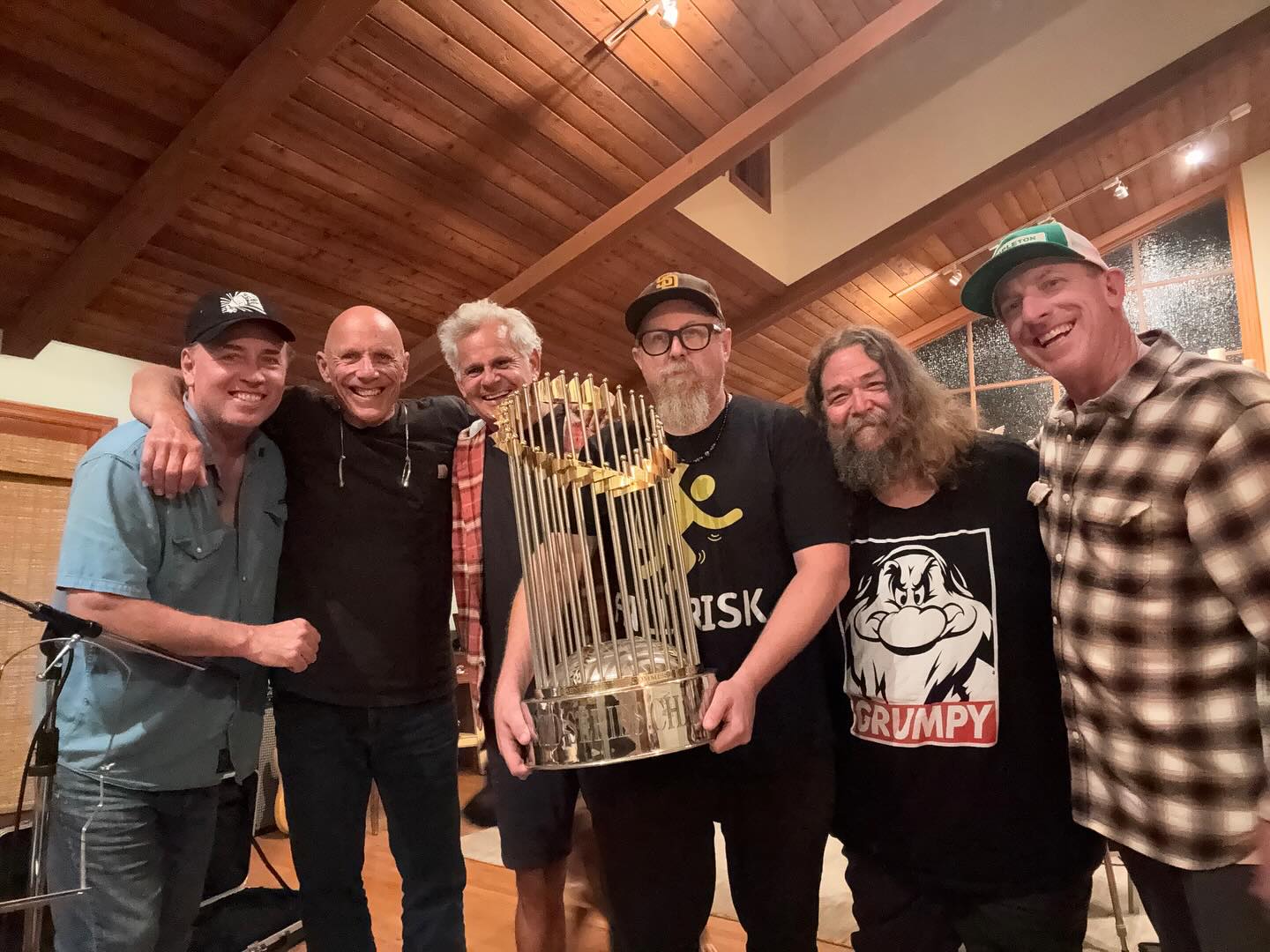
The Bastards, posing with Flannery’s World Series trophy.
They’ve got a good start going and the momentum is building. I ask them about their expectations for the future. Rohlf says, “I feel like I just got on a boat heading down a river and it’s a wild ride. I’m just going to where it takes me, you know. It’s fun. It’s a fun group to be in a boat with.”
Berkley reflects, “I think for the first time, I am completely personally wide open and looking forward to anything-can-happen kind of stuff, you know? There are other projects I’ve been in where I probably got in my own way because I had some plan, and I wasn’t open to new things or whatever. I think this band, by nature, is just like anything could happen. Yeah,” he smiles, “and that’s the fun of it.”
Be sure to see the Bastards (for the fun of it) at the San Diego Troubadour annual holiday fundraiser and 25th anniversary celebration at Tio Leo’s Lounge on December 14, 4-10pm.

