





Featured Stories
Spacebar Café & Wine Bistro: Where Luck and Timing Take the Stage

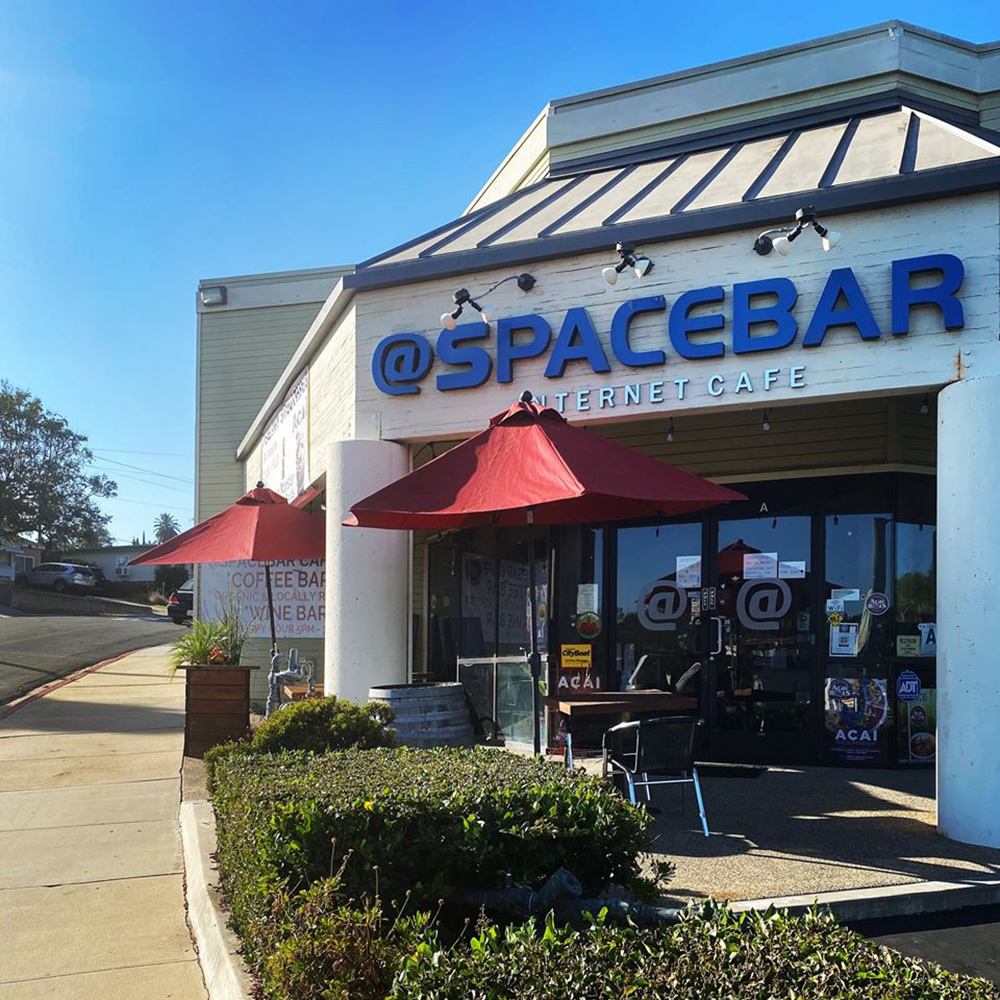
The Spacebar in La Mesa.
In any neighborhood I find myself in, Spacebar is exactly the kind of place I look for: an independent, local café—my favorite kind. I have spent many an hour in cafés with friends, talking about everything, not planning where the conversation would end up, but knowing it would take its time getting there, through a multitude of twists and turns. That’s the good life, right there.
Frank Moody and his wife Huong opened the business in 2009 as an internet cafe, with computers for rent lining the walls. Through Frank’s travels as an IT manager in the Air Force, he had always been intrigued by coffee shops, so he combined tech with coffee. Eventually, the rise of personal smartphones and laptops made the rentals unnecessary, and five years in, they no longer had any computers. But Frank is a yes man. He dreams big and attracts others who do the same, or at least those who are willing to take a chance on something new.
They started making food, Frank says, “I’m good on the grill. We just started coming up with simple things that we could prepare, you know, and making sure it was something that was really tasty. From the start, we’ve always wanted high quality products. For instance, our coffee, from day one, has been 100% organic.” I have to admit, it is really good coffee. I’m also fond of the brown rice and quinoa bowl with grilled veggies. They throw in shiitake mushrooms, spinach, red onions, and peppers, along with a masala sauce. You have to try it.
As much as I seek out places like this, I wasn’t familiar with the area and likely wouldn’t have found it on my own. Back in 2016 my band, Enter the Blue Sky, was approached by Tim Cien (Fire Brothers) to play a show there. Joey Harris was opening—I couldn’t believe the luck. I still had an old Fingers album from the late ’70s that I wanted Joey to sign. We jumped at the chance to perform, and that first night felt like a big deal. All these years later, the Fire Brothers are still playing at Spacebar on the first Saturday of every month.
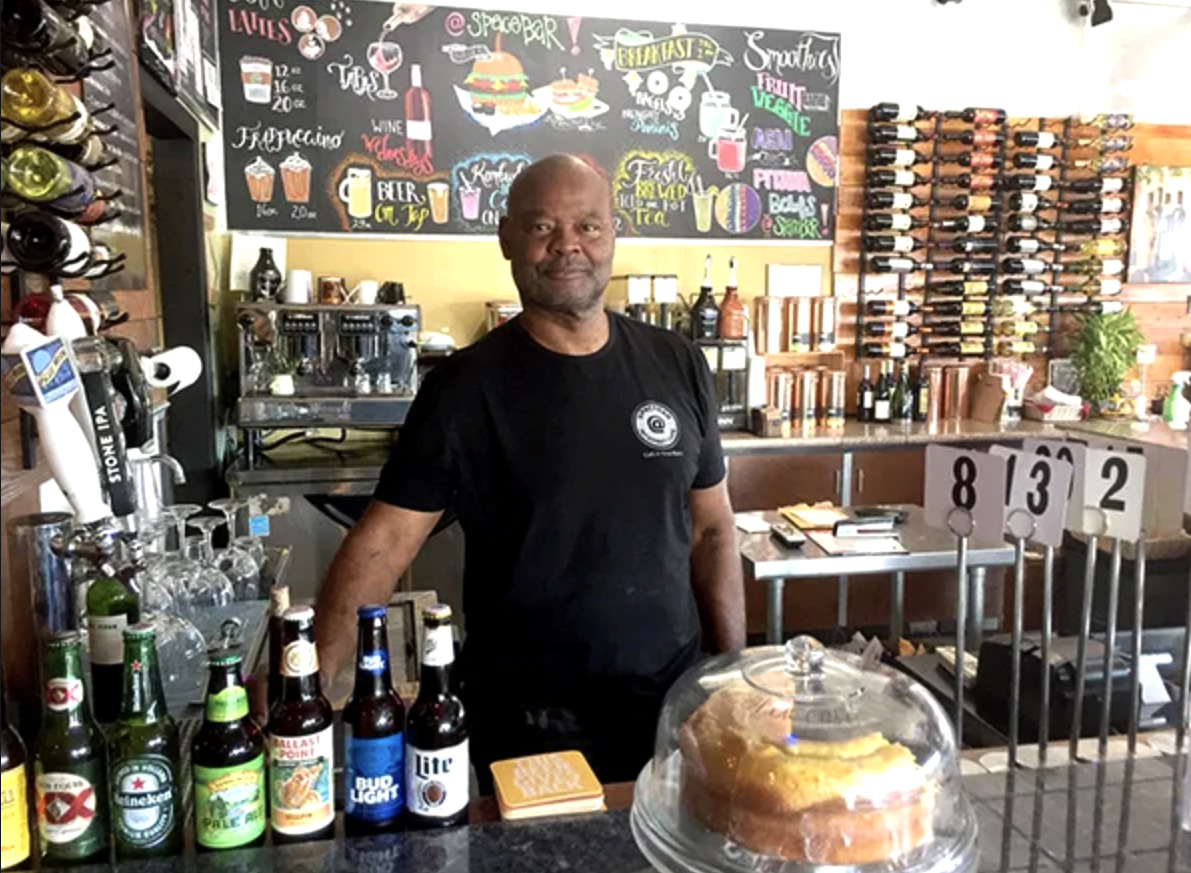
Owner and proprietor Frank Moody.
Frank begins to list the expansive mix of entertainment they have every week. “On Mondays, we got Latin jazz.” That’s the ten-piece band Los Maniacos led by trumpet player Bill Caballero, who played with San Diego-based Joe Garrison’s ensembles, including Night People. In addition to trumpet, the lineup onstage includes guitar, electric bass, keys, two trombones, sax, congas, percussion, drums—sometimes with vocalists. This is a well-attended event; the room is dimly lit and the atmosphere buzzes. There is a disco light flashing frantically on a table near the stage. The band adeptly raises the roof.
Frank continues, “Three out of four Thursdays are booked now with music. The remaining Thursday has a comedy workshop-type open mic starting in April, run by ASAP, a veterans’ support organization. And Fridays, we have the open mic.”
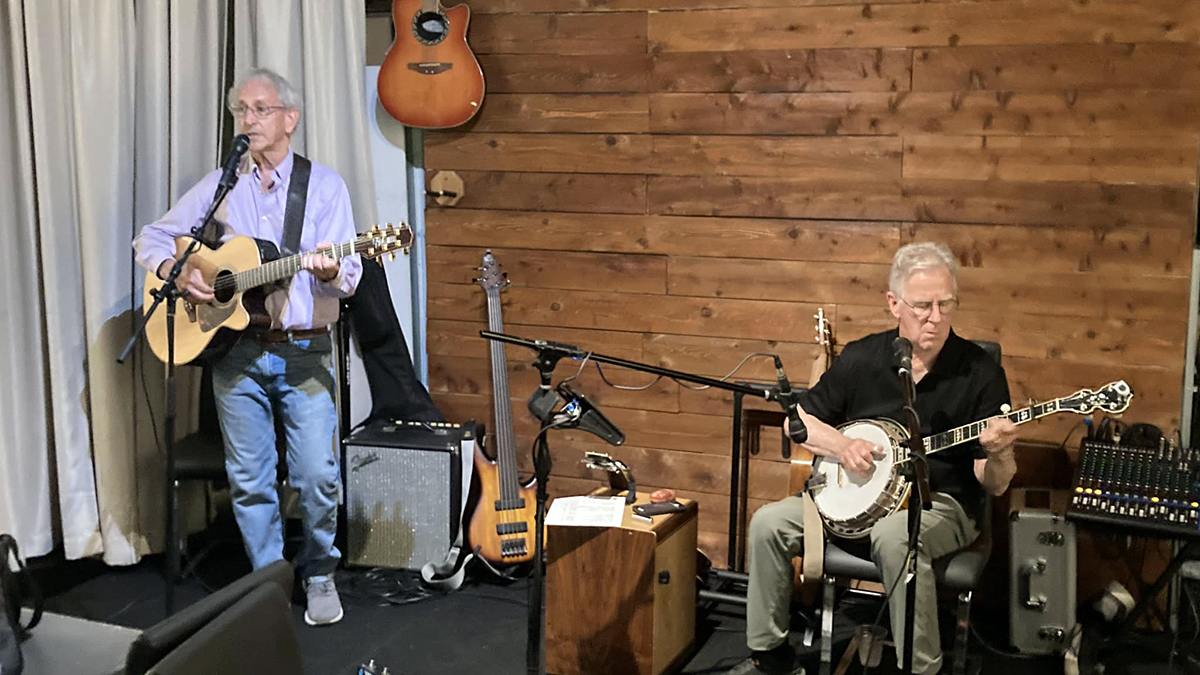
Open mic with Mark Montijo & Lenny Bole.
Since late 2017, Charlie Kirk has been running the open mic every Friday night, 5:30 to 9:30pm, except on the fourth Friday, when comedy takes the stage. He always tells the crowd to keep it clean. The open mic draws a loyal over-60 crowd and is consistently packed. Musicians begin lining up an hour ahead of time to claim one of the 15-minute slots. By the time it gets underway, the room is filled mostly with performers waiting their turn and listening sometimes takes a back seat. There is a camaraderie among them, though, and at any given moment, musicians—mostly singing cover songs—might be joined onstage by someone volunteering vocal harmonies or guitar fills. Having known each other for decades, the group counts among its regular favorites the legendary Cliff Nieman, former manager of the famed Candy Company folk-and-blues-music venue.
“The first, second, and third Saturdays,” Frank goes on, “are filled with music or dance. And then, the fourth and fifth Saturdays, we have open for booking.” He mentions that a poetry open mic was just added to second Sundays and began last month.
Rounding out the list is the jazz jam every other Wednesday led by alto saxophonist Dave Good, who is a gracious and encouraging host. He is joined onstage by Taylor Smith on upright bass, Barry Farrar on drums, Dwight Love on guitar, 12-year-old Elliott on vibes, and 15-year-old Aiden on keys, along with a multitude of players who sit in for a song or two.
Previously, Dave had tried unsuccessfully to run a bossa nova night at Spacebar. During that time, he was playing tenor sax and began to see the limitations in his ability. He recounts the frustration, “We tried it for a few weeks and, you know, the tenor just wasn’t working. It still spoke rock ‘n’ roll and I couldn’t make it not. I mean your hands, you know, you just play the lines that you’ve always played and the form and the sound and all that.
“I don’t know how to do this,” he realized. “So, I got an alto—I just reinvented myself entirely. The alto is a whole different language. I gotta reinvent it or quit this shit and go back to, you know, loud bands. So, I did it. I stuck with it.”
In the midst of that period, he noticed students from the International Academy of Jazz coming in to play. “They’d sit in with us because the one thing lacking is stage time. And we’re not trying to save jazz—that’s too lofty an ambition. Nobody’s trying to do that. We like to play the music, so the people that eventually fell in with this, again, it’s just luck and timing.”
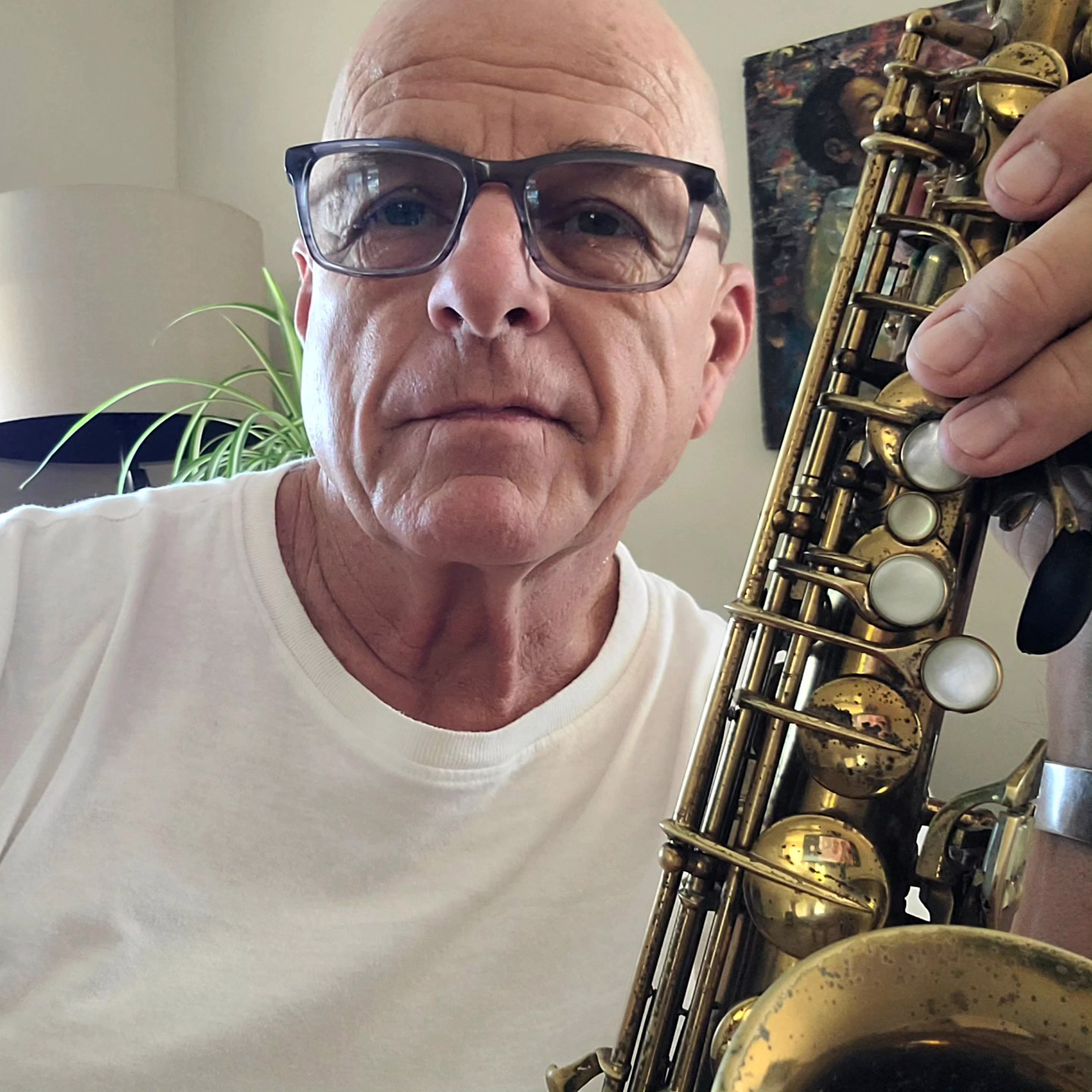
Dave Good’s jazz jam happens on Wednesday evenings.
Dave is passionate about the jam. “There’s never more than 11 people here to see this, and they play amazingly well. And, so many of the youth have gotten to come in and sit in with those guys and play solos. And, now, I have two of them actually writing for this group, rearranging something, making it cool, changing the time signature, reharmonizing or whatever, or just writing something right off the top, you know.”Raised in San Diego, Dave started playing sax at Henry Clay Elementary School (now Dr. Bertha O. Pendleton Elementary School) in Rolando when he was ten. He had wanted to play clarinet like his best friend Ricky Welsh, but his parents came home with a saxophone. “They were poor as church mice. And to come up with a brand-spanking-new alto saxophone in the case, you know, was a major setback for their finances. They went up to Ozzie’s Music on El Cajon Boulevard and they got it on time payments. These people had no money, no credit, no future, nothing. I mean, just generational poverty. And that was the biggest thing, I think, just to get this saxophone. And they couldn’t afford lessons to go with that. So, the school band was where I learned how to maneuver the horn and, you know, the same material they’re playing today, “Hot Cross Buns,” you know, and stuff like that. It was a drag. The school band was a drag.”
In sixth grade, some of Dave’s friends started a surf rock band and they wanted Herbert, the first-chair sax player, to be in it. But he came from an Orthodox Jewish family and when his father heard about the band, he refused to let him play. So, instead, they got Dave, the second chair.
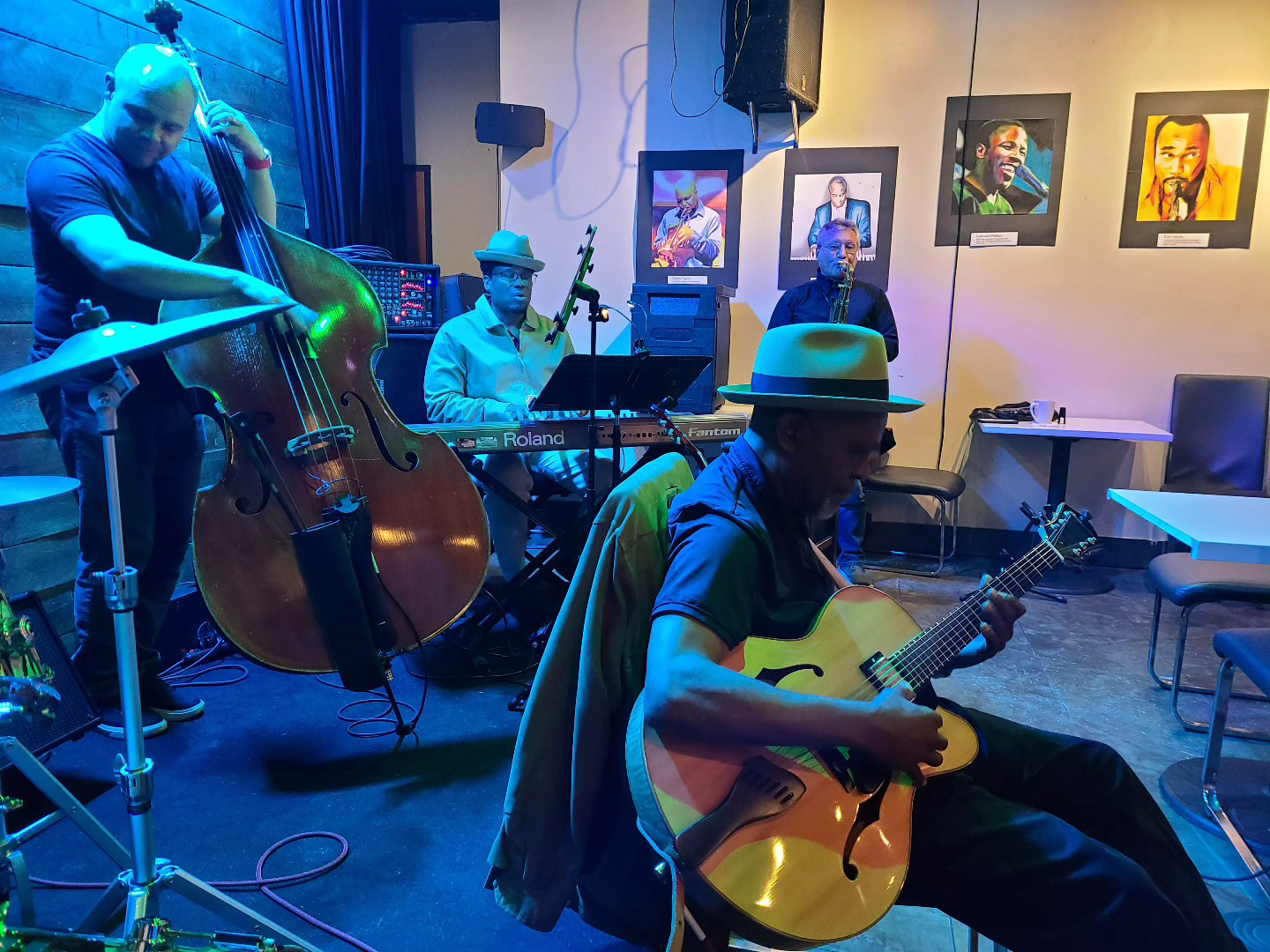
Jazz jam in session.
He loved being in the band. Their drummer had a Slingerland blue sparkle-tone drum set. Dave remembers, “I’ve said this a million times, but it was marvelous to be in the presence of those drums. I mean, I never heard anything like that. It was just the coolest thing, and guitars were wonderfully beautiful. They looked like you could eat them. They were red and yellow and, you know, sunburst, and the amplifiers and all that business.” He continues, “So I learned that if I wanted to keep this experience, I had to work really hard at it. You know, I had to work harder than Herbert. They didn’t have any music education, you know. They learned everything from little records. They had 45s there. And that’s how we did it. We would play these records, and they would learn the part. And then they would say, okay, here’s your part, do this. And that was the way. If there is a God, the grace of God shined on me and said, ‘You know, you get a saxophone, you get to be in this band, and you get to learn the right way, by ear. You get to learn how to play from the other musicians.’”
Remembering playing in the school auditorium, Dave says, “The other thing that really stuck with me was walking onto the stage with all that gear set up, was a big deal, the amps all hummed. Because they were all cheap, they all made noise. And the guitars, you know, and everything was stacked up. You know, the drums were there, and the stage lights, and I just thought, this is where I live. This is my address.”
“I got very lucky,” he says. “That’s probably the one theme through all this: just luck and timing. Luck and timing.”
There is a thread that weaves its way through all of Dave’s life—through his choices, his chances, through everything. He calls it luck and timing, and he has had an abundance of both. He resists taking credit for the good that has come his way. I push him with this point, “I’m sorry, but you do have to take responsibility for it. I mean, luck’s everywhere, but you remain open to it.”
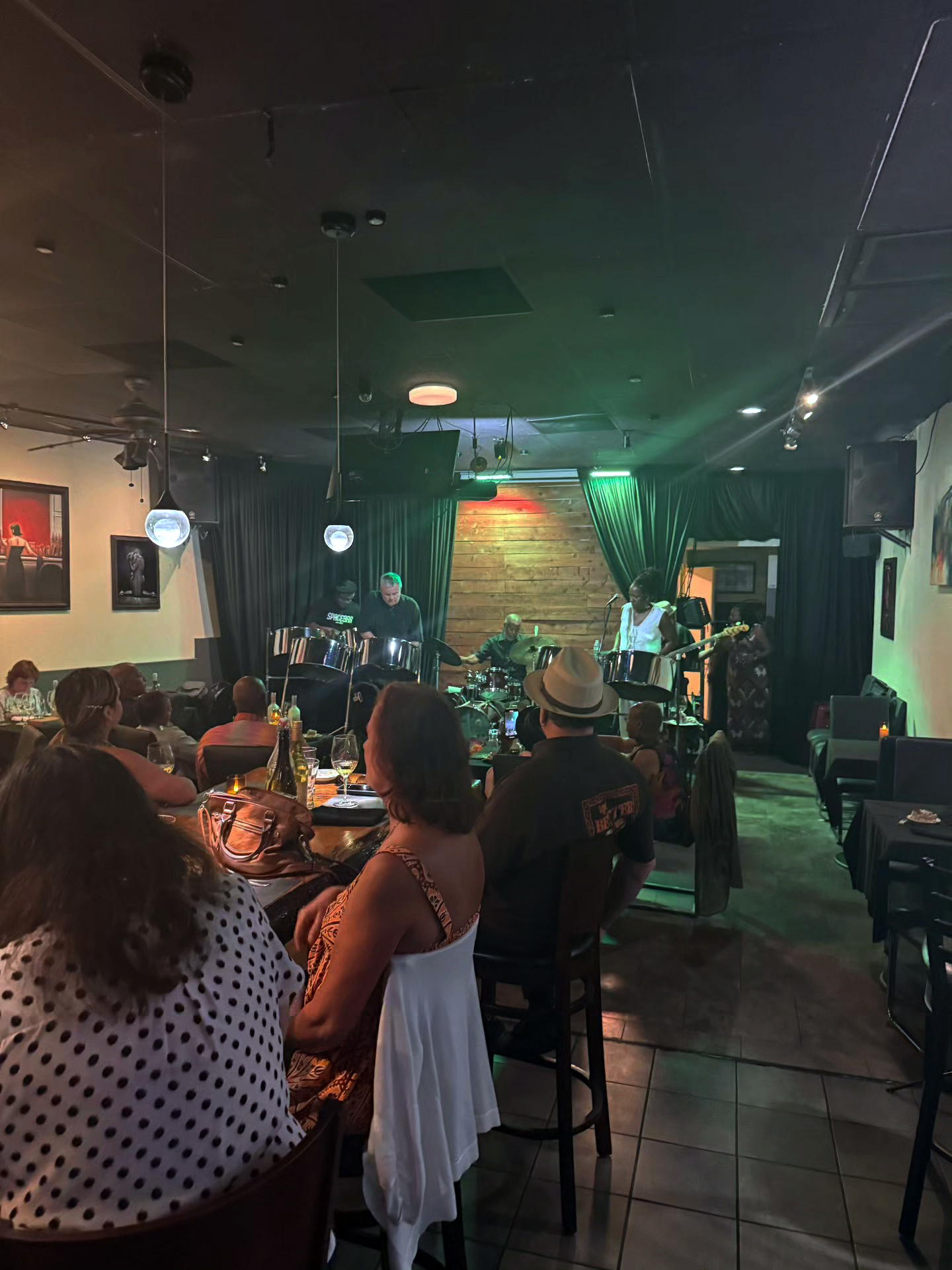
Wonderful ambience inside the Spacebar.
He disagrees and says, “I wouldn’t know about that. All I know is I got lucky, you know. And I know a lot of other people that didn’t get lucky, had no luck. So, I had a hard time with that because I would be asked to go speak for graduating classes at colleges and see, I got nothing. Your education isn’t gonna help you at all. And eventually they stopped asking because, you know, I tell them it’s this: the circle of friends that you’ve created and luck and timing. Otherwise, there are so many people who are vastly more talented than I am, incredibly better at everything than I am, but luck and timing and showing up and, you know, doing the work, that’s it.”
Dave winks and admits, “Well, there’s a modifier to this whole story I’ve left out, you know. I’m happy to share it with you.” Now, he’s got me going. He continues, “Here’s the deal, again, luck and timing, but you have to put yourself in a place where those two events are likely to come together. Hanging out where music is happening, where you get to know people and faces and they get to know you. And that’s the hardest part of the equation. Anybody who ever punched through the glass that separates us from the gods will tell you that. So, luck and timing will not happen to you if you’re sitting home instead of in a place where the people are who could pull out the big sword and knight you.”
He continues to be where he should be and do the work.
Frank and Huong do the same. I asked Frank, “Is having all the entertainment through the years a surprise to you? Did you imagine that this is what you would be doing, or did you just stay open to what would come to you?” He smiled and revealed, “Well, it’s actually a survival technique, but it wouldn’t be if I didn’t love music.”
He takes care of business, does the admin tasks, pays ASCAP, BMI, SESAC, and AllTrack. He’s not convinced the PROs are doing their best for artists. Having received a $34 royalty check last year, I can attest to that. Frank says, “But, you know what? I think if they had the right foresight and the right management, it could’ve actually made artists grow and their revenue grow.” What a concept.
Between the music and the café itself, it all still has to balance. A typical restaurant will have customers trickling in over the course of the day, but each time an artist takes the stage at the café, it is an event where everyone shows up all at once. It makes it difficult to provide service quickly. Sometimes people are impatient, not understanding the unique conditions at play. Frank and Huong continue to do and provide their best.
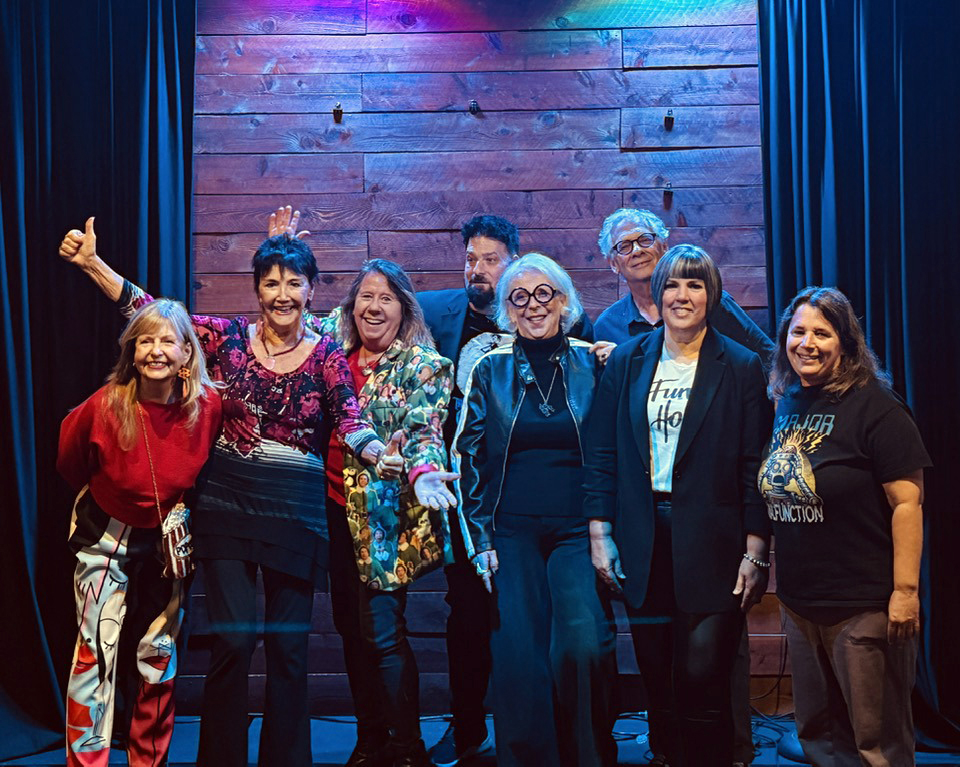
Comedy group, Brassy Broads.
They don’t do any marketing so as not to be overwhelmed. In addition to the café hours, they also cater pop-up and corporate events, and lunches offsite. They have regular events at Qualcomm and Southwestern College, where they grill, press sandwiches, and serve drinks. It’s a diversification of sorts and part of ambitious planning that Frank has in the works. When asked about the future, he says, “I am hopeful. I guess, number one, I should start filling these seats, you know, during non-event time. That’s an immediate challenge.” I agree. I would like to see the same thing happening. That is my challenge to everyone reading this: go have a meal or a coffee when it’s quiet, no entertainment, and enjoy the heck out of it.
Then take a look at their event calendar and go enjoy that too. Dave says, “This is like being at Java Joe’s. A lot of people come and perform here, and Frank and Huong love music. They support music and painters and photographers and poets and comedians, you know. And I know it’s not the fanciest place in the world, but, you know, it’s a place that supports music. Ain’t no other place does that, Starbucks, none of the other people.”

