







CD Reviews
DUDE CERVANTES & THE PANCHOS: The Ride or Die of Dude Cervantes and the Panchos

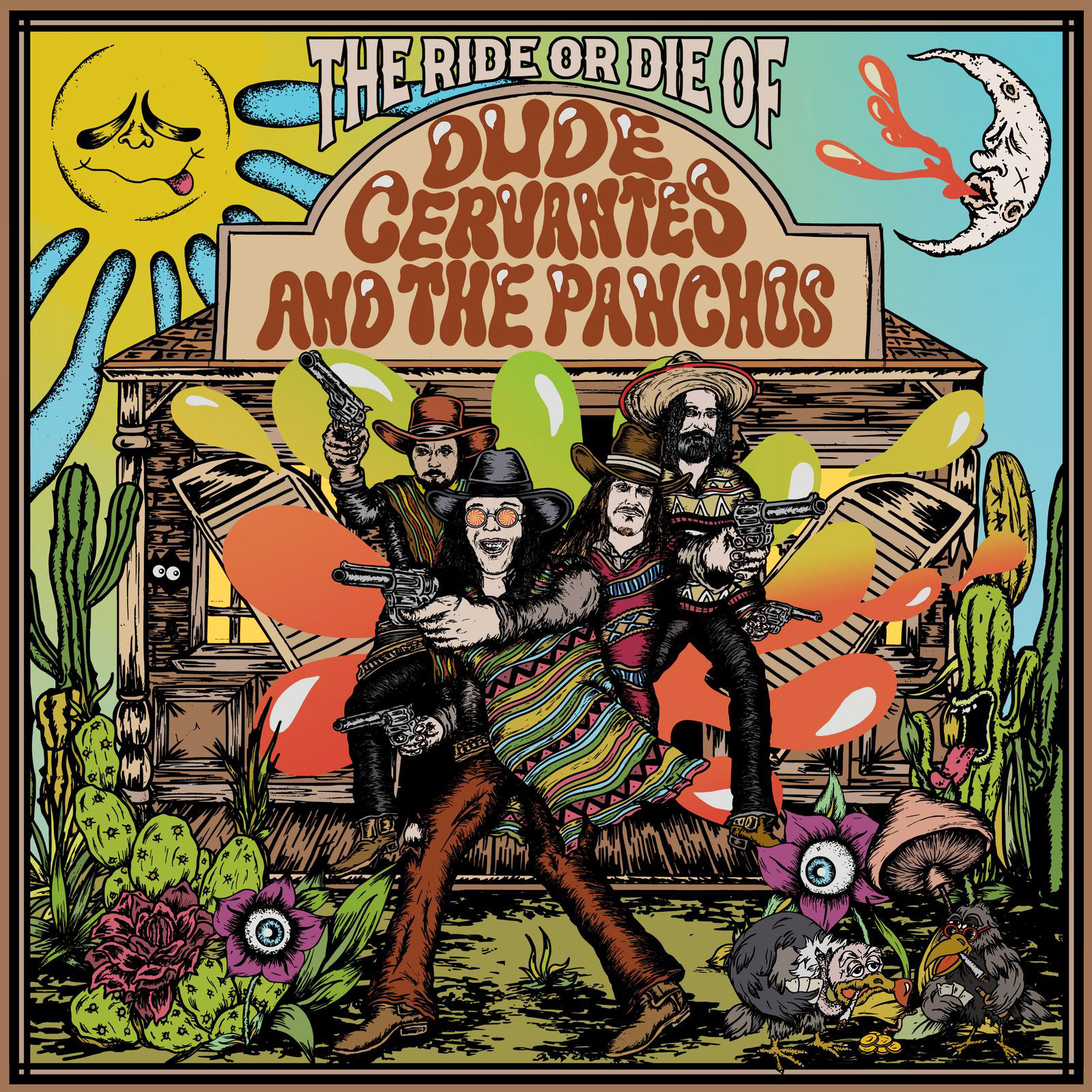
There was a time that rock bands featuring two lead guitarists were—while rare and elite—still not unheard of: Early Fleetwood Mac with Peter Green and Jeremy Spencer, the Allman Brothers with Duane Allman and Dickey Betts, Humble Pie’s Steve Marriott and Peter Framptom, Judas Priest’s K.K. Downing and Glenn Tipton, and perhaps the most overlooked, Wishbone Ash with Andy Powell and Ted Turner.
Not to mention our own local legends, the Beat Farmers with Jerry Raney and Buddy Blue (later Joey Harris).
San Diego’s Dude Cervantes and his fellow Panchos guitarist Dylan Donovan seem ready to take that rock history and run with it. Their new release is a hard-charging monster that melds heavy blues, classic rock, and modern, post-alternative rock into something razor-sharp and exciting.
They come out of the gate like fire-breathing thoroughbreds with “Lesson Learned,” a bit of swamp blues meets Southern rock, with bassist Ryan Grenda and drummer Justin De La Vega propelling the song forward like nothing this town has heard since the early Beat Farmers when Country Dick Montana and Rollie Love provided a similarly irresistible sonic wind tunnel.
On “Blood in the Water,” the Wishbone Ash influences shine brightest. It’s not entirely clear whose guitar is on the left channel and whose is on the right (although the clarity of this live recording from Hollywood’s the Hotel Café last year is impressive), but the way they play off each other is reminiscent of not only Wishbone Ash, but also the Allmans, early Mac, and Humble Pie. Both are playing the lead, but not in unison—their counterpoint melodies swirling in and out of the other. It is breathtaking to listen to, even on the fourth, fifth, and sixth listens. And De La Vega pumps the bass drum and rides the toms providing a low-end foundation you can feel.
The band then turns in a twin-guitar attack of Santana’s “Samba Para Ti,” which is as much a reinvention as Santana’s own cover of Fleetwood Mac’s “Black Magic Woman” was. Where Santana upped the tempo on their cover of the Mac, so do the Panchos, slowing the pace on “Samba Pa Ti.” There’s also less emphasis on the Latin rhythm, with more of a funk vibe driven by Grenda’s insistent bass lines.
And we get something Santana didn’t have: two guitars both carrying the melodic lead (as on “Blood in the Water”), chasing each other through increasingly virtuosic improvisations as the slow opening pace slowly builds to their (apparently usual) frenetic energy. The ability of Cervantes and Donovan to improvise in real time without losing the thread, and then bring it back to a resounding close is on a par usually only seen in top-flight jazz musicians.
The eight-minute “Everyone, Everywhere, Everything” offers a much needed change of pace, allowing the listener to catch their breath a bit. The long, somewhat unstructured improvisational passages remain interesting for their virtuosity, but aren’t nearly as intense as the rest of the songs, a needed break.
“Billion Dollar Art” closes out the album with a slowly percolating blues that morphs into a gorgeous Beatles-esque bit of pop rock shortly before the halfway mark. Jody Bagley’s Fender Rhodes adds a nice shimmer behind Cervantes’ vocals and the twin guitar leads, Grenda’s bass again pushing, pushing, pushing toward the close.
This is a tremendous album, never mind a debut. It stands as the work of a fully mature outfit, one hitting on all cylinders with a clearly defined sound, possessed of the chops and discipline to bring that vision to life.

