



Bluegrass Corner
What Makes Live Music, Including Bluegrass, So Appealing and How Can Performing Musicians Tap Into That?

There is something about a live music experience, bluegrass or other, that can’t be duplicated by listening to a recording. If this weren’t so, folks would never attend a live music event. They could get everything from online and recorded sources. The appeal of live music is true across all genres, from classical to bluegrass, singer-songwriter, rap, and more. So, there must be something special about live music. There is, but it’s not what many performing musicians emphasize.
Why Are Musicians Focusing on the Wrong Things when Performing?
A typical musician is thinking: Am I showing off the chops I’ve worked so hard to develop? Am I making mistakes? Is the sound system good? Are the monitors working properly? Am I managing my nerves? Is the band showcasing my skills? Are my solos great? Can I be heard over the rest of the band? I’ll bet these concerns sound familiar to many musicians. But, trust me, no one in your audience (except perhaps other musicians), is thinking that way.
The audience came to your concert hoping to be moved emotionally. They want to be moved in a way they can’t be by listening to music at home. They want you to succeed. They want to like you and for you to like them. They want to get to know you and share a personal experience with you and your music. They want a connection. The world’s greatest solo guitar player, who scowls and looks down at his or her instrument the whole time, will not be as loved by an audience as the mediocre player who looks at the audience and engages with them.
I’ll give you an analogy. When you go to a movie are you thinking wow, look at that lighting effect, listen to the quality of the Dolby audio, use of backlighting for that scene, great use of the steady cam, etc. Nope, you’re not (unless you are a film maker). Likewise, your audience (except other musicians) isn’t thinking about the guitar you play, the output and quality of your amps, the strings you use, or whether your technique is spot on. Just as you want to be captured and transported by a good film your audience wants to be captured and transported by you and your music. They want an “emotional moment” that will stick with them.
Think back to a great concert you saw as a youngster. Do you remember what kind of guitar or strings were being used? Or, do you remember that concert because it had a moment where the music and the performer moved you emotionally?
HOW TO CREATE THAT MOMENT FOR YOUR AUDIENCE
Here are some tips:
• Your audience’s impression starts when they walk in the door. Help your stage setup make a good impression before you take the stage.
• Set up your stage to be visually appealing. Move the speakers and mic cables off the stage to the side out of the visual frame of your show. Try one mic, clip ons, or wireless equipment to avoid mic stands and cable clutter. A line of mics, speakers, stands, and cables creates a barrier between you and your audience. Move clutter off stage or take it down if you can.
• Look at the audience. From the moment you walk on stage, look at the audience. Try to see the people and connect visually. Smile and look like you want to make friends. Too many performers look at their instrument or their bandmates. Even worse, avoid stage banter amongst band mates. These distractions only create separation between you and your audience
• Be tuned and ready. Take care of these details in advance before stepping on the stage.
• Think about your set list well in advance. Does it flow? Does it tell a story? At what intervals will you chat with the audience? Who will speak for the band?
• Open with something strong. Maybe start one instrument at a time and then layer them in. Or, consider an a capella start then bring in the band with a bang. Maybe walk into the audience while playing. You want the audience to think “Wow, this is a surprise! This is going to be better than I expected!”
• Play before talking. Open with two or three tunes without interruption. No talking. Make the crowd want to hear you talk. Then talk. Have a designated spokesperson talk for the band. Map out the talking points on your set list. Be prepared on what to say. Talk to the audience, not your bandmates.
• Set List. It’s best to know your set list by heart. If you need a cheat sheet, put it on your instrument not on the ground. It’s not a good look when the band is looking down at the floor after each tune.
• Put out emotion if you expect it back. Sing and play your heart out. Don’t worry about mistakes. Trust me, every performing musician makes them every show. Nobody but the performer is likely to notice. The audience is not looking for goofs. They want you to succeed. Nobody (except other competing musicians) is hoping you fail. Some very well-known performers have told me they deliberately make mistakes early in a show, stop, apologize, and make a correction knowing it builds rapport with the audience.
• Stop strong and on time. An encore is okay if it is actually earned and wanted by the audience. Don’t squander your good will after a great show. Have a prepared encore. Leave them wanting more.
• After the show. Before you leave the stage take the time to thank the audience, the promoter, the sound person, and the venue operator.
• Follow up. If you would like further gigs, follow up with thank you notes to the venue and those who made it happen.
• Keep a gig book. Collect info from all your shows: (1) How many attended? (2) what was the ticket price? (3) Keep notes on the sound setup (4) make copies of any promotional or press materials (5) Keep photos. You may think that the quality of your music is the most important factor in getting gigs. It’s not. To a promoter it’s: can you put butts in the seats and sell tickets? Your gig book is your tool to show promoters that, yup, you have a quality act and proof you can put butts in the seats.
Following these guidelines will help you build a successful career.
TROUBADOUR CELEBRATES 25 YEARS
Sunday, December 14, 2025
Tio Leo’s, 5302 Napa Street, Bay Park
4-10 pm
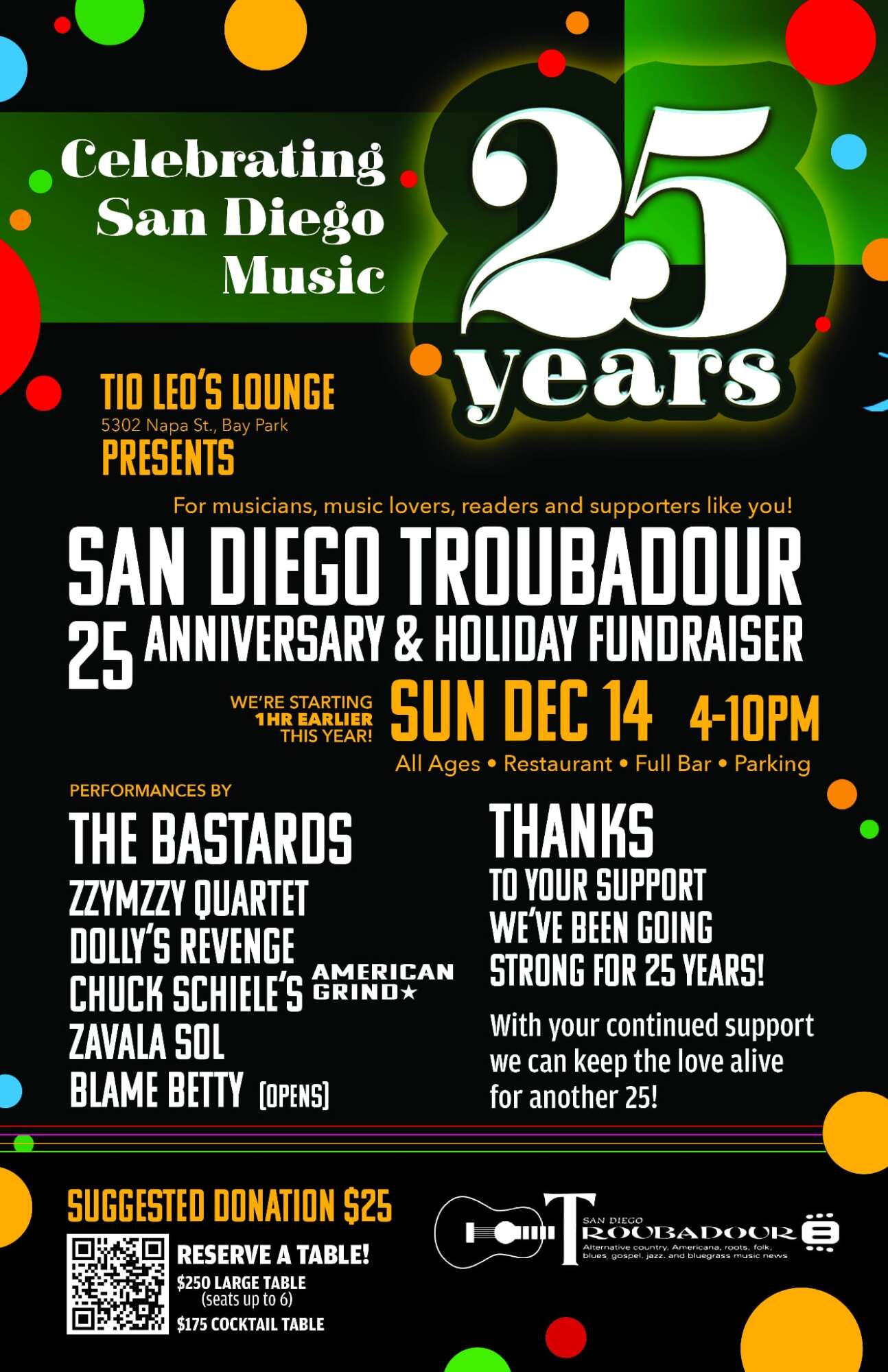
Wow! We’re celebrating our 25th year as San Diego’s premier music newspaper. I’m proud to say I’ve been here the entire 25 years. If you love music as much as we do, join us to celebrate this event featuring a host of great live music. All ages welcome. Please consider making a donation ($25 or more suggested) to keep the Troubadour going for another 25 years! To make a donation, click here: https://www.paypal.com/donate/?cmd=_s-xclick&hosted_button_id=R2UMYAEB6QRTL&ssrt=176393782222
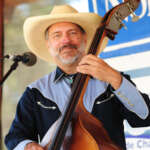
Dwight Worden, who has been writing a bluegrass column for the Troubadour since its beginning, plays guitar, fiddle, mandolin, and bass and is active in several bluegrass bands. He is a board member of the San Diego Bluegrass Society, a prior board member of the International Bluegrass Music Association, a recovering lawyer, a Del Mar council member for 10 years, and mayor of the City of Del Mar for two years. Ed. Note: Thanks for being with us from the very beginning, Dwight! We are happy that you bring a voice to the bluegrass community.

