


SUE'S SPOTLIGHT: Women in Blues and Jazz
Women in Blues & Jazz: Marcia Ball, Cindy Cashdollar, Carline Ray

MARCIA BALL 1949-
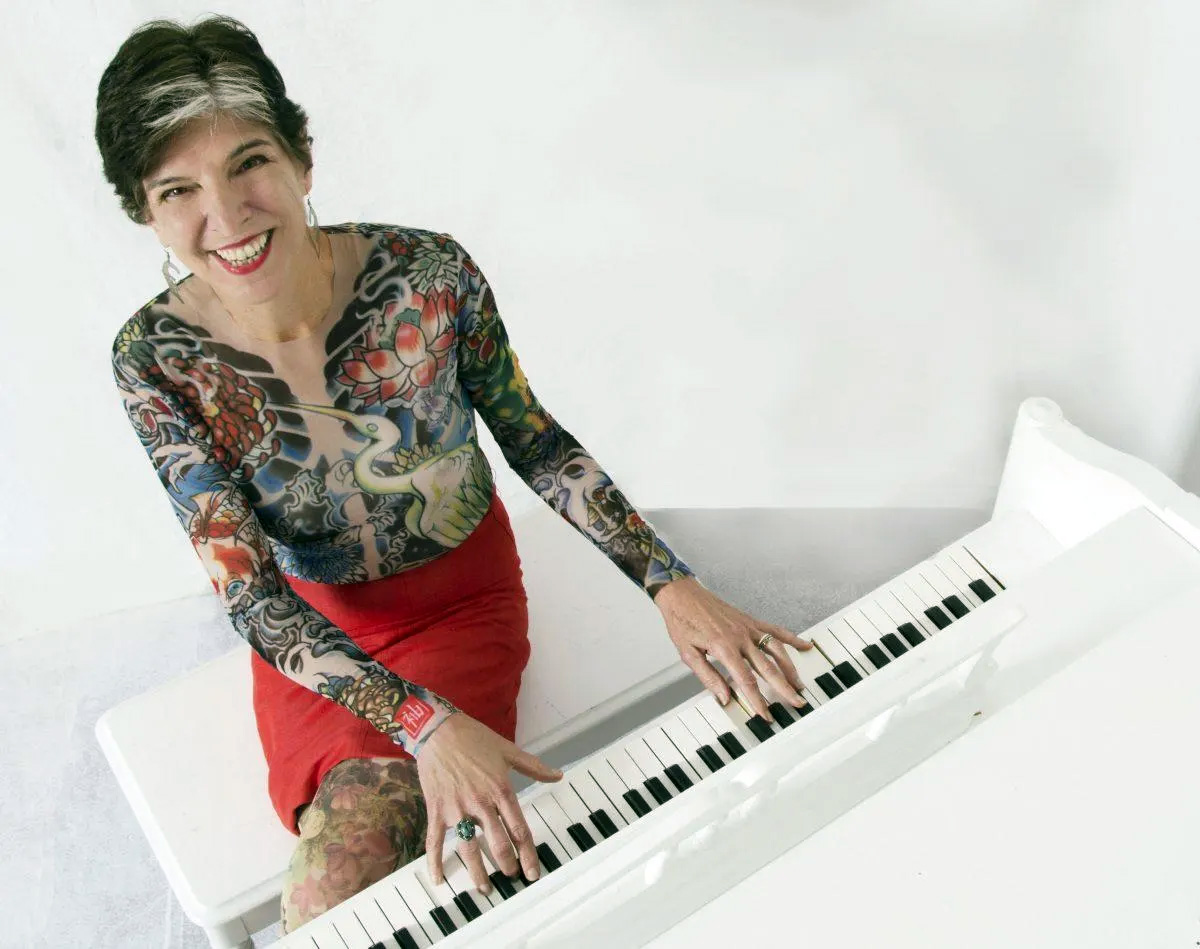
Marcia Ball. Photo by Mary Bruton.
In this column—as a rule—I haven’t mentioned many women who have achieved the recognition they deserve. But I have to make an exception for pianist/singer/songwriter Marcia Ball, who recently announced her retirement due to being diagnosed with ALS. She has had a wonderful career, apparently enjoying herself most of the way. Described by USA Today as “a sensational, saucy singer and superb pianist…where Texas stomp-rock and Louisiana blues-swamp meet.”
“Rollicking, playful, goodtime blues, and intimate, reflective balladry…her songs ring with emotional depth.” …Rolling Stone
Marcia has earned a huge and very loyal following over the course of a five-decade career. She projects warmth and inclusiveness, both to the audience and to her fellow musicians. She was born in Orange, Texas (because that’s where the hospital was) and raised in Vinton, Louisiana, both right on the Texas-Louisiana border. Her family was musical, which led to the music of Fats Domino, Professor Longhair, and James Booker. She lists Irma Thomas as her vocal inspiration and much later made a wonderful album with Irma herself and Tracy Nelson. She says that that album, Rounder Records’ Sing It and Antone’s album, Dreams Come True—with Austin vocalists Lou Ann Barton and Angela Strehli—were her two most popular albums. This attests to her willingness to share the stage with other musicians and make music together.
In the ’70s, she began her touring career with a progressive country band called Freda and the Firedogs. She also decided to settle in Austin, which, at the time, was beginning to experience an economic boom and starting to get a reputation for attracting outlaw creative people. In addition, Austin is the state capitol and home to the University of Texas, Austin. Austin became a refuge for country and western artists, trying to escape the corporate dominance of Nashville. The best-known artist in this group was Willie Nelson, who still maintains a sound studio there. Later, well-known blues guitarist Stevie Ray Vaughn rose to fame there. Austin City Limits, on PBS, premiered there in 1975, ultimately leading to the city’s official motto as “the music capital of the world.” Marcia was and is very much a part of the always-happening Austin scene.
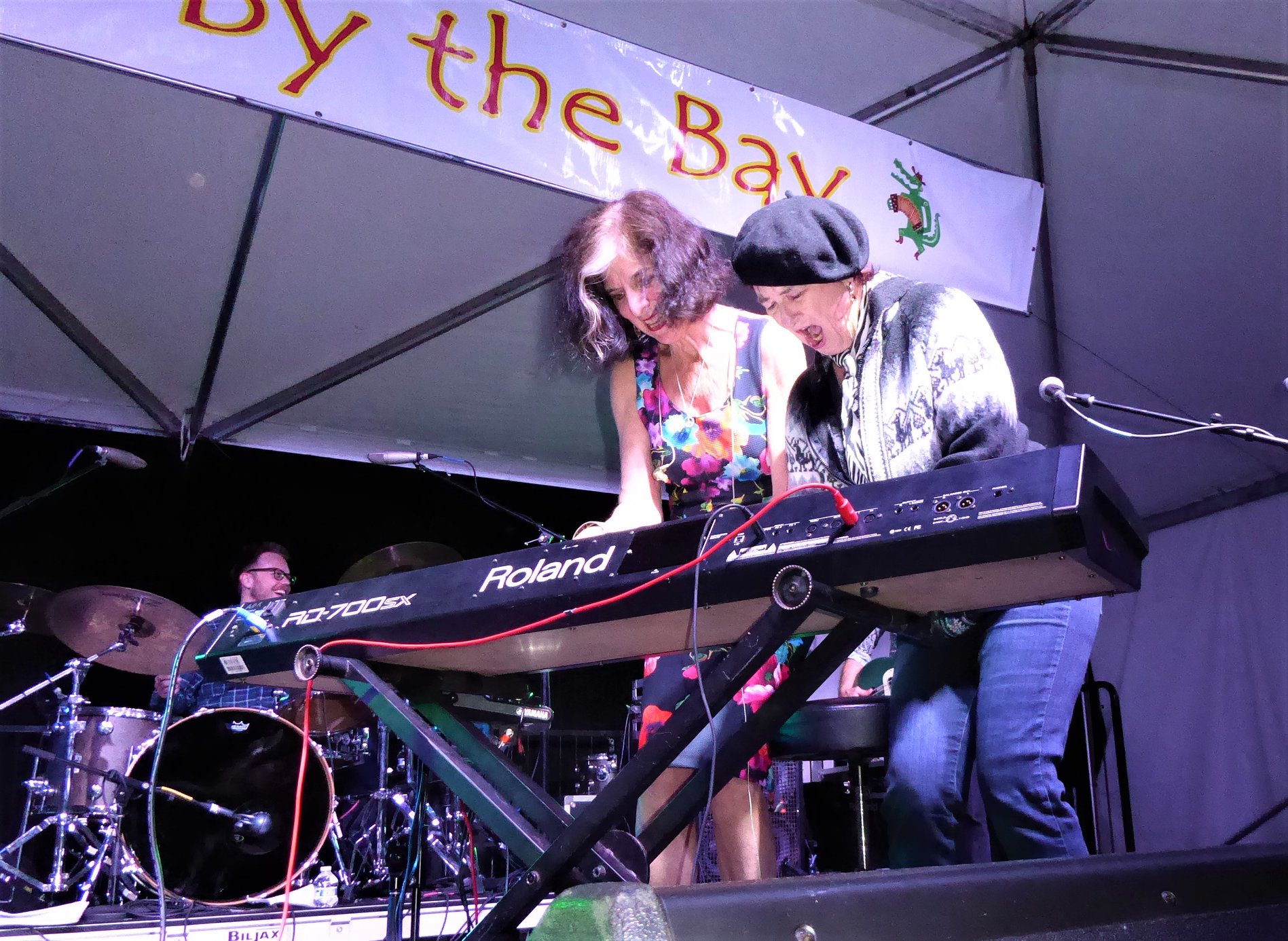
Marcia Ball and Sue Palmer at Gator by the Bay, 2017.
She began her solo career in 1974, touring out of Texas and Louisiana, and appeared on Austin City Limits in 1976. I began hearing her name in the late ’70s, and my father told me about her after he saw her on the PBS show. He was a big fan of Marcia’s, and when I was a part of blues singer Candye Kane’s band, he was thrilled when we opened for her at the Belly Up Tavern and she invited me to sit in with her. I was fortunate to bump into her several times on the road, at festivals and at San Diego’s Gator by the Bay Festival. The two of us played boogie woogie together, and we both enjoyed it. I also grew up in a musical family and my mother and all her siblings and parents were from Texas. Marcia and I first met in Austin in the ’90s, when Candye Kane signed with Antones Records. Marcia is always very warm and gracious. After another gig at the Belly Up, I gave her one of my wigs, which she wore at her next birthday party!
Musician Delbert McClinton calls Marcia a “musical goddess…watching her is like watching the truth.” She is an international favorite who has won five Grammy nominations, 21 music awards, and has been inducted into the Music Hall of Fame four times. She was named the official 2018 Texas State Musician. She is active in Austin in several non-profits, including HAMM (Health Alliance for Austin Musicians, and HOME (Housing Opportunities for Musicians and Entertainers). She is very much a huge part of Austin, whether she plays or not.
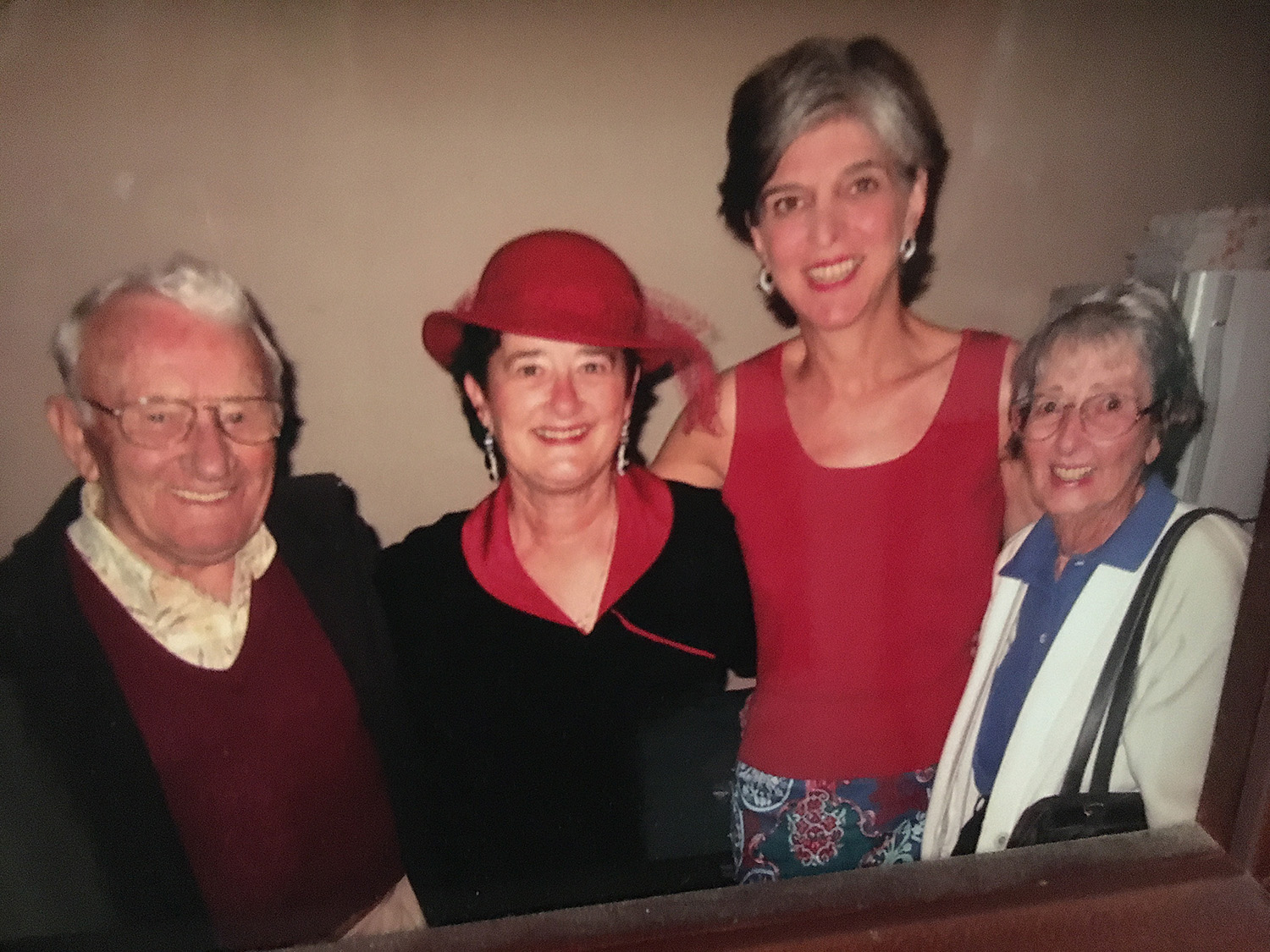
Marcia Balll and Sue Palmer with her parents, Roy and Dot Palmer.
Her latest album, Shines Bright, features her tune, “Pots and Pans,” a catchy dance number calling for us to be out in the streets, banging on pots and pans, protesting our current political situation.
“Music has always been part of my life and my family and has tied us all together. My son doesn’t play music professionally, but he can play drums and is raising his sons in a house with music. And the 11-year-old grandson is the piano player who’s got me playing classical music. Music is a sustaining force in my life and so many other people’s lives. It can lift you up when you’re down and comfort you and trigger emotions better than almost anything. Music has affected everything I’ve ever done.”
Thank You, Marcia!
CINDY CASHDOLLAR 1956-
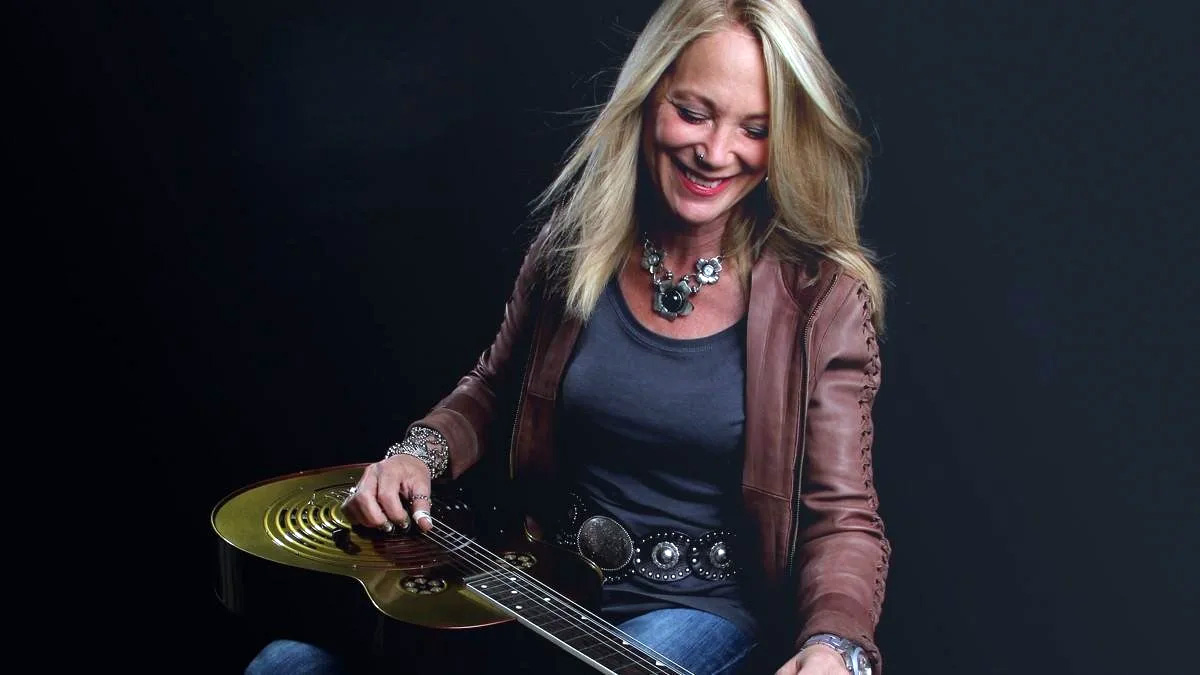
Cindy Cashdollar
Another musician who ended up in Austin in the ’90s, becoming a regular and in-demand side person, was Cindy Cashdollar. Called an “all-purpose string wonder woman,” she specializes in steel guitar and dobro. She first heard the unique sliding sound of the dobro in her hometown of Woodstock, New York, where she honed her skills, playing with bluegrass legend John Herald, blues great Paul Butterfield, Leon Helm and Rick Danko of The Band, and many others who lived in the small but musically hip Catskills mountain town. A dobro is similar to an acoustic guitar but with a resonator (spun metal cones), that originally helped amplify their unique sound. The lap steel guitar—also known as the Hawaiian guitar—is typically played in the performer’s lap in a horizontal position. The tunings can vary. It has been used in a variety of styles, all of which Cindy is incredibly good at, accurate and exciting. These styles not only include Hawaiian swing, but also blues, bluegrass, jazz, Nigerian JuJu music (King Sunny Ade), gospel, and country, particularly the subgenres of country, including Western Swing and honkytonk.
Cashdollar’s musical quest led her to Nashville, where she met a very popular Western Swing band called Asleep at the Wheel. They were based in Austin, Texas, and invited her to join them. She moved to Austin and began touring and recording with them for almost nine years. During her time with the band, she had a chance to collaborate with such legends as Willie Nelson, Merle Haggard, Dolly Parton, and Lyle Lovett, among others, and won five Grammys. After her stint with AATW, she was sought after by a number of musicians and genres, such as Bob Dylan, Van Morrison, Dave Alvin, Rod Stewart, Albert Lee, Leon Redbone, Marcia Ball, and many other Austin musicians. She was the first woman inducted into the Texas Steel Guitar Hall of Fame and the Texas Music Hall of Fame in 2012.
“Cindy Cashdollar is that rarity, a musician’s musician…an instrumentalist who moves effortlessly among genres, hopping around with seeming ease, quality, and self-assurance.” —Iain Patience, Elmore Magazine
She is currently on tour with slide guitarist Sonny Landreth.
CARLINE RAY 1925-2013
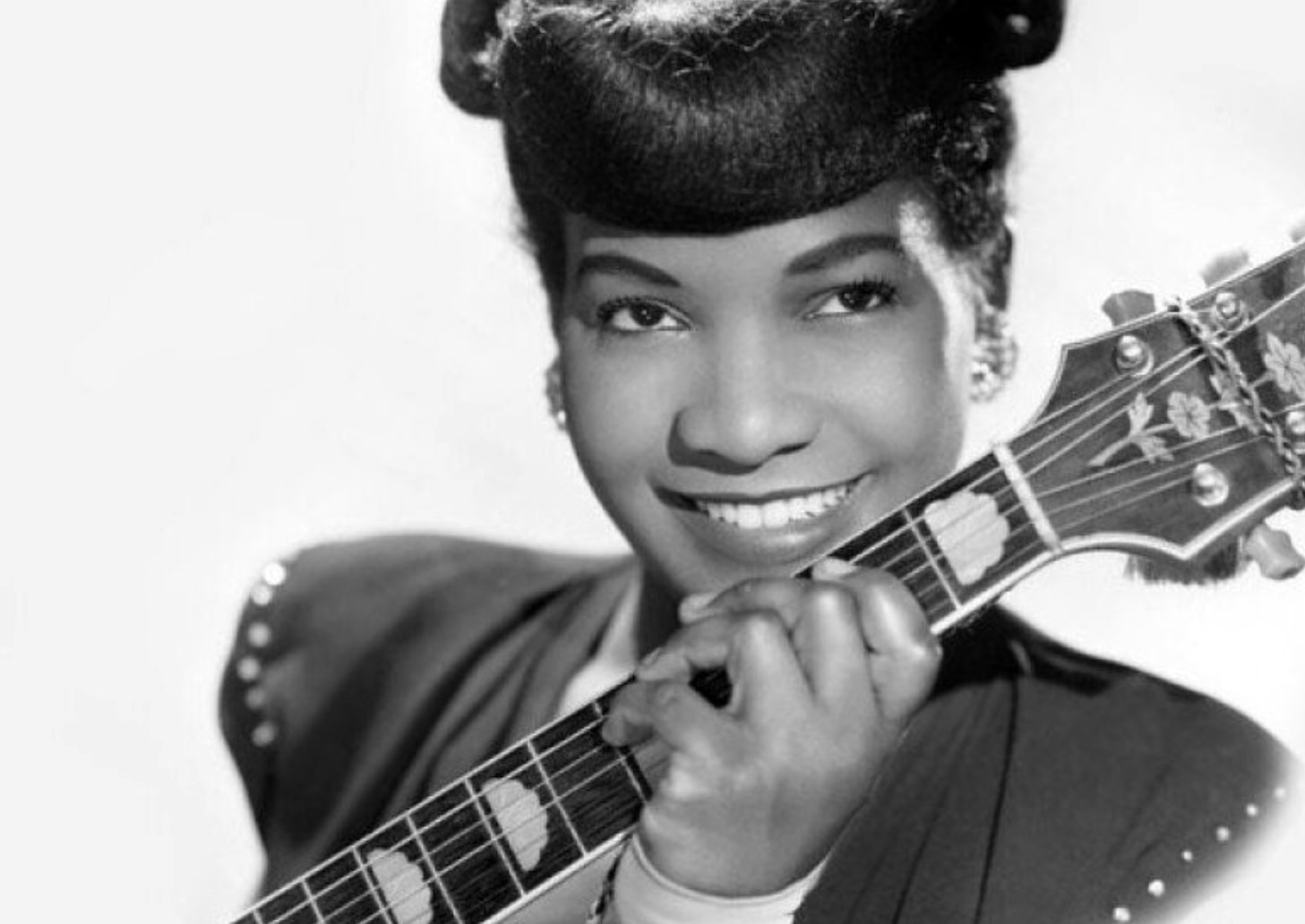
Carline Ray
Carline Ray has been called a pioneer’s pioneer. As a pianist, guitarist, bassist, and vocalist, she also had a direct link to Louis Armstrong through her husband, Luis Russell, who was Armstrong’s longtime music director. She broke the color line at Juilliard and the Manhattan School of Music and toured with the all-woman legendary International Sweethearts of Rhythm as a young woman. In the video of them, you can really hear her rhythm guitar (seated to the left of the bass player).
She was born in Manhattan, in 1925, and her father was also a gifted musician. He had toured with James Reese Europe’s band in Europe. She was not only a rhythm guitarist for the Sweethearts but also a featured vocalist, with a three-and-a-half octave range. She went on to join the Erskine Hawkins band, as the lead vocalist, and would take her guitar out when she wasn’t singing and play with the rhythm section, so she wouldn’t just be sitting there during instrumentals. After leaving Hawkins, she joined a piano trio, featuring herself on piano, her Juilliard friend Edna Smith on bass, and former Sweetheart and great drummer Pauline Braddy, working around New York.
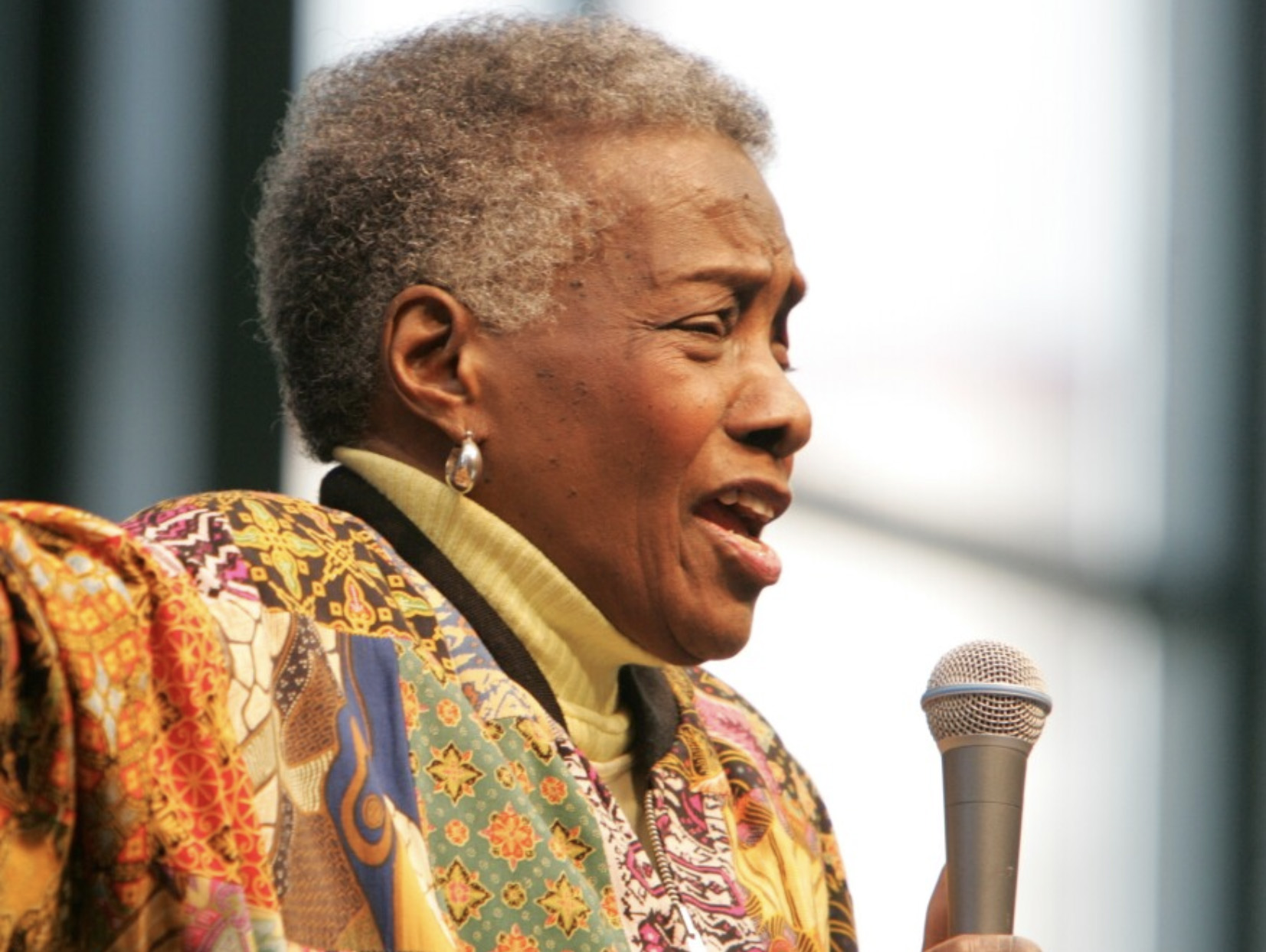
Carline Ray in her later years.
In 1956, she married her husband, bandleader Luis Russell and had her daughter, well-known blues and jazz singer Catherine Russell. She worked in the ’60s and ’70s with a great variety of groups: Skitch Henderson, Alvin Ailey, Mary Lou Williams, Mercer Ellington, Melba Liston, and Marian McPartland. She appears in the documentary The Girls in the Band, in 2011. She released Vocal Sides, her first album as a lead singer, in 2013, the year she died. It was produced by her daughter, Catherine Russell.Ray was a consummate professional, finding in music a lifetime of challenges and fulfillment. As she remarked to Sally Placksin, author of American Women in Jazz, “…I would rather be taken seriously as a musician, and the fact that I’m female—I just happen to be female, that’s all.”

Sue Palmer has been a San Diego musician and resident her whole life. She has received numerous San Diego music awards as well as an award for Best Self-Produced CD from the International Blues Challenge in Memphis. She was inducted into the San Diego Music Hall of Fame, has recorded 30 podcasts, and hosted her online radio show for three years on the local jazz and blues radio station, KSDS Jazz88.3.

