Cover Story
Virginia James: Bringing Appalachian Soul to San Diego

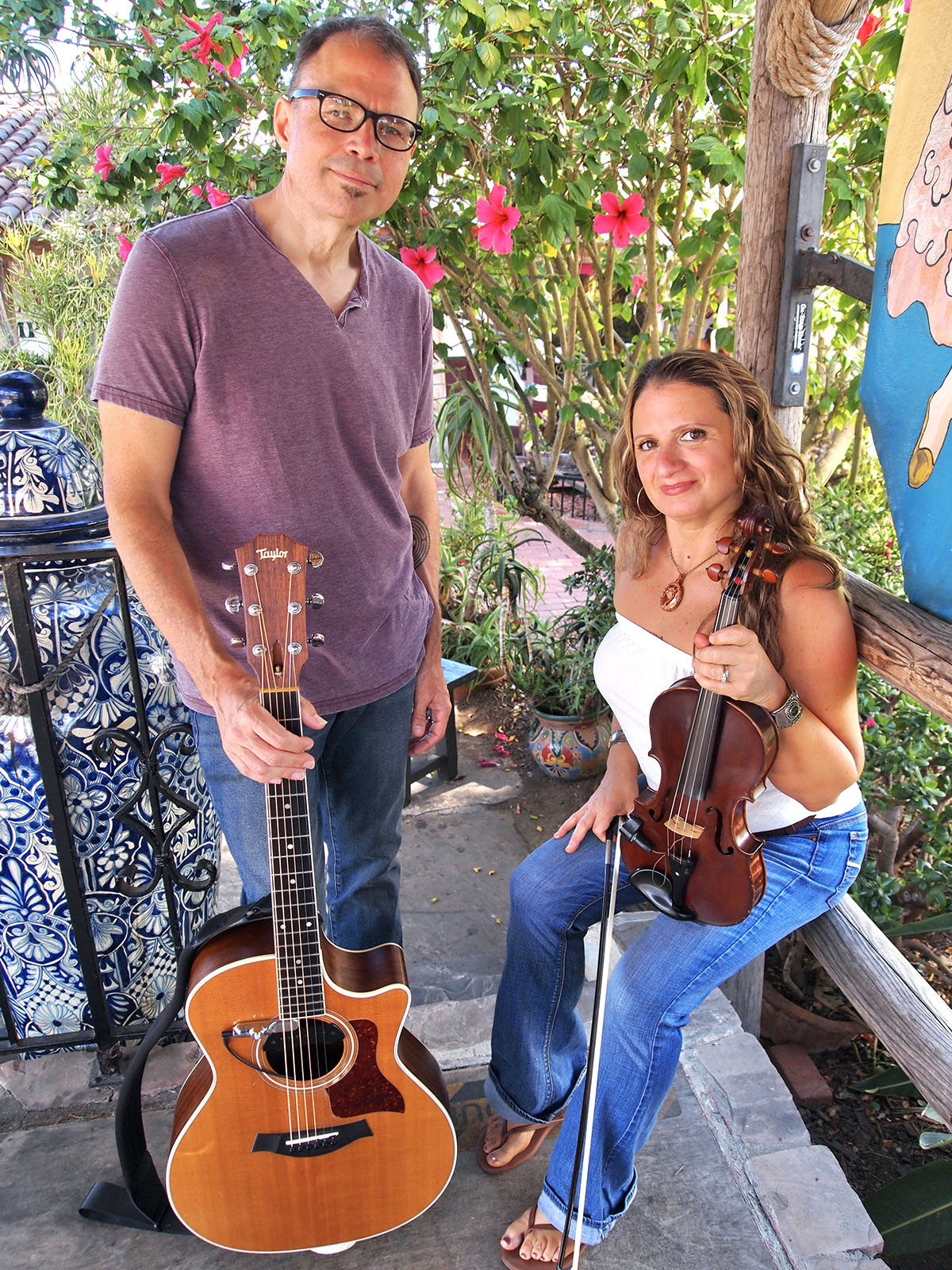
Chris & Alicia Farias. Photo by Marie Haddad.
Every singer-songwriter knows the risks. You love writing and performing music. You study your craft. You pay your dues. You take the leap and ditch your day job to do music full time.
But gigs where you play your original songs don’t pay the rent. So you learn more covers. You play restaurants. You do corporate events. You give private lessons. You do session work. And all that extra time you thought you’d have to write and develop your own repertoire is suddenly going toward learning a Billie Eilish song for that bat mitzvah this weekend.
And you wonder—how do I keep the music I have to do from sabotaging the music I want to do?
Chris and Alicia Farias—also known as the music duo Virginia James—are still figuring that out. When they do, they’ll let us know.
“How many originals do we do here? Can we get away with another?” Chris often asks. “It can be difficult to put a song out there you really believe in and have it get no response.” He tries to remember that people sometimes don’t respond to a song “not because it’s no good, but because they haven’t heard it yet.”

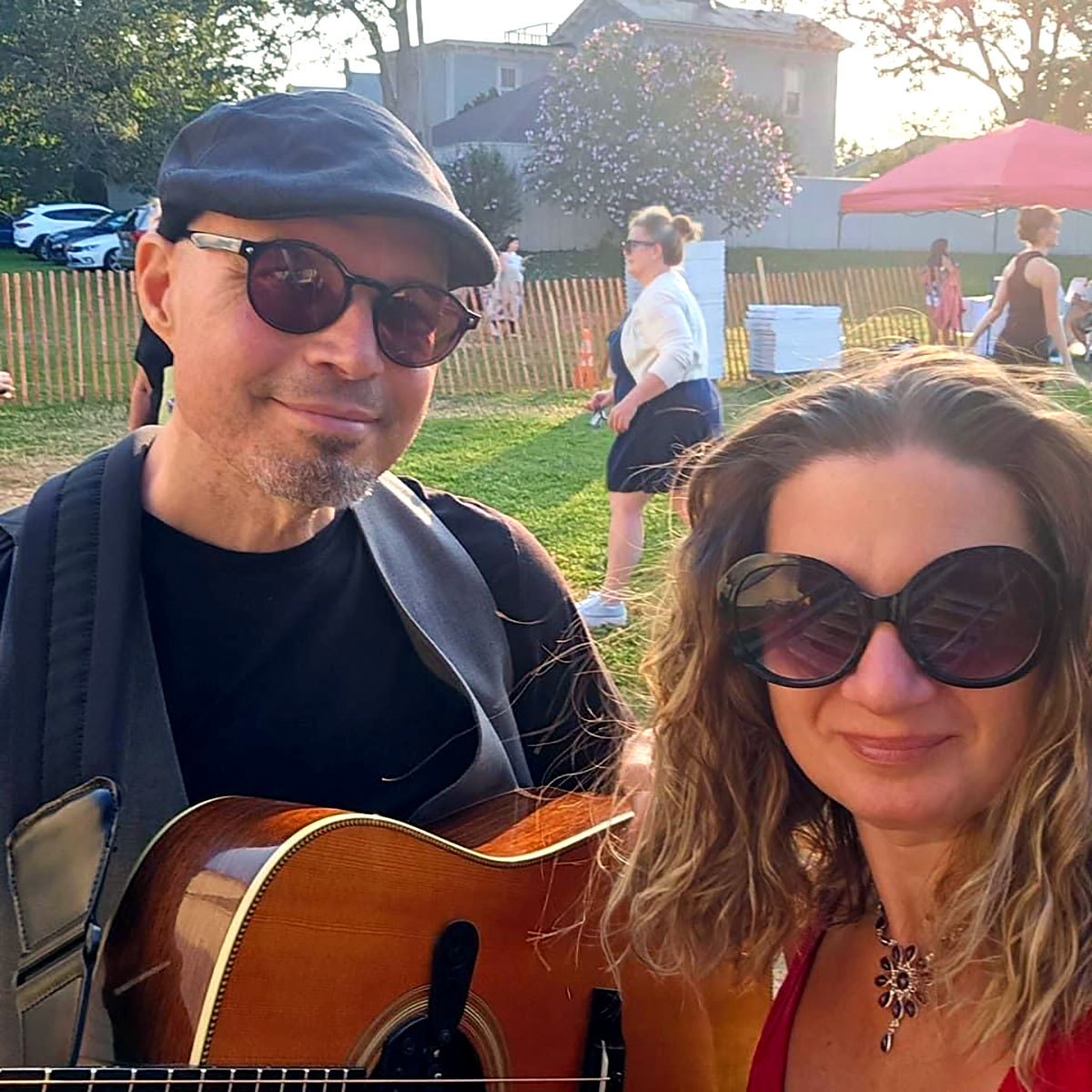
After two years in California, Chris’ Rhode Island accent still carries a flat realism mixed with the persistent hope necessary for the life he’s chosen. He grew up in a three-traffic-light farming town in a household full of working musicians. “I was always at a gig with my grandfather or my father, and I remember very vividly the smell of a room full of amps and guitars that had been in a smoky bar. I know that smell. There was never a time when that wasn’t part of my experience.”
Alicia, by contrast, grew up in a house of music appreciators. “My dad played a mean stereo. He was an audiophile, and there was always music in the house.” One day, when Alicia was young, her mother asked her if she wanted to play the violin, and she responded with the characteristic flippancy of youth—“sure, why not?” But after years of classical training, Alicia had to unlearn those high standards of perfection to become comfortable doing improvisational playing. “A friend of mine in college would sit at the piano and say, ‘all right, Alicia, just play some stuff.’ And I’m like, what do you mean, it’s going to suck! And he said, ‘who cares if it sucks? Just play.’ So I’d noodle around while he played on some chords. There was something edgy about it for a classical player.”
Alicia and Chris became friends when they were both studying music at Rhode Island College—she worked at a local pizza joint and would gift the struggling musician leftover pies. (As Chris remembers with gratitude, “It was two or three days of free meals. It’s a big pizza.”) But on the advice of a former violin teacher, Alicia soon set out for her first stint in San Diego, where she joined the local music scene for a few years. Other friends then beckoned her to the international stage, where she taught English and music in South Korea before touring Europe, Australia, and Taiwan.
But in 2016, Alicia returned to Rhode Island, where her relationship with Chris finally transcended pepperoni. At first, she simply needed a guitarist for a wedding, but “the gig was a disaster. Everything that could have gone wrong pretty much did.” They arrived at the wrong time and were told they didn’t need amplification, but the bride was at the bottom of a windy hill and couldn’t hear the music. Naturally, they decided on the drive home that “we should do this again.” As Chris puts it, “the world likes to think that things happen by chance. But we came back together because at this point, we were done on both sides. We were fully baked.”

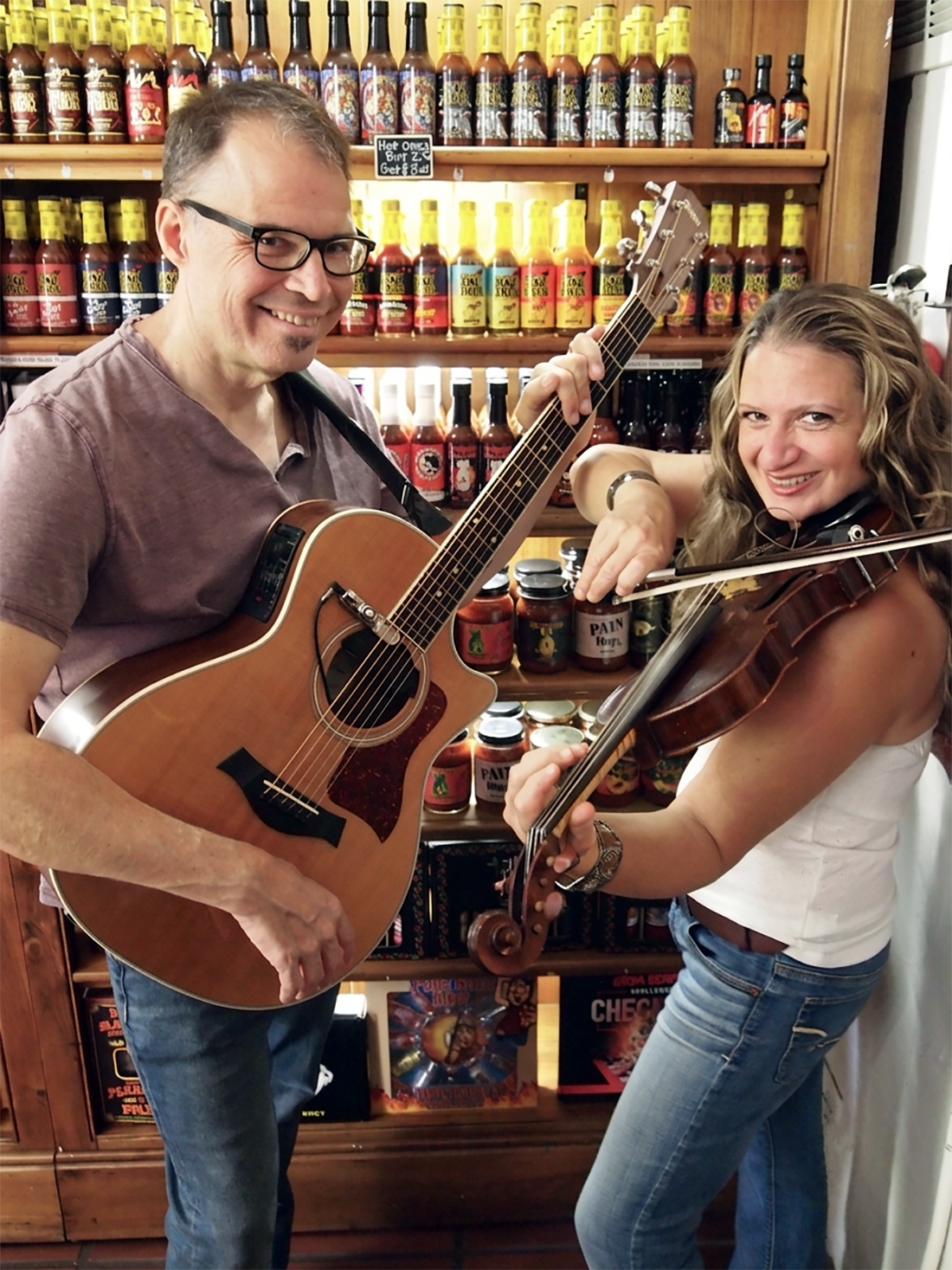
Photo by Marie Haddad.
The couple began dating and performing and writing together. During COVID, they recorded an album in their basement of songs they had written individually, which required reconciling their differing styles. “I don’t struggle for words. So my songs tended to be longer and have lots of extra things or even extra musical pieces that just weren’t necessary,” Chris recounts. “So, part of what she did when we got together was trim a lot of that out. And at first it stung. But the end result was like night and day.”
These days, their writing process is more collaborative. “Sometimes I’ll have melodies that will just stick. So I’ll record a melody on the phone and then I’ll go to my guitarist,” Alicia explains with a smile. “And sometimes we’ve got the lyrics already written. We were in the car one day stuck in traffic and we just wrote out the lyrics. Things like that will pop up.” Chris confirms the utility of the phone-based writing method: “My things come from noodling. I have a pile of hundreds of voice memos on the phone with just little odds and ends, and when we need a bit or a piece, we’ll go through them. Sometimes little chord progressions and bits of riffs or finger picking or something will hang around for years and years before it turns into a song.”
If you’ve never heard them perform live, a band called Virginia James (a mash-up of their middle names) might conjure images of a traditional fiddle-guitar duo sitting in rocking chairs in front of a stone fireplace in the holler. Make no mistake—they can pull off the “Cold Mountain” stuff if they want to. Just like they can wrap their lush harmonies and instruments around almost any cover that drunken revelers in the final hour of a wedding reception might yell out. (After all, they did move to San Diego several years ago to take advantage of the longer outdoor-event season.)

But Chris and Alicia’s original albums and live performances weave together innovative sequences of looping and layering, presenting a more rhythmic, modern sound than you might expect from a violin-guitar duo. Chris describes it as bringing in that “808 sound”—referring to the classic Roland 808 drum machine that became the heartbeat of modern hip hop—with “the fiddle sometimes acting like what a synth would do.” And Alicia’s fearless vocals soar over the mix, channeling more Aretha than Gillian. A recent Troubadour review (https://sandiegotroubadour.com/virginia-james-time-and-time-again/) of their second album Time and Time Again describes them as “seamlessly skirt[ing] between singer-songwriter, folk, blues, contemporary, and even flashes of some bossa nova,” prompting one friend to dub their sound “Appalachian Soul.”
Which brings us back around to that pesky making-a-living topic. How do you balance the natural experimentation of two supremely talented musicians with the demands of rent, gas, groceries, and the current economy? “That’s the burning question, really,” Chris admits. “I think the honest answer right now is that most of the attention is being spent on sustaining life.”


For Virginia James, “sustaining life” happens mostly through weddings and corporate gigs, with the hope that fewer and better paying ones will permit more of the soul-feeding ones. With only two years in San Diego under their belt, the duo is still trying to build their reputation on the West Coast after leaving years of Rhode Island connections behind. But both are avid teachers, offering online private lessons to anyone anywhere with a stable Internet connection. And it’s difficult to name a stringed instrument on which they can’t offer instruction—Alicia does most of the “fretless” ones (violin, viola, and cello), while Chris offers bass guitar and most of the “fretted” ones (guitar, ukelele, mandolin, banjo). They also give advice on songwriting, music theory, and any of the “side disciplines” inherent in music. Until TV, movies, or Taylor Swift comes knocking, those will have to do.
I can’t let the interview end without asking the obligatory question of what’s it like to be both a band and a married couple? They could easily use this as a launching pad to expose each other’s faults and banter good-naturedly about irritating quirks or habits. But it’s mostly a quiet pause, one inside joke about “husband stress,” and then reporting, “it’s all good.” As Chris explains with touching honesty, “She’s my best friend. I mean, I just want to spend all my time with her. So every once in a while she gets to go do her hair. Other than that she’s stuck.” But the look on Alicia’s face doesn’t give that impression. It’s the look of someone who’s “fully baked” and found her place—geographically, romantically, and musically. The trick is to figure out how to keep it going.
