CD Reviews
ZANE YORK & JOHN YORK: The Apple & The Tree

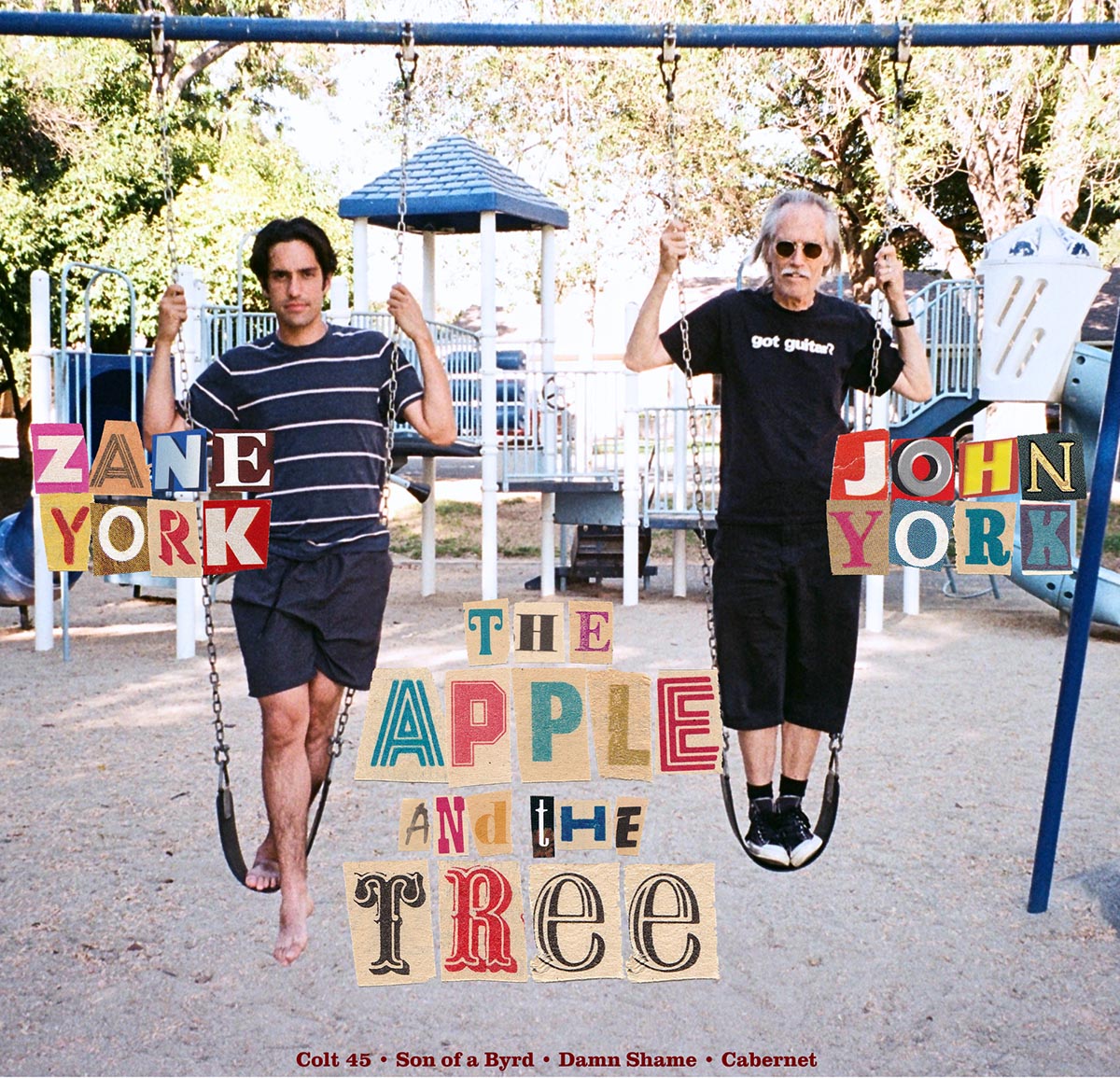
There is something refreshingly stubborn about The Apple & The Tree. At a time when so much contemporary Americana feels polished to within an inch of its life—every harmony perfectly tuned, every kick drum meticulously sculpted—Zane York and his father, former Byrds’ bassist John York, head in the opposite direction. The result is a five-song EP that feels less like a studio project than a document: intimate, imperfect, and deeply human.
Written by Zane with John contributing tasteful acoustic and 12-string guitar throughout, The Apple & The Tree is rooted in folk storytelling more than sonic spectacle. Every song opens with snippets of conversation, count-offs, or candid exchanges between father and son. Rather than functioning as studio banter, these moments make the listener feel like they’ve quietly wandered into the room while the tape was already rolling. “Voyeuristic” isn’t quite the right word. It’s more like being welcomed into a family conversation without ceremony.
Opening track “Colt 45” immediately establishes the record’s aesthetic. A lo-fi acoustic guitar emerges like a forgotten country song drifting from an old truck radio before a low electric guitar adds unexpected gravity, almost resembling a subdued horn section. Zane’s smoky, weathered voice recalls Bob Dylan’s John Wesley Harding era, both in phrasing and sparse melodic sensibility. The production is unrefined in the best possible sense. Every rough edge reinforces the song’s honesty, allowing its vivid portraits of addiction, hardship, and survival to land without melodrama. It feels like discovering an unknown songwriter at an open mic whose songs linger long after the room has emptied.
“Work to Be Done” offers a gentle counterbalance. Built around understated acoustic strumming and a simple, pendulum-like chord progression, the song evokes steady forward motion rather than repetition. There is optimism here—not because life has been figured out, but because the work itself continues. Zane never forces emotion; he simply inhabits it.
On “Cabernet,” a bottle of wine becomes the emotional center of an entire world. Delicate finger-picked guitar supports lyrics filled with loneliness, distance, and quiet longing. At times, Zane’s vocals slip beneath the guitars, nearly disappearing into the mix. Under different circumstances, this might be considered a flaw. Here, it becomes an invitation. The listener leans closer.
“Good For Nothing” recalls the hushed intimacy of Bon Iver’s For Emma, Forever Ago, not through imitation but through atmosphere. Again, the father-son exchanges frame the performance as something lived rather than manufactured.
Closing with the country shuffle of “Damn Shame,” the EP finally lets itself breathe outward. Its chorus feels destined for a roomful of voices singing together over one last round.
Technically, The Apple & The Tree is anything but pristine. The guitars occasionally drift out of tune. The recordings feel almost accidental. Yet those qualities become the record’s greatest strength. Zane York demonstrates that compelling songwriting, lived-in performances, and emotional sincerity can accomplish more world-building than productions costing hundreds of thousands of dollars.
In an era increasingly obsessed with perfection, The Apple & The Tree reminds us that authenticity still carries its own unmistakable sound.