CD Reviews
TOM GRIESGRABER: The Split

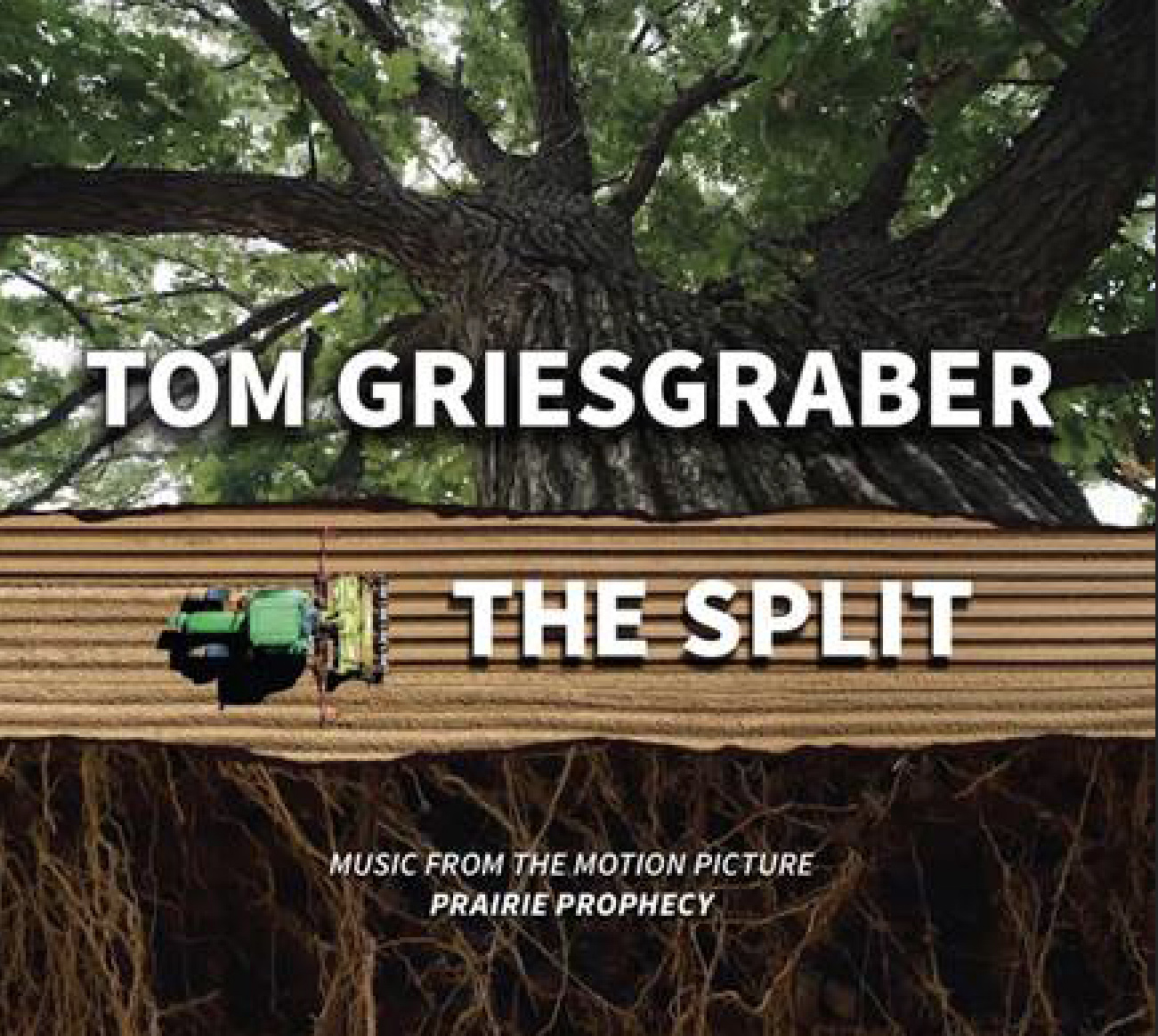
Tom Griesgraber’s The Split arrives as both soundtrack and standalone statement—a richly textured, cinematic work composed for Prairie Prophecy, director Michael R. “MJ” Johnson’s documentary, chronicling the life and legacy of scientist, farmer, and environmental visionary Wes Jackson. Best known as co-founder of The Land Institute, Jackson has spent decades advocating for perennial agriculture and a reimagined relationship between humanity and the natural world. Griesgraber’s score proves a fitting companion to a story rooted equally in ecological urgency and enduring hope.
Featuring 19 instrumental tracks from the film—along with two bonus alternates—The Split unfolds less like a conventional album and more like a carefully sequenced emotional landscape. Presented in the order they appear in the documentary, recurring motifs subtly shift and evolve throughout, creating the sensation of following an unfolding narrative rather than simply moving from song to song.
The album opens with “At a Moment,” a breathy wash of ambient synths that feels simultaneously expansive and intimate, like the first inhale before a long journey. Intricate synth pads ebb and swell beneath Griesgraber’s signature Chapman Stick, whose uniquely tactile resonance becomes the emotional centerpiece of the record. While the instrument is often associated with progressive rock virtuosity, Griesgraber employs it here with restraint and nuance, favoring mood, texture, and storytelling over technical exhibitionism.
Nature itself becomes a kind of collaborator throughout the album. Sonic textures evoke rainfall, wind, open fields, and shifting landscapes. On the title track, “The Split,” crisp rain sounds punctuate delicate synth work, evoking the documentary’s central tension: humanity’s growing separation from the natural systems that sustain it. The music subtly mirrors the film’s themes, often juxtaposing warm organic textures against colder, mechanized synth arrangements.
That contrast emerges vividly in tracks like “Cassettes,” where aggressive, jabbing synth strings and percussive tension briefly rupture the album’s otherwise meditative flow. The piece feels restless, uneasy—perhaps even anxious—serving as one of the record’s most dramatic moments. Elsewhere, tracks such as “Land Institute” offer buoyant, folky plucking that feels rooted in place, carrying an earthy optimism that recalls wide-open prairies and hard-earned possibility.
What makes The Split particularly compelling is its refusal to settle into passive ambience. Though quiet and understated in places, this is not merely background music for studying or drifting off to sleep. Each composition carries narrative weight, painting emotional landscapes and cinematic moods with remarkable intentionality. Griesgraber understands the delicate balancing act required of a film composer: the music must support the story without overpowering it. Yet removed from the visuals, the score still manages to stand firmly on its own.
The recurring themes reward attentive listening. Melodic fragments introduced early reappear later transformed—more expansive, more resolved—as if echoing the evolution of Jackson’s ideas themselves. There’s a patient intelligence to the album’s pacing, one that trusts listeners enough to move slowly and listen deeply.
For longtime fans of Griesgraber’s work with the Chapman Stick, The Split offers a fresh context for his expressive playing. For newcomers, it serves as a compelling introduction to an artist capable of wringing profound emotion from unusual instrumentation.
Like the prairie at the center of Prairie Prophecy, The Split asks for patience. But for listeners willing to slow down and fully inhabit its world, Griesgraber has created something quietly transportive—an album that lingers long after the final note fades.