Featured Stories
The Unstoppable Tim Foley: Irish Music and Beyond

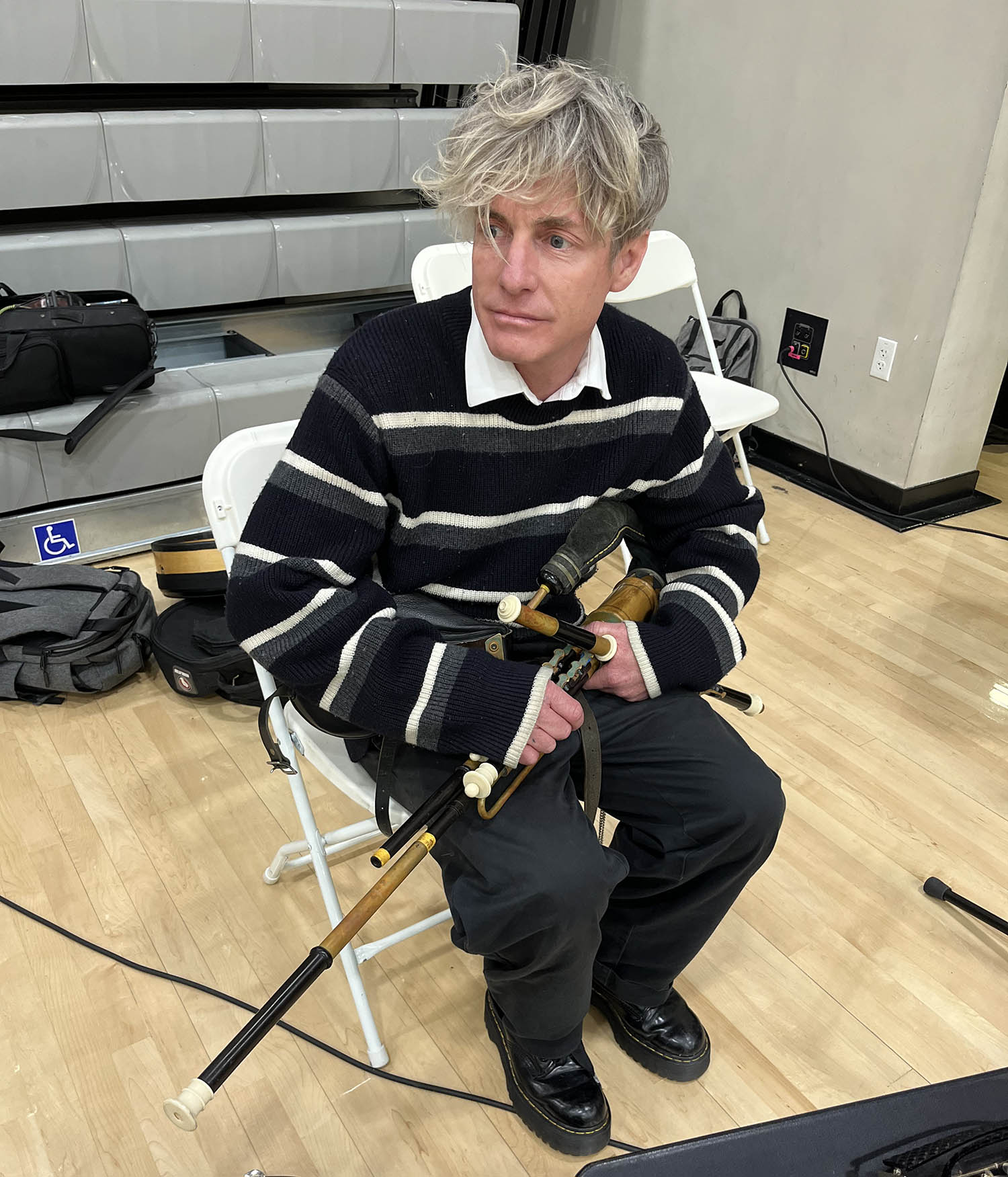
Tim Foley
Tim Foley can’t stop. He is a musician and driving force behind Skelpin, the successful Irish world-music band that’s been a mainstay in San Diego for years. But he’s also an adventurer whose ambitions extend well beyond the local scene.
The band continues to thrive. They’ve won awards; they were huge in Japan as the cliche goes; they are mainstays at the Belly Up, Humphrey’s, and all over. Of course, they’re in huge demand near St. Patrick’s Day—this year headlining downtown in Vegas. And Foley appeared with original music in the movie Master and Commander.
Even with as much energy as a music career takes, Foley isn’t satisfied just to be on stage. Yes, he’s a working musician but he also just happens to be finishing up law school.
To hear it from his musical partner in Skelpin, Patric Petrie, “I respect him so much. He has a wide range of talents, but he also wants to have a second career. I’m just in awe.”
What follows is a conversation with Foley about versatility, world and Irish music, and what it means to keep saying yes.
What’s musically new right now—in Skelpin’s world or your music?
Tim Foley: In Skelpin, our goal is to write some new music this year. So, for us it’s still the beginning of 2026, but our goal is to have some new music. We’re doing a thing in Vegas in March, and so that’ll be fun.
How is law school going while you’re doing your music?
I’m taking a program through Purdue that’s online and I’m in my last semester.
My family members are all attorneys. My dad and my sister do estate planning and I used to teach and only do music, and then I started working for them before COVID happened when gigs shut down, and they said, “Why don’t you just go to law school?” And I was thinking, “Why not? I’ll just do it at night online.” Yeah, the first year blows, but, luckily, having worked with them, I had a leg up on it.
What’s the difference for you being with a band where you’ve got friends and people to experience it with on stage versus solo when there’s nobody else up there?

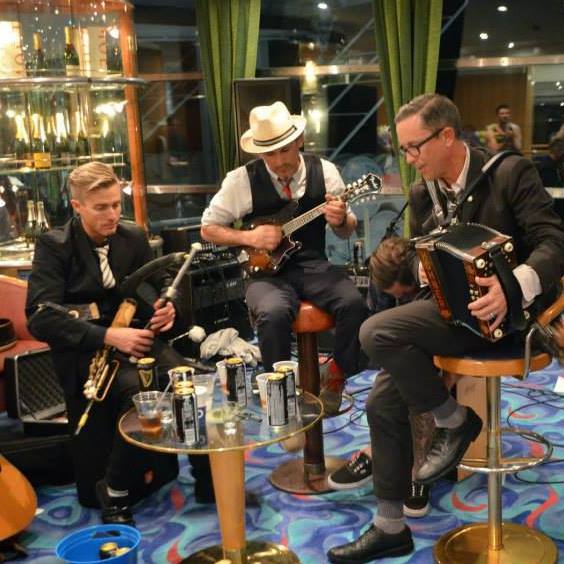
Irish jam with Tim Foley and friends
It really shows me how much it is playing with people that you like and trust. That’s where the key is, right? When you are playing with people that you don’t normally play with, sometimes it’s easier to play on your own, right? You can experiment.
And so, sometimes, if I really like it, you know, if it’s just one of those mindless gigs and the money’s barely worth it, obviously we all have to schlep through those. But sometimes they’re great opportunities just to practice and just try new things. So that’s fun.
But I will say that when you play, like with Skelpin, it’s fun, because I can still do that kind of optional practicing—all trying things, experimenting, and you know they know where you’re going.
How did you get into Irish music?
I grew up in an Irish American family; my dad’s family’s all from Ireland and moved to Chicago. And so, I was just always a part of my culture.
I always identified with that. And I always loved music; I always loved the weird instruments, so I wanted to play the Irish pipes. I knew I wanted to go away and study music in Ireland in college. I found a school and they had Uilleann pipes on their course listing.
I just thought that if I want to play Uilleann pipes I’m going to Cork, so I took it from there. I went and studied Irish music for a year over there, studied the pipes, flutes, and that kind of stuff. Uilleann pipes have always really spoken to me.
I grew up listening to my parents’ folk music. It was James Taylor, Paul Simon, all that kind of stuff. And my dad’s Irish records, you know. Or it was pop music. I have three sisters. So, it was Whitney Houston, James Taylor, or the Dubliners.
You’ve been playing Irish music in the San Diego area for a while. When did you start performing Irish music?

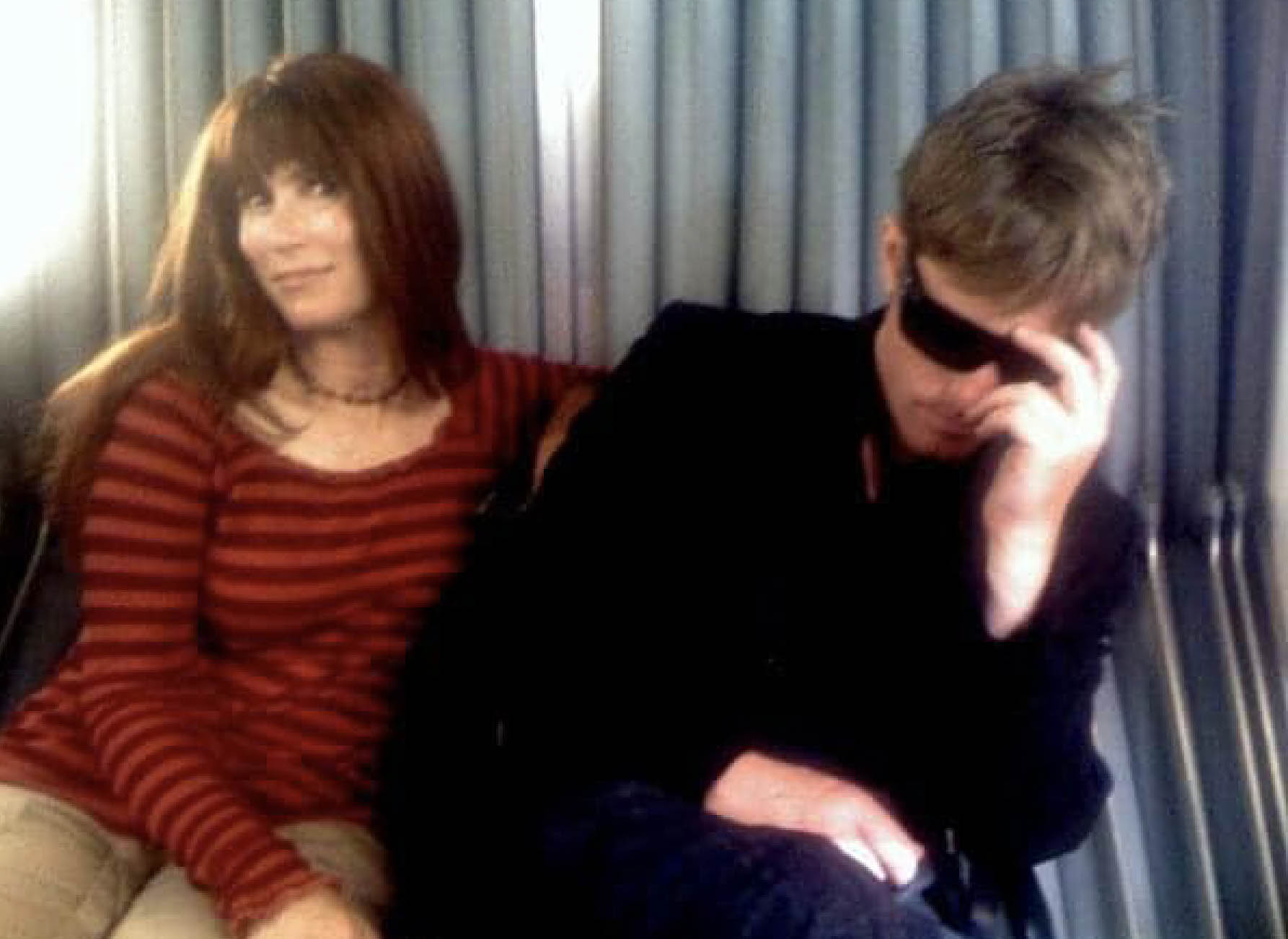
Patric Petrie & Tim Foley in 2009
That would have been in college when I was 22. When I went and studied there, and when I came back, that’s when I met Patric Petrie. I started going to the local sessions and we started playing together as Skelpin a few years after that.
There are a couple great trad sessions in town, or at least there were at that time. So, I would go, and we have a small but close Irish community here in San Diego that really looks after each other.
But there were some people that took me under their wing in those sessions, told me what songs to learn, and showed me things about the pipes.
What surprised you about getting into session music?
For one thing, just how many songs they know—the thousands of ones they know. There are tunes that are grouped together, but they can change depending on where you are, what part of Ireland or what part of America. I just appreciate how that how it’s so much a part of the fabric of the Irish culture in Ireland in a real organic way.
Obviously, we love music in America, but like just how it’s always just people in the pubs just playing and family parties, people singing. So just to learn that music was important, because then you can really be a part of that musical conversation like wallpaper, not in a bad way.
Is there anything different about playing Irish music in public now than 20 years ago?
I should think maybe, but no. Irish music was huge when I was going to school there; you were coming out of Riverdance and the world stage with Eurovision. And then, of course, U2 was in its prime, and the Cranberries.
There was a lot of great trad bands coming out of Ireland. And then, you know, maybe it kind of cooled off. Maybe Ireland’s not as much of a fad as it was 20 years ago. But it’s always just that people in America love Ireland and Irish music; it’s such a part of our music here. Music-wise, they do. People love it.
How did Skelpin start?

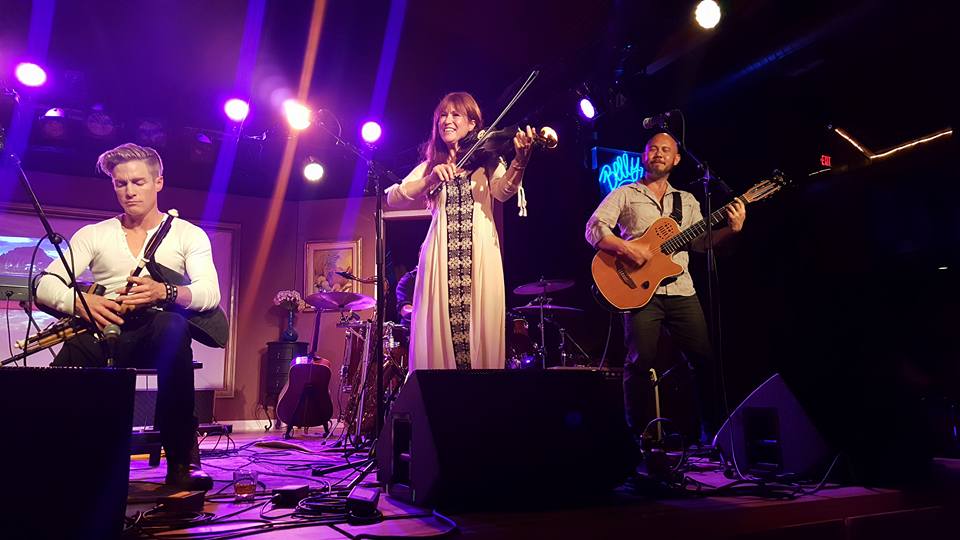
Skelpin. Photo by Peter Oliver.
Well, Patric started the band; she’s really the founder of the band. And she started it because there was a famous Irish dancer named Liam, Liam Harney, who was in the cast of Riverdance. He lived in San Diego and put on a dance show at one of the Irish pubs. They wanted a band, so Patric got this band together and named it Skelpin.
And, you know, I joined them, and we were playing at Dublin Square in the Gaslamp district of San Diego. Our friend David Maldonado, one of my friends who plays flamenco guitar, was playing across the street at Cafe Zavia. Maldonado is a very well-known flamenco guitarist; we were friends.
So, when we were playing at Dublin Square on our break, we’d go over and listen to him and sit in and play fiddle and different stuff. And then when on his break, he’d come over and jam with us. And that’s when we all started playing together.
And then we came up with this whole kind of Spanishy-Irish thing that’s mostly Irish.
How does Irish music fit into what people would call world music?
When Irish music was really having a resurgence in the late ’90s, places like Tower records were doing a lot of stuff with Spanish music. And there’s a great band called the Afro Celts, as you might know, which is on Peter Gabriel’s label.
And I love their stuff; West African and Irish music. The Celts were from all over the world. Ireland’s the last surviving Celtic nation. So, I think it just pairs perfectly.
You’re a multi-instrumentalist. Tell us about that.
I’ve played a lot of things. I could fart around on a piano, but I think if you’re talented enough and musical enough, you can go jump into anything.
But Uilleann pipes is another bag, literally. How hard or what’s particular about playing that as opposed to other instruments?

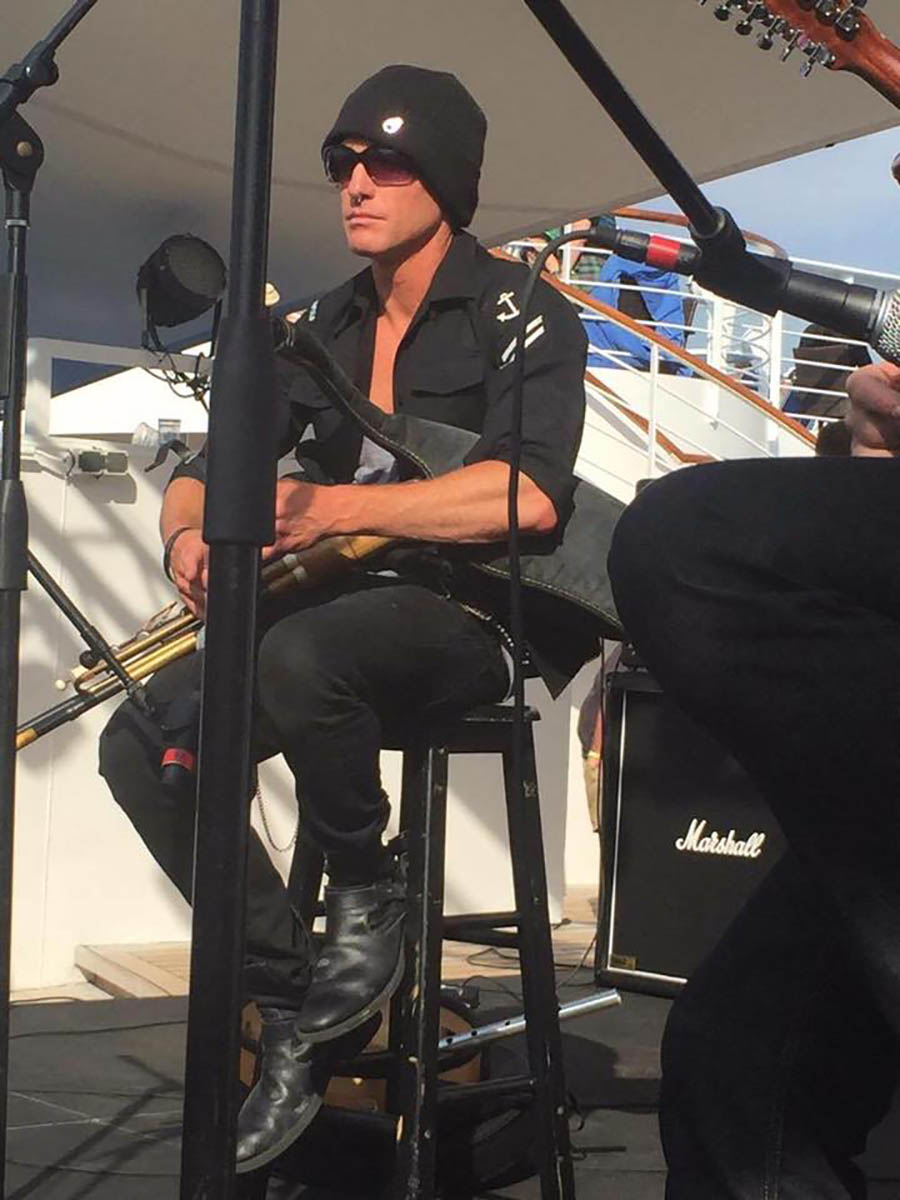
I never even tried one until I went to the school. I had a tin whistle and some other stuff, but when I went to study, it was the first time I put one in my hands, which was the best because I’ve always loved pipes. Even though the Highland pipes are Scottish, they’d be seen at parades, but they are so temperamental. I mean, they’re ike a person, you know. It’s a dry reed, as you know, so it’s totally affected by the humidity and the altitude. And they’re just there’s so much going on… and they’re still handmade.
I’m sure they’re much better made now than they were 100 years ago. But they’re prone to leaking and joints falling apart, because it’s all tied with hair. They’re really hard to keep together.
There are some days you pull them out and it’s like nope, I’m not gonna play today. But some days your fingers aren’t working and you really have to be prepared. Yeah, it’s easy to pick up a few chords, not that that’s genius. But you really could say this about any instrument, right?
The Uilleanns don’t have dynamics, which is so crazy. You really have to relax yourself to play, but you’re moving so many muscles, you can get tense. And then if you can’t hear on stage, you notice you’re pushing harder, but it doesn’t make it louder.
You’ve played on stages and at bars. What happens to you on a stage versus a session? How does it feel different?
First of all, I love to perform. And there’s something in me where I love putting that energy out there and then getting the energy back from the audience.
And then seeing how they’re affected by it, not in a prideful way, but wow, I was a part of that. You know, I think any performer can connect with that. That’s what I love about performing on stage, being able to move people and really being able to put my energy out, whether it’s a performance or a gift. I don’t think that highly of myself, but that’s the total opposite of a session; if you go in there and try to perform, they’re just like, look at this fucking guy here.
You want to really connect with everybody there. So, you know, when you’re playing with a band, there’s a bit of the same listening that you do in a session. For example, I’m here to be a part of the machine, the cog; I’m just here to fit in and not to present something, you know?
You’re focused on each other.
I’m a very spiritual person and I’m also religious. Don’t worry, ha ha. Part of my regular gigs is that I’ll be playing at church and—I’ve always laughed because I’ve got one foot in the bars on Saturdays but on Sundays I’m playing in church. I got one foot in heaven and one foot in hell. But you know, as an LGBT person I totally have conflicting views with religion, you know, as an Irish person, I love/hate being with the Catholic church, but there’s that sense of spirituality that I get out of music. And so, sometimes you can get that in a church and sometimes you can’t, but you can get that on a stage, and you can still get that in that session.
And how about a small place, more pub types. Which ones could you always count on being not necessarily always the most fun, but that something’s going to happen at that place.
One of the craziest places we used to play was the Blarney Stone in Clairemont. I loved playing there. It was off the hook. And it was the cheapest sound system or the simplest sound system—however you want to look at it—but it was loud. It had good bass. Skelpin had some great times. That was one of our favorite places to play. It was the best and the worst.

I know you’re writing; would you ever make another record? Is it hard to get Irish music down on a record?
No, we have a little bit of freedom because as Skelpin, we wouldn’t. We play traditional Irish music, but we’re not traditional. So, I feel like we have a lot of freedom there to do whatever we want.
I’ve also been writing stuff; it’s been the kind of thing where I want to write stuff for the LGBTQ community, whether that’s in the Irish space or the folk or spiritual space.
Skelpin has a great vibe because we’re playing the music we love; we just love to jam, and we love to try new things. Plus, we’re really supportive of each other. The hard part is getting people together.
Is playing music still as exciting as it was 20 years ago?
Playing music is just as exciting and it will always be exciting. I just think as I get older, I’m more selective when and where I want to play music. I just played for free at my friend’s coffee shop in December with another friend’s band; I sat in with them for an hour and a half, and it was so fun. And I just did it for the fun, you know? And don’t quote me on that. I don’t want people to think that I’m saying that!
You know what I mean—I love playing music, which is one of the reasons why I’ve continued to play at church over the years, because it was like a set gig every weekend. A lot of the times it was really good, because I played with good people. During COVID, it was the only gig I had.
Is music an addiction? Something you can’t quit?
Absolutely! Because I’ll always think about why I’m still doing this or why am I still doing that gig? Because I can’t stop. I need to always be doing something. Like if everything shut down or there were no more opportunities, I would be playing at the local car wash once a month.

What’s music going to look like in general and for you in like five or ten years?
I believe in music, and I believe in people and I believe people want to hear live music. And I believe that as A.I. gets stronger, people will always be people and will want to resist that and see live performances. If you go out to a bar or a venue, you’re still going to want to see people playing live. And, you know, they can do whatever they want with holograms. I was there when Tupac came out in 2012.
In five years, I want to still be writing. I want to still be performing. I mean, I have to be performing. I just have to.