Featured Stories
The Continuing Saga of Ric Lee

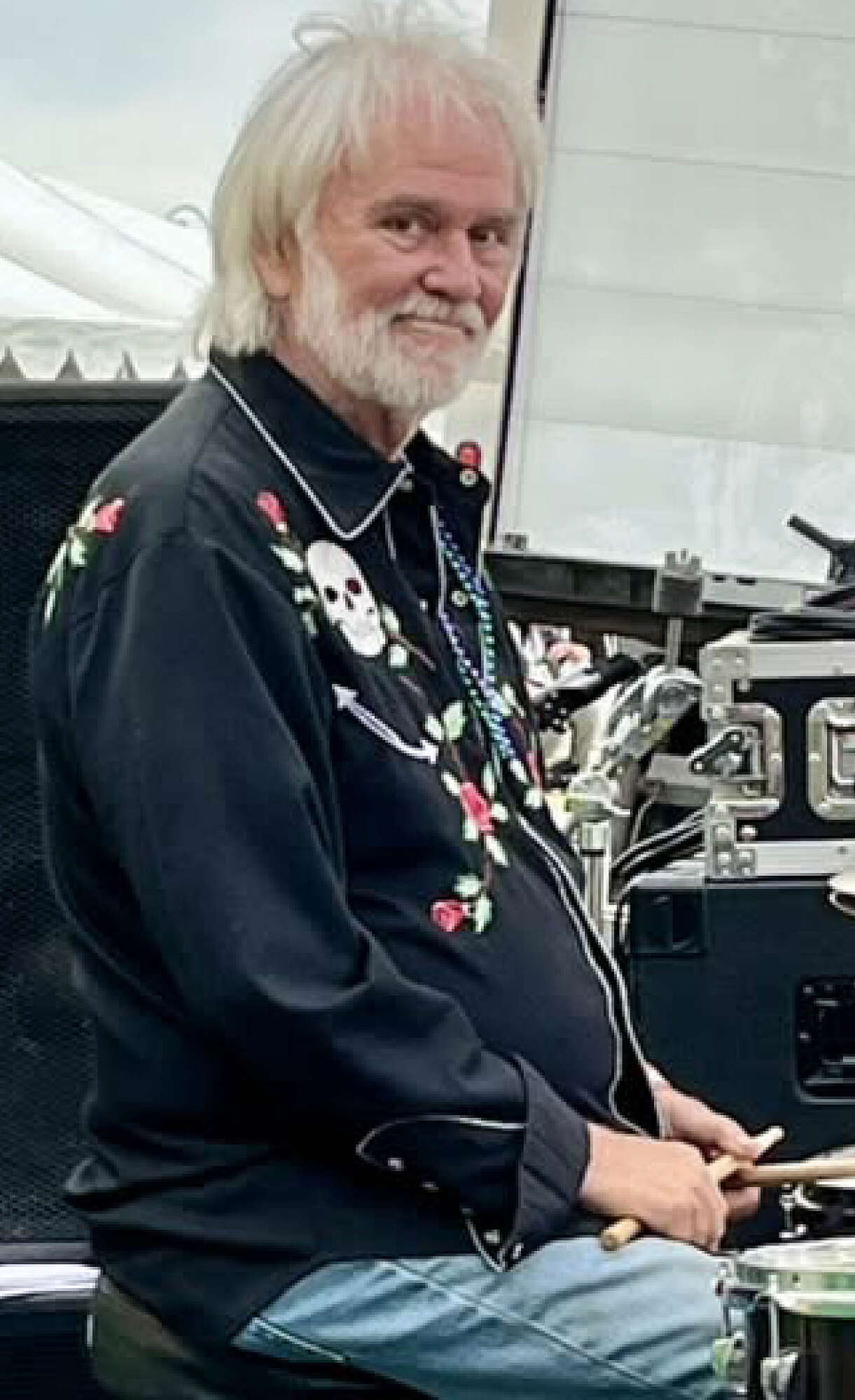
Ric Lee. Photo by Michele Lundeen.
The Bayou Brothers’ Ric Lee became a drummer in 1962 at the age of ten when he rode his red Schwinn Stingray down D Avenue to his childhood Coronado home. The Lees lived in a duplex with front and back houses. That day he skidded his Stingray to a stop when he heard the teenager who lived in the back house playing drums in the garage. “It was the coolest sound I’d ever heard,” Ric said. “And I wanted to do it.”
He inched the Stingray to the garage. “Hey kid,” the drummer said. “You wanna bang on these drums a little?”
Ric said, “Yes I do.” And he did. And he liked it a lot. He learned a few rudimentary licks from the kid and began playing on the drum set every chance he got.
When his parents saw his dedication, they supported his drumming. Ric’s Coronado Police Sergeant father paid for half the cost of a drum set; Ric worked odd jobs to pay for the remainder and whittled his own drum sticks out of hardwood to save money. Ric became “that damn kid down the street who made a racket on the drums night and day.” Ric Lee has been banging on drums ever since.
There is a story connected to the drummer, which has nothing to do with music, but reveals everything about Ric’s mischievous personality and twinkly charisma. The boy’s family owned a red howler monkey, which they kept fenced in the front yard. Rick said, “I’d bug that howler monkey every chance I’d get. I’d walk by and poke my finger in the fence, the monkey would let loose with a howl that sounded like King Kong. I’d run away laughing every time.”
Unbeknownst to Ric, when he poked, the monkey poked back, slowly opening a small hole in the chain link fence. One day after school Ric and his friends poked the monkey: the monkey poked back and ripped a hole big enough to escape.

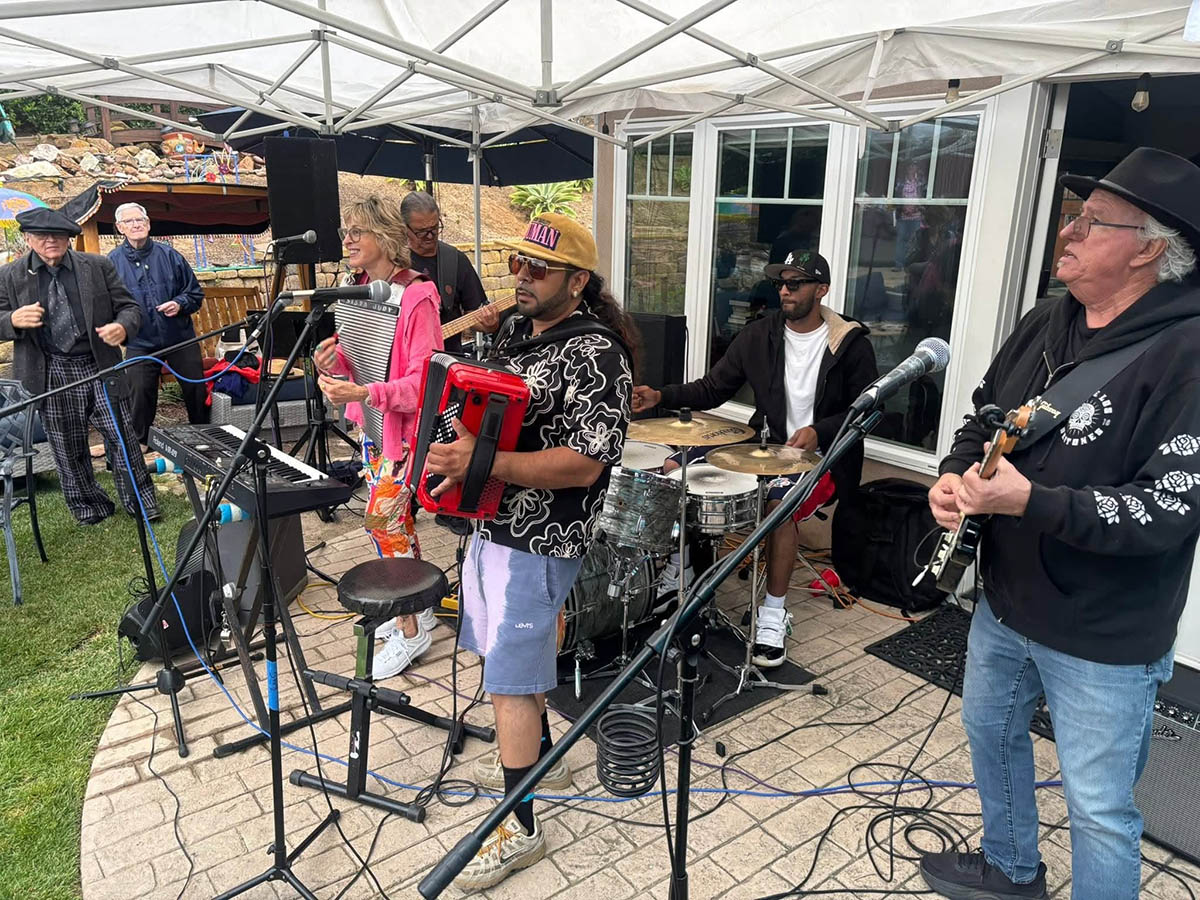
Backyard party with the Bayou Brothers.
The monkey let loose with a brain-rattling howl and burst through the opening. Ric and his friends started laughing. The monkey stared down Ric. “We weren’t laughing long. Things got serious fast. We looked at each other for a minute. Then the monkey took off and so did I. I ran down the street,” he said, until he noticed the monkey had clambered onto the roof. Ric looked up; rhe howler monkey looked down with predatory eyes. “I figured I’d better get out of there.” The monkey’s howls escalated to apocalyptic levels.
Ric turned to run but saw Kirby, his four-year-old brother on his tricycle. The monkey’s devil eyes shifted from Ric to his little brother. “I thought he was going to attack my brother for sure. Maybe eat him.” He did what every kid does in that situation. He yelled for his mom. His mother heard the howling and Ric’s yell. “She came out of the house with a broom and beat the shit out of that monkey. She took my brother into the house, looked at me and said, ‘I’ll deal with you later.” In addition to banging on things, Ric Lee has been poking the monkey his entire life.
The next milestone in Ric’s musical education was the first day of his freshmen year at Coronado High School. The music teacher, Mr. Granger, had retired. “He was old school squaresville,” Ric said. He drew an imaginary picture frame in the air to accentuate that fact.
Right before band practice that afternoon, a 1968 gold Corvette thundered into school. The driver executed a perfect brodie, spun the sports car into a teacher’s parking space, slammed on the brakes, and climbed out of the car holding a trumpet and a Telecaster. He was the new band teacher. “He looked like a rock star,” Ric said. “He wore skin-tight pants, pointy-toe cowboy boots, and a pompadour with a duck’s-ass haircut styled perfectly at the back. “Who is this guy?” the kids wondered.
This guy was Bob Demmon and he changed the culture of the Coronado High School music program. He had been a rock star. He had a hit song, “Baja,”a surf instrumental that reached top ten in Japan in 1963 with his Colorado-based surf rock band, The Astronauts. “I’ve done music my whole life, and I attribute that to what I learned from Mr. Demmon,” said Lee.
Bob Demmon taught the students how to be responsible in a real band. “He taught us to get the gig, keep the gig, come early, and stay late.” He also asked the students to play more than one instrument, and because the band program was relatively small, take the place of three musicians. Bob Demmon taught Ric well, and since 1968 Ric Lee has been getting gigs, keeping gigs, rehearsing, and staying late. Beginning with his first band out of high school to his current gig as band leader and drummer for the Bayou Brothers, Ric has been a catalyst and community builder in San Diego.

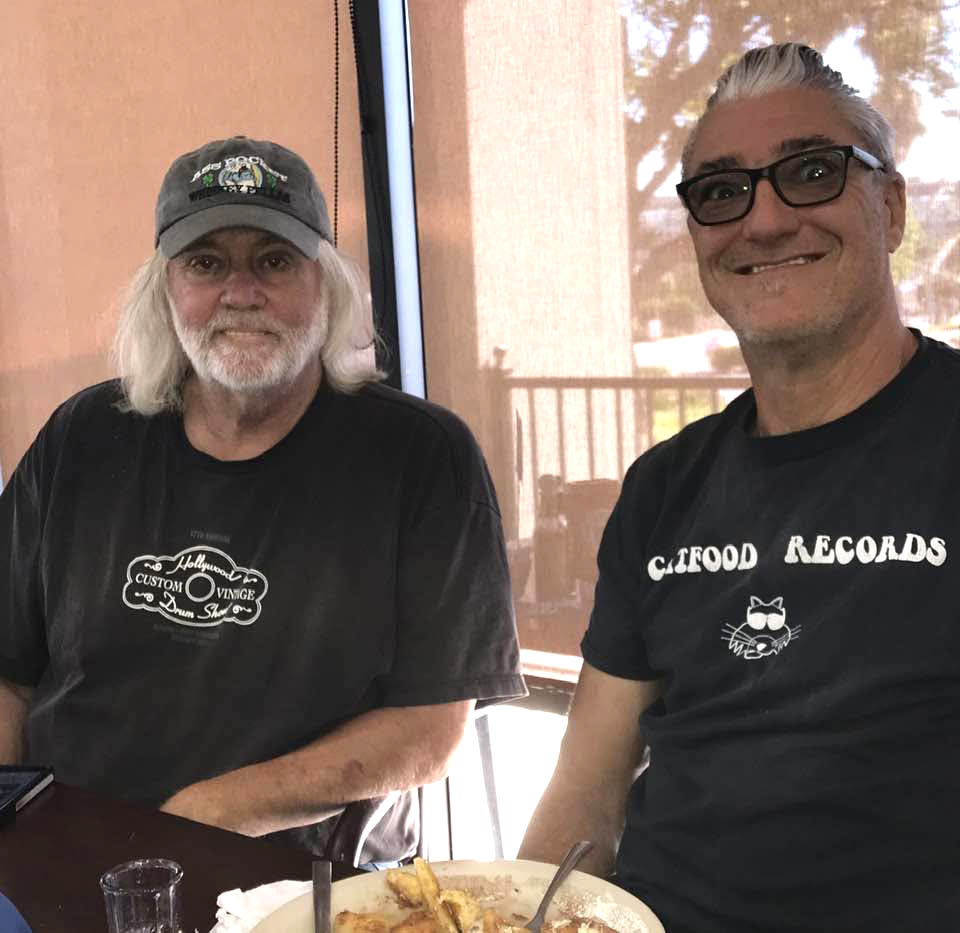
Ric with Chickenbone Slim.
Ric took Bob Demmon’s lessons seriously. He first played the snare drum in the revamped and award-winning Coronado High School marching band. When he discovered that bandleader John Phillip Sousa had paid his bass drummer extra money, Ric learned how to play that instrument to maximize future earning potential.
At Coronado High School both Joey Harris and Ric’s future bandmate, John Chambers, were seniors and already in local rock bands. Ric was still a little square, playing in some rock bands, but he stayed in the school band until graduation. Ric’s first paid drumming gig was for a musical theatre show while he was still in high school.
Squaresville didn’t last long. After graduating high school, Ric drove his motorcycle, backpack, and drum kit to Los Angeles to become a rock star or at least a professional drummer. He lived with a musician friend and his father until dad asked them to leave. Ric ended up living in Watts and Inglewood, played in a funk band and taught drums. That was a cultural and musical education for Ric. The sister of the funk band’s manager took a liking to Ric; they got married and had three children.
Ric moved back to San Diego and had two job offers. One was with the hottest country group in San Diego at the time, the KSON Flatbed Truck Country Band; the other was with the Blonde Bruce band, a blues trio, featuring the mercurial Cadillac-loving, vintage clothes enthusiast frontman, and guitar player, Bruce Thorpe and Mike Judge (future creator of Beavis and Butthead) as the bass player. Ric chose the Blonde Bruce Band. They played 25 nights a month at Winston’s in Ocean Beach, Patrick’s II in the Gaslamp, and Jose Murphy’s in Pacific Beach.
“I learned a lot,” Ric said. They played locally and traveled the country in a van. “We were all a little wild and into the rock ‘n’ roll lifestyle. The funny thing was that Mike Judge would try out his Beavis and Butthead routines in the van, making those strange noises though his nose and as we traveled to gigs. We thought he was crazy. That tells you what I know.”
The band started to disintegrate after the owner at Patrick’s fronted the band money for a single that did well. After the single, the band received money for an album. However, “The band manager absconded to Hawaii in the middle of the night with the money, a briefcase of cocaine, and two hookers from the Gaslamp,” Ric said.
And what happened to the manager? “Well,” Ric said, “he came back to town a little while later. And one night in December, Bruce, the band members, and I made a visit to his house and persuaded him to join us. I mean we really didn’t kidnap him because he knew us, but we had to convince him to come with us. So, we drove around with him for a while and then took him to Fiesta Island, stripped him naked down to his tighty whities and left him there on a cold windy windy San Diego evening.” Eventually Ric left the Blonde Bruce Band.
In the late eighties Ric became the in-house drummer for the Lamb’s Player’s Theatre in San Diego, where he played in Godspell, Joseph and the Amazing Technicolor Dream Coat, and Boomers, a hit musical for which Ric wrote the drum score. The job lasted ten years and gave him some stability.

After that local bluesmen Chris James and Patrick Rynn offered Ric gigs. Tomcat Courtney used Ric as his drummer. He played in a Stevie Ray Vaughn cover band called Crossfire and opened for Elvin Bishop on a gig where he met Lazy Lester, the southern harmonica blues legend. Ric continued his friendship until Lester’s death in 2018. Ric has played with Michele Lundeen many times. “Michele is a huge talent who has survived in the music business as long as I have. I respect her a great deal.” In addition, he has played with Aki Kumar, Billy Boy Arnold, John Primer, Bill Magee, Johnny “Night Train” Lane, Hollywood Fats, and William Clarke. He played drums in the band West Coast Ironworks with his high school friend John Chambers.
He and John Chambers played with the Royal Polynesians at the Bali Hai on Shelter Island and a dive bar called Suga Lu’s. After that, John and Ric joined Theo and the Zydeco Patrol. Ric and John thoroughly immersed themselves in zydeco music. John Chambers, who plays keyboard and accordion, says of Ric, “What stands out most about Ric’s drumming is his versatility. He can play show tunes, funk, Zydeco, blues, rock ‘n’ roll, Celtic. If he doesn’t know it, he will learn it.”
That musical curiosity led to Ric’s current band, the Bayou Brothers, who play Zydeco and blues, are a happy accident. In 1998 Ric and John played a Zydeco gig at a housewarming party for the current Bayou Brothers rub board player, Sista Judy Seid. The band was supposed to be a one-night stand but instead, they formed a musical family and have played together for 30 years. Ric’s daughter Jessica played the rub board at first. “We just kept playing and getting gigs.” The band advertised by word of mouth and began playing in all the Zydeco and blues festivals in the Southwest. They took the name the Bayou Brothers in 2008, so Ric convinced Judy Seid to learn the rub board after Jessca’s work took her away from the band.

An early Bayou Brothers gig illustrates Ric’s tenacity and creativity. “We had a gig playing the San Diego Zoo for 75 nights in a row. By the end of it the band members weren’t talking to each other, not because we didn’t like each other but because we had nothing else to say. But four million people visited the zoo that year. So I contacted Gretch Drums and let them know that over 75 days and about 900,000 people passed by; their name on my gear would be great advertising. They agreed and sponsored me.” Ric received a free drum kit, which he still plays. Ric also is sponsored by Bosphorus Cymbals and visited their factory in Turkey.
The Bayou Brothers have had a long career. They toured England in 2011 with Lazy Lester and returned to England two years later. He met Katie “Mama” Tokus on a third England trip with Robin Henkel. Katie introduced him to Vince Lee and Sophie Lord, blues musicians from Plymouth, England. Katie, Vince, and Sophie have all become part of Ric’s musical family and have visited and played throughout Southern California, thanks to Ric.


Ric Lee with Mma Tokus and Robin Henkel.
In England, the entire band—five adults and their instruments—stayed in a one-bedroom flat with the tour promoter. “It was not glamorous; we had a saxophone player with us and he slept behind the front door, which hit him in the ass every time someone came in.” One night a large friend of the promoter came home and started yelling, “I’m pissed! I’m really pissed!” Judy and Ric thought a drug deal had gone bad, so they escaped in the middle of the night and found refuge on a neighbor’s couch, where their legs stuck over the sides. “I was relieved that Judy and I were safe.” The next day they learned that “pissed” meant drunk in England. “He wasn’t angry, he was howling at the moon.” The real-life lessons of a rock ‘n’ roll life.
The Bayou Brothers have released five albums over the years, including the most recent High Roller Zydeco. They won the Blues Artists of the year in 2016 at the San Diego Music Awards. The Oompa Brothers, a German polka band, is an illustration of Ric’s versatility and the Bayou brother’s adaptability. Every year during Octoberfest the San Diego community is treated to the seductive sight of Jack Stevens, Ric Lee, John Chambers, and Oliver Shirley playing spirited German music in authentic form-fitting lederhosen.
They have played and done promotion at every Gator by the Bay Festival since its inception. “Peter Oliver, Catherine Miller, and Tom Withers, the original owners of Gator by the Bay, have been friends of the band and helped us get many gigs over the years,” Ric said. “They made us a part of the festival and for many years we did the KUSI promotion with Peter on live TV in the morning.”
Ric’s longevity in the business and his positive attitude have made him a leader in the San Diego music community. Ric, along with John Frazer, Chet Cannon, and Bud Willis have organized and volunteered at the Spring Harp Festival in La Mesa for over 20 years. Ric is an instructor and now director for Blues in the Schools, a nonprofit that provides free music classes to San Diego school children; he also volunteers at their summer blues camp. He has also played for Blues against Hunger.
Ric credits Rand De Mattei of the Blues Lovers of San Diego, Mike Kinsman, organizer of the San Diego Blues Festival; and Paul Martin of SHOWZ San Diego, as fellow San Diego music leaders who have helped his career and supported music in San Diego.

Ric has also organized many benefits for ailing musicians over the years. His first benefit was for his second wife, Karen. “She had a stroke, and our insurance did not begin to cover all the medical expenses. So, I organized a benefit to help with the bills and I have done many since then.”
Ric is most proud of his children, Rebecca; Jessica, a longtime rub board player; Richard, who has become a respected hip hop producer and artist; and his six grandchildren. Sadly, Ric lost his wife, Karen, to a stroke and last year his son, Richard, died in a house fire. But Ric Lee keeps moving forward. “To stay in the music business, you have to ignore rejection,” he said. “For every ten calls I make to schedule gigs, I’m lucky if three produce work. I’ve been blessed; when I’m playing drums, I feel safe from all that’s bad out in the world.” In addition, Ric’s new partner Lupe provides security and support.
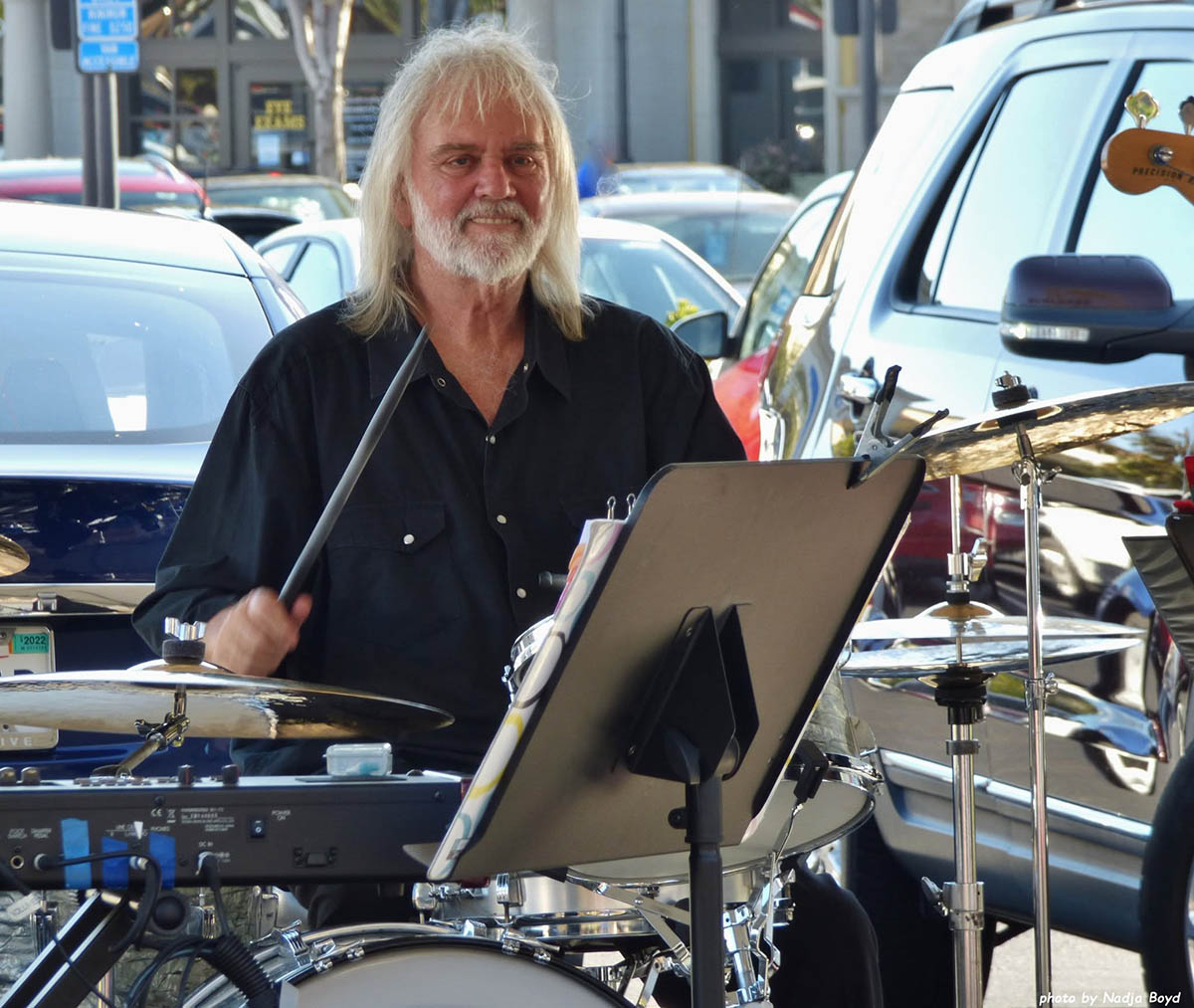
To really understand Ric Lee and know him, one has to see Ric at work. Picture this: Ric, with his now gray lion’s mane hair and neatly coiffed beard, looks a little like a bluesy Kenny Rogers behind his kit. When Ric is drumming, he’s smiling and twirling the sticks. He smiles when Jack Stephens takes a wicked guitar solo. He smiles when John Chambers adds a particularly tasty lick on his accordion or keyboard. He smiles when Oliver Shirley lays down a driving bass line, or when Sista Judy has three children and their mothers up on stage playing rub boards, tambourines, and shakers.
It’s an infectious smile, a little sly and a bit mischievous, but most of all it’s a smile that reflects Ric Lee’s lifelong passion and unadulterated joy at making music and building community.