Featured Stories
More than Just Hearing: ASL Music Interpretation and the Bella Lunas

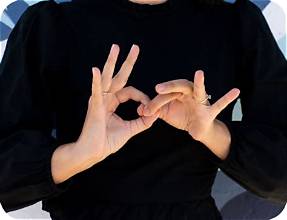
“Music is more than just hearing.” This quote by an American Sign Language (ASL) music interpreter has been rolling around my brain. Like many hearing people, I’d always thought of music as an auditory art form. But the increased presence of ASL interpreters at concerts shows that deaf people are clearly experiencing music through senses other than hearing.
So I decided to ask the questions I was embarrassed I didn’t know the answers to. How are deaf people experiencing music? As a singer-songwriter, how should I be making music more accessible? And as a purely selfish question, what multi-sensory experience am I missing out on?
First, let’s talk about ASL music interpreters. Anyone who’s watched one at a concert can immediately tell this is not a series of stiff hand gestures isolated from the rest of the interpreter’s body à la Lord of the Dance. Rather, it’s a visually stunning physical performance utilizing every part of the interpreter’s body to convey the lyrics, pitch, instrumentation, and energy of a song. For instance, an interpreter may mimic particular musical instruments, denoting the difference between a guitar and a bass or a snare and a kick drum. An interpreter’s open facial expression may signal notes sung in the lower register, while a scrunched face with closed eyes may indicate a higher-pitched vocal (think Axl Rose in “Paradise City”). Interpreters may mouth some or all of the lyrics while stretching or condensing their hand signs in perfect rhythm with the words. And all of this happens while the interpreter is swaying or dancing to the beat, using their feet, head movements, and facial expressions to capture the song’s attitude and spirit (check out YouTube’s “10 Epic Sign Language Interpreters at Metal Shows” for the definition of commitment). Not surprisingly, it takes immense preparation. But the result is pure performance artistry.
Then there’s the beat. Lily Molina, a San Diego musician who proudly describes herself as “Deaf with a capital D,” grew up in a musical family. When they would jam, she could “feel the vibrations change” through the home’s wooden floors and internalized it to the point where she could follow the room’s musical atmosphere. Not surprisingly, Lily views music as something that begins internally, like a primal pulse. After all, the four beats of a measure are “not just numbers or something that the music world came up with—it’s our heartbeats.” She pauses, “I don’t know how to explain it. But I just love music. I love it.”

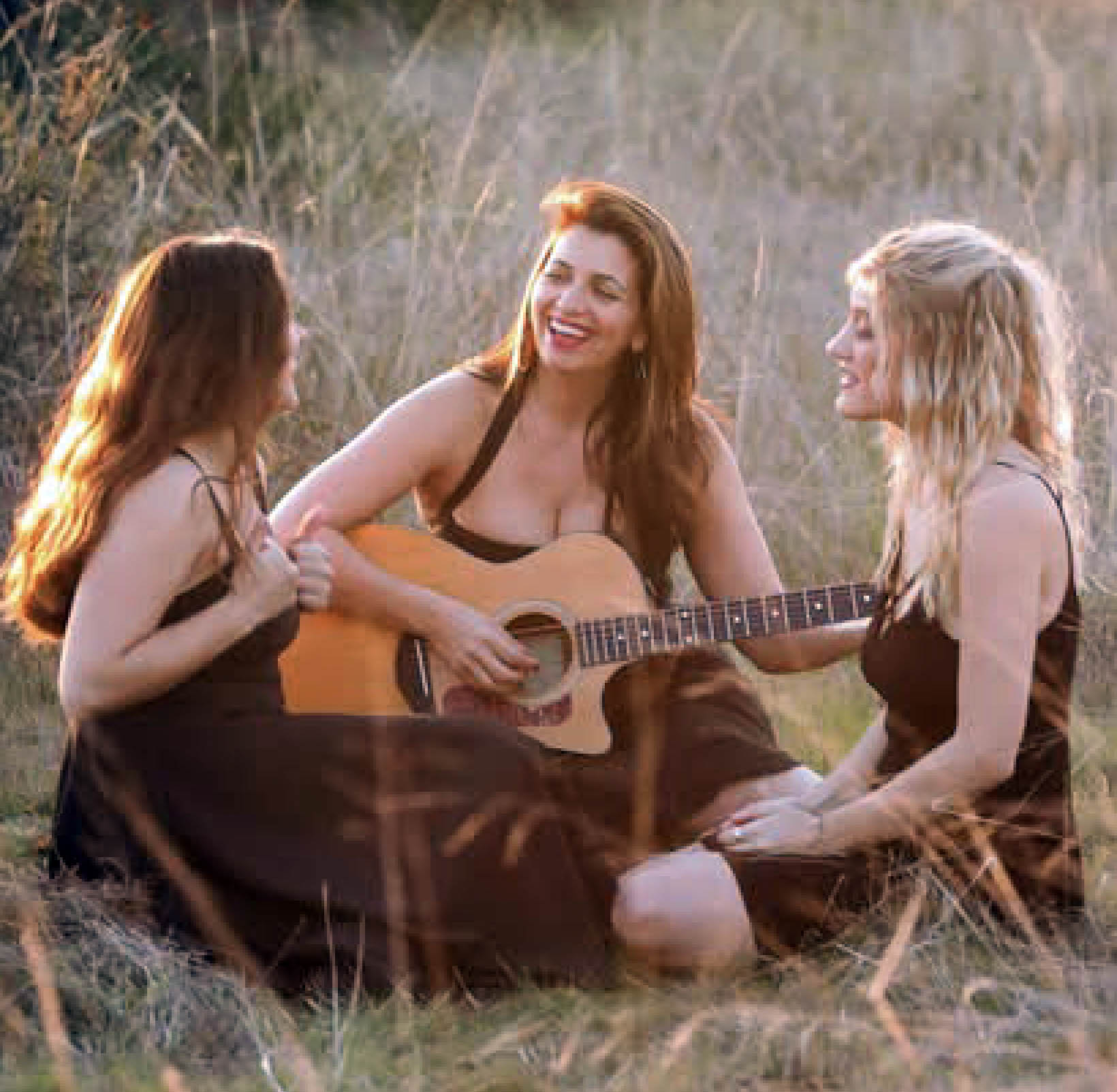
The Bella Lunas
That love shines through in Lily’s work with the Bella Lunas, a local trio in which she’s not only a catalyst of the music but a co-creator of the content. The trio started when Lily was living with her two roommates, both of whom had their own musical careers and connections to the Deaf community. Sheena Rice is a singer-songwriter, hearing interpreter, and child of deaf parents (known as a CODA) whose song “Strawberry Lemonade” was nominated for a recent San Diego Music Award. Rhea Makiaris is a singer-songwriter and hearing interpreter who’s provided ASL interpretation for top acts such as Bruno Mars and the Red Hot Chili Peppers. The three roommates often had informal dance parties and discussed the idea of performing together. So when Rhea invited the other two to join her on a winery gig, they found—not only a receptive audience—but also an experience that was enjoyable enough to officially declare themselves a band.
The trio began writing and rehearsing in a space in their house dubbed the “moon room” (which also inspired the band’s name). They’d use prompts to trigger creative ideas and then swap journals and circle the parts they liked. Once these parts were brought together into a song, Rhea and Sheena would rehearse the music and create a Google doc so they could project the lyrics onto the wall. Then they’d sit in a circle and sing through the lyrics so Lily could follow along and create an interpretation of her own.
The Bella Lunas maintain a similar half-moon stage plot during their performances—a configuration that adds to their communication and emotional connection. “There have been many moments when the three of us are performing together and I look over at Lily and get super moved,” says Rhea. “When we look at each other on stage and I’m getting the beautiful sounds of the music and the visual art that Lily is putting out there, it’s just the best thing.” Sheena adds, “I feel relieved as a CODA because everything’s accessible. So as I’m singing, it’s natural for me to look over at Lily and be like, yeah, this is whole.”

More music venues are beginning to appreciate the importance of accessibility. Lindsay White, who produces the monthly Songwriter Sanctuary concert series, has been able to integrate ASL into eight concerts this year (up from one last year) thanks to generous funding from Ability Central and other community partners. And even when interpreters aren’t available, Songwriter Sanctuary provides QR codes that allow anyone to scan and view the artists’ lyrics. While Lindsay notes that “artists aren’t used to pre-selecting songs and submitting lyrics weeks prior to their shows,” she emphasizes that “doing so is an act of care that allows us to make our series more accessible for our Deaf community members.”
Still, Lindsay acknowledges the concerns she shares with “every other broke community organizer”: how to pay for these critical services while still providing the musicians a fair wage and keeping ticket prices affordable. “This work will chase the perfectionism right out of you, because it’s never complete, you are constantly vulnerable to criticism, and it’s hard to find energy and resources for all the projects and people you hope to serve.” But the goal remains to make everyone “feel as welcome and as comfortable as possible, while also going home thinking about how they might reduce barriers in their own spaces.”
An ASL music interpreter at the Songwriter Sanctuary.

The deaf community encounters other roadblocks to enjoying music. Beyond the financial burden of who foots the bill for interpreters, venues are often concerned that ASL will be a focus-stealing “distraction.” Some fail to provide a designated space for the interpreters, forcing them to stand in the aisles and dodge vendors or people walking to their seats. Even those with a blocked-off ADA area may locate it so far away from the stage that viewers have to constantly head-swivel between the stage and the interpreter, forcing deaf audiences to make the choice between watching the performer and understanding the lyrics.

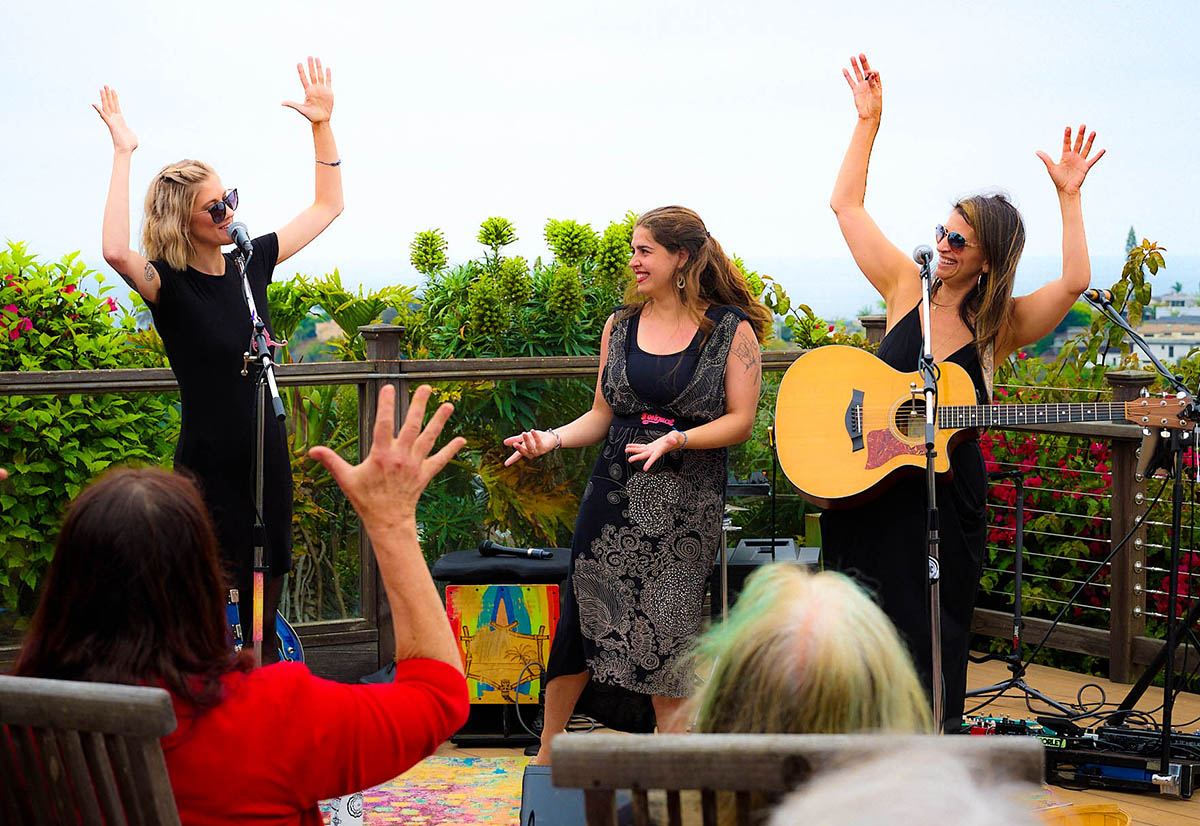
The Bella Lunas
Some members of the deaf community also struggle with misconceptions from their own families. Parents who discover a child is deaf often go through a grieving process, attempting to “fix” the “defect” through cochlear implants or other devices. Lily shares the “dark cloud” her own musically-inclined father went through when figuring out how he would connect with a daughter who didn’t experience music the way he did. The key, Lily believes, is for parents to learn ASL and bring themselves into the child’s world, rather than “always putting it on the kid” to try to match their parents’ hearing experience.
That’s good advice for non-parents, too. The more I learn about ASL, the more I’m convinced that providing access is not only our responsibility (not to mention the law), it’s a net gain for the music community. Because if you’ve seen the Bella Lunas, a Songwriter Sanctuary concert, or a similar event, you start realizing that music is “more than just hearing”—it’s a layering of sensory harmonies. So the real loss may not be a Deaf person’s inability to “hear” the music but a hearing person’s failure to “see” its emotion and “feel” its energy. Or in Sheena’s words, the goal is for all of us to attend a concert and come away feeling, “yeah, this is whole.”