Featured Stories
Laura Chavez: Her Own Voice

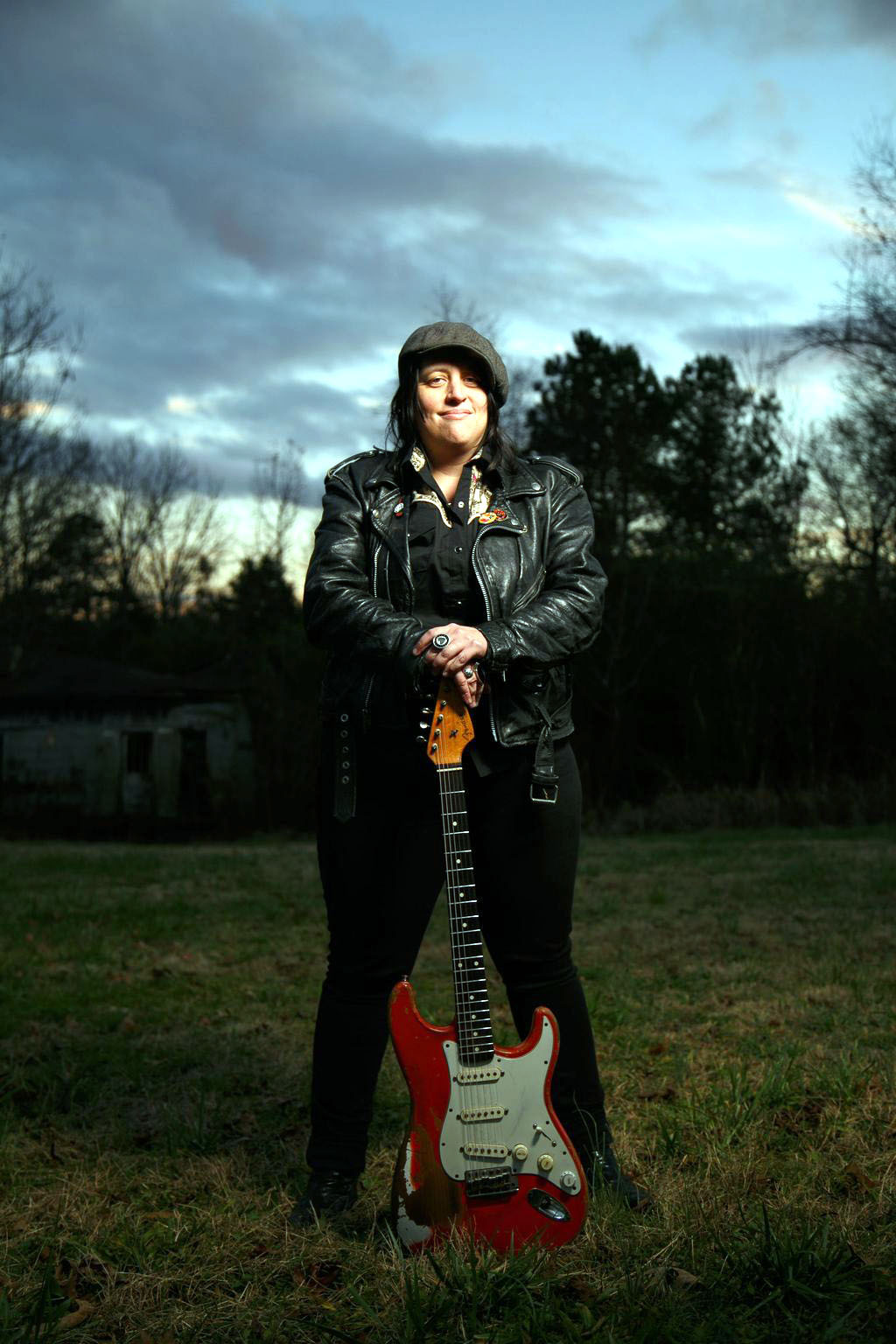
Laura Chavez. Photo by Austiin Britt.
In the early days of rock ‘n’ roll, a teenage guitarist named Duane Eddy felt that his voice wasn’t good enough to record, so he turned to composing instrumental guitar riffs and melodies in the late 1950s, churning out a catchy track titled “Rebel Rouser,” which set the mold for others to follow. There was Link Wray with “Rumble” and guitarist Billy Butler’s iconic riffs with the Bill Doggett Trio on “Honky Tonk,” culminating in the early 1960s with the advent of The Ventures, who took instrumental guitar arrangements to the forefront of the pop charts with their arrangements of “Walk Don’t Run,” “Pipeline,” and “Hawaii Five-O,” to name a few, ultimately landing them in the Rock ‘n’ Roll Hall of Fame in 2008.
Since then, there have been myriad others who have charted new musical directions with their instrumental prowess on guitar, fueled by rocker Jeff Beck’s groundbreaking all instrumental Blow by Blow album in the 1970s. Additionally, Alan Holdsworth, Al DiMeola, John McLaughlin, Larry Coryell, Joe Satriani, Lee Ritenour, and Ronnie Montrose, were all notable in successful instrumental guitar projects.
As for primarily pure blues-oriented instrumental guitarists of note, there are not that many, which brings us to the debut ten-track album by guitarist Laura Chavez, titled My Voice, on the Ruf Record label, co-produced with Thomas Ruf, recorded last year in Germany, engineered and mixed by Michael Muhauer at St. Annen Studio in Bad Sooden-Allendorf, Germany, with additional recording at Bulbancha YaYa Studios in Chula Vista, California.
Chavez is joined by an A-list of musos, featuring Lea Worms on organ and piano, Tomek Germann on bass, Marty Dodson and Denis Palatin sharing drum duties, and Tony Econom on percussion.

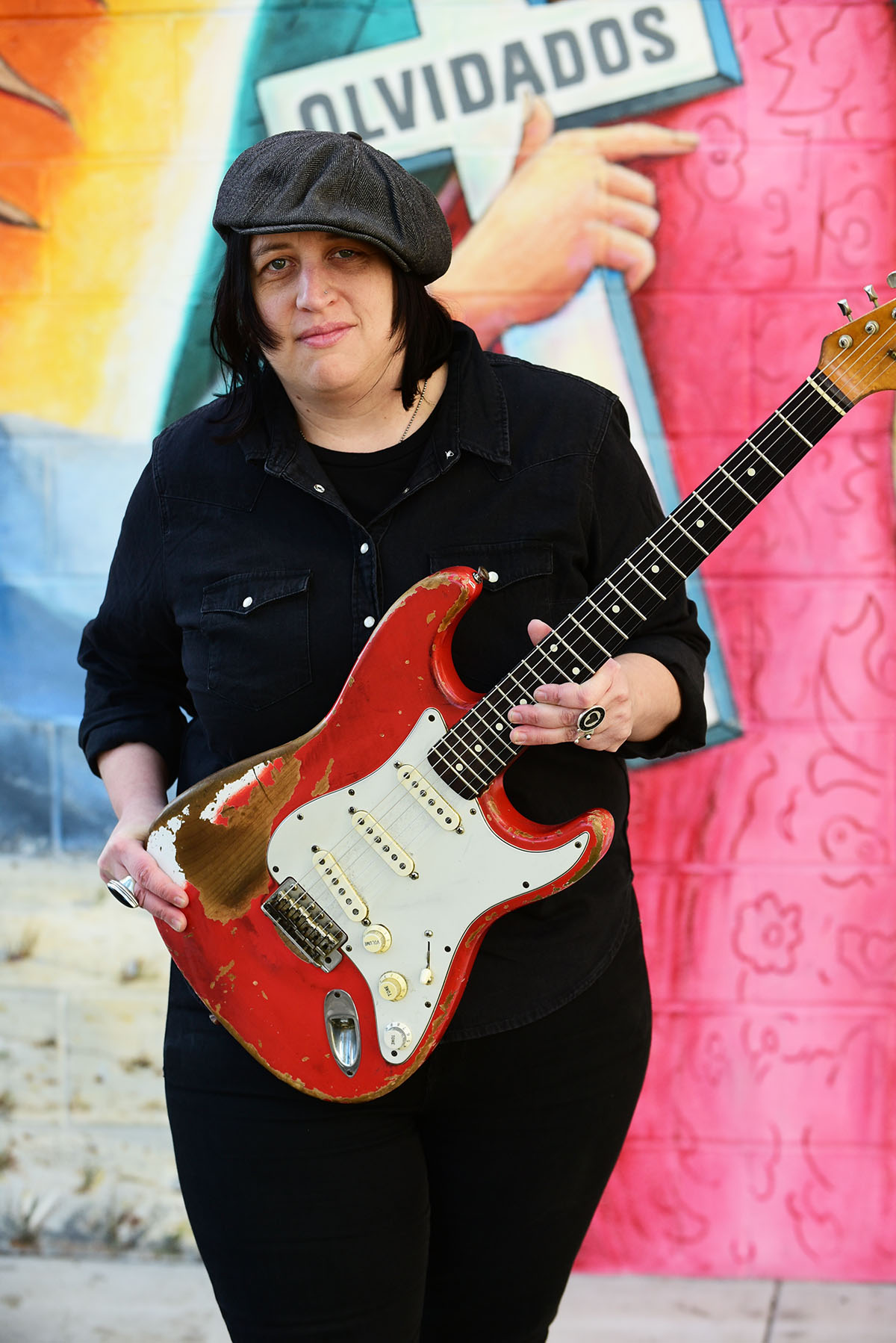
Photo by Steve Covault.
So, first some essential background on how she arrived at this musical juncture in her career. She made her mark with blues singer Candye Kane a couple of decades back, covering everything from blues to jazz standards, gaining a reputation for her ability to play accurately and with intensity over most any song format.
As word got out, Chavez became in high demand, which led to gigs with high-visibility vocalists internationally, including Nikki Hill, Vanessa Collier, Whitney Shay, Sue Palmer, and Casey Hensley. Chavez expanded on this experience in the album’s liner notes: “I love vocalists. My true joy as a player has always been standing beside them, doing what I can to support them, and bringing out their best. I had to find a way—with my guitar as the primary voice—to communicate the same things my favorite singers were able to communicate through true songs with hooks, melodies, and—most important—my own voice and personality.”
Her fierce guitar playing, always in context, gradually garnered the attention of many music onlookers, eventually earning her the honor as the 2023 winner in the Instrumentalist/Guitar category at the annual Blues Foundation’s Blues Music Awards in Memphis. And now for a deep dive into My Voice.
The most revered blues guitar artists over the past decades have been known not only their fretboard wizardry, but also their soulful vocal presence, à la B.B. King, Buddy Guy, Jony Lang, Muddy Waters, Stevie Ray Vaughan, Susan Tedeschi, T-Bone Walker, and the list goes on and on. In contrast, Chavez expresses her own voice instrumentally on the fretboard, not only as an already internationally recognized blues guitarist, but also much more as she comfortably stretches into other musical idioms throughout the ten tracks.


Chavez’ first solo album, My Voice.
The opening two tracks pull no punches as Chavez defines the roots of her fretboard identity, hot buttered soul at its finest. The opening track, an instrumental cover of CCR’s “Born on the Bayou,” mirrors what guitarist Lonnie Mack established with his instrumental version of Chuck Berry’s “Memphis” in 1964, taking a popular vocal recording and tearing it up instrumentally on your axe with your own fretboard personality.
The second track, “Mind Your Step,” a Chavez original, continues the infectious soulful groove, with the strong presence of Worm’s rhythmic and melodic interplay on organ and piano in conversation with Chavez’s guitar phrasings, melded with the ever-steady rhythm section of Dodson and Germann on drums and bass respectively.
Both tracks take one back to that nostalgic soulful 1960s R&B era of Magic Sam’s guitar bellowing down Rush Street in Chicago, or Cornell Dupree’s guitar riffs emanating out of Small’s Paradise in Harlem, or Johnny Guitar Watson’s penetrating guitar phrases heard along the juke joints of South Los Angeles, along with Phil Upchurch, Steve Cropper, and the Wrecking Crew’s Howard Roberts, all prominent blues, soul, and R&B guitar masters of the day. Chavez not only brings back to life the memorable grooves of that era, but she also does it with a relentless rhythmic drive and perfectly phrased solos played with a definitively crisp and clean tone.
The third track, “Shot-Zee,” also a Chavez original tune, lays down a nasty syncopated funk/rock groove, spotlighting the whole band leaving just the right spaces for Chavez’s soulful staccato-laden phrases against Germann’s melodic bass lines, again in tandem with Worms’ dazzling rhythmic organ accompaniment.

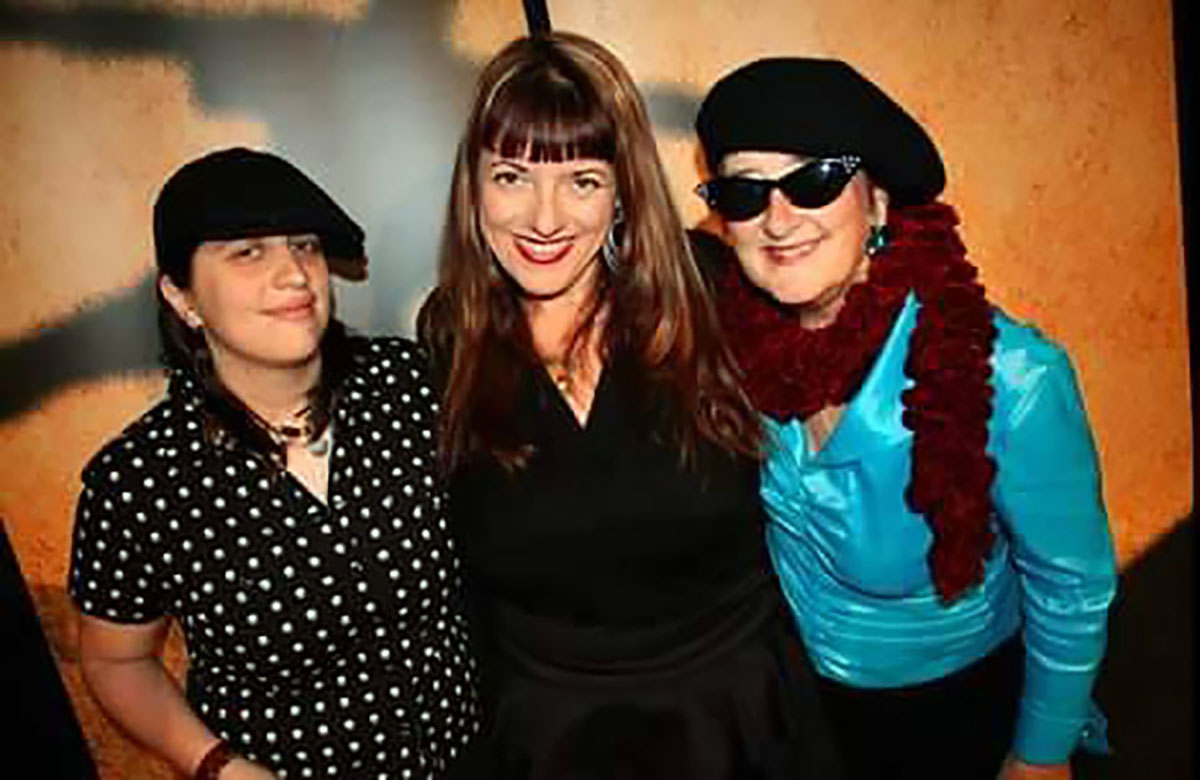
Chavez with Candye Kane & Sue Palmer.
On track four, Chavez switches musical gears on a beautiful original ballad, “Wanderer,” displaying her command of lush chord voicings amid a tender melody line that builds in intensity, culminating in a string-rattling vibrato-filled conclusion.
On track five, Chavez dials up the minor key Mariachi classic, “El Cascabel,” riffing flawlessly through the frenetic 6/8 tempo before leaving space for the percussion section to shine, upon returning with dynamic string-bending melodic phrases building once again in intensity to bring the tight arrangement to its conclusion.
Track six spotlights Chavez’s nifty single-note low-end rumblings to rollicking high-end double-stop rockabilly riffs, played to perfection in a lively instrumental interpretation of the 1980s Beaters tune “So Long Baby, Goodbye,” accompanied perfectly by Worms’ Farfisa organ setting, a delightful arrangement, which has been earmarked as a single off the album.
On track seven Chavez gives us some Memphis soul in her interpretation of Booker T. and the MGs tune “Chinese Checkers.” She keeps the groove simple and gets the horn section phrases just right, bolstered by appropriate R&B double-stop goodies, shifting from clean to dirty guitar tones amid her tasty repeating call and response phrases.

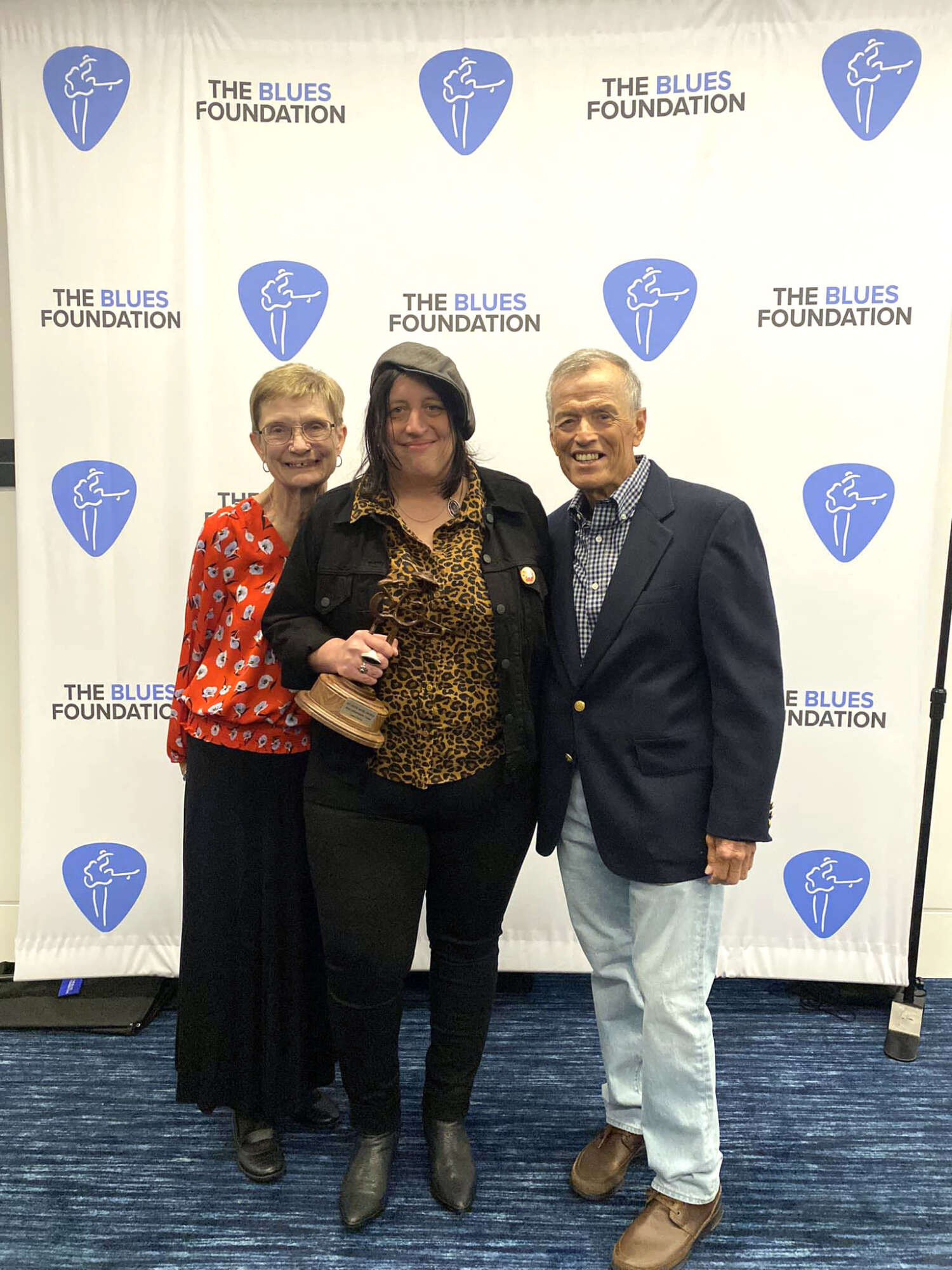
Chavez with her parents after winning top honors from the Blues Foundation in 2023.
Track eight, “Mamba Negra,” is a compositional masterpiece from Chavez’ original tune playbook. An alluring and mesmerizing minor-key melody set against a Latin Rumba rhythm that transitions midstream to an all-out straight-ahead rocking groove right in Chavez’s wheelhouse as she busts out a lengthy array of tasty blues-rock licks before returning to the haunting Latin melody with just the echoes of the drums fading out subtly to conclude the piece.
On track nine Chavez lets it all hang out on her original tune “Napa Street” in a downhome Austin shuffle groove, channeling Stevie Ray Vaughan to perfection and leaving no doubt of her reputation as a top-tier blues-guitar slinger as she gets to strut her chops effortlessly throughout the track’s entirety.
The album concludes with the traditional Mexican Folk song “Llorona,” a perfect choice, with Chavez’s interpretation constructed neatly into a slow minor blues format, giving her ample room to stretch out with volleys of stinging string bending, vibrato-laced motifs, a signature instrumental tune that can be a prominent feature for her as “Europa” is for Carlos Santana.
In conclusion, Chavez’s playing is clean and precise throughout her shifting musical landscapes, with conviction, passion, and confidence in her solos with no need for heavy distortion, whammy bar-dive bombing, note tapping, as well as avoiding any out-of-context note selections but most important, she never overplays. She’s true to each style she represents by dialing in just the right tonal settings to capture each groove authentically while letting her fretboard instincts and knowledge take over. The cat is now out of the bag. Chavez has arrived with a voice of her own, leaving the door open for future albums of the same ilk to look forward to.
“Why don’t you sing, people ask.”

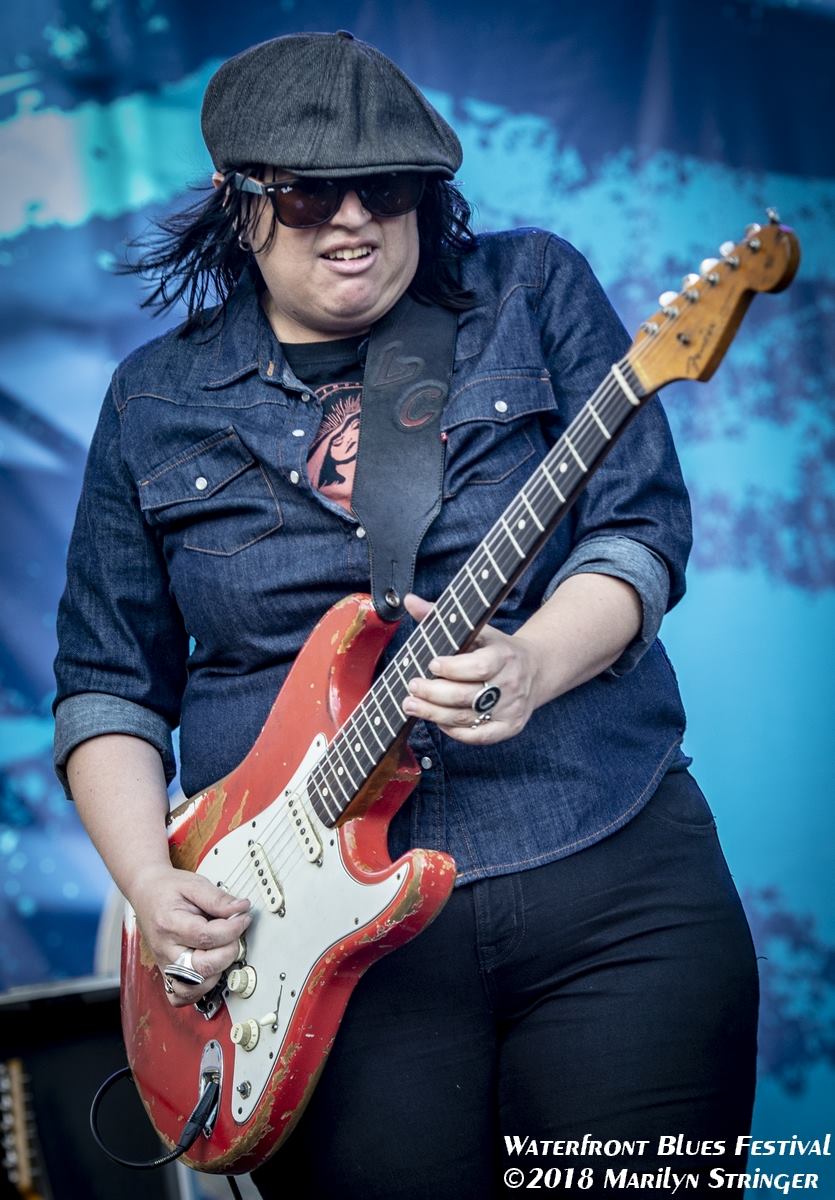
Photo by Marilyn Stringer.
Laura Chavez: It is perhaps the single question I’ve been asked more than any other, usually followed by something along the lines of, “I’m sure you have a great voice.” The truth is, long before I ever thought about it, the guitar became my most effective way of communicating things that I was not able to communicate, with words or otherwise. Maybe I learned to know limitations and focus on my strengths, or maybe I felt that communicating any more would be saying too much.
I love vocalists. I always have, and my true joy as a player has always been standing beside them doing what I can to support them and bring out their best. I have a tattoo on my arm called “La Cantante” to celebrate all of the vocalists I have been blessed to work with because I would never be the guitar player I am without them. For most of my life, I have felt I was at my best backing them up. My abilities were best exemplified when I could become the perfect foil to bring out the best in them too. I want this role to continue for as long as I am able to play the guitar.
For years, I’ve shied away from making an instrumental album as much as I’ve shied away from singing. I knew I could play the guitar, but I didn’t know if I could make a statement the same way without a vocalist and the place I was used to occupying within a song. While some guitar fans might think they wanted to hear an entire album of guitar solos, I knew I would never want to hear that—and neither would anyone else, really. I had to find a way, with my guitar as the primary voice, to communicate the same things my favorite singers were able to communicate through true songs with hooks, melodies, and most importantly, my own voice and personality.
I thought long and hard about which songs to record for this project. The Creedence song is for my Dad. The Blasters song is my tribute to California and its roots/rock ‘n’ roll sound and the scene that has influenced me so much in almost everything I have done. There is a personal story and emotional attachment to each of them, as well as the originals, and I dug deep here in hopes of sharing it all with you. Most of all, I hope I convey humor and fun, a lot of emotion and angst, maybe a bit of grit and irreverence. I hope you hear everything that is me—through my voice, my guitar.
Don’t miss Chavez’ CD release show Thursday, May 12, at the Belly Up. The Sleepwalkers open.
Wayne Riker, a 2017 Lifetime Achievement Award recipient at the San Diego Music Awards, has been a feature story and CD reviewer for the San Diego Troubadour since 2011.