SUE'S SPOTLIGHT: Women in Blues and Jazz
Kansas City in the 1930s: Julia Lee, Mary Lou Williams, Countess Margaret Queenie Johnson

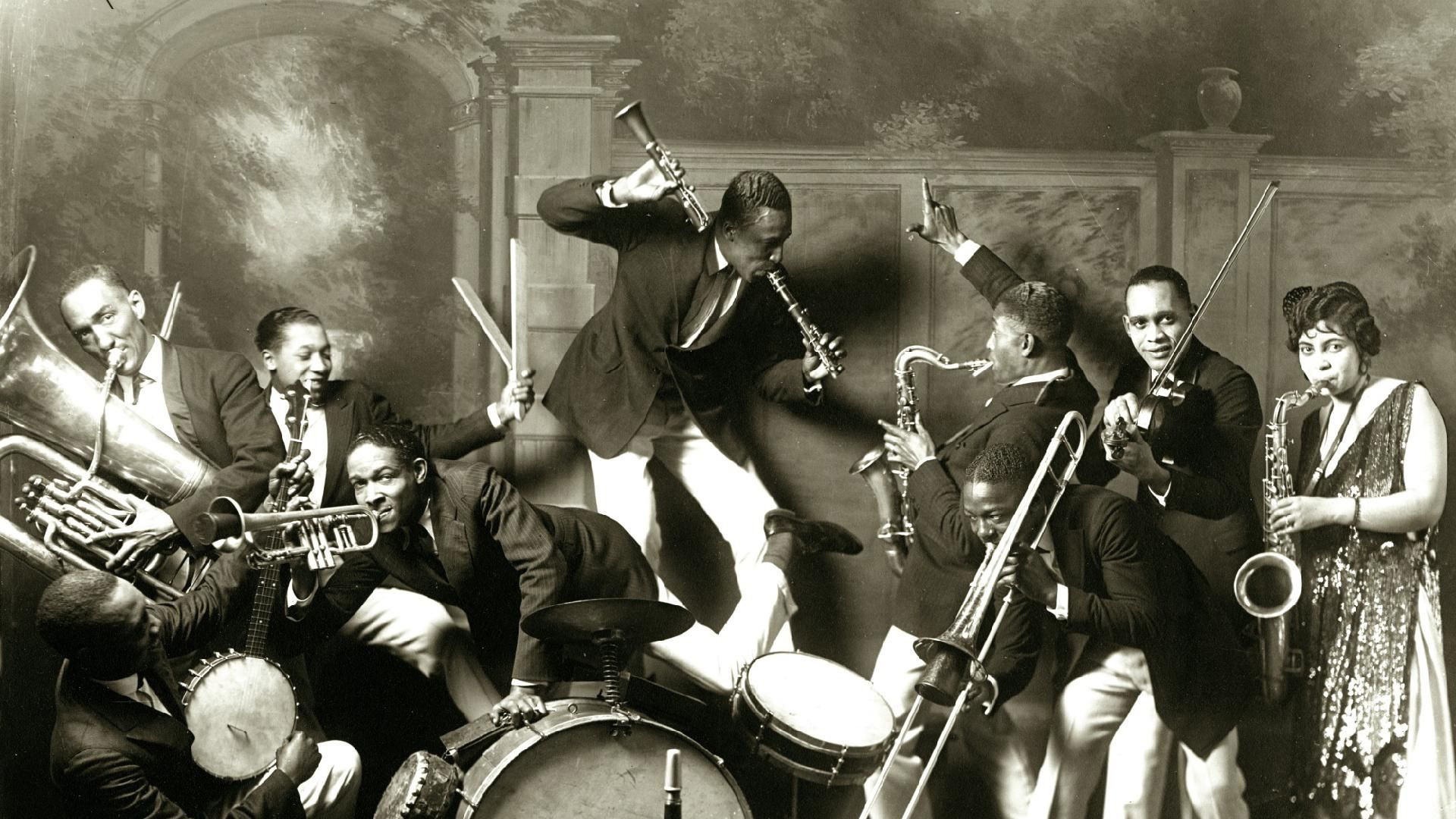
100 years ago, as jazz was being created, regions across the U.S. were developing reputations for certain “sounds,” depending on the financial situations and on the musicians living there. There were the sophisticated sounds of Duke Ellington in Manhattan; the Chicago musicians who were influenced by the New Orleans musicians after the close of the infamous legalized, segregated vice district, Storyville, in 1917; and, later, the West Coast sound out of Los Angeles and the Central Avenue sounds of the Afro-American Community 1920-1955. There was the Western Swing phenomenon with Bob Wills out of Texas, combining country and jazz, and the blues sounds of the deep South. Although Vaudeville and later various road circuits showcased the different bands to new audiences, out of the big cities there was no internet to play everyone everywhere. Radio and juke boxes accelerated the markets. People were clamoring to hear all of it. One of the sounds that was distinct to the development of jazz and blues emanated from Kansas City.
Gangsters and jazz had always been linked, initially due to Prohibition. Speakeasies abounded, even though alcohol was prohibited from 1920 to 1933. Mobsters like Owney Madden at the Cotton Club in Harlem, Al Capone at the Green Mill in Chicago, and Mickey Cohen in LA extorted these clubs to launder illegal money. After Prohibition, they stayed in the entertainment scene and did provide flourishing employment for many musicians. But, according to my aunts, who were musicians in LA during the ’40s and ’50s, they had to ask Mickey Cohen, for example, if they could leave a club. If he wanted you to stay, you risked your life, or some lesser disagreeable outcome if you didn’t do what he wanted. I know it was true in any big city with a powerful underworld.

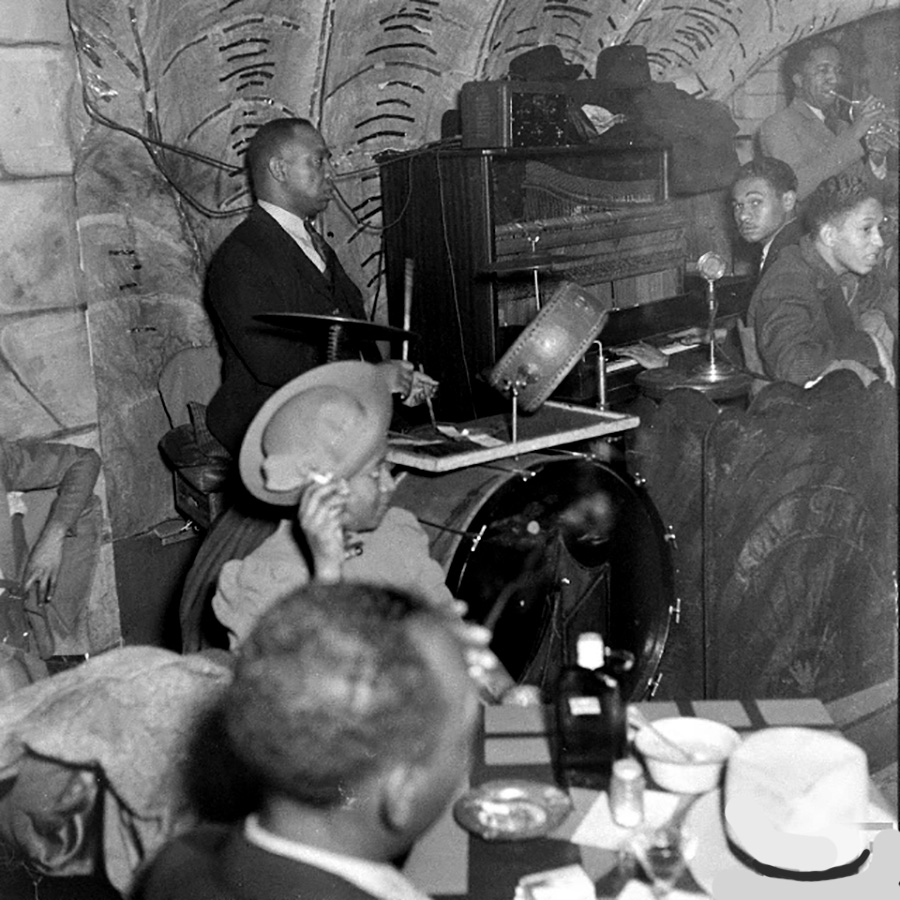
In Kansas City, politics came under the influence of the Pendergast era, especially in the ’30s. Tom Pendergast was an American political boss who controlled Kansas City and Jackson County, Missouri from 1925-1939. Pendergast only briefly held elected office as an alderman, but in his capacity as chairman of the Jackson City Democratic Party it allowed him to ask his large network of Irish family and friends to help with the election of politicians, in some cases with voter fraud, to hand out government contracts and patronage jobs. He became wealthy but accumulated gambling debts and eventually was convicted of income tax evasion and went to prison. Among other things, he launched the career of Harry Truman. Despite the association of organized crime, he promoted Kansas City as a wide-open town, providing jobs—legal and illegal—and creating a huge music scene for the area and for musicians. Kansas City was just far enough away from Chicago and New York to create a sound of its own. Money flowed and attracted Afro-Americans from the South and East, providing stable employment. Clubs in the 18th and Vine area flourished from early evening until dawn the next day, seven days a week. Improvisation became necessary to lengthen the material and keep the music going. Jam sessions and “cutting contests” abounded. Blues vocalists were used in big band arrangements, and the atmosphere encouraged the utmost technical inventiveness and adventure. Kansas City jazz in the ’30s was a vibrant, improvisational style, known for its bluesy riffs, driving rhythms, and jam sessions.
JULIA LEE, 1902-1958

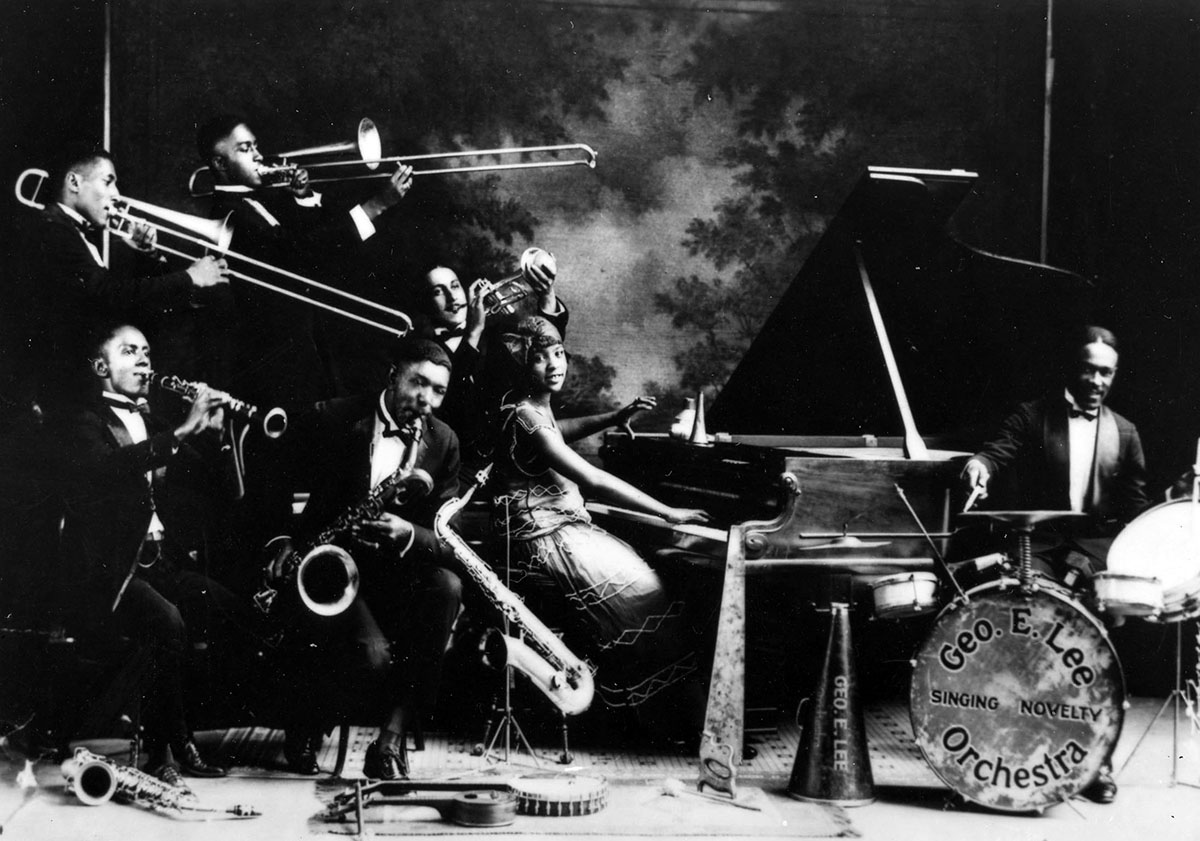
Young Julia Lee playing piano with her brother’s band, the George E. Lee Novelty Singing Orchestra. UMKC University Libraries.
There were many female musicians in Kansas City, who were either raised there or came there because of the freewheeling music community and the availability of work. One that was actually born in the area and raised there was Julia Lee. She was born in 1902 as jazz was just developing, hearing ragtime (Scott Joplin was from St. Louis, Missouri), stride piano and boogie woogie from the start. As a child, she performed with her father’s string trio, playing at house parties and for church socials. She began her professional career, playing piano in her brother’s band, George E. Lee & his Novelty Singing Orchestra. George Lee’s band was the biggest rival to Bennie Moten’s band, the precursor to the famous Count Basie Band. It was the training ground for many talented young musicians, including, briefly, Charlie Parker and also the young Julia Lee.

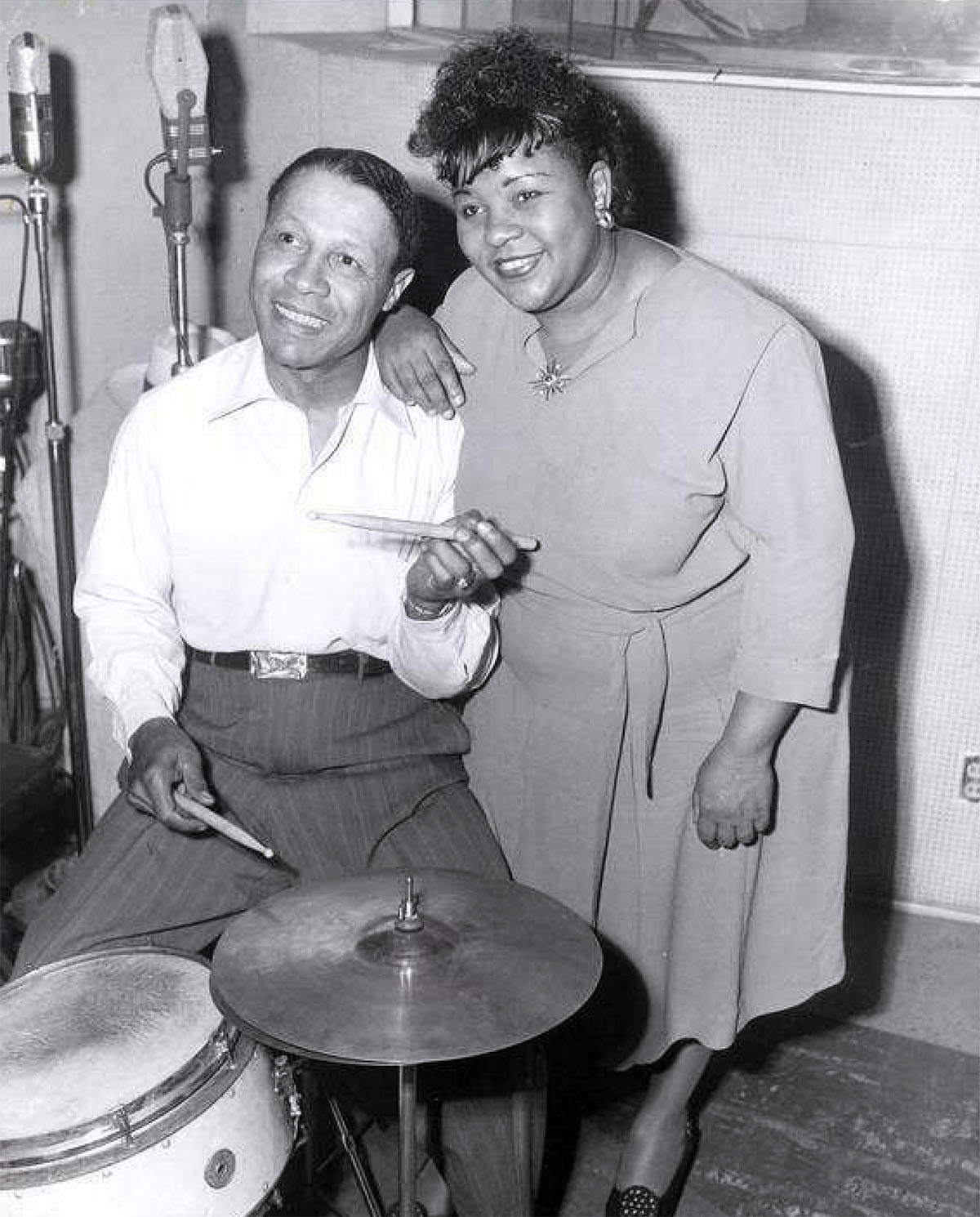
Julia Lee and drummer Samuel “Baby” Lovett. UMKC University Libraries.
After her brother’s band disbanded in 1935, Julia began her solo career. A major figure in the blues revival following World War II, her trademark was double entendre songs, or as she put it “the songs my mother taught me not to sing.” She worked primarily in Kansas City, as she didn’t like the road life after suffering a major car crash in 1935. She had several hit records in the ’40s, including “Snatch and Grab It,” “Hurry on Down to my House Baby,” and “Sweet Lotus Blossom,” (“Sweet Marijuana Blossom,” originally), leading to a contract with Capitol Records, where she sold over half a million records. She frequently teamed up with drummer “Baby” Lovett, and the two were invited to play at the White House for fellow Kansas City native President Truman. He specifically asked her to sing “Kingsize Papa,” one of the risque songs she was famous for. These double entendre songs seem so mild now.


Although she could have been more famous if she had toured more, she was one of the most popular musicians in Kansas City in the ’30s and ’40s, until her death. She died of a heart attack at the age of 56.
MARY LOU WILLIAMS, 1910-1981

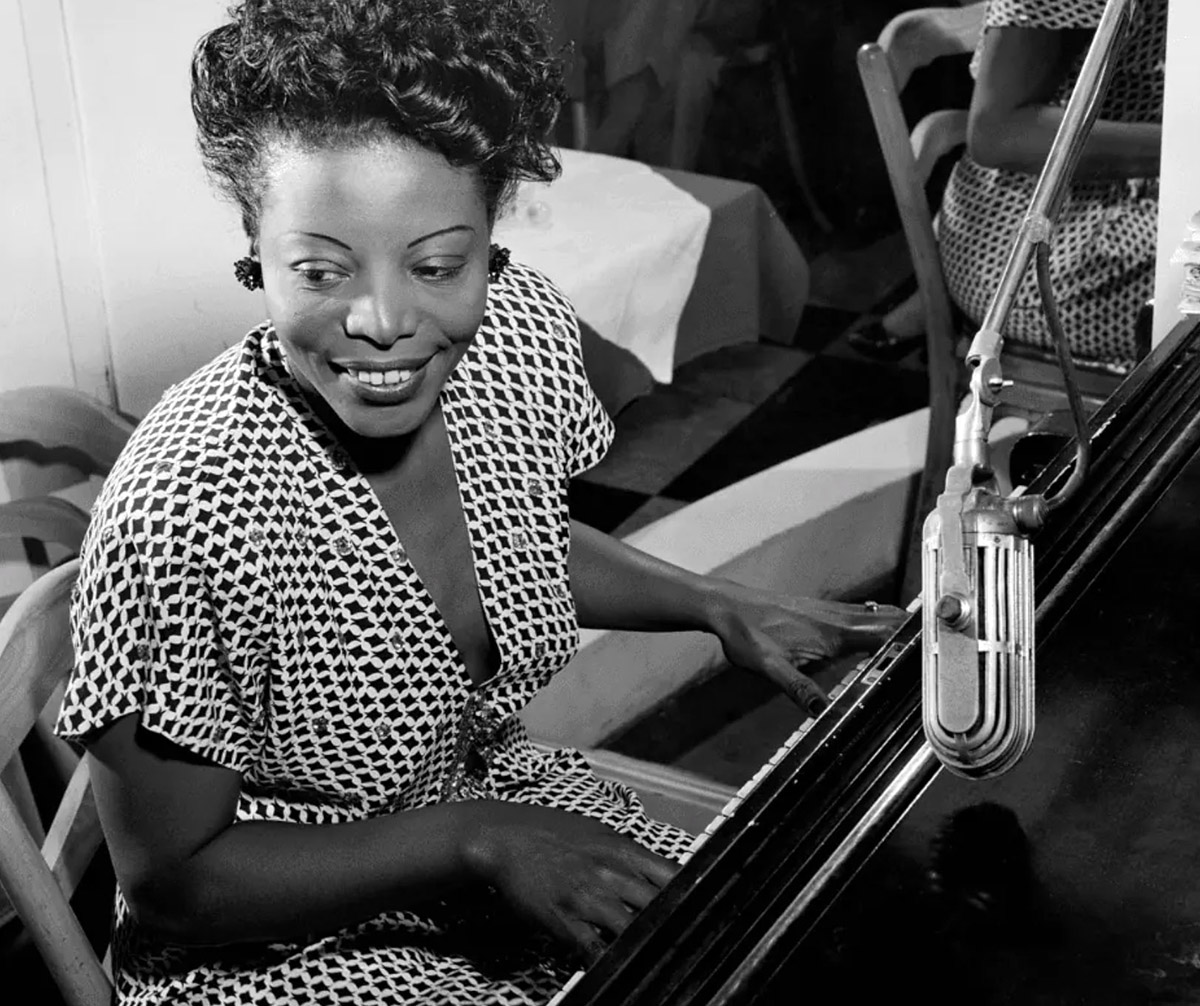
Mary Lou Williams. Photo by William Gottlieb.
Around the early 1900s, in Philadelphia and Pittsburg, another young piano player was beginning her career. Probably the best-known female jazz musician of the 20th century, Mary Lou Williams began playing at three years old. By the time she was six, she was going out on professional jobs, playing Fats Waller solos and boogie woogie. Obviously a prodigy, she was playing in bands by the time she was in fifth and sixth grade. Eventually, she married John Williams, a sax/clarinet player and they moved to Kansas City with Andy Kirk & his Clouds of Joy. Mary Lou wasn’t yet a part of the band, but she would sit in with the band occasionally, stirring audiences with her boogie woogie renditions. She supported her husband’s band by sewing, styling hair, driving the bus, and anything they needed while they were playing. She volunteered to sit in for the piano player, who had been in a car accident, as she knew the band’s repertoire by heart after listening to them every night on the road. ’She had perfect pitch and an uncanny memory. She spent the majority of her time in Kansas City, going to the many cabarets around 18th and Vine, soaking up all the many sounds with her two friends, known only as Louise and Lucille. It wasn’t easy for a woman to go out without a man. Being on the road was even worse, unless you were married to one of the other musicians in the band. There was a lot of prejudice, both racially and gender-wise. Once she had to travel by herself to catch up with the band and got accosted and raped on the train.

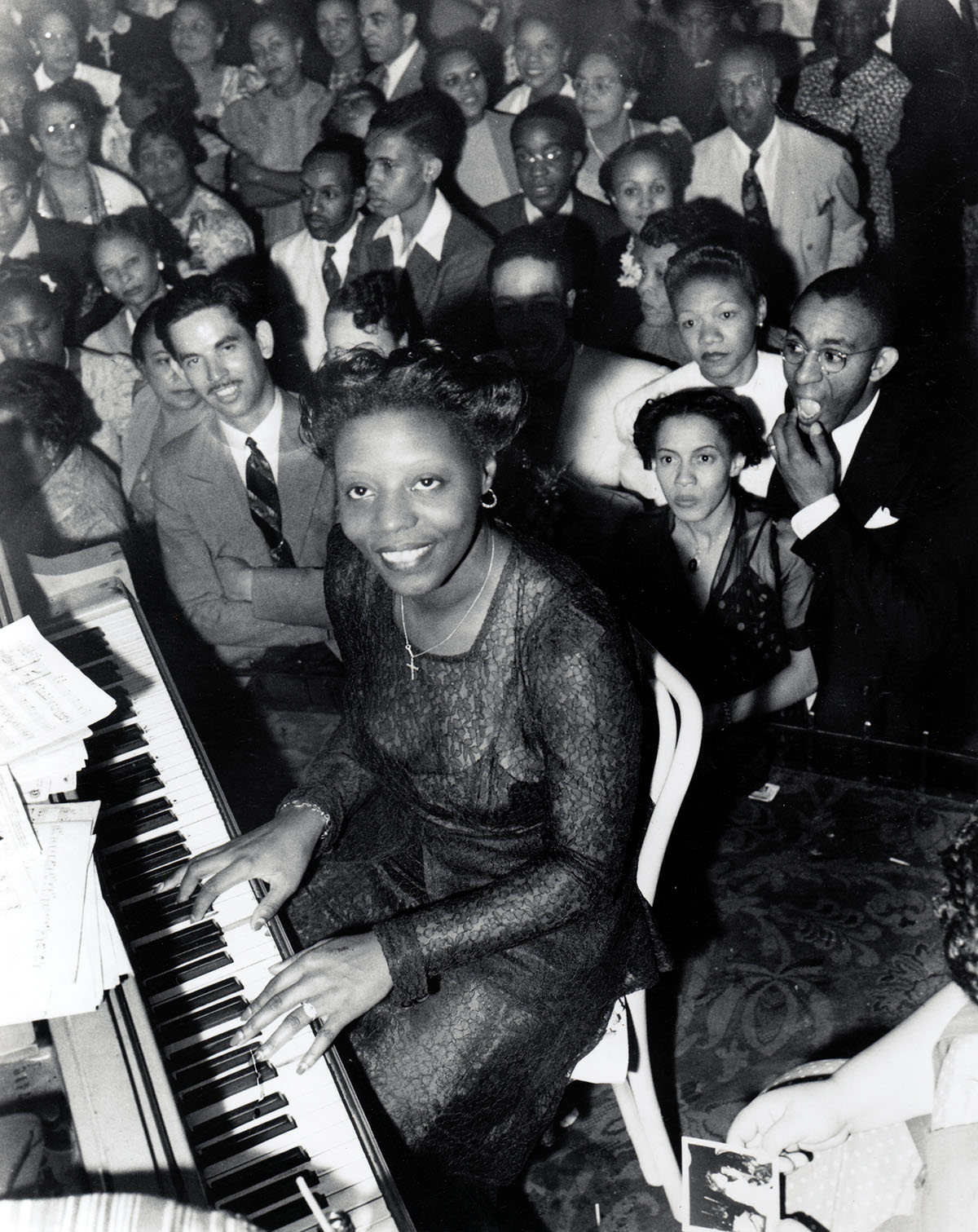
Mary Lou Williams on stage, 1930s.
Through the Kirk band, who stayed in Kansas City throughout the ’30s, she began playing and arranging music. She learned how to notate the arrangements and eventually was sought after by Benny Goodman, Louis Armstrong, Earl Hine, Jimmy Dorsey, and others as well as Andy Kirk. The Kirk band, with Mary Lou at the piano and arranging, hit a milestone with their recording of “Until the Real Thing Comes Along” with Pha Terrell on vocals. Supposedly, it was America’s favorite song in 1936.

While soaking up all the Kansas City music and playing and arranging for Andy Kirk’s Clouds of Joy, she met and played with a variety of jazz and blues players, including Ben Webster, Coleman Hawkins, Joe Turner, Pete Johnson, and even future bebop stars Dizzy Gillespie and Charlie Parker. Her arrangements gave the band that Kansas City beat. She left the band after 12 years and went back to the East Coast. By that time, due to personality differences and band changes, the camaraderie that had defined the band had disappeared. And the jazz scene of the early ’40s was governed by a new generation of musicians, who believed there was no place for women in jazz, except for the occasional vocalist. There was a transition in the aesthetic of jazz, which had openly accepted women musicians within their ranks during the Depression. It became an accepted wisdom that swing was a representation of young white American male angst. Mary Lou was at the top of her game and probably the most well-known female jazz piano player since Lil Hardin Armstrong with Louis Armstrong in the ’20s.

She continued as a freelance arranger and played with several bands, collaborating with the up-and-coming bebop players, including Dizzy Gillespie. She was nationally known and respected, although she still suffered periods of no work, probably due in part to her gender. Her career flourished again in the ’70s, and she began writing masses, based on her Catholic conversion. It was heavily jazz influenced. She was one of the first women to be successful in jazz.

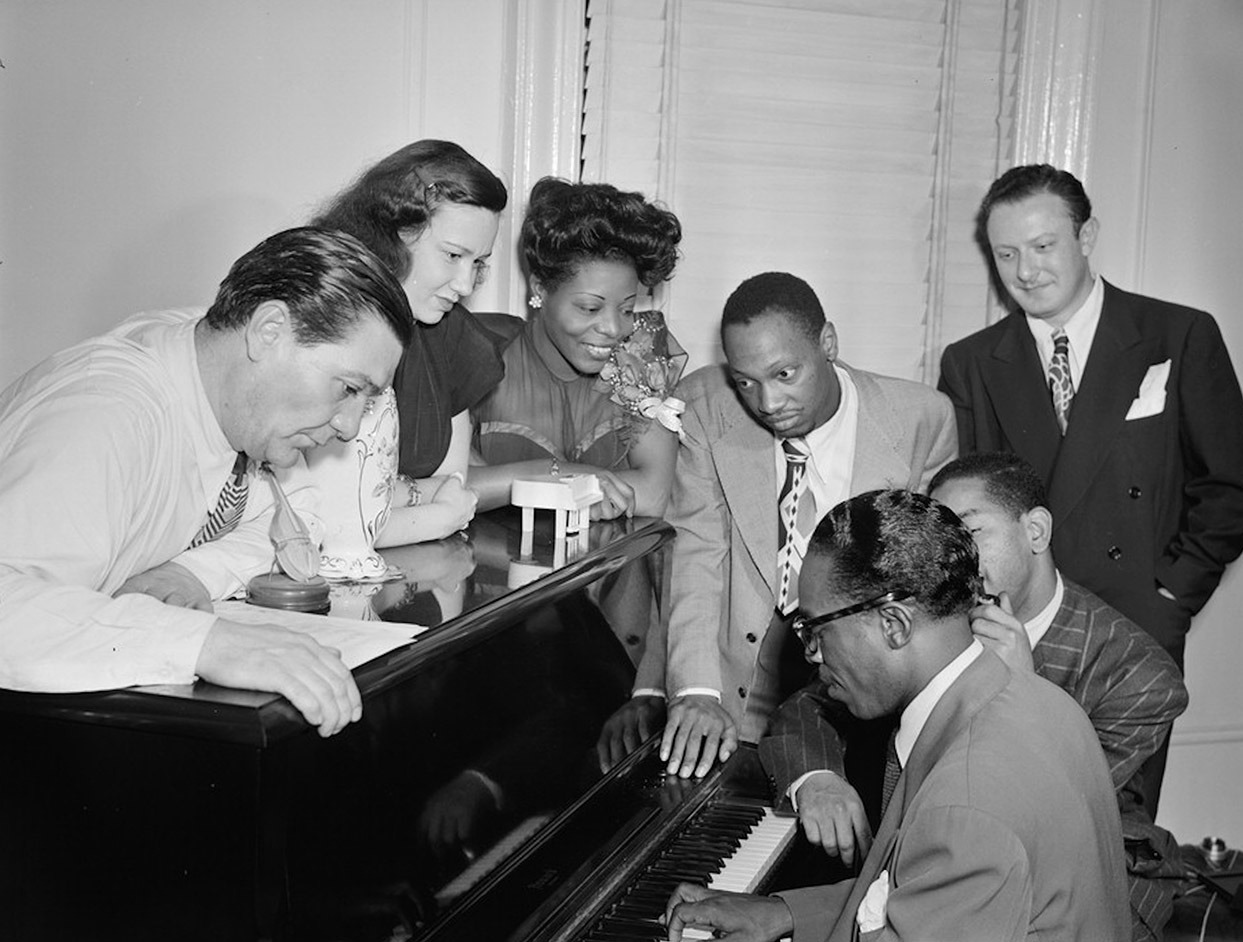
Jack Teagarden, Dixie Bailey, Mary Lou Williams, Tadd Dameron, Hank Jones, Dizzy Gillespie, and Milt Orent, 1947.
Mary Lou Williams’ piano playing was virtuoso and her composer-arranger skills gained her national recognition. She excelled in boogie woogie, blues, stride, swing, and bebop. She would have been considered a major artist no matter what her sex. Just the fact that Williams and Duke Ellington were virtually the only stride pianists to modernize their styles through the years would have been enough to guarantee her a place in the history books. She managed to sound modern during a half century career without forgetting her roots or how to play them.

Her 12-year stay in Kansas City, and her work with Andy Kirk and the Clouds of Joy gave her a period of stability and influence that shaped her evolution as an artist for the rest of her career. She died in 1981.
COUNTESS MARGARET QUEENIE JOHNSON, 1919-1939

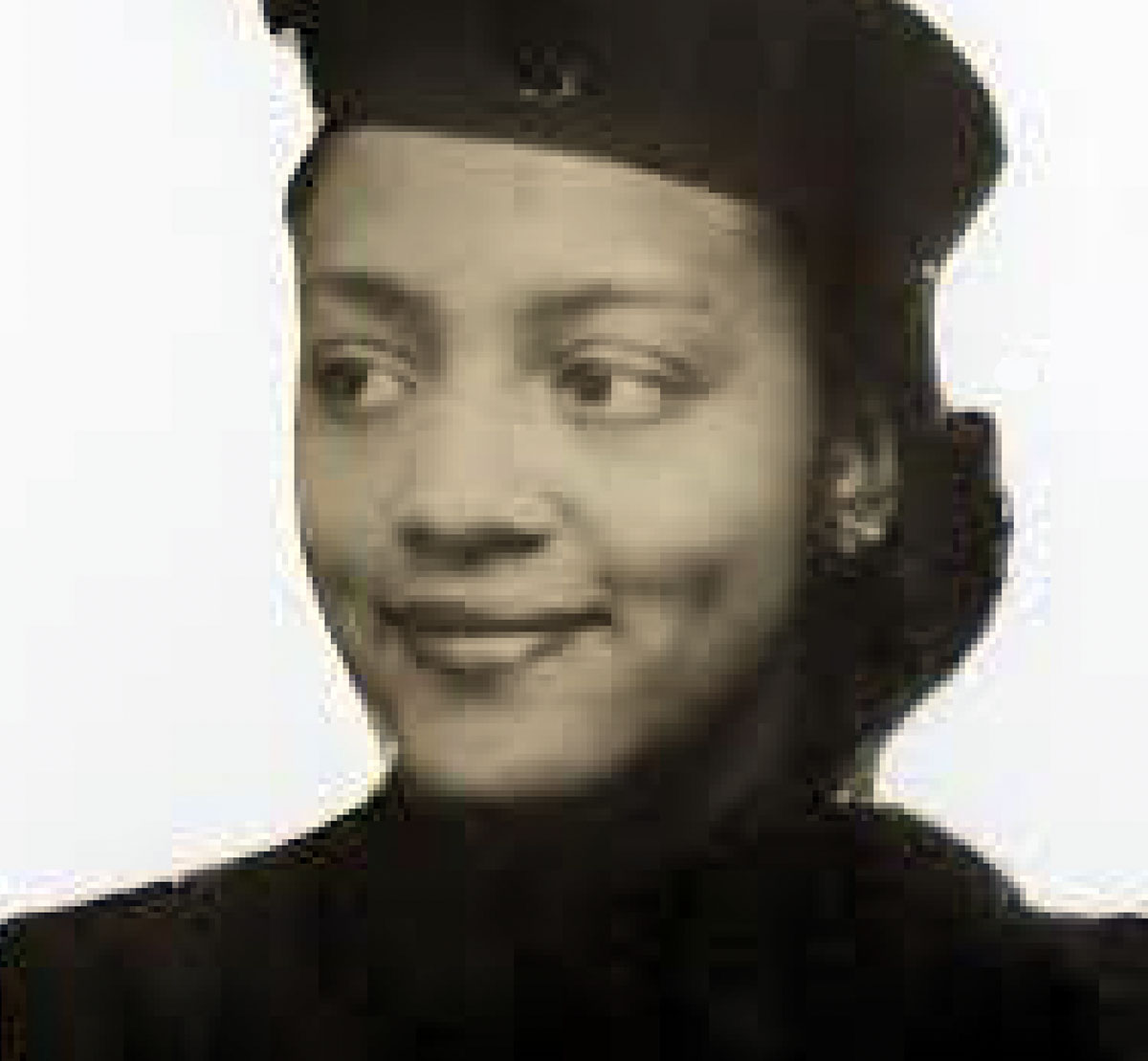
Probably the only existing photo of Margaret “Queenie” Johnson, 1930s.
Another Kansas City native, who moved there when she was 12, was child piano prodigy Margaret Johnson, who was variously known as “Countess” and “Queenie.” She died of tuberculosis when she was 20, so very little exists of her work. She was obviously recognized as a jazz powerhouse at an early age as her career took off when she graduated from high school at age 16. She immediately formed her own big band and was playing piano for some of the most popular groups in Kansas City, including Count Basie’s, when he had another engagement in Chicago.

In 1938, she was given a bigger opportunity—she took Mary Lou Williams’ place in Andy Kirk’s Clouds of Joy, when Williams (her musical hero), fell ill. For four months, she toured with them, all across the country. She remained in New York City to record with Billie Holiday. Also on the date were Lester Young (on clarinet), Buck Clayton on trumpet, Freddie Green on rhythm guitar, Walter Page on bass, and Jo Jones on drums. Swing was still going strong, and Johnson was playing with the best of Count Basie’s band. Holiday was with Count Basie for only eight months in 1937, but they were very significant months, and Countess Margaret Johnson was right there in the mix.
Johnson continued to tour, but road life can be very taxing for a number of reasons, and she contracted tuberculosis and died in 1939. She was the same age as a young Charlie Parker, and on the same trajectory, career wise. While her loss was devastating to the Kansas City community, hundreds of musicians attended her funeral. Her name and legacy quickly became forgotten. We will never know what she could have become but at least we can remember what she was. The Holiday recordings are the only recordings she made.