Featured Stories
The Gipsy Kings: A Living Dynasty

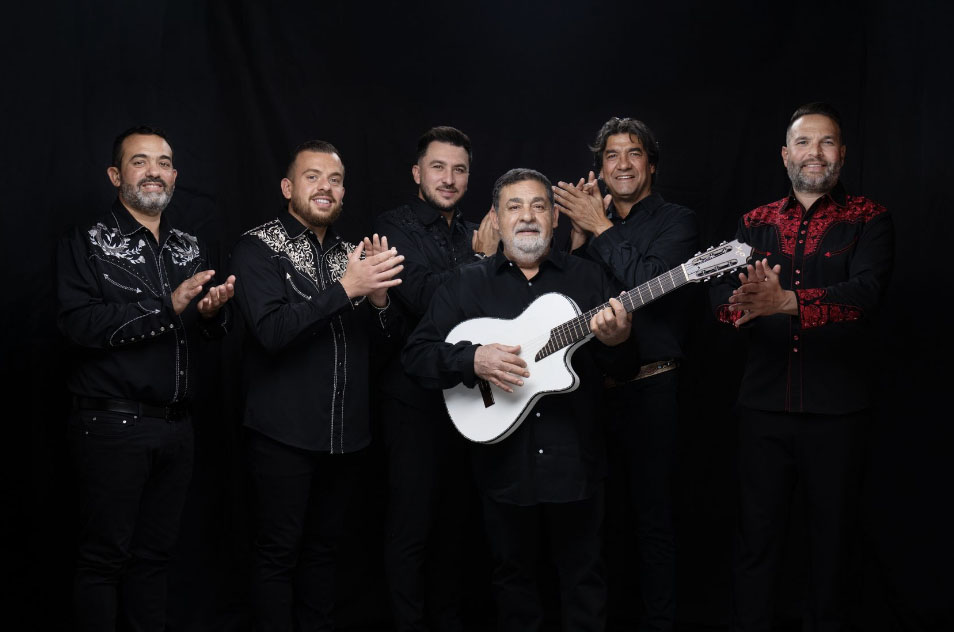
Gipsy Kings’ current lineup, Tonino Ballardo, center.
Life really changed for the Gipsy Kings and their co-founder, Tonino Ballardo, in his pre-fame 20s during the 1980s. They were playing music on the beaches of St. Tropez when they were spotted by legendary actress Brigitte Bardot. According to Ballardo, “She adored our music and way of life. One day, she asked us to play at one of her parties. We, of course, accepted.” They performed at her villa, where her guests included Charlie Chaplin, Kirk Douglas, Pablo Picasso, and other legends. “I thought right then: maybe we are a bit special.”
As a young man, Ballardo came from an impressive musical lineage, including legends José Reyes and other family members. “Our background as gypsies was always being around family, playing guitars and singing. My cousin was the great Spanish guitar player Manitas De Plata.” He remembers, “As a young boy, we would go and play in cafes, bars, and parties. For me it was just a natural way of life.”
Upon Jose Reyes’ death in 1979, it was up to the next generation of the family—Tonino Ballardo and Nicholas Reyes—to pick up the musical mantle, and the Gipsy Kings as we know them were born.
That tradition of welcoming younger family members into their musical experience continues to this day and is a big part of the upcoming 2026 release from Gipsy Kings, featuring Tonino Ballardo.
The group’s music is a vibrant and popular blend of flamenco and Catalan rumba influences. They’ve had a storied career with alt chart hits, including “Bamboléo” and “Djobi Djoba.” They’ve also had mainstream film and English-language crossover with a flamenco rendition of the Eagles’ “Hotel California,” which made a key appearance in the movie, The Big Lebowski, in 1998. And their version of Randy Newman’s song, “You’ve Got a Friend in Me,” was featured on the soundtrack of Toy Story 3 in 2010.
Before global fame, the Gipsy Kings played weddings, street gatherings, and family celebrations, absorbing flamenco traditions passed down orally rather than academically. Given their career in retrospect, it might be tough to remember that at this point they were still carrying guitars without cases and playing on the street for years.

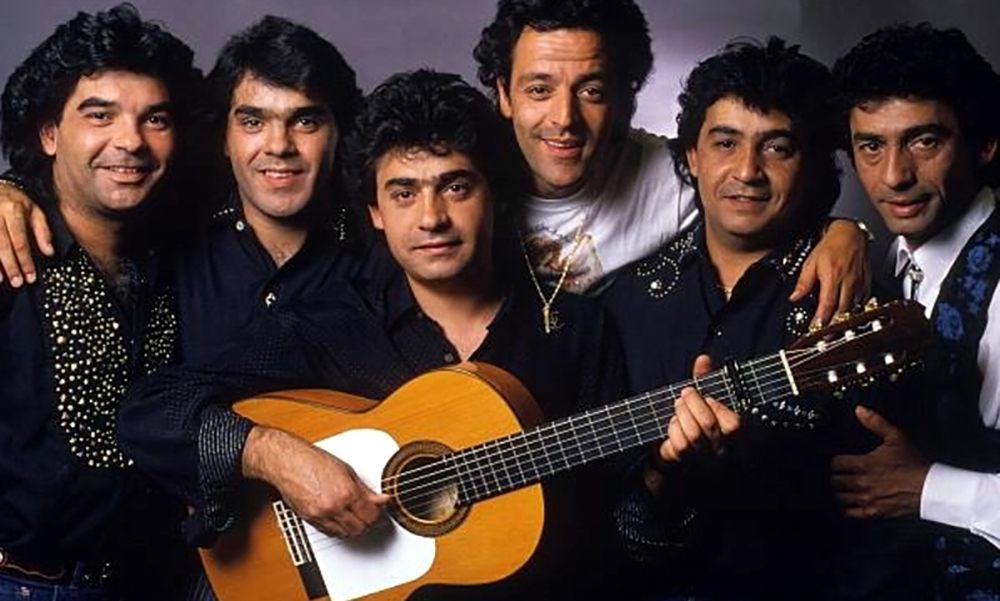
In the beginning…
When their breakthrough came in the late 1980s, success did not dilute that lineage; it amplified it. The music of the Gipsy Kings didn’t change so much as world music opened up to the band’s traditions and what the band was already doing. Rumba flamenca, especially as pop crept into it, became a global sound without losing its accent.
What made the Gipsy Kings singular has never been just virtuosity. It was collective rhythm, a group vibe and sound where the listener can’t quite tell which person is playing which sound they hear, much like The Band or Arcade Fire in their own way. Voices and guitars interlock and overlap like family talk over dinner.
Over the course of decades, band and family members have come and gone from the act. That sort of movement is common in legacy family acts or flamenco dynasties. Some of the one-time and even founding members of the group have started their own bands, retired for health reasons, or other departures.
What might seem to be confusing to American audiences is that there are two Gipsy Kings entities these days, the Gipsy Kings featuring Tonino Ballardo, who we are discussing here—and also the Gipsy Kings, featuring Nicolas Reyes. Both groups remain active touring acts rooted in the original Gipsy Kings lineage, carrying forward the catalog and performance tradition in their own way.

Both legacy Gipsy Kings’ bands have quietly shifted from legacy act to living lineage. Younger members of the extended family—sons, nephews, and close relatives raised inside the music – have begun contributing more visibly on stage, in arrangements, and in studio sessions.
The folding in of Tonino’s sons, Cosso and Mikael, and other cousins with Gipsy Kings featuring Tonino Ballardo seems like the most natural thing in the world to all of them. They grew up around this music, so performing was demystified at an early age. And the younger musicians had such a feel for the band’s catalog and style that they could integrate more seamlessly than any other new blood or band replacements.
“Rumba flamenco,” the genre that the Gipsy Kings trade in, is particularly about group rhythm. There are all kinds of rhythm patterns in flamenco—especially when a group piles on multiple acoustic guitars and percussion elements—complex sub-rhythms within rhythms start happening—or as genre fans call it, the “compás.” It’s kind of the Gipsy Kings’ sound. It’s almost a family trait.
What’s notable about the Gipsy Kings in 2026 is not that they’re holding on—it’s their living, breathing continuity that’s impressive. The generational shift in the band is organic and ongoing, which is exactly how musical traditions like Romani, Catalan, and flamenco music move forward.
These younger players didn’t “join the band” so much as aged into it. They’re not trying to modernize the Gipsy Kings from the outside, they’re extending a dialect they already speak fluently.
Cosso and Mikael still have their more millennial ways in comparison to their father. Says Tonino, “The boys are always on social media, listening to old and new/artists checking out YouTube.” With a little bit of the resignation of a dad he says, “Life is so different now.”
Their new album, Historia, will be released on May 15, via Cooking Vinyl Records and available in all the usual places. It returns to the roots of the Gipsy Kings while also heading in new directions.
Historia is about family and tradition, some overtly and some naturally in the makeup of the multi-generational lineup. “The theme is about my life and how fortunate I am. Family is at the heart of everything,” says Ballardo. “In the Romani community young people are still brought up with flamenco and Catalan rumba. It’s woven into our identity.”

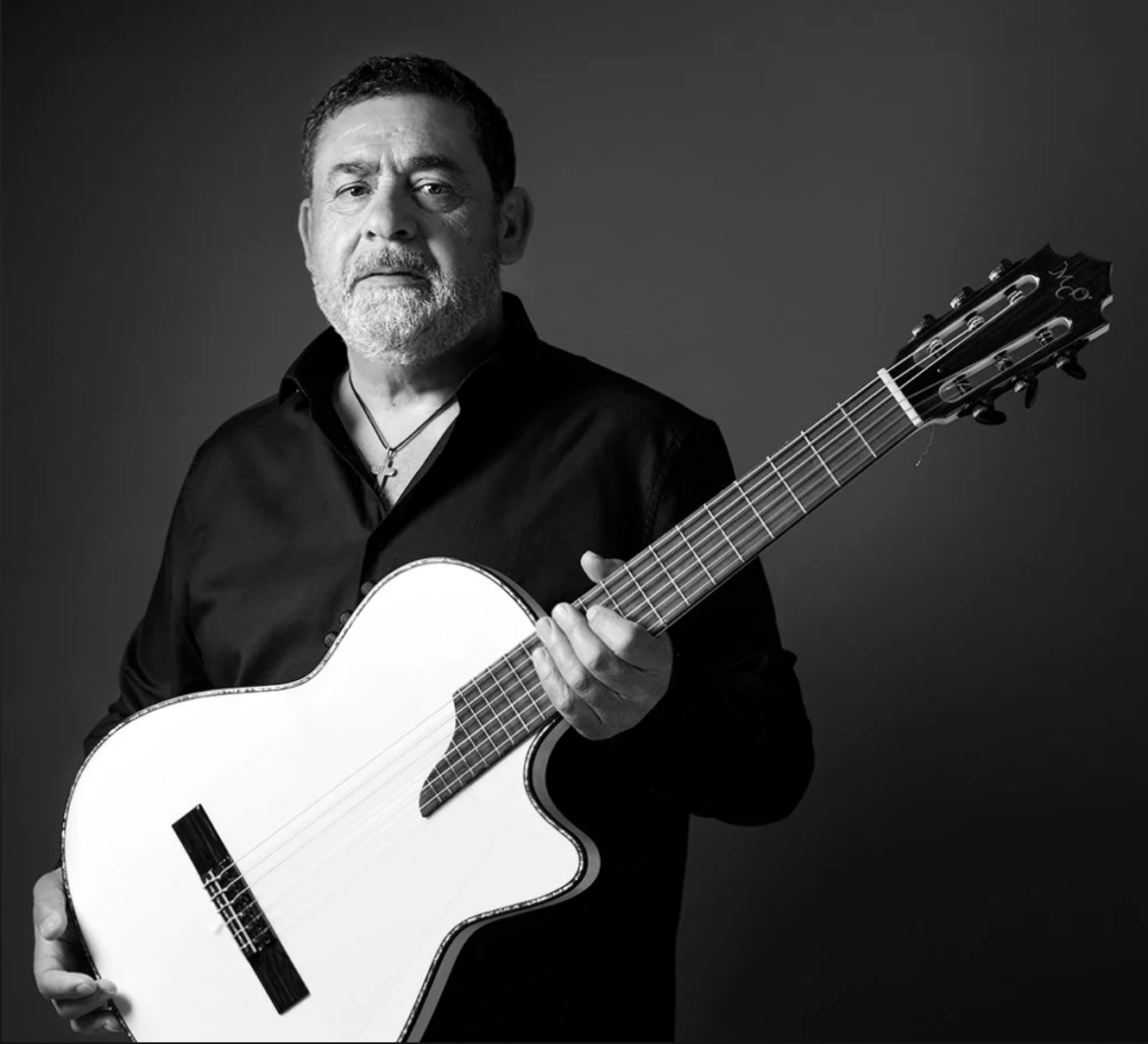
Ballardo
Tonino mentions the last song on the album. “I was in the studio one day and my young grandson Milan said to me, ‘Can you write a song called ‘Big Bang’?’ I smiled and said to him, ‘Why not?’”
Speaking of “Big Bang,” the song is a hell of a closer, which leaves the listener wanting more. The first single, “Senorita,” already available on streaming and for purchase, is vintage Gipsy Kings. In fact, so much of this album is delivering what one would expect, which makes sense for a band so steeped in tradition.
There’s no formula in these recordings but there certainly is a template; each track starts with a moody solo performer establishing something for a few seconds before the group vibe and energy kick in at the 20-second mark, without fail. That’s the compás flamenco energy mentioned above, and it’s a great magic trick every time that on-switch gets flipped to actually start their songs. That said, longtime fans—or people who just want a needle drop of the flamenco vibe—get what they want with this record. “El Campo” scratches that itch.
There are also some special moments where you can almost feel the energy of new band members, new recording techniques, and new choices in the middle of the band doing what they do. “La Vida” is just beautiful. And my favorite, “Cielo,” is also a gem. You can imagine Mark Knopfler hearing this and feeling envious of the acoustic tone and triads/triplets sounding like a million bucks.
“The opening track ‘Senorita,’ for me, takes me back to my youth, sitting outside our caravans with all the families playing and singing.”
Gipsy Kings in their early days…

Tonino describes “La Guerre” as “a ballad pushing for peace in the face of unnecessary war,” while “Sonador” takes on an Al Dimeola vibe while singing about hanging onto a dream. As I said earlier, there are subtle variations in rhythm and time signatures all over the place—it might all sound similar to a casual listener, but the high-energy wall of acoustic guitar hits in different ways in different songs. The upbeat rumba of “El Campo,” according to Ballardo, “is about a Romani clan and the life that goes with it.”
The album really is alive; it’s not an ethnomusicology exercise. This is vintage Gipsy Kings music. And, while the recording techniques are more advanced these days, there’s still something timeless here. Baliardo says, “For me, you can never copy the feel and sound of a Spanish acoustic guitar.”
Historia celebrates this whole stew of musical tradition, family growth and loss, and the passing of time. A documentary crew followed Ballardo while the album was made, telling the story of his 35 years on the road as a bandleader and musician. It is also a testament to the Gipsy Kings’ enduring legacy because, as he points out, “We have remained faithful to who we are and where we came from.”
The documentary will be released on Amazon Prime in mid-May, concurrent with the album. “It is something I have always wanted to film. My life as a Gipsy King,” Ballardo said. The footage captures the band at festivals, interacting with fans and spending time with family.

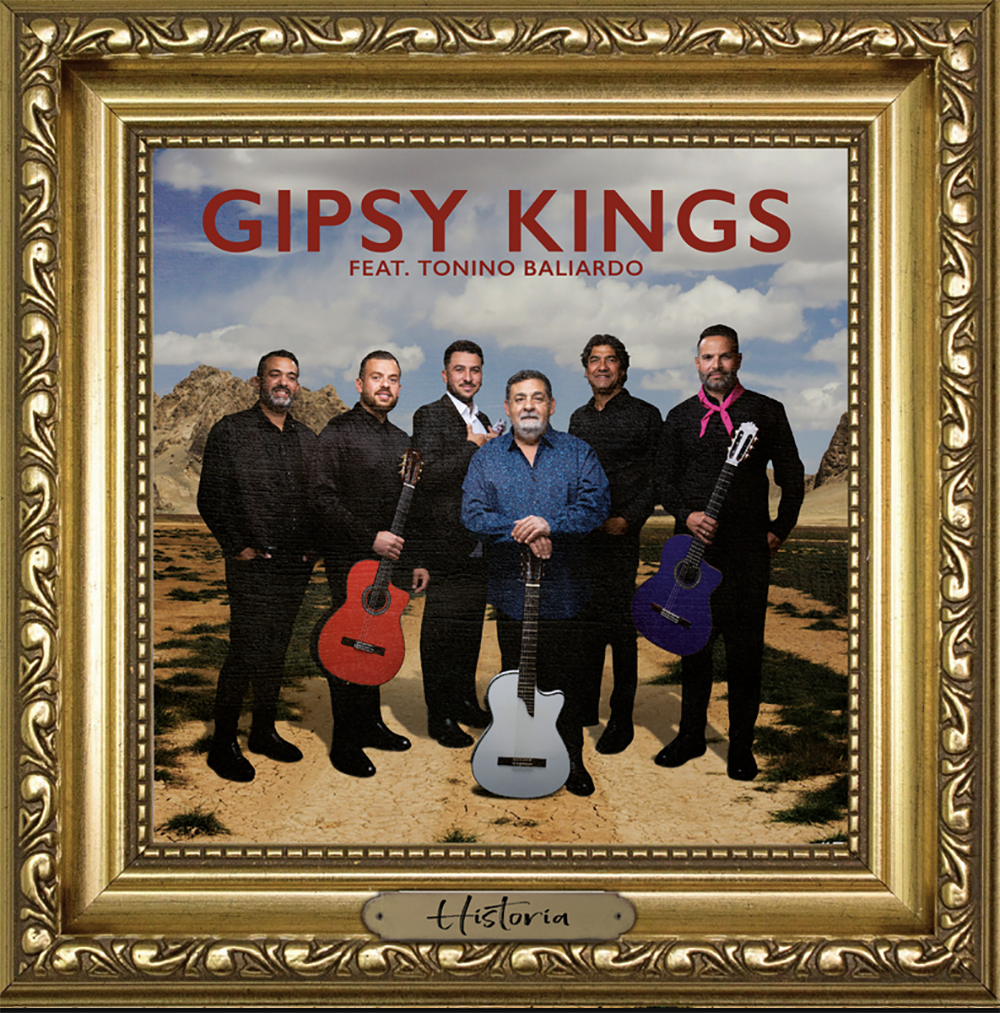
Gipsy Kings new album, Historia
The older generation has been at this for decades—long enough that comparisons to aging rockers like the Rolling Stones are inevitable. But in flamenco tradition, evolving generational play is natural. Think of it as a gypsy caravan, with the music rolling forward through the years.
The Gipsy Kings are headlining festivals and theater shows and have been on the world stage for decades. No longer are they playing on the beach or being discovered by a jet-setting actress. But in some ways, little has changed about the passion and energy of flamenco and Catalan music.
The Gipsy Kings’ live show experience has not changed much over the years. Tonino said, “Every concert is a fiesta. We love to see our fans partying from the moment we hit the stage. The world today is a sad place. What I love to see is after our show everyone leaves the theater with a smile.”
See the Gipsy Kings live on Saturday, March 14 at the Heritage Event Center, Sycuan Casino in El Cajon.