Unsolicited Advice
Forgive and Forget

Screenshot
We’ve all heard the expression “forgive and forget.” I remember seeing a fictionalized version of Franklin and Eleanor Roosevelt’s life, in which Eleanor mused that the two words are often used together, but don’t really go together. “We may forgive,” she pointed out, “but do we ever actually forget?”
My generation—GenX—is the FAFO generation. We were brought up with a dual worldview of “live and let live, but if you intrude on my ability to live, it’s going to be on like Rae Dawn Chong.”
In fact, I think we may be to blame, indirectly, for the Millennial scourge of Karening; Steve Martin’s Planes, Trains, and Automobiles’ “You’re messing with the wrong guy” morphed into an Encino Man-style “don’t harsh my mellow” of pre-emptively defending against imagined wrongs, with bonus racism crystals for freshness.
Funny enough, my tendency has always been more toward forgetting but not forgiving. I rarely remember the wrong thing someone has done, in retrospect, beyond the mere sense-memory of something unkind having happened, and it rendering the road back to connection untraversable.
Linguistically, the phrase “forgive and forget” has a unique property. Through sheer coincidence, the suffixes turn out to paradoxical terms in their own right—give and get. And while we often process forgiveness as the thing we give to others, I think it’s useful to focus instead on what we get when we forgive.
This thought experiment was inspired by a speech that just happened to drop into my ears one day. It was during the memorial service for Jesse Jackson, Jr. I was primed to listen to the content by the explosively articulate Otis Moss, Jr., who laid down a concise, cogent, and poetic reflection on the state of our culture. (See it here.)
But then someone less concise and poetic began to speak. A pastor named Steve Munsey gave a prosaic, jokey, casual speech that felt almost like a convention keynote. I was thinking, it must be hard to follow someone whose words are as carefully freighted as Otis Moss’s are. Until…BAM. This guy Munsey started on a riff that stopped me in my tracks. In fact, it hasn’t left me since.
He was musing about how no one seemed to get under Jesse Jackson’s skin. He said, “I could never get him stuck on somebody who disliked him…” I [wondered] “What is it about him? I want it. I want his gift.”
Standard eulogistic hero-worship…so far. And then he started the riff that stopped time.
He said:
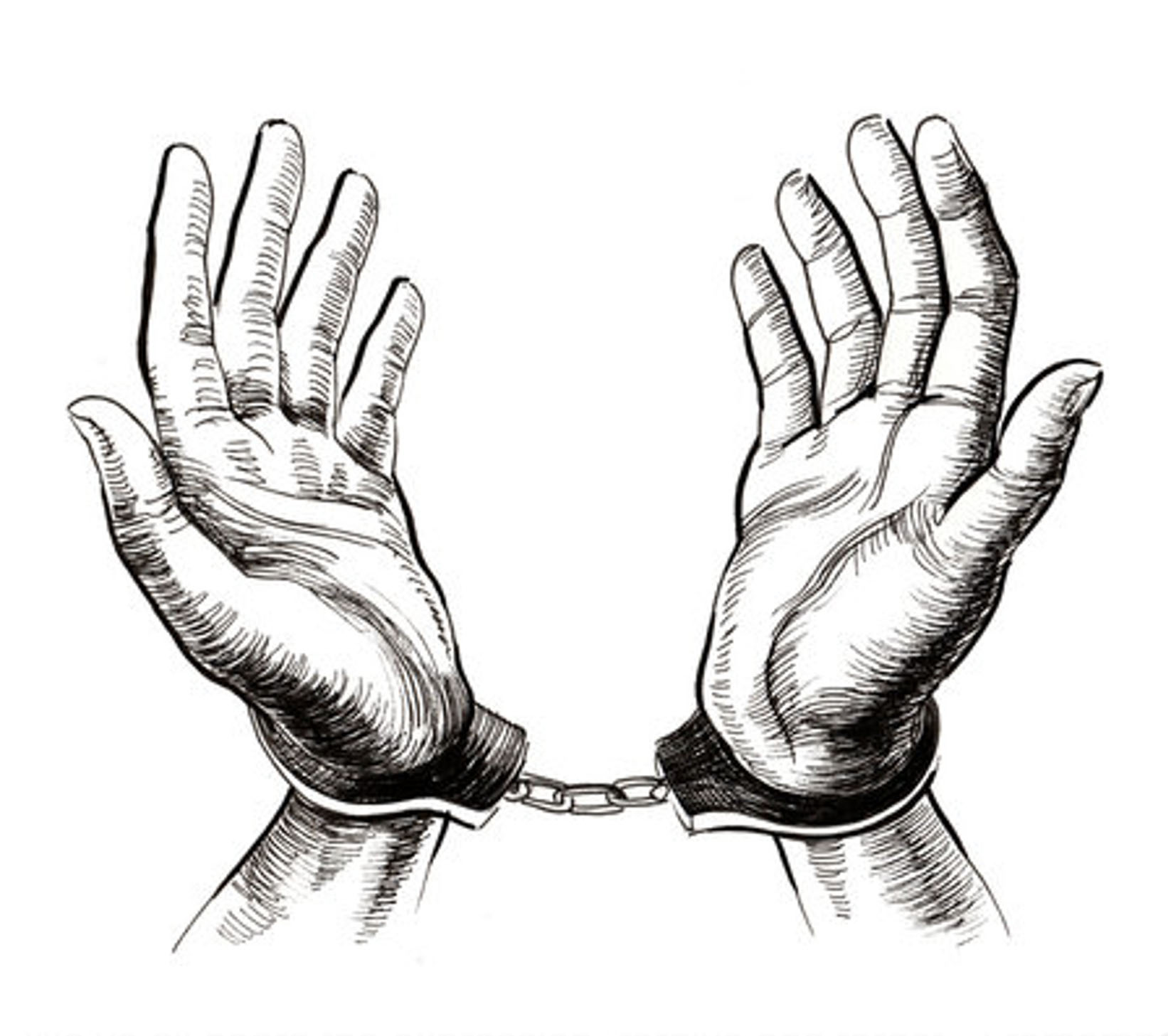
“And then it hit me. This man knows how to forgive. … Holding unforgiveness or a grudge is willingly to chain yourself to the person who harms you. It’s a form of self-imposed slavery. Forgiveness is your declaration of emancipation.’”
Isn’t that an amazing concept? Forgiveness is not something you give. It’s something you get. It’s not the act of unkindness that hurts us in the end. It’s our own backward sense of justice over it. Because, ultimately, it’s never the person who FA’s who needs to FO. It’s us. Their FA is how we FO who we need to be free from.
He went on:
“It’s not about saying ‘What you did was okay.’ It’s about saying, ‘What you did will no longer have power over my inner kingdom.’ It’s not a gift you give them. It’s an act of self-liberation you perform for yourself.”
Mind-blow emoji. We certainly know it’s not healthy to hold grudges. We usually interpret that as encouragement to find compassion or understanding or equanimity with the impulse or situation that might drive someone to behave unkindly or unfairly. That is, to give them the benefit of the doubt, or an emotional Get Out of Jail Free card. But this completely flips that construct on its head and locates forgiveness within and for ourselves.
If you put the couch down on your hand, you wouldn’t think of moving it to free your hand as something you’re doing for the couch. The couch’s point of view would never enter the equation! You’d change the situation that created the pain and go on with your day all the better for it.
Finally, he capped it off with this gem:
“You don’t forgive because they deserve mercy. You forgive because you deserve peace.”
Man. That got me. Underneath unforgiveness is the social justice objection that someone who does you wrong, might “get away” with it. In fact, until we forgive, it’s us who never gets away from it. If we feel we do not deserve the unkindness we need to forgive in the first place, then by definition we do not deserve the unkindness of perseveration over it. In this sense, “Forgive and forget” can be read as using forgiveness as a tool “for getting” free.
So, fictional Eleanor Rooesevelt was right: those words rarely go together. Because we tend to focus on the “give” part and forget the real freedom of the “get.” This month’s unsolicited advice is to view forgiveness as a conscious act of freedom and peace for yourself, and to free that mental room up for the really important stuff. Like why “FAFO” only has one A in the middle.


Josh Weinstein is an SDMA-winning songwriter, arranger, producer, and pianist/organist/keyboard player originally from New York. He holds a Ph.D. in music and teaches college and private lessons across a variety of disciplines. His dog is way cooler than he is.