Featured Stories
Come to Me with Beauty: The Life and Legacy of Glen Hansard

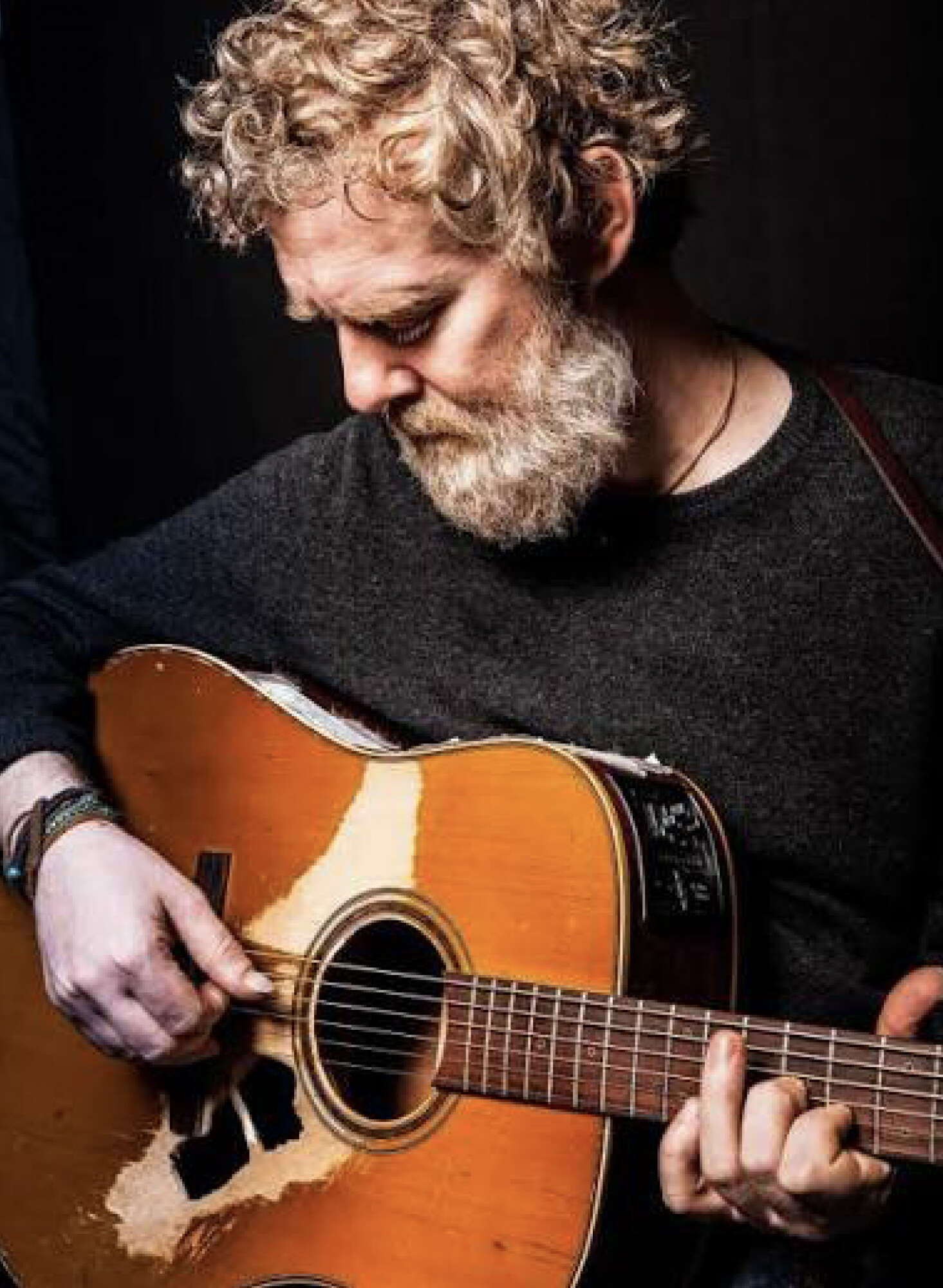
Glen Hansard
In Dublin, Ireland, in the early morning hours of July 29th, musician Glen Hansard, 56, died in a single-vehicle accident. He was characterized by those familiar with him as a driving unstoppable musical force who was driven by a diversity of genre influences, including northern soul, folk, rock, gospel, and traditional Irish music. From his earliest albums with The Frames, founded in 1991 to his 2026 releases Don’t Settle (Vol 1, Transmissions East) and Don’t Settle (Vol 2, Transmissions West), he has explored restlessness of the human soul through themes of tender love, heartbreak, forgiveness, anger, frustration, romance, and redemption. Viewing videos of his concerts shows his charisma and unique connection with the audience, which flowed from his early years of as a Dublin street busker. It is clear why there was such an outpouring of private and public grief over his passing. Especially from an artist who was so intent on living out a long life with his wife and three-year-old son.
From childhood, Glen Hansard stood out like a bright, shining sun. He grew up with family gatherings of what he called “drunk uncles,” who spent hours singing and drinking. He learned from them that songs could carry unfiltered emotion. This drew him to music as a place of refuge and healing, where both sorrow and joy could be openly expressed. When he was 13, his headmaster recognized his love and talent for singing and advised him to leave school and pursue a music career. He left school for the streets with his guitar in hand and took up permanent residence in Dublin’s city center, on its busking capital, Grafton Street, which gave a start to Bono of U2, Damien Rice, and Rodrigo y Gabriela.

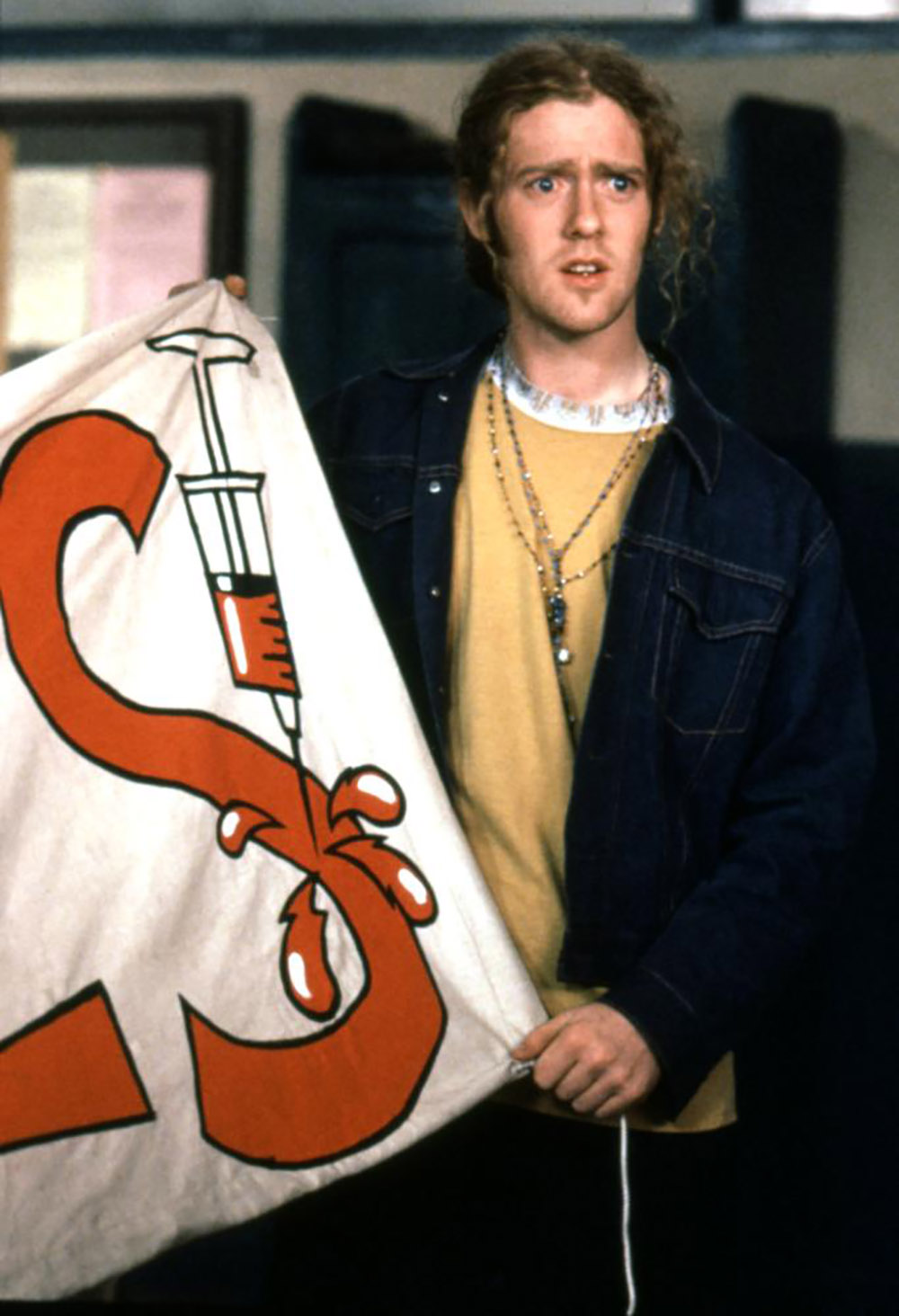
A young Glen Hansard in the movie, The Commitments.
When he was 15, as he was exhibiting risky, mischievous, criminal-like behavior, his girlfriend’s brother gave him a cassette of Bob Dylan’s Greatest Hits Volume 2, which included songs like “I Shall Be Released” and “All Along the Watchtower.” According to Hansard, he locked himself in his room for two years and learned how to write songs. This led to years of busking, songwriting, and learning how to command an audience’s attention.
Then came his first band. The year was 1990. Hansard emerged as the frontman of the influential Irish rock band, the Frames, who made their mark on Dublin’s rock scene. They released eight albums from 1990 to 2006. The early albums of the Frames reveal the influence of the Irish rock tradition, with echoes of U2 throughout their sound. Even so, the band established its own identity on tracks such as “The Dancer” from its debut album, Another Love Song. Their sophomore effort, Fitzcarraldo, marked a transition toward the more organic, expansive sound that would define the band for years to come.
In 2006 he co-founded the folk-rock duo the Swell Season with Czech singer-songwriter, Markéta Irglová, with whom he shared romantic love for three years (2006-2009) through a unique and creative bond captured on three albums. They gained worldwide acclaim through their work on the independent film Once (2007). They co-wrote the film’s musical centerpiece, “Falling Slowly,” which won the Academy Award for Best Original Song in 2008.
The film was written and directed by the Frames’ bassist, John Carney, who persuaded Hansard to replace Cillian Murphy after he withdrew from the film production. According to reports about the production, Murphy did not want to work with an inexperienced actress Markéta Irglová, and he didn’t believe he had the vocal ability to credibly sing the songs written by Hansard and Irglová. The film has today become a classic of independent cinema. The Oscar win gave the Swell Season a commercial boost and launched Glen Hansard’s solo career.
Hansard’s solo career began in earnest with 2012’s Rhythm and Repose, an album that found him deepening his craft while continuing to explore a broad range of influences, guided by a commitment to revealing, confessional, and deeply intimate songs, added breadth and depth to his songwriting skill. The solo albums that followed include Didn’t He Ramble (2015), Between Two Shores (2018), This Wild Willing (2019) and All That Is East of Me Is West of Me Now (2023).

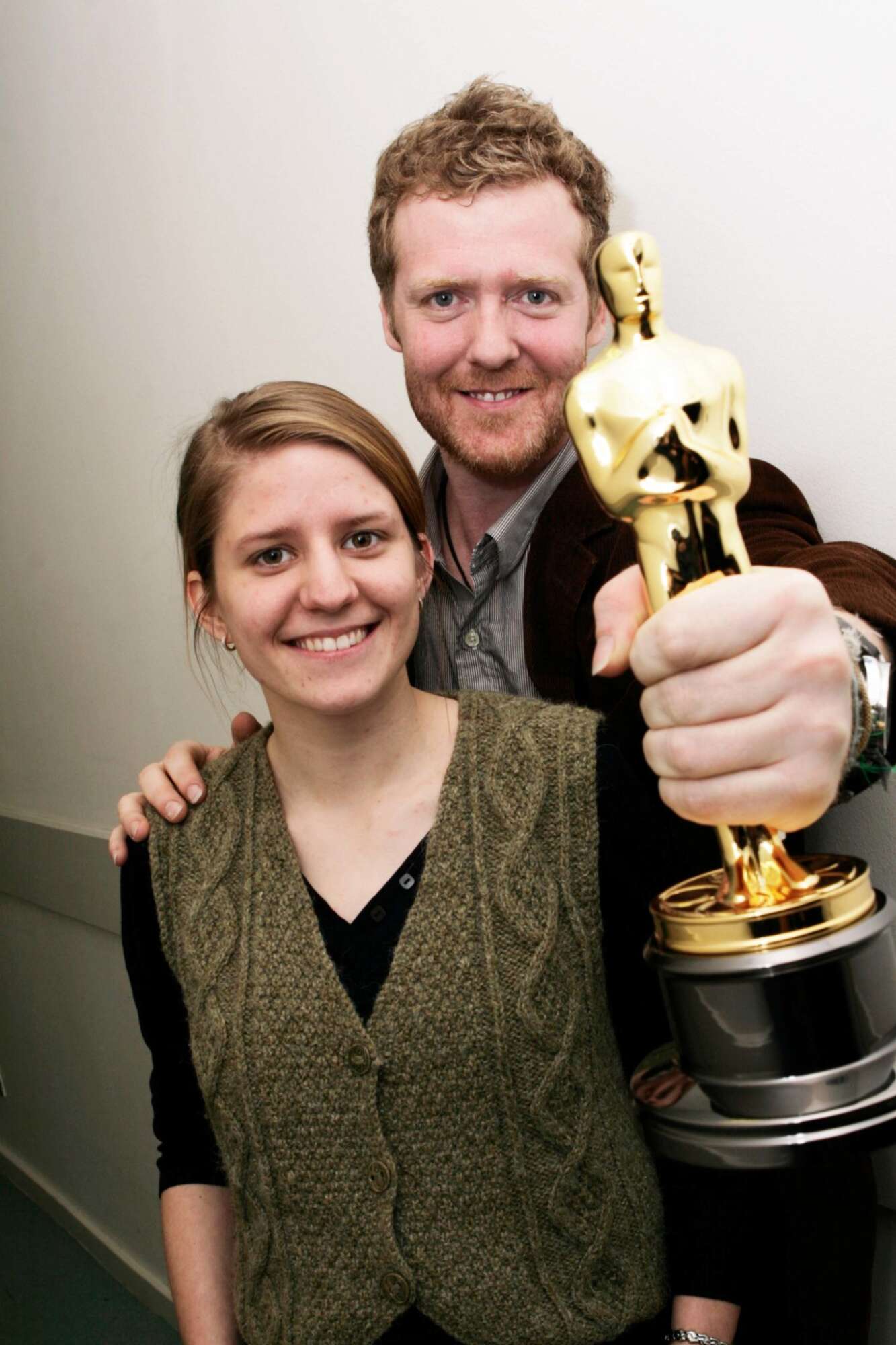
Hansard and Marketa Irglova after their Oscar win in 2008.
In 2026, following a North American tour and several European engagements, Hansard released the two-part retrospective Don’t Settle (Transmission East) and Don’t Settle (Transmission West). The concept was inspired by a 2024 concert in The Hague, Netherlands, when a catastrophic storm hit, producing torrential rains. Hansard brought the audience of over 2000 people on stage under a huge sheltering awning and continued the show without incident. This led to the live-in studio communal recording of a two-night concert in East Berlin at Funkhous Studio on April 20-21 2025. The historic studio was an East German state-of-the-art radio broadcasting venue with excellent acoustics. It was the ideal place to recreate the atmosphere captured in The Hague in 2024. It helped Hansard to realize a concept he had learned during his early street busking days that song need live audiences as witnesses to come alive and find new meaning. The albums capture the up-close feel of performance with the quality of studio recordings. Embracing a warts-and-all approach, the project produced near-perfect renditions of some of the finest songs of his career, all documented in an accompanying film.
Among the highlights is the Frames’ “Revelate,” a hard-driving rocker with a punk edge that arguably improves upon the original version in speed and rage. Equally remarkable is “Her Mercy,” from his 2015 album Didn’t He Ramble, a song inspired by his lifelong love for Leonard Cohen, which, according to many long-time fans, may be the finest filmed live performance by this artist. There is a spontaneous moment when the audience joins in at a low sonic ebb and sings background. It is a spine-chilling example of the dynamic of performance art caught on film.
Then came July of 2026. Nothing about these achievements suggested that the end was near for such a vital and creative artist.
On July 29 sometime after 11:30pm, following a night of traditional Irish music at The Wren’s Nest, a local pub, near the Strawberry Beds area of Dublin, Hansard boarded his motorcycle. It has been noted the crash took place one to two miles from Wren’s Nest. Much has been unreliably published about a “five-hour gap,” between 11:30pm and 4:30am when he was discovered. However, based on the distance from the pub to the crash site, the accident most likely happened not long after he left the pub. The Irish police, known as the Gardaí, are still investigating, so as of this writing nothing has been concluded. Based on what is known, Hansard died following a single-vehicle motorcycle collision. Rescuers found him at the scene at 4:30am, where he was pronounced dead soon afterward.

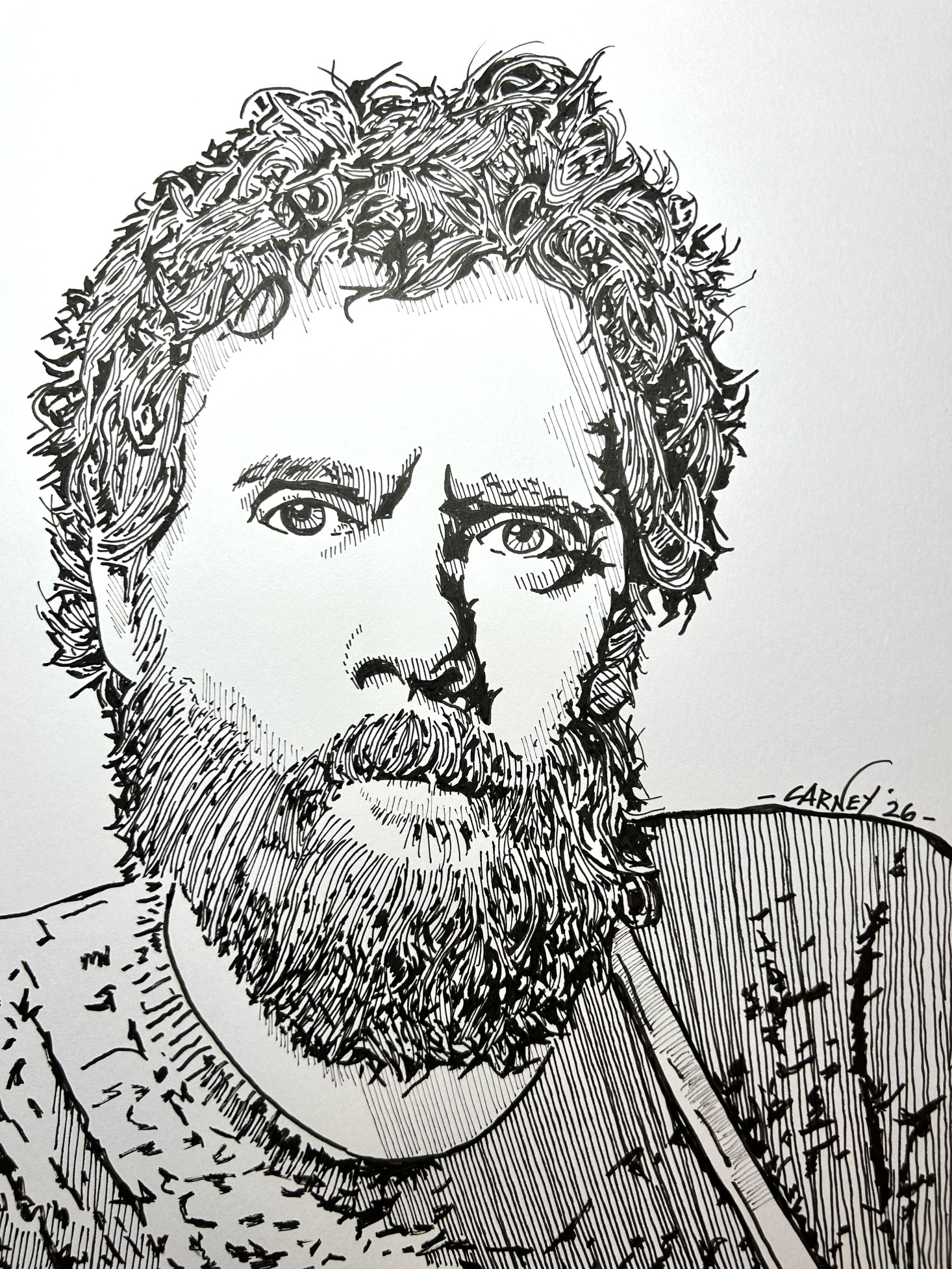
Portrait of Glen Hansard by local artist Patrick Carney.
The story of the accident is hauntingly reminiscent of tales that remain in our culture’s collective memory. Like Buddy Holly and James Dean, this tragedy carries the same feeling of collective loss. Of course, grief is felt most deeply by his friends and family, but it also reverberates to millions of people who have felt the soul and emotion behind songs like the Oscar-winning “Falling Slowly.” Yet this song is only the tip of the flame of legacy that has warmed us with intimate honesty, revealing moments of heartbreak, tenderness, anger, and joy. As we review his legacy, it’s clear we are still registering the depth of what has been lost with his shocking and untimely death.
And always, in the immediate aftermath of these kinds of tragedies, there is the ultimate unanswerable question: Why? Why did this happen to a new husband, father and to such an important artist?
Perhaps that is the lesson hidden inside the question of “why” that so often follows loss. But maybe “why” is the wrong place to remain. For those who feel this loss and for those who have felt similar grief over those close to them, we must work to resolve and find meaning during unresolvable sorrow. What remains is our collective responsibility to remember them and him and move forward, honoring the lives and gifts of those who have gone before us.

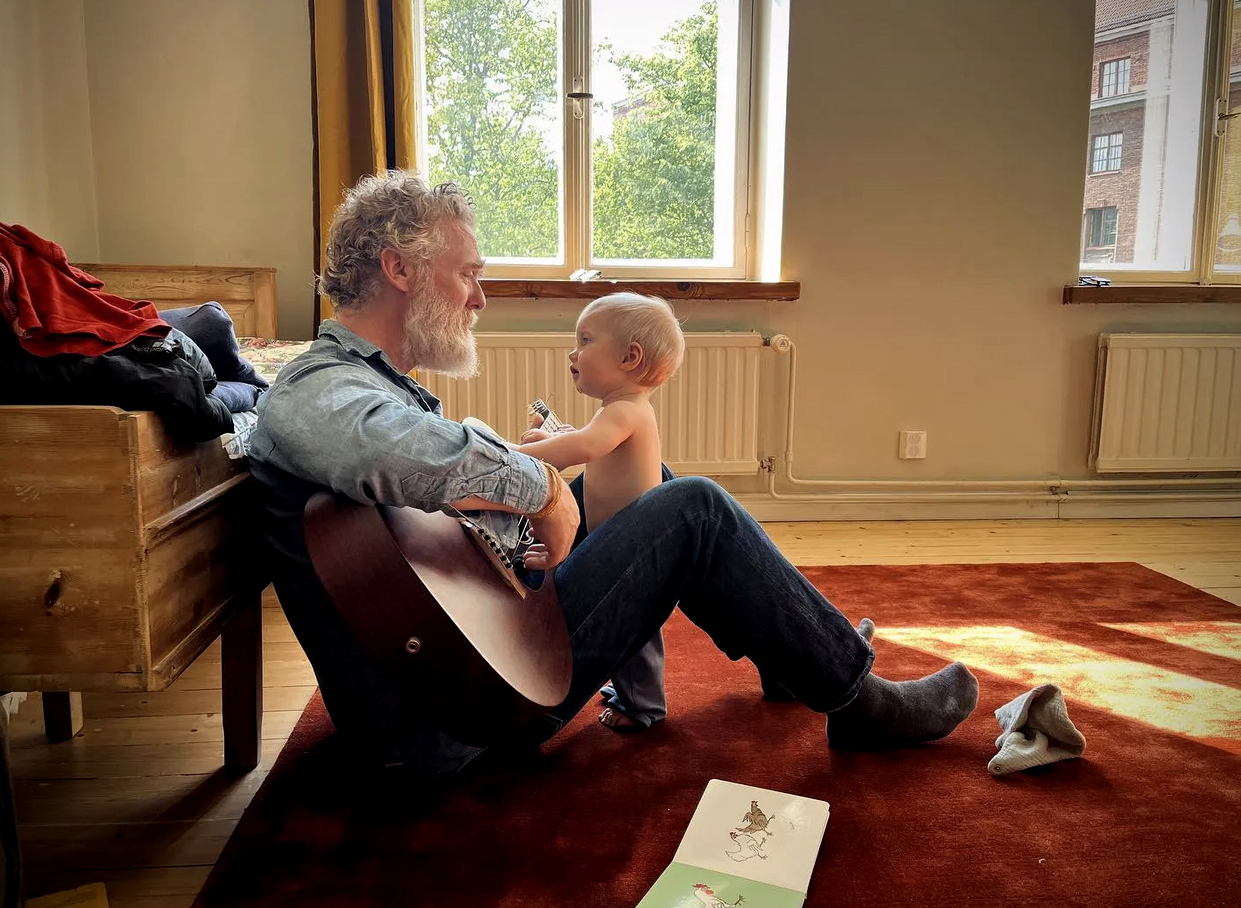
Hansard with his son, Christy.
For over two decades, Glen Hansard was absorbed in his career, but not in a self-centered way. He nurtured community wherever he went. He married Finnish poet Mairé Saaritsa in 2022 and was gifted with a son, Christy, earlier that same year. His life was filled with new beginnings, all linked to his career in music, but this change was different.
His greatest adventure may have been becoming a husband and father in his fifth decade of life. He said his focus changed from his career to being a father to his son. In a 2023 interview with the Irish Times, Hansard said, “For 52 years I was the most important person in my own life, and then suddenly I got a complete perspective shift, and I’m absolutely loving it. To be of service to this young mind, to this young life, is just… I can’t believe I didn’t do it before now. Isn’t it true that when the student is ready, the teacher appears?”
Glen Hansard’s legacy endures through his music, his generosity of spirit, and the community he built around his art. The songs remain, the voice, so full of life, passion, and humanity of a man whose work touched so many lives around the globe. On August 4, his funeral was held at St. Patrick’s Cathedral in Central Dublin. It was open to the public. As expected, thousands came to remember Glen Hansard. In this moving goodbye, his family, his wife, his brothers, and friends sang and spoke about their love for this good man. Included were notable celebrities, including Bono, Eddie Vedder, Liam Ó Maonlaí, and Markéta Irglová.

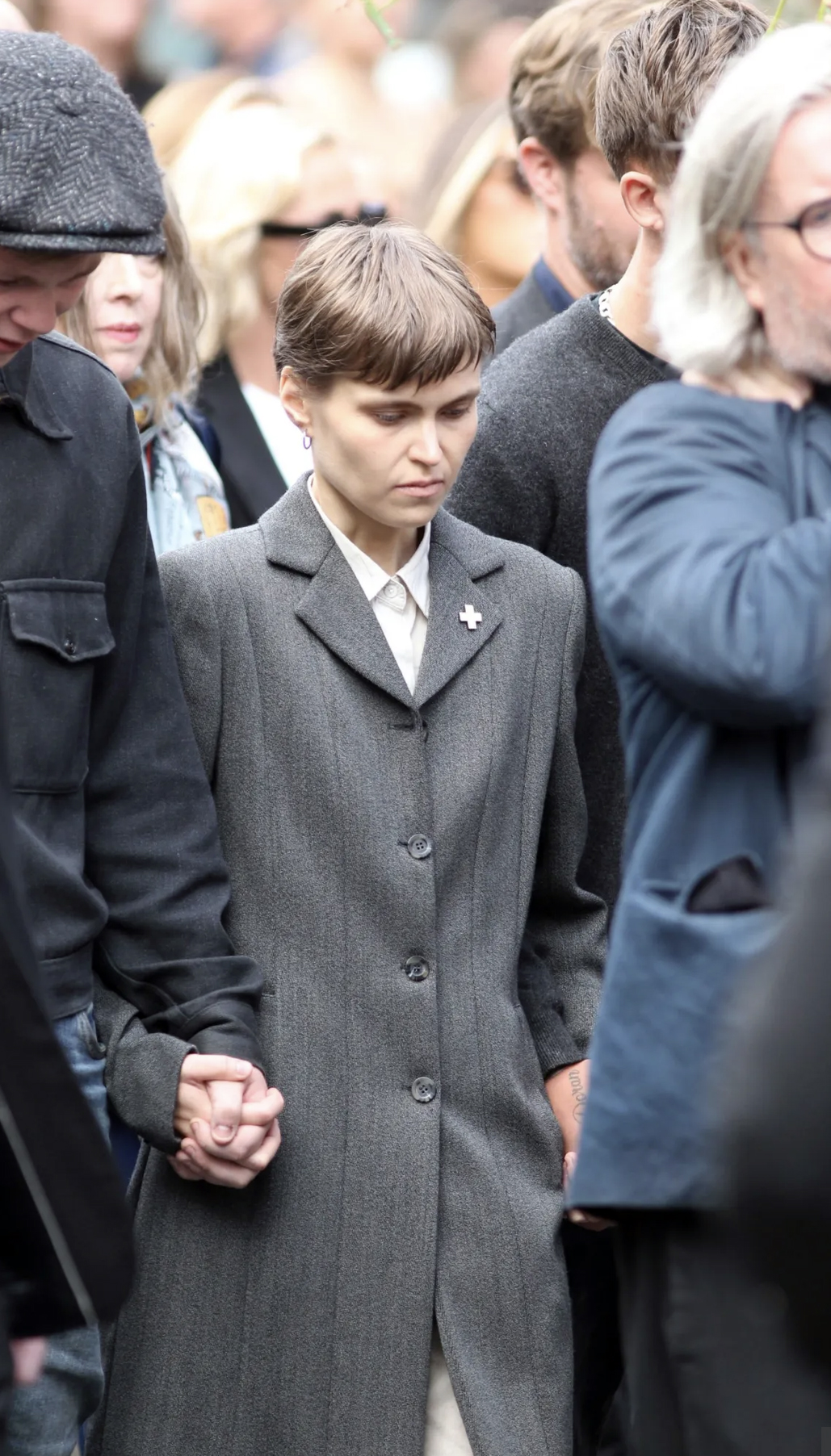
Glen’s widow, Maire Saaritsa, at Hansard’s funeral.
His wife, Maire Saaritsa, gave these words to him in the form of a poem in return for the songs he wrote for her.
Come to me with beauty.
I require it to stay alive.
I’m not talking of precious gifts,
nor do I want a dolled-up, dutiful,
and well-assessed array of tender words.
Hurl the clash of what you’ve pocketed
from this day at my feet,
and then be brave enough
to look me in the eye.
Push the boundary of two minds
till it stretches,
till there are two bodies in one embrace,
and a moment of understanding
or acceptance,
or blind faith,
and a sense of the infinite
jump and jive.
That, to me, is beauty,
and I require it to stay alive.

His younger brother, Richard, offered the words that helped to bring Glen Hansard’s spirit to the moment of grief, loss and longing:
Glen made me feel like the world was a much more magical place than it was at the time. He sang songs, he was a storyteller, he would come in and turn the evening around. It was easy to look up and be inspired. I know he made ripples and made waves. He had an impact on so many, look at this room. Those waves began at kitchen tables in Ballymun and Killester, and it is at those tables for us he will remain. His first stage was our house, and his audience was his mam, dad, and brothers. We have inherited all the magical, colorful words, hugs, talks, madness, sadness, insightful manic beauty that a brother, an uncle, a husband, and a father could ever give. Thank you, Glen. Thank you, brother. Thank you, thank you, thank you, thank you, thank you.