SUE'S SPOTLIGHT: Women in Blues and Jazz
Career Connectors in the Music Business
Musicians understand that they don’t achieve success without help from many different corners, to both guide them and teach them the business of making music successfully: family, friends, teachers, older musicians, journalists, radio DJs, bookers of venues large and small, anyone and everyone. This month’s column focuses on some of the people who have helped many musicians progress in getting their music into the universe and getting engagements.

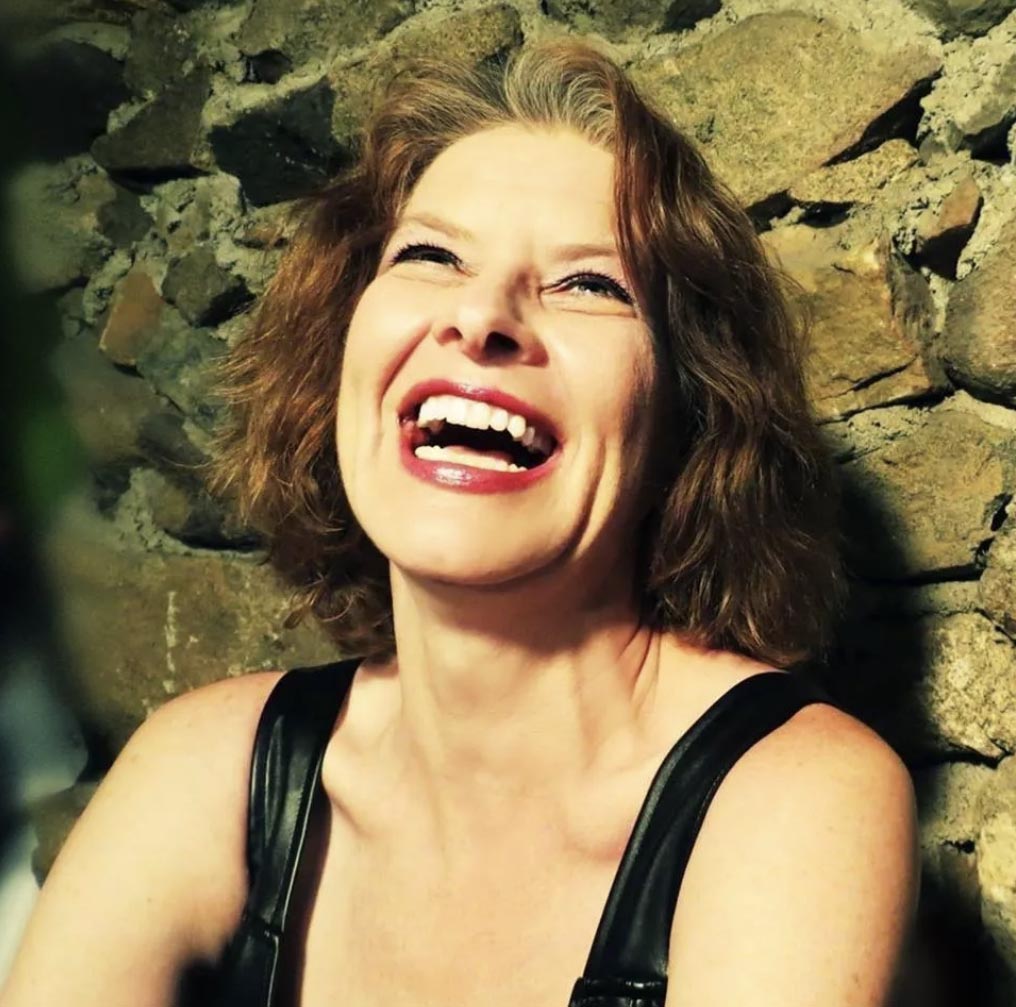
Jazz Kitty, Claudia Russell.
CLAUDIA RUSSELL: Radio Legend
First, I would like to congratulate San Diego’s own radio legend, Claudia Russell, for her induction into San Diego’s 2026 Music Hall of Fame. She recently retired from a 25-year stint at Radio Station, Jazz 88.3FM, affiliated with San Diego City Community College. As soon as she arrived in San Diego, in 2001, she began actively meeting all the musicians in town, introducing their album release shows (as the KSDS program director), writing creative liner notes, interviewing musicians live on her show while playing their releases.
Our local music scene was being carried live all over the world. For example, one could have fans in Bolivia, Poland, and Tokyo, as well as San Diego. She has been a major connector for musicians to all kinds of audiences, getting to know them as friends, while exploring their artistic processes. In an article in the Troubadour, in 2022, by Laura Preble (https://sandiegotroubadour.com/honoring-female-contributions-while-striving-for-a-more-human-centered-world/), Claudia describes herself as “the wheel connecting audiences to musicians, giving you things you’ve forgotten you love.”

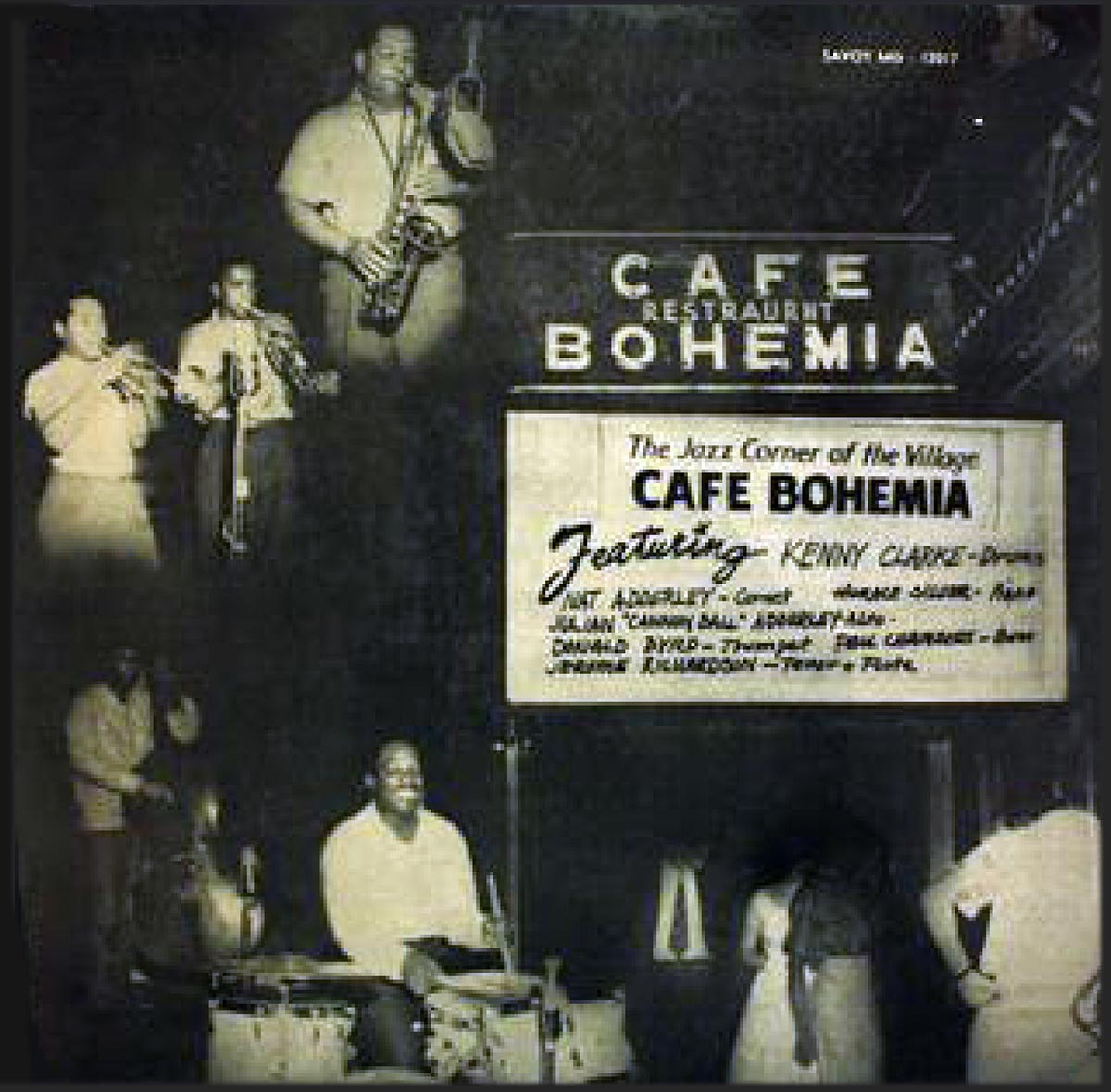
Cafe Bohemia in New York City.
This article precluded her last show on Jazz 88.3, before retiring, Bohemia After Dark. The title of the show was based on a song written by Oscar Pettiford about an NYC jazz club called Cafe Bohemia. The song became a bop standard. Claudia’s show contained all elements of jazz, performance art, and spoken-word jazz poetry. It had an offbeat nighttime flavor and was one of the most interesting shows on jazz radio. Claudia herself morphed into the “Jazz Kitty.”

Claudia has spent her entire adult life being a DJ. Born in South Bend, Indiana, in 1967 (the Summer of Love), she is the youngest of seven children. For her entire childhood, she was immersed in the music of her older brothers and sisters, as well as her parents. Their music was the soundtrack for the rest of her life. She frequented the historic Midway Tavern in Mishawaka, just east of South Bend, and absorbed the cool music that touring bands brought through that iconic juke joint lounge.

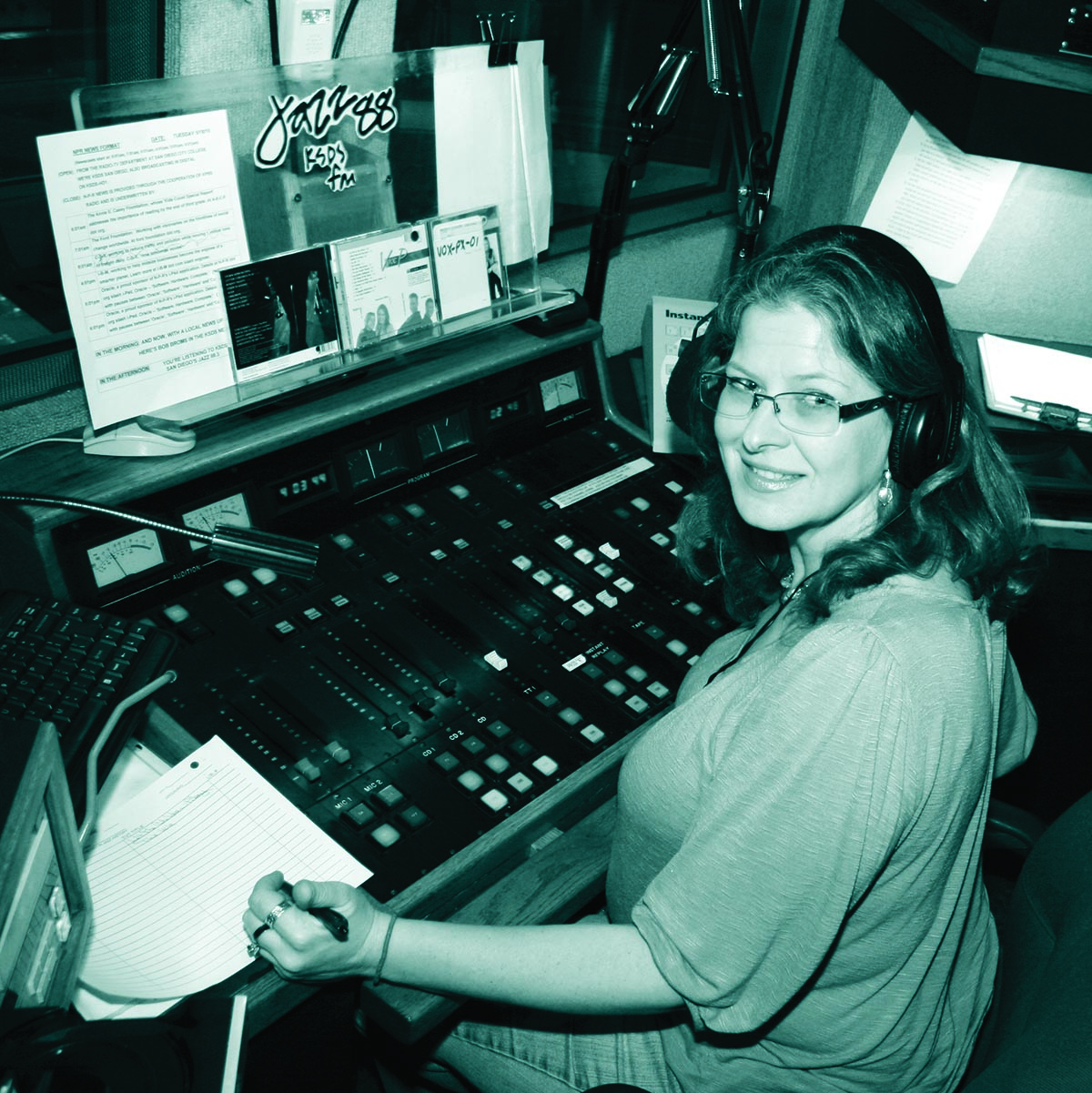
Claudia in the studio at Jazz88.3.
She had the music appreciation and foundation by the time she was hired for her first DJ job at the age of 21. She said she just said yes to everything and ended up with news shows, doing farm and weather updates, jazz, and contemporary country shows, learning the behind-the-scenes mechanisms of a radio station. She had two more jobs in Indiana at two different stations, learning how to be a copywriter, doing station promotions and production direction. Then, in January 2001, winter struck Indiana. That was the deciding factor, and she applied and was accepted for a job in sunny San Diego, at a community college nonprofit station. San Diego was very lucky to have her here for 25 years.
She has not only interviewed local musicians, big and small, but national and international stars (Charles McPherson, Jeannie and Jimmy Cheatham, Herbie Hancock, Chick Corea, Diane Schuur, Dave Brubeck, Terence Blanchard, Red Holloway, and the great Joe Williams (Count Basie’s longtime singer). She told the world that the San Diego music scene could rival NYC, Paris, and Stockholm. She definitely put us on the map, while making a name for herself. George Varga, senior music editor of the San Diego Union Tribune, calls her a radio legend. We are very proud to include her in our San Diego Music Hall of Fame, 2026.


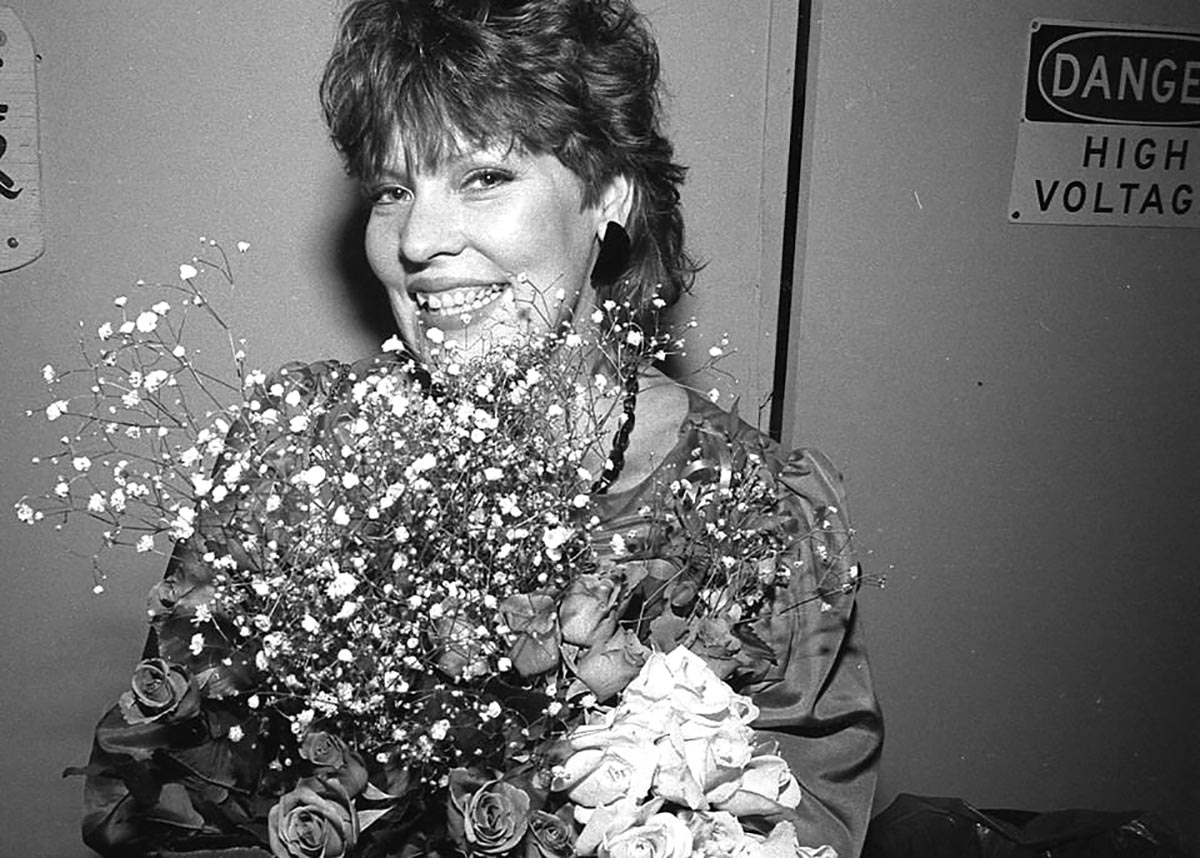
Margaret Moser in 1985. Photo by Michael Corcoran.
MARGARET MOSER (1954-2017), Journalist
One of the most colorful of all the connectors for musicians has been the career of Margaret Moser. Precocious and brilliant as a child, Margaret moved to Austin at the age of 19. A high school dropout with no discernible skills, she used her guile and instinct to become Texas’ most celebrated and influential female journalist. I was fortunate to meet her through my association with bawdy blues singer Candye Kane, as her piano player. We stayed at Margaret’s house numerous times, while playing in Austin, when Candye’s record company was the iconic Antone’s label. Candye called Margaret’s house the “Marga-Ritz.” Both were fierce women who left an indelible mark on the roots and American blues scenes, while sharing a deep friendship. Margaret frequently covered or referenced the larger-than-life blues artist Candye Kane.
Margaret wanted to feel that rush of being moved by music since the age of 14. She wrote reviews in her journal to be more connected to the music. It never occurred to her that a female could be a music journalist. She at first found access to this mesmerizing feeling as a self-proclaimed groupie. It wasn’t about sex, it was about access. “Yes, the sex had been fun, hot, druggy, and free (except for the occasional trip to the clinic) but I never wanted to be a musician—I wanted to tell people what I’d heard and seen. The sex was almost incidental.” — Interview of Margaret by the Oxford American. She was often seen with a group of blondes called “The Texas Blondes.” They partied with musicians and were given free tickets and back stage passes. Moser was the leader of the group.

Moser started working at the Austin Sun, initially as a janitor, in 1976. When she told her editor she had access to certain musicians and could interview them, her journalism career was begun. She began working for the Austin Chronicle in 1981, as a gossip columnist. Eventually her columns became essential reading for all of Austin’s musicians, their audiences, hipsters, and fans. She was called the “Patron Saint of Austin music.”
Later in life, she brought performing opportunities to teenagers, with her Under 18 series at the Chronicle, teaching them to be a good audience, if they themselves wanted an audience. They turned out for each other’s gigs. Moser was a community builder. At one point, she ruled the Austin Music Awards at the iconic South By Southwest Festival, where I first met her. Candye essentially got her first record label with Antone’s by performing at that festival.
Margaret Moser had a wonderful 40-year journalism career, all based on her true love of music.

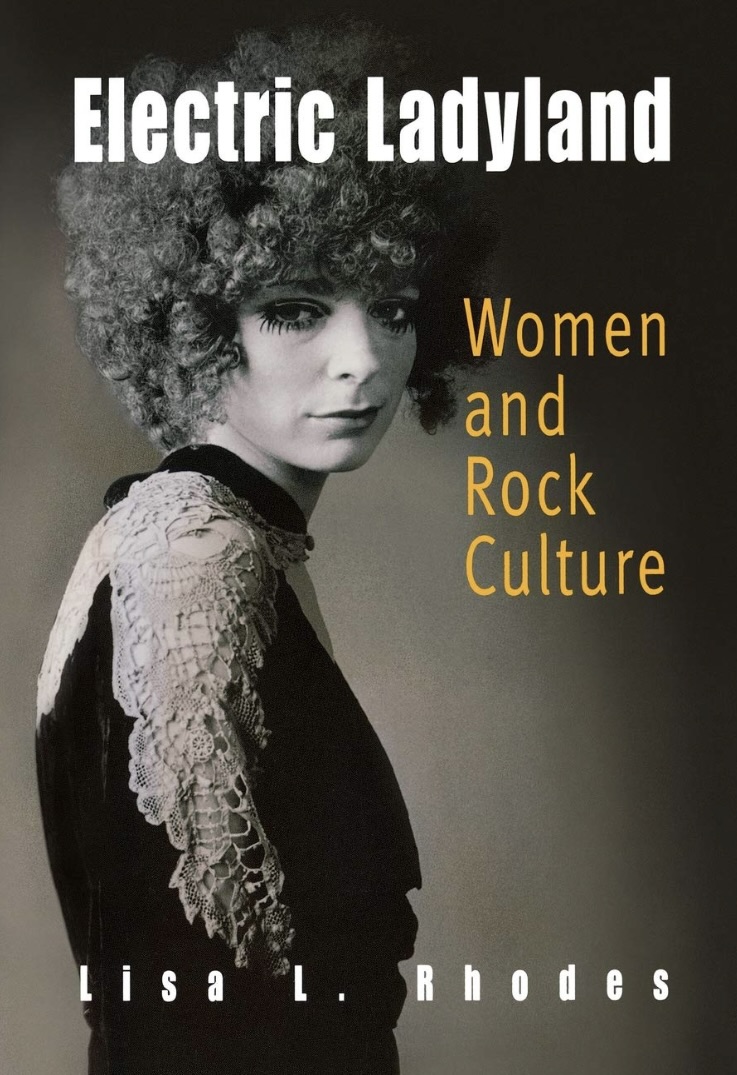
Lisa Rhodes

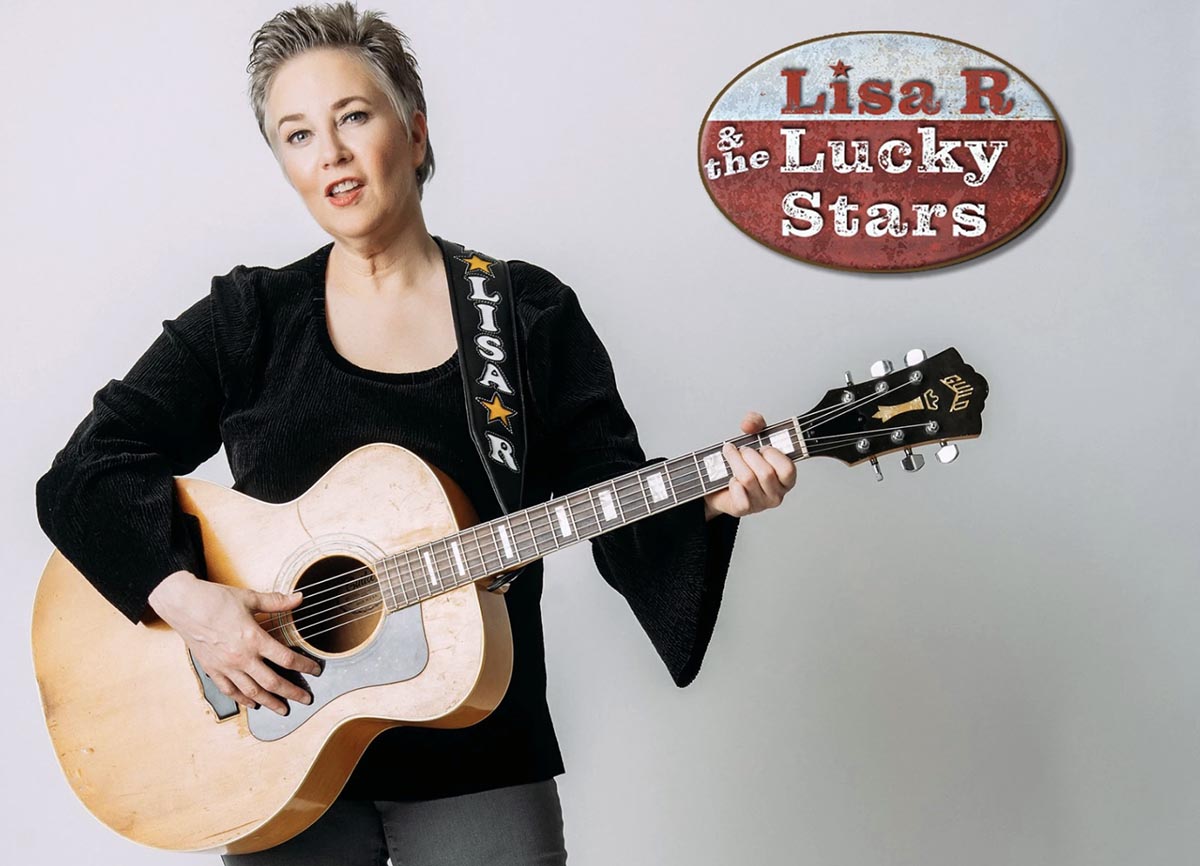
Daphne Brooks
LISA RHODES, Scholar/Author
Rhodes began her career in Austin, Texas, in the heyday of the ’80s. She shared the stage with artists such as Stevie Ray Vaughn, Joan Jett, the Fabulous Thunderbirds, and Joe Ely. She performed and recorded with the Neville Brothers, cowriting the song “The Dealer.” After years as a respected scholar and author, she returned to music with her band Lisa R and the Lucky Stars. Her books include Electric Ladyland, Women in Rock Culture. She chronicles the women who were part of a rock subculture that literally blew apart the world at that time (1965-1975).
DAPHNE BROOKS, Historian/Author
Daphne Brooks, historian and author, is the William R, Kenan Jr. Professor of Black Studies at Yale University. She is the author of Bodies of Dissent: Spectacular Performances of Race and Freedom 1850-1910 and liner notes for Revolution: The Intellectual Life of Black Feminist Sound, among many other award-winning articles, books, and prizes, including Nina Simone’s Triple Play and All That You Can’t Leave Behind: Black Female Soul Singing in the Age of Catastrophe. Brooks explores how Nina Simone subverted the boundaries of Black popular music, blues and jazz, classical, and folk traditions. Simone’s recording of Ellington’s classic “Mood Indigo” on her first album, before she was discovered by the world, is a perfect example.
ROSETTA REITZ (1921-2008): Record Producer

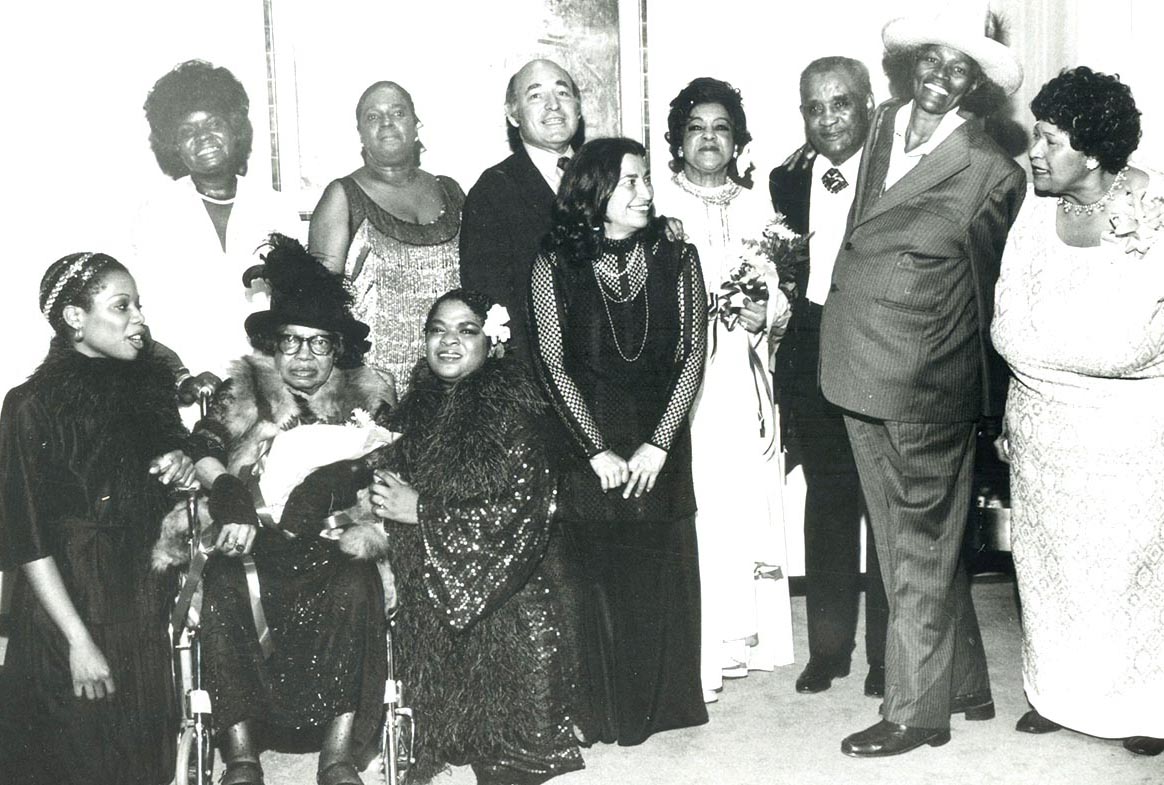
Performers in Blues Is a Woman concert at the Newport Jazz Festival in 1980, organized by Rosetta Reitz. Standing are Koko Taylor, Linda Hopkins, George Wein, Rosetta Reitz, Adelaide Hall, Little Brother Montgomery, Big Mama Thornton, Beulah Bryant. Seated: Sharon Freeman, Sippie Wallace, Nell Carter.
Rosetta Reitz was a feminist, an educator, a jazz historian, a Village Voice critic, food writer, and more. My interaction with her was her wonderful series of vinyl albums created under her label, Rosetta Records. She researched the background of forgotten female artists, remastered recordings, and wrote wonderful liner notes. These compilations included Valaida Snow (trumpet/vocals), Hadda Brooks (vocals/piano), pianist/singer Georgia White, and lesser-known records of Ida Cox, Ma Rainey, Bessie Smith, and Mae West, as well as instrumentalists like Lovie Austin and Mary Lou Williams. Her collections included recordings from 1920-1960s, featuring many blues queens.
I have focused on just a few of the music lovers who formed a way to create their own opportunities and further those of musicians. As radio DJs, journalists, authors of books and articles, reviewers, and record producers, they have furthered a sense of shared culture, furthered many careers, and fostered a feeling of community. Musicians and audiences need these connector people. They are an integral part of our whole music scene, world wide. Thank you.