Cover Story
Big Boss Bubeleh: Playful on Stage, Heartfelt in Life

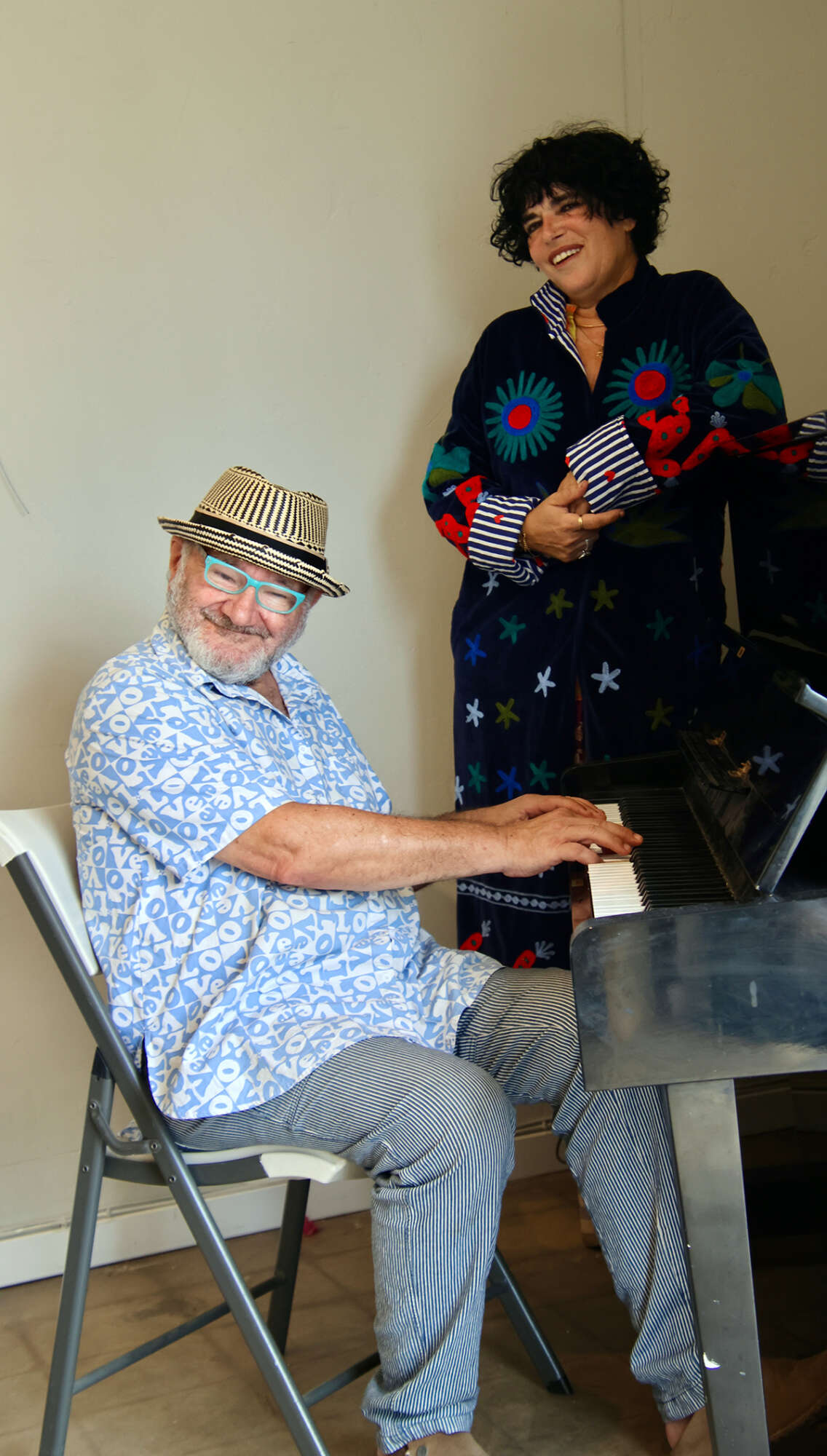
Big Boss Bubeleh is Yael and Vlady. Photo by Kristin Albright.
There is something particularly enjoyable about talking to Yael Gmach and Vlady Yarovinsky on a beautiful San Diego day. The setting is relaxed, sitting in their yard, and the conversation feels less like an interview than spending an afternoon with a favorite married couple while they talk about the thing they’re most passionate about: music.
Except that this particular couple has spent 17 years making music together onstage, and the music they make is almost as unpredictable as the conversation.
They don’t simply finish each other’s sentences, although they sometimes do. More often, one of them will introduce an idea and the other will take it somewhere unexpected. A question produces an answer, which produces another thought, which seems to be something the other person is hearing for the first time. There is a history between them, obviously, but the history hasn’t turned into a script. That may be the best way to understand Big Boss Bubeleh.
The San Diego band has always been difficult to put into a single musical category. Their music draws from gypsy jazz, klezmer, Russian and Eastern European folk, blues, swing, French chanson, Latin music and other traditions that might not ordinarily be expected to share the same stage.
Of course, given the two main artists’ makeup, you can immediately hear the gypsy jazz and klezmer of it all. There are a lot of easy reference points to make: the guitars can often sound like Django Reinhardt; when you hear violin, it could easily remind you of Stéphane Grappelli; plenty of times Yael’s voice could be mistaken for Ingrid Michaelson’s or a modern Blossom Dearie. At different times, the rhythm section can sound like it’s from the Balkans and at others like it owes a debt to Cuban percussionists.
Big Boss Bubeleh is far from an exercise in old-world genres and sensibilities. It’s thoroughly modern and ties old together with the new. For those who are familiar with the station, many of their songs are danceable like the pop French fare on SiriusXM’s Influence Franco station.
And now, after 17 years of making music their own way, Big Boss Bubeleh has just finished SIT, a new 16-song album that I would describe as frisky and playful as Vlady and Yael are personally.
Is the Band Like the Music, Or Is the Music Like the Band?
What makes Big Boss Bubeleh distinctive is that the music seems to operate according to the same principle as the people making it: Let’s see what happens.
“When we’re setting up a song and making it start, we first just try to make it groove,” Yael says. “Then the goal is just to even get it to the second verse.”
Vlady’s response is immediate and concise.
“It’s like riding a horse.”
That may sound like a joke, but it is also a pretty good description of what Big Boss Bubeleh does.
*********************
“What happens when a French artist and a Ukrainian artist come together?” is almost impossible to answer without talking about the collision of cultures that makes Big Boss Bubeleh sound like Big Boss Bubeleh. “It widens topics and conversations,” Yael says. “It’s kind of our secret weapon.”
**********************
Two Histories, One Band
Yael and Vlady came to their partnership from very different places. Yael was born in Paris and grew up in a French-Jewish family. Vlady was raised as a Russian Jew in the Ukraine. Both eventually came to California, where their paths crossed and eventually led to a musical and romantic partnership. The different backgrounds aren’t simply biographical details. They are embedded in the music.
“What happens when a French artist and a Ukrainian artist come together?” is almost impossible to answer without talking about the collision of cultures that makes Big Boss Bubeleh sound like Big Boss Bubeleh.
“It widens topics and conversations,” Yael says. “It’s kind of our secret weapon.”

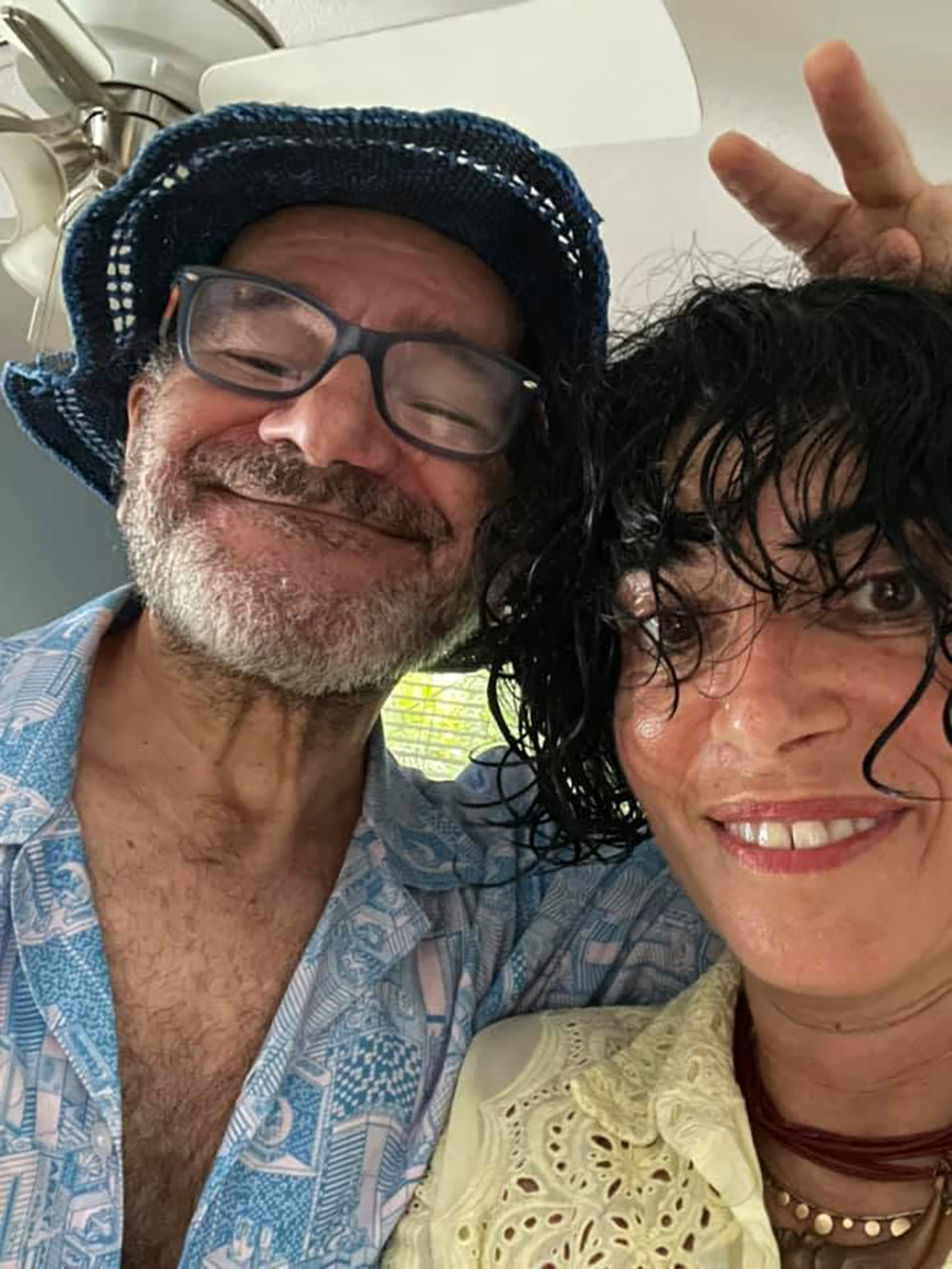
Vlady has a more historical explanation for what happened musically. “In the Soviet Union there was still a tradition from the Russian czars when they selected music for the palace; gypsy music and tonal signatures became the music of Russia,” he says. “With our combination, musically it made our sound become something like gypsy jazz heading toward Edith Piaf and Billie Holiday.”
The multicultural musical grab bag that is Big Boss Bubeleh was already apparent in their 2017 album A Droite!, which brought together 14 original songs drawing on old-world melodies, blues, jazz and folk traditions. Earlier descriptions of the band have tried to capture that quality with phrases such as “gypsy jazzy klezmer pop,” but even that only gets part of the way there.
The band has also never been strictly limited to Yael and Vlady. Big Boss Bubeleh can be a larger ensemble, with other musicians adding their own personalities and musical languages. But Yael and Vlady remain its center, the two people whose relationship gives the project its particular character.
And that relationship began with music.
Learning How to Surprise Each Other
Vlady had already spent years playing before meeting Yael, and his musical history brought a particularly strong improvisational sensibility to their collaboration. In an earlier interview, he recalled meeting Yael at an Encinitas event where he was playing with other musicians. At one point, a guitarist left his instrument on a chair. Yael picked it up, began singing and playing, and the musicians joined her. The encounter led to more playing together, then songwriting, and eventually marriage and Big Boss Bubeleh. Vlady began introducing Yael to more complicated blues and jazz progressions. He describes deliberately making things harder for her.
“I was trying to confuse her a little,” he recalled.
It worked—or perhaps it worked exactly as he hoped.

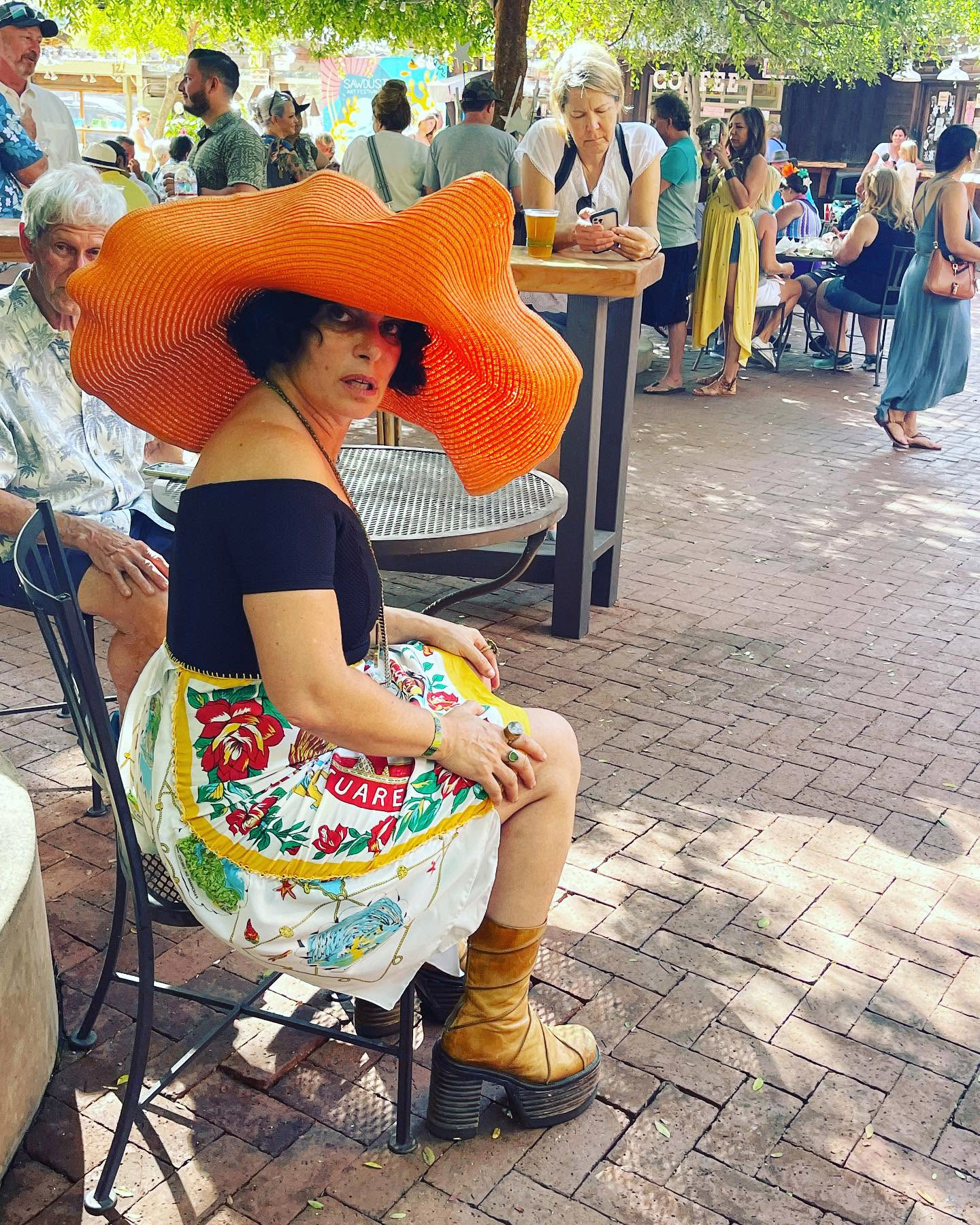
Yael
He introduced her to extended chord progressions, changes, and musical structures that required her to listen closely to what was happening around her. She absorbed them. That dynamic remains part of their relationship.
“He’s a strong teacher,” Yael says. “He will tell you what you need to do with a particular song. It could be in a way that sounds like torture, but it’s not at all torture.”
It doesn’t seem to be Vlady challenging Yael, but giving her something to respond to; that’s something that goes both ways with these two. It’s like they are paired electrons bouncing around the same nucleus,
When asked what the two understand about each other that other musicians might not, Vlady points to the sheer amount of time they have spent together.
“Our relationship has strengthened this two-headed monster by being together for 17 years,” he says. “We play together all the time, being physically next to each other on stage is important.”
Yael immediately turns that image into something warmer.
“I love having a front-row seat next to Vlady all the time.”
It’s a nice description of their partnership because it doesn’t suggest that either one of them has figured the other out completely. A front-row seat is a place from which you watch something happen. And apparently, even after 17 years, there is still something to watch.
The Art of Not Knowing What Happens Next
There is a familiar claim made by musicians: every show is different. Anything can happen. We improvise. We never know where the music will take us. Sometimes that’s true. Often, it isn’t.
Most bands, understandably, know what they are going to play. They have rehearsed the songs, worked out the arrangements, and established a beginning, middle, and end. Even when there is some improvisation, there are boundaries. Big Boss Bubeleh has never seemed particularly interested in those boundaries.

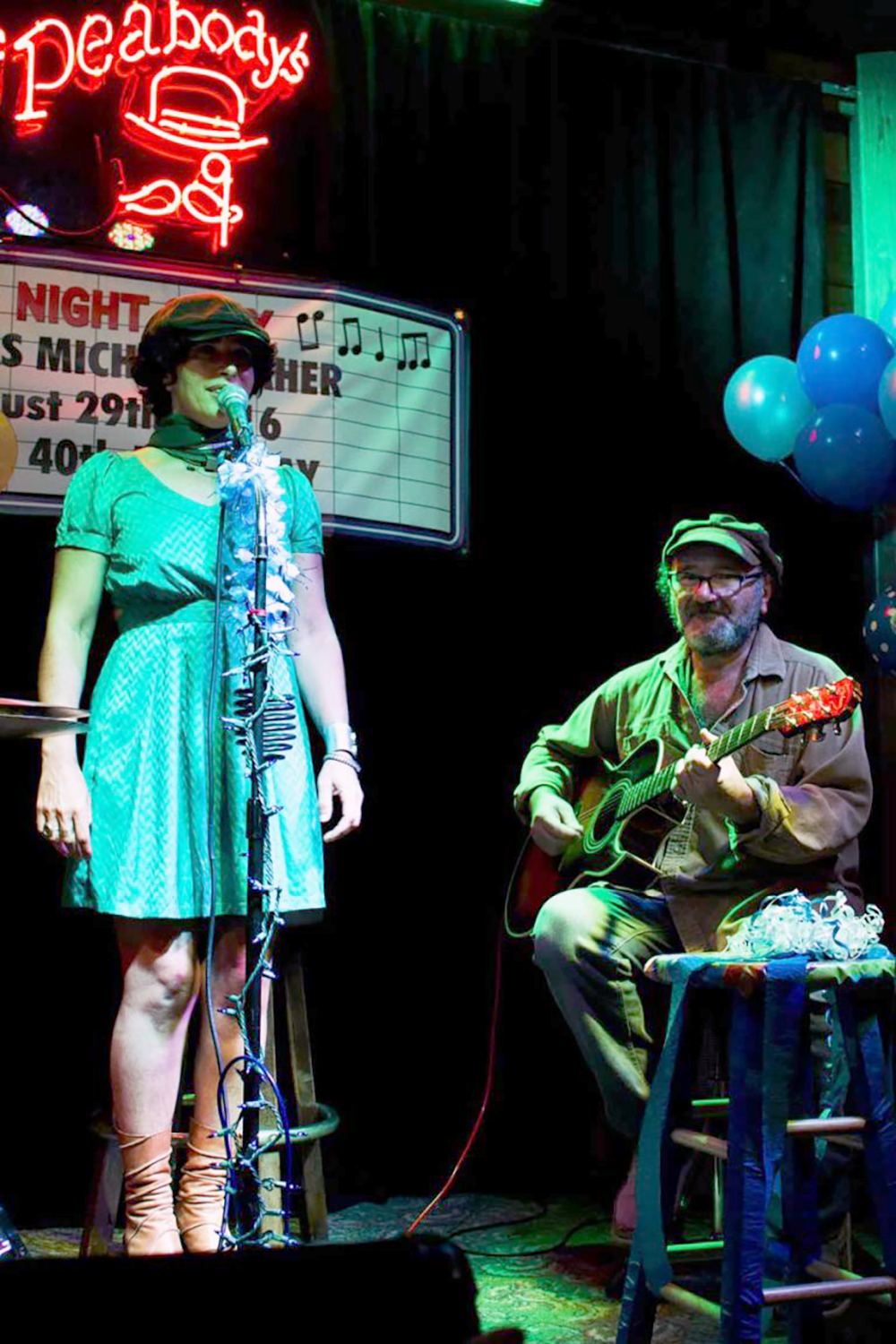
The band’s music can stretch. Songs can breathe. Other musicians can join. A guest can appear. a musical idea can take the band somewhere nobody quite expected. This isn’t improvisation as a marketing description. It is a practical part of how they play.
Vlady learned some of that approach through playing blues and reggae. He remembers a particularly important experience in Chicago in 1979.
“In 1979, in Chicago, with blues jams at the Checkerboard Lounge, I learned to be spontaneous on stage; you have to be saying and living what it is to be in the moment.”
A previous Troubadour account of the band described an evening at Café Europa when a touring group of Mariachi musicians happened to be in the room. The Mariachi musicians eventually joined Big Boss Bubeleh for an extended jam, adding guitars and trumpets to the music. On another night, a trumpet player simply asked if he could sit in. These aren’t the kinds of things that happen because a band has carefully planned its spontaneity. They happen because a band leaves the door open.
“Vlady Is Absurd”
That openness can produce moments that are musical, but it can also produce moments that are simply funny.
I asked Yael and Vlady how they surprise each other on stage.
“Vlady is absurd,” Yael says, while I stick up for him that he’s spontaneous and witty.
Vlady’s explanation of where his spontaneity comes from reaches back to those blues jams in Chicago. But Yael has a more recent example of the kind of thing that can happen when you are playing with someone who doesn’t panic when the unexpected arrives.
“Last Wednesday, a guy recognized Vlady from 30 years ago and suddenly just comes up and sits on the stage in the middle of the stage,” she says. “But Vlady just rolled with it and dealt with it in an amazing way.”
The same qualities that make Big Boss Bubeleh’s performances unpredictable seem to be part of the way Yael and Vlady experience the world. Something unexpected happens, and rather than immediately trying to restore order, they see what it might become. Even their answers about one another tend to take unexpected turns.
Asked what still surprises him about Yael after all these years, Vlady says, “She’s very kind and forgiving” before a small guilty laugh.
It is both a joke and a revealing answer. Seventeen years together have apparently given them plenty of opportunities to test that quality. And Yael’s answer to the same question is a story rather than a characteristic. That’s one of the things that makes talking to them so much fun. Their answers don’t always neatly conclude the conversation. They open another door.
Not a Svengali

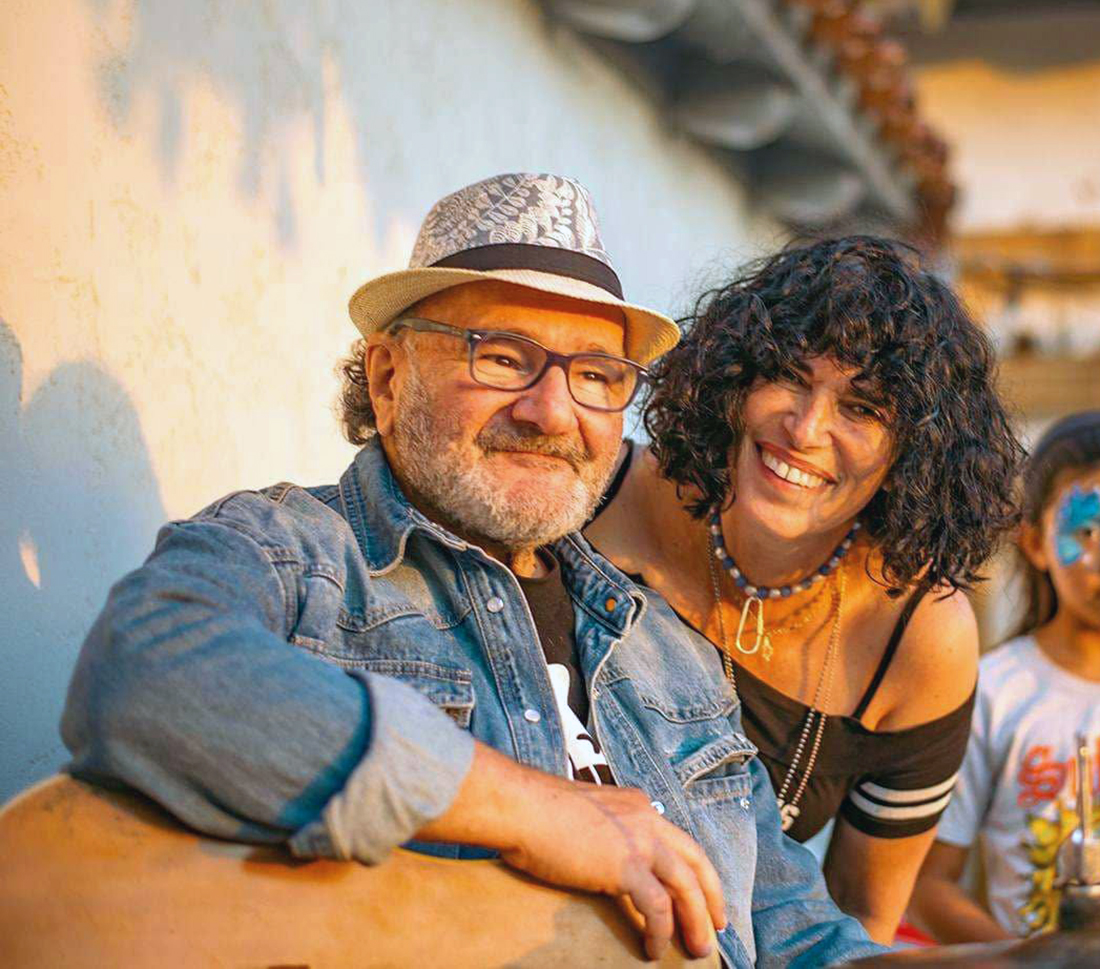
Because Vlady is the band’s musical director and has played for so many years, it would be easy to describe Big Boss Bubeleh as a project led by a musical mastermind with a charismatic singer out front. That would miss half the story.
Vlady clearly has a strong musical vision. He has taught Yael, challenged her and pushed her toward becoming a more confident musician and performer. But Yael isn’t simply the person who carries out that vision. Her contribution is the personality of the music.
Her voice has always been one of the band’s defining characteristics: low, expressive, theatrical, and capable of moving between sweetness and humor. Her French background, Jewish musical upbringing, and attraction to American songwriting all feed into a vocal personality that doesn’t sound like anyone else’s.
And then there is her willingness to take risks.
When asked how they surprise each other onstage, her first answer isn’t about a complicated chord progression or an unexpected arrangement. It was her “Vlady is absurd” comment.
That’s Yael. It is also part of what makes the partnership work.
Vlady brings structure and musical direction. Yael brings instinct, personality and an ability to respond to what is happening around her. Neither quality is particularly complete or fully realized without the other. The result is less like a Svengali and his discovery than two people who have developed a private musical language and continue to use it to challenge one another. That may also explain why the band has lasted.
What They Don’t Want to Lose
After 17 years together, there is an obvious question about what changes.
Musicians age. Voices change. Bodies change. Tastes change. Audiences change. The local music scene changes.
So, what do they preserve? For Vlady, the answer isn’t a particular arrangement or even a particular sound.
“Getting older, we really don’t want to lose the ability to play music for many more years,” he says.
Then comes the more interesting part. “And we don’t want to lose the feeling of being unpredictable.”
That is a deceivingly ambitious thing to preserve.
Most long-running bands eventually become very good at being themselves. Their audiences know what they will sound like. Their set lists become familiar. Their stage personalities settle into recognizable roles.
Big Boss Bubeleh doesn’t seem to just want to be something slightly different; I would contend they’re not capable of becoming predictable. Like the gypsies their music reminds one of, their music has a wandering spirit, constantly picking up something from one place and carrying it somewhere else.

When the Audience Becomes Part of It
Yael remembers a performance as one of those moments when everything connected.
“You just made me think of one day, playing at the Sawdust Art Festival in Laguna Beach,” she says. “It was a perfect moment of that feeling when you’re being one with the audience.”
A band playing a tightly controlled set can deliver the same performance to hundreds of different rooms. But a band that is genuinely responsive to its surroundings is going to be affected by the room, the people in it and the energy coming back from the audience.
That’s why the live Big Boss Bubeleh experience is different from simply putting one of their records on.
Their recordings preserve the songs. The live performance preserves the possibility that the songs might become something else. That distinction has been part of the band since its earliest years.
The music has always drawn from traditions that value performance, interpretation, and variation. Klezmer, blues, gypsy jazz and other forms in their musical vocabulary aren’t built around the idea that a song has only one possible life. Big Boss Bubeleh takes advantage of that.
Just as Good in Your Earbuds
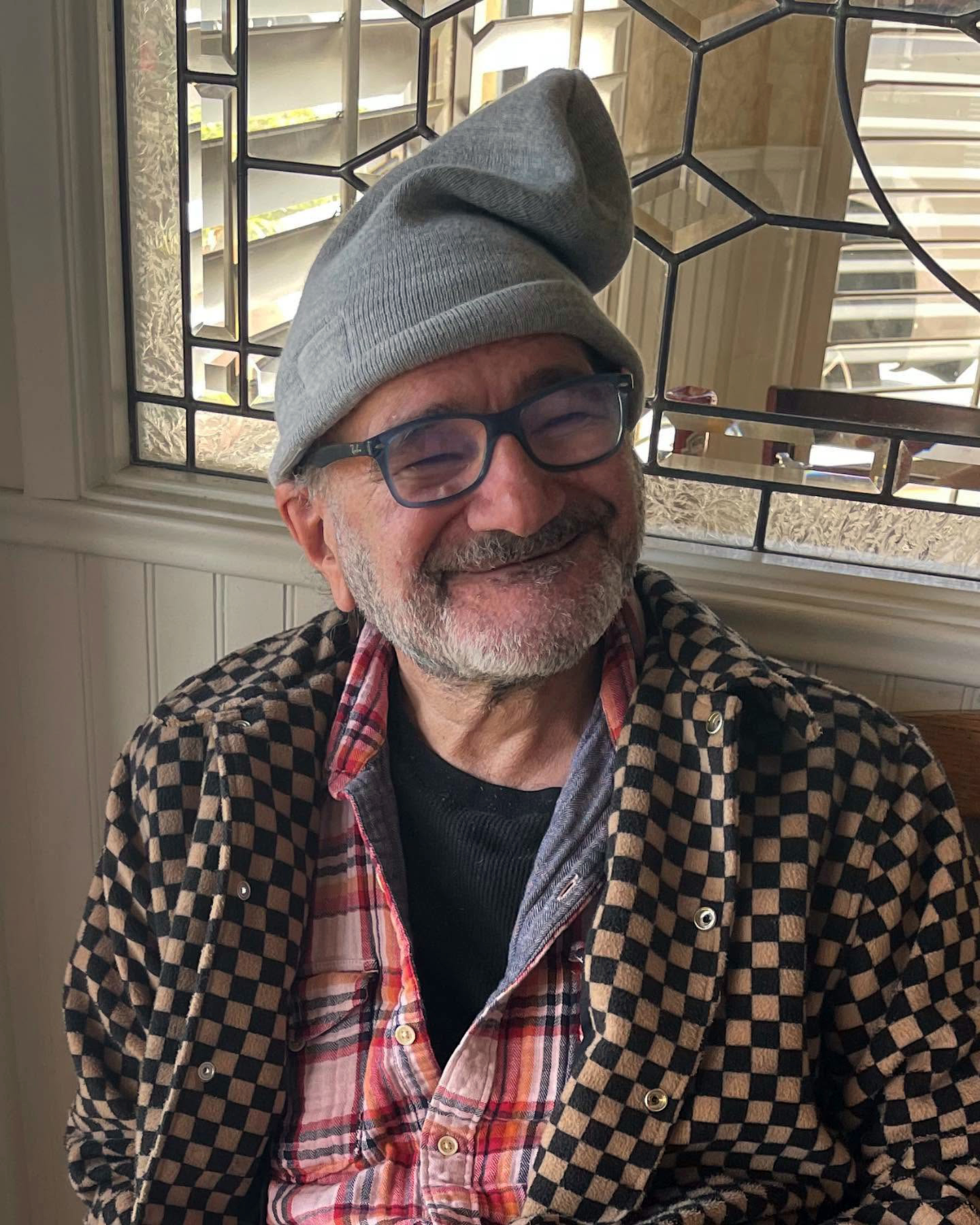
Vlady
Since the band creates such an infectious live energy, either when it’s just Vlady and Yael on a small stage or a full complement of 12 great musicians creating a bigger sound, it’s tempting to think of them as a local stage act, albeit a great one.
But their recorded catalog gives you plenty to live with in front of your good speakers at home or while on a dog walk or washing dishes.
As Big Boss Bubeleh, they’ve produced their most sophisticated recordings. In addition to 2017’s A Droite, in 2021 they released Super Boss, which starts out intimate before left turns into songs like “Max,” which have a 1990s indie vibe like Julianna Hatfield or Ani DiFranco, then swerving back to Left Bank eurosoul with something like “Caparica.”
Before that, their 2013 release of Delicious In Ze Middle as Yael and Vlady is a different package but delivers the same adventuresome spirit, particularly with the seductive “More.”
And now there’s SIT, their newest album, a 16-song collection that Yael says they have just finished. They’re hoping to press it on vinyl “one day,” which seems appropriate for a band that has never appeared particularly concerned with doing things all that conventionally.
More important, the new record arrives at an interesting point in Big Boss Bubeleh’s history: after 17 years of playing, Yael says they’re finally seeing something they haven’t always had: an audience that comes to the gigs, seems to understand what the band is doing, and wants to come back for more.
On SIT, they’re still experimenting with new genres and ideas but can’t help but stay authentic to themselves. On “Super Wet” they’re striking an indie-rock bossa nova groove, with “Yaya Iz the Namo” they’re playing with a calmer hot jazz feel with more keyboard flavor than in the past, and throw in a beautiful cover of Boris Vian’s “Super Gudulie,” which matches the silliness of the original, punch for punch.
That may be more significant than simply having another album to release. For a band whose music asks listeners to follow it through so many different musical neighborhoods, finding an audience that can “take it” may mean the audience has finally caught up with the band—or that the band has been finding its people after years with a really supportive group of fans.
If you dig further in their recording past, Vlady has been laying down great music for years, Yael has a more direct singer-songwriter album—with a really moving song “New Proposal”—and the more klezmer-themed funfest of The Chicken Soup Group, which I’m urging them to release on Spotify or streaming.
And their recording output continues. I really enjoyed a peek behind the curtain of their new “Shit.” It’s hard to describe Yael and Vlady’s continuation of being all over the place as more of the same, even in a good way. Is “continued eclecticism” an oxymoron?
Yes, they’re eclectic and likely have been called that in just about every review or article ever written about them. But you never feel like you’re being yanked around by genre-hopping experiments; it always sounds like them.

More Able to Have Fun
There is another word that comes up repeatedly when Yael and Vlady talk about their lives together.
Fun.
Not fun as a marketing concept. Not “We’re the fun band.” Actual fun.
“When we talk to people, I can prove that we’re soulmates,” Yael says. “Burning Man taught me to say things like that.”
It’s a very Yael sentence: romantic, slightly absurd, and delivered with enough humor that you aren’t quite sure where the serious part ends. Vlady has a simpler observation.
“These days, we’re even more able to have fun.”
That might be the most significant thing about a couple who have been together for 17 years.
They haven’t simply accumulated a history. They seem to have accumulated permission to play. They know each other’s musical tendencies. They know each other’s stories. They know what the other person is likely to do. But only up to a point. Even in our short, sunny conversation, I noticed how much they still surprise each other.
The deeper the shared vocabulary, the more you can communicate without explaining everything. A glance can be a cue. A musical change can be a joke. A stranger walking onto the stage can become part of the show rather than a problem to solve.
And sometimes, in the middle of a conversation in a San Diego backyard, one person says something that makes the other person think about their own history in a slightly different way. That is what struck me most about talking with Yael and Vlady. They have spent years learning how to finish each other’s musical thoughts. But it seems like they’re never going to run out of new ones.
Go See What Happens
There are plenty of ways to describe Big Boss Bubeleh’s music. Again, you could call it gypsy jazz-flavored klezmer. You could talk about Russian and Eastern European folk traditions, French chanson, blues, swing and the other sounds that have found their way into the band’s repertoire.
All of that would be accurate. None of it quite explains what happens when Yael and Vlady are on stage together. For that, you have to see them live. Because every band can tell you that their shows are special. Every band can say they are eclectic. Every band can promise that anything might happen.
Big Boss Bubeleh doesn’t really need to make those claims. They have the music, history and relationships to back them up.
Vlady brings the musical direction, experience, and ability to keep the whole thing moving. Yael brings a voice and personality that can take that structure somewhere unexpected. The other musicians who join them add still more possibilities.
And underneath all of it is the relationship between two people who have been playing together for a long time and apparently still haven’t figured out exactly what the other one is going to do next. That’s the appeal.
For those of you not lucky enough to have a great conversation with Vlady and Yael like I have, the next best thing is to see them on stage. You’re watching a musical conversation between two people who have become extraordinarily good at listening to each other. And if that conversation takes an unexpected turn, that’s not a mistake.