Featured Stories
A Single Note that Changed Everything: Music, Identity, and Purpose


Author-musician Yale Strom.
When Troubadour publisher Liz Abbott asked me to write about my latest book, Kid with a Guitar: The Story of Memphis Minnie—what motivated me to write it and what I hope readers will take from it—I realized this was also an opportunity to reflect on my own journey and the experiences that brought me to this moment. Many readers of Troubadour may know my work as a musician and composer, but fewer know how or why I first picked up the violin.
I was in third grade in my hometown of Detroit when a woman named Mrs. Baker entered our classroom, spoke quietly with the teacher, and began calling students out one by one. When it was finally my turn, I followed her into a small room with a piano. She sat down and said, “Yale, when I play a note, sing it back to me.” It seemed simple and it was. After this brief music test, she scribbled something on a piece of paper and told me to bring it home to my parents. That afternoon, as I sat eating a snack and watching cartoons, my mother read the note aloud. It explained that I had perfectly matched every pitch and was being offered weekly violin lessons at school. The only cost would be a modest rental fee of 25 dollars a month for the instrument. To my young ears, the most important detail was this: I would get to leave class for 30 minutes every Thursday. That small privilege opened the door to a lifelong vocation. The violin became not just an instrument, but a compass guiding, shaping, and ultimately defining my life.

Years later, that same sense of discovery inspired me to write Kid with a Guitar: The Story of Memphis Minnie. After visiting elementary and middle schools in San Diego, where I gave mini-lectures and concerts on klezmer music, I noticed a glaring absence in school libraries: there were very few books about musicians, especially for young readers. Having written books for over 30 years, I felt compelled to address that void. I wanted to introduce children to a remarkable American artist whose story had yet to be told for their age group.
I first learned about Memphis Minnie through my wife more than three decades ago. I was immediately struck by her virtuosity, her tenacity, and her singular voice as both a guitarist and singer. Women musicians, particularly women of color, have too often been relegated to the margins of history, and Minnie’s story demanded to be brought to the forefront. Her influence reverberates through generations of music; her songs have been recorded by artists ranging from Bonnie Raitt to Led Zeppelin, a testament to her enduring legacy.


My decision to write about Memphis Minnie was also deeply personal. I grew up in 1960s Detroit in a neighborhood that was predominantly African-American, with a smaller mix of Jewish and gentile families. My parents were able to purchase their first home there in part because of “white flight,” but they did not share the fears that drove others away. They believed in community, equity, and human connection. In 1967, I witnessed the Detroit uprising; I remember standing on our porch and seeing smoke rise in the distance. My father, an elementary school teacher, recorded interviews with young African-American boys in the neighborhood, asking about their experiences with the unrest and with the police. Their voices raw, candid, and unfiltered have never left me.
Another formative moment was the adoption of my sister Naomi, making us the first Jewish family in Michigan to adopt an African-American child through a Catholic agency. Our family grew to eight, and our home became a microcosm of cultural intersection and shared identity. Tragically, Naomi passed away from acute leukemia just before starting kindergarten. In time, my parents adopted three more African-American children, and this richly diverse family continues to shape who I am. As a Jewish child, I experienced anti-Semitism, but I could often “blend in.” My siblings, who were both Black and Jewish, could not. Their experiences with discrimination were more immediate and more frequent, and they profoundly influenced my understanding of injustice and resilience.
In many ways, Memphis Minnie’s life echoed these themes. Born Lizzie Douglas in Louisiana, raised in Mississippi, and later based in Chicago, she navigated a world rife with racism, sexism, and economic hardship. From picking cotton as a child to busking on the streets of Memphis where she earned the nickname that would define her career, she forged her own path. She performed with traveling shows—including the circus—and eventually electrified Chicago audiences with her bold, innovative sound. By the early 1940s, she had embraced the electric guitar, ensuring her music could cut through the din of crowded clubs. Her 1941 recording “Me and my Chauffeur Blues” marked a pivotal moment in that transition, and, by 1942, even Langston Hughes described her amplified sound as having the intensity of an “electric welder.”


Memphis Minnie
Researching her life required both diligence and imagination. I consulted biographies such as Woman with Guitar: Memphis Minnie’s Blues and scoured articles and archival material. Because so little is documented about her early years, I immersed myself in historical accounts of a sharecropping life: the grueling labor, the oppressive heat, and the relentless mosquitoes. What emerged was a portrait of a young girl with extraordinary determination, someone who refused to be confined by circumstance. Minnie’s journey from rural poverty to musical prominence is not just inspiring, it is also emblematic of the indomitable human spirit.
In addition, I found myself reflecting on the broader role of storytelling itself. Writing for young audiences demands clarity, but it also requires a kind of emotional honesty that does not dilute complexity. Children understand far more than we often assume; they recognize injustice, perseverance, and courage in ways that are immediate and unfiltered. By presenting Minnie’s story with both candor and care, I aimed to create not just a biography, but an invitation, an opening for dialogue between past and present, between reader and subject. In classrooms where I now share this book, I often see students connect the struggles of the past to their own lives, drawing parallels that are as insightful as they are moving.
And yet, like many blues artists of her generation, her life ended in relative obscurity. After suffering a series of debilitating strokes, she spent her final years in a wheelchair and passed away in 1973 with little public recognition. That arc—from brilliance to neglect—is both heartbreaking and instructive, reminding us of the importance of preserving cultural memory.
My own life was irrevocably changed when I first held a violin at age eight. That moment set me on a path I could never have predicted. Through this book, I hope young readers will see that music and, more broadly, creative expression can be transformative. I hope they will recognize that dreams, no matter how audacious, are worth pursuing with persistence and courage. I also hope educators and parents will see the value of introducing children to stories that expand their understanding of history, culture, and identity. Music, after all, is a universal language, but the stories behind it give that language meaning and depth.
I am also pleased to share that I have another book for young readers: The Harmonica’s Cry, the Guitar’s Reply: The Story of Sonny Terry and Brownie McGhee. Like Memphis Minnie, these influential African-American musicians helped shape American roots music, yet their stories remain largely absent from children’s literature. Bringing such narratives to life is both a responsibility and a joy.

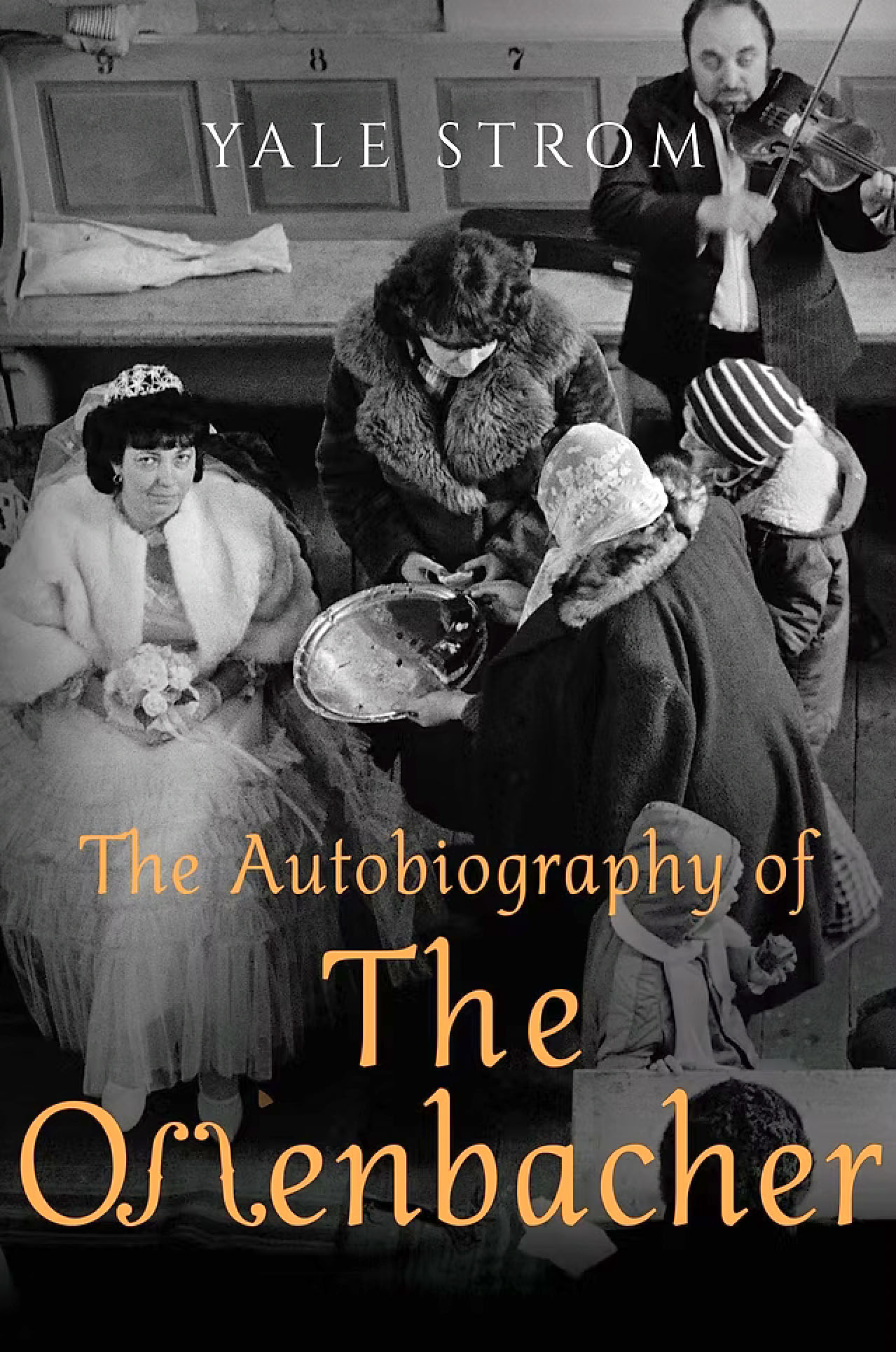
Finally, I invite readers to explore my first historical novel, The Autobiography of the Offenbacher. This work traces the journey of a violin crafted in eighteenth-century Germany as it passes through generations of musicians across Central and Eastern Europe. Narrated by the instrument itself, the novel bears witness to pogroms, wars, artistic flourishing, and cultural exchange among Jewish and Romani performers. It is a story of endurance, memory, and the transcendent power of music, how it can elevate moments of joy and provide solace in times of profound sorrow. In the end, the violin’s journey comes full circle, reunited with the family of a former owner lost in the Holocaust a quiet testament to history, loss, and continuity.
If there is a unifying thread through all my work, it is this: music is not merely sound, it is testimony, identity, and survival. And, sometimes, it begins with a single note played in a quiet room, waiting to be echoed back.